
“The most humiliating aspect I have ever seen”: Western business leaders “horrified” after visiting Chinese factories
Ford Motor Company CEO Jim Farley and other business leaders are “horrified” by the breathtaking pace of technological advances in China, warning that the Asian superpower’s innovations could crush Western companies if they don’t act quickly, according to a sensational report in the Telegraph.
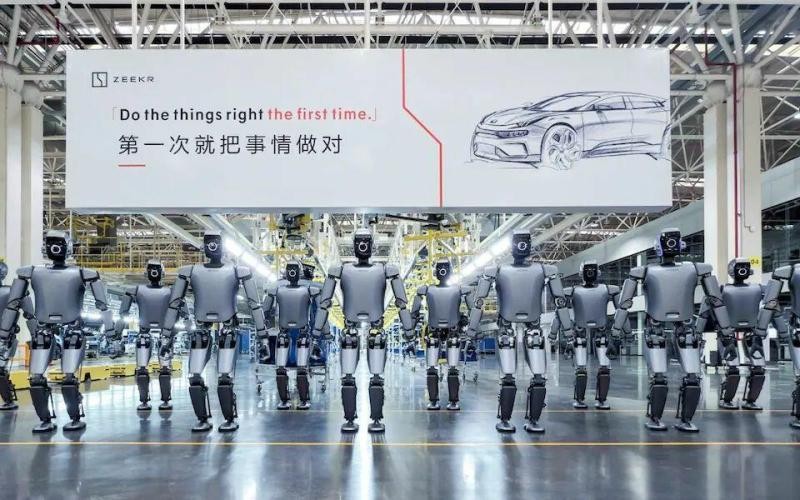
After touring Chinese car factories, Farley expressed shock at the cutting-edge technology used there – including self-driving software and facial recognition systems. “Their cost structure and the quality of their vehicles are far superior to Western industry,” Farley warned, according to the Telegraph.
But the Chinese are not only overtaking U.S. car manufacturers. Greg Jackson, head of the British energy company Octopus, described an astonishing visit to a so-called “dark factory” that produces mobile phones with almost no human labour:
“We visited a dark factory that was producing an astronomical number of cell phones,” Jackson told the paper. “The process was so highly automated that there were no workers on the production side anymore – just a few technicians who made sure the plant ran. You get the feeling that China’s competitiveness is no longer based on subsidies and low wages, but on a huge number of highly skilled engineers innovating like crazy.”
Australian mining billionaire Andrew Forrest abandoned his plans to build electric vehicles after his trip to China – after experiencing China’s dominance first hand:
“We are in global competition with China – and that doesn’t just apply to electric vehicles. If we lose this battle, we have no future at Ford,” Forrest told the Telegraph.
Forrest described futuristic factories where robots emerge from the ground and assemble trucks without any human involvement:
“I can take you into factories in China right now where you walk next to an assembly line, and the machines emerge from the ground and start assembling parts,” he explained. “And as you walk 800 to 900 meters, a finished truck rolls out at the end. There are no people there – everything is robotized.”
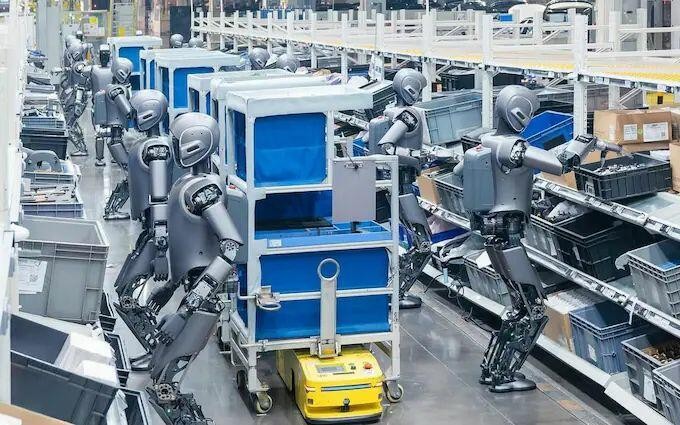
According to analysts at Morgan Stanley, the humanoid robotics market could become a $5 trillion industry by 2050, driven by supply chains, maintenance, and support networks. Massive adoption is expected starting in the late 2030s. By 2050, over a billion humanoid robots could be in use, 90% of which would be in industrial and commercial sectors.
Venture capitalist Vinod Khosla, an early supporter of OpenAI, predicts a robotics breakthrough comparable to the launch of ChatGPT within the next two to three years. He expects machines that can chop vegetables or wash dishes in people’s homes.
China’s Unitree Robotics already dominates the market – with a 60% global market share for four-legged robots – leaving US companies like Boston Dynamics far behind.
On U.S. soil, Tesla’s humanoid robots could give America one last chance to compete against China’s robot giants in the coming years.
And while the big economic powers of the world battle in AI and robotics advancements, experts warn that this race may lead to a gruesome future of the human kind.
yogaesoteric
October 28, 2025