
Essential traditional revelations on the profound and lasting beneficial spiritual transformation that comes about through the proper perseverant and enthusiastic practice of the multi-millennial yoga techniques (3)
By Nicolae Catrina
Previous parts of the article: first part, second part.
The second essential esoteric ingredient of a plenary effective yoga practice is called vairagya in Sanskrit.
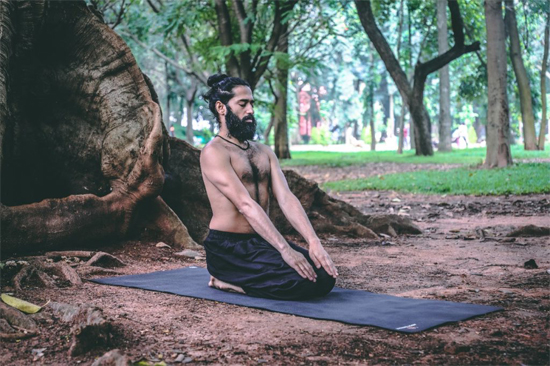
The term vairagya is usually translated as discernment. Vairagya teaches us how to open our consciousness to our spiritual practice, how to allow that practice to transform us, to restructure our whole life from the ground up. Vairagya opens our consciousness to the beauty, the richness, the exuberance of life, thus helping us not to remain stuck in the past or rigidly fixed to some future we daydream about. Vairagya gives us true spiritual freedom.
The Sanskrit word vairagya is a specific declension of viraga. In Sanskrit, raga generally means habitual or selfish desires, emotional dependence and attachments of any kind. The prefix vi here indicates a completely opposite movement, that of accepting or following our common attachments, dependencies and desires – raga in Sanskrit. In other words, vairagya means wise detachment from those bonds, dependencies, habits, attachments, towards the ephemeral aspects of our lives.
Vairagya offers us a radical state of freedom, it offers us an inner space, a space of our consciousness and soul that is completely pure and completely free and in which new possibilities of living, thinking, communicating, perceiving and spiritually transforming can emerge.
Simply put, vairagya gives us a whole new perspective on life, a perspective from which we no longer allow ourselves to be driven by our habitual addictions and attachments, by our habitual cognitive filters or by our habitual conceptual representations, and we can thus become aware of what really exists, what is real and not what we represent to ourselves in a more or less distorted way at the level of our conceptual thinking.
We can now understand that although abhyasa is indeed the occult engine of the effectiveness of our spiritual practice, if abhyasa is not supported and complemented by the wise and discerning spiritual detachment that is vairagya, over time abhyasa will reveal its limitations, and in some cases these limitations, which all come without exception from an egoic misunderstanding and wrong approach of the spiritual practice, these limitations, so they can even make our spiritual practice from our ego’s perspective appear to us as a kind of prison, make us feel that we are no longer free, that we would like to do something else, but we can’t because we have to do our tapas, our practice that we have taken on. Such a completely wrong attitude, which is obviously specific to the ego, ahamkara, is deeply harmful because it induces even at a subconscious level the bizarre and obviously completely false idea that we no longer have freedom, that we are constrained, even suffocated by our spiritual practice.
All this is nothing but – we emphasise – our mistaken impression, an impression that only appears at the ego level, but which manifests itself precisely because of the lack of the second essential ingredient of an effective spiritual practice, which is vairagya. Indeed, vairagya gives us complete inner freedom and a vast, profound state of peace right in the midst, in the heart of the actual performance of our spiritual practice.
Vairagya also means freedom from the various mechanisms, blueprints or patterns of egoic thinking and behaviour connected to all kinds of addictions and attachments and, a fundamental aspect, vairagya always keeps our spiritual integrity intact.
In the absence of a proper awakening and amplification of vairagya in their being, some yoga practitioners may simply transfer their habitual way of being, their desires, their attachments, etc., from the ordinary life to a so-called spiritual life.
For example, a very similar state of joy that is to a large extent egoistic, selfish, joy that a certain practitioner used to experience before devoting himself to the spiritual practice, for example when buying different objects, that egoistic joy can also be identified in the way that same person experiences it in the case of minor successes in his yoga practice.

Because of the lack of vairagya, a real and profound spiritual transformation has not yet taken place in that person, but instead vanities, egoisms, pride, etc. have become somewhat more subtle in that person, but they still remain inferior tendencies.
By integrating vairagya into our spiritual practice, we will radically and completely transform our attitude towards this practice and towards our life in general.
Vairagya teaches us how to identify and then set aside the egoic expectations about the results that can be achieved through our spiritual practice. Of course, this removal of the egoic expectations does not mean that we don’t care what results we achieve or even if we achieve them. It is in fact a clearly superior state of spiritual detachment, but one in which we are also profoundly present and free of egoistic expectations.
Analogically speaking, we can understand vairagya as a free game, full of purity. When children play, they are totally present in their game, which for them is extraordinarily fascinating. But they are constantly curious to discover what that game brings them. They have no expectations or anticipatory projections about their innocent game. With such an attitude, there can be no more weariness, routine, boredom or egoistic expectations, because you live in the present and you also have a superior and innocent curiosity about what is to come.
Can we discover this state of sublime and innocent game in our spiritual practice? The answer of the yoga tradition is a huge YES if we integrate both abhyasa and vairagya into our practice, both of which are essential elements or ingredients of the unfailing spiritual effectiveness.
From a practical point of view, we will always start with abhyasa, we will pay attention to all the four basic qualities of abhyasa, in order to gain stability in our practice. But only by adding and fully integrating the vairagya attitude, that is, by eliminating the egoistic expectations, our being uptight or tense, the egoistic involvement in our spiritual practice, will we be able to achieve full success in this practice, and the spiritual transformation we achieve will be total and permanent. What’s more, as soon as we start practicing yoga in this way, we will find that we can extend this superior attitude into almost all areas of our lives.
For example, in our love relationships. These relationships also need stability, constancy in love, integration of all the four basic qualities of abhyasa, i.e. an adequate duration of spending quality time with the loved one, a perfect continuity of our love, a complete authenticity in love, an enthusiastic approach to love and Pure Godly Eros, and to all this is added vairagya, spiritual detachment, the state of sublime and innocent game that is completely free from egoic expectations, attachments to the other, possessiveness, jealousy, emotional dependencies and so on.
Always and forever abhyasa will provide us with the occult, beneficent, transformative energy, the proper and infallible direction towards our fundamental spiritual goal, the constancy, the inner stability, to always move forward towards ecstatic and perfect union with God. In turn, vairagya will give us the possibility to fully enjoy life, our entire spiritual journey and not just its final destination, it will teach us how to cherish, how to enjoy and ecstatically savour the sublime beauty and the mysterious perfection that characterise both our fundamental spiritual journey towards God and our entire existence.
It can be said that such a spiritual realisation, which is the fruit of the combined and mutually sustained action of the first two esoteric ingredients of spiritual effectiveness, namely abhyasa and vairagya, can be considered as a true crowning achievement of our spiritual practice. However, these two ingredients will intensify their transformative and spiritualising action much more in the presence of the third essential ingredient, which, due to its more subtle nature, is not explicitly mentioned in some yoga treatises.
This third ingredient is called bhavana in Sanskrit.
The Sanskrit word bhavana literally means the instrument of creating a new and, it is implied, far superior reality. Indeed, through bhavana we can manifest, we can bring into reality what we intensely aspire to achieve, to live, to accomplish.

Bhavana also refers to our ability to spiritually identify ourselves or duplicate in our being, in our consciousness, in our aura, qualities and aspects that are very attractive to us and that exist in an archetypal form, in a certain Godly Attribute, in a certain Godly Hypostasis or in a great god, a great goddess, etc., but also in certain human beings.
By focusing as fully as possible and in a profoundly transfiguring way on these qualities or attributes, we come, thanks to this third fundamental spiritual ingredient bhavana, to awaken them, to amplify them, to duplicate them, so to speak, in ourselves.
We can therefore understand that although this third essential aspect, bhavana, is not explicitly mentioned in some traditional yoga treatises, but is highly valued and described as an essential aspect in many treatises of the tantra yoga tradition, it can nevertheless be said that we find examples of bhavana, hints towards bhavana, everywhere in yoga. For example, the very names of the yoga techniques and procedures may refer to certain qualities or even certain Godly Attributes and by this the names implicitly extend an invitation for us to perform this higher spiritual identification, to the use of this mysterious tool to create a much higher, clearly superior reality in which we then constantly live.
For example, there are bodily postures in yoga such as the mountain posture, Tadasana, which refers to the perfect stability of the mountain and implicitly to the Godly Attribute of Godly Stability, which is then transferred through bhavana in correlation of course with abhyasa and vairagya, with the yoga practice itself, into our own being or the hero posture, Virasana, which evokes the Godly Attribute of Godly Heroism or the lotus posture, Padmasana, which evokes Purity, Beauty, Perfection as Godly Attributes, which is also reflected in the beautiful lotus flower, and so on.
But particularly in the tantra yoga tradition, this third essential ingredient of effective spiritual practice – bhavana – is described as being of fundamental importance. Without bhavana there could, for example, be no transfiguration or self-transfiguration. Without bhavana there could be no creation of the genuine sacred space that is so necessary for spiritual ceremonies, including the erotic and spiritual ceremony, Maithuna.
Through bhavana, our whole being is profoundly transfigured, which will make the combined and in a sense complementary action of the other two esoteric ingredients, abhyasa and vairagya, far more effective than in the absence of the third element bhavana.
Even our body becomes through bhavana, especially in the context of the transfiguring tantric eros, a veritable sacred space that allows the harmonious and increasingly plenary manifestation of our spiritual potentialities.
Through bhavana, our whole existence is thus transformed. Any life experience can easily become a form of yoga in this way. Through bhavana we completely transcend the ordinary, banal reality and step transfigured into a sublime space-time, a pure universe full of wonders or even miracles, which we ourselves can turn our everyday reality into, through bhavana. We would like to point out that here we are not referring in the least to imagining what does not exist, what is not real. This is not and has nothing to do with bhavana, which could also be described as a radical reconfiguration or redrawing of the boundaries of the reality in which we live, and primarily as a gradual removal of all the limitations of our consciousness.
Therefore, both in the yoga practice, as in any authentic spiritual practice, bhavana provides us with the possibility, but also the occult energy necessary to reconstruct, metaphorically speaking, the reality in which we live. And such a reconstruction of reality from the ground up implies, as in the case of rebuilding a house, the prior demolition, in the case of bhavana, of the various behavioural or thinking patterns of our ego, patterns and habits that previously kept us prisoners of a very restrictive, limiting, banal existential condition, prisoners of a way of being circumscribed by our ego, ahamkara.
In this way, and of course in conjunction with the other two essential ingredients of an effective spiritual practice, we will more quickly reveal our true and Godly identity, the eternal and perfect Self, Atman, in Sanskrit.
yogaesoteric
November 6, 2025
Also available in:
 Română