
A Yes with a Question Mark: Why the E-ID Is Far From Decided
E-ID Adopted: All Is Not Lost Yet – Ways Out of Digital Control
On September 28, 2025, Switzerland adopted the Federal Act on Electronic Identity (E-ID) by a razor-thin majority of 50.4 percent. Only 17,700 votes were needed for rejection. Voter turnout was around 50 percent – higher than the long-term average of 43.7 percent, but by no means a mass exodus.
For the Federal Council, the “yes” vote is a milestone on the path to digital administration; introduction is planned for summer 2026 at the earliest. Opponents, however, see it as a threat to freedom: a step towards digital control instead of digital sovereignty.
But give up? Now way. There are complaints, initiatives, and international warning signs that offer hope. This article summarizes the reactions, opportunities, and risks.
The narrow result and the frustration of the opponents
The result was a shock for the e-ID critics. “Digital control or digital freedom?” – that was the central question for them. The narrow “yes” vote motivates them all the more not to give up.
Their resistance is manifested in several appeals against the vote filed with the Federal Supreme Court and in the cantons. The main accusations:
- Violation of political neutrality: Swisscom, a state-owned company, donated 30,000 francs to the “yes” campaign.
- False information in the voting booklet: Misleading wording regarding the voluntary nature of the e-ID and potential fees.
Complainants include the journalist and entrepreneur Stefan Siler, the Mode-voll movement, the Young SVP, and the Friends of the Constitution.
The Federal Council and the Federal Chancellery reject the accusations: The booklet correctly described the voluntary nature and the fact that participation was free of charge.
The aim of the complaints: to have the result overturned and a recount or a new vote held.
The hurdles are enormous. Since 1848, there have been over 300 nationwide complaints regarding voting results – only two led to annulment, and both involved individual cantons (Nidwalden 1954, Schwyz 2019). A nationwide repeat? Unprecedented.
The trump card: The complaint about the SwiYu wallet
One complaint stands out – submitted by Richard Koller (schweiz-macher.ch). It could be successful because it focuses on a lack of information: The SwiYu wallet, a central component of the e-ID, was hardly explained to voters. Many would have voted differently with better information.
What exactly is the SwiYu wallet?
The e-ID is not a standalone app from the App Store. Users need to first install the SwiYu wallet – a special wallet app that stores personal data: health insurance information, flight tickets, ID cards, and the e-ID itself.
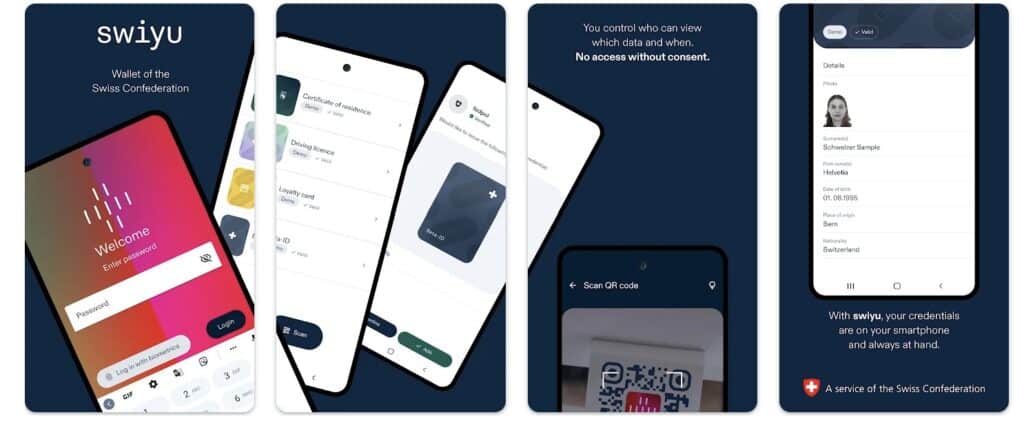
Practical at first glance. The downside: Whoever controls the app (operator or hacker via a backdoor) could read identity, location, or usage times.
The Federal Council reassures: The wallet is operated by SwissSign (a private provider), data remains decentralized and encrypted on the mobile phone – no central database in Bern, sovereignty with the citizen.
Koller nevertheless warns: 100% security doesn’t exist. The wallet could become mandatory for payments in the future. One click – and accounts are blocked. Switzerland is a member of the Better Than Cash Alliance (annual donation: approx. 2 million Swiss francs), which promotes cashless societies.
Koller’s point: The e-ID opens the door to a powerful infrastructure. Many voters were unaware that with the e-ID they automatically accept a state-supervised wallet. Better informed, the result could have been reversed.
Not lost yet: Two saving initiatives
Even if the complaints fail, there are glimmers of hope. Two popular initiatives are gaining traction:
“Digital yes, but free” (in preparation by Richard Koller) – Amendment to the Federal Constitution by adding Article 13a.
Key point: E-ID remains explicitly voluntary. Authorities and companies must always offer alternative forms of identification (e.g., physical card).
This way, digital enthusiasts benefit from the wallet, while those who value freedom remain independent.
“Cash is freedom” (Freedom Movement Switzerland, FBS) – Already submitted, enough signatures, counter-proposal from the Federal Council to Parliament (summer 2024). Vote expected in 2026/2027.
Goal: Constitutional protection for cash (coins and banknotes). The Federal Council’s counter-proposal allows digital central bank money to be considered “cash” – a “nasty catch,” say the initiators. The initiative prevents exactly that.
If these two actions succeed, control is averted. Otherwise: Theoretically, a free hand for surveillance.
International comparison: The USA and Real ID as a warning
In the US, Real ID has been running for years – originally to standardize driver’s licenses. Today: A digital surveillance system?
Officially voluntary, but pressure is mounting: Soon, without Real ID, no flying or entering federal buildings (e.g., the tax office).
Twila Brase (Citizens’ Council for Health Freedom) calls it a “Trojan horse”: National ID card, violation of privacy.
Planned digitization:
- On smartphone, remotely readable in real time.
- Data: Name, address, biometric facial scans – in national/international databases.
Critics: First step towards total surveillance, extension to health or travel data.
Consequence: Digital passport for movement and health. The state could restrict travel, deny access – or make it mandatory for bank accounts, marriage, gun purchases, car rentals.
Brase: Not too late. Prioritize traditional IDs to prevent misuse.
The same pattern worldwide: Centralized data collection at the state level – no coincidence?
Conclusion: Act instead of resigning
The e-ID has been accepted, but the fight continues. Complaints (especially Koller’s regarding the wallet) could be overturned.
The initiatives “Digital yes, but free” and “Cash is freedom” need to prevail.
International examples serve as a warning: Voluntary today, mandatory tomorrow.
Switzerland can remain a pioneer for freedom – with vigilance and commitment. All is not lost yet.
yogaesoteric
November 15, 2025