
Climate adaptation as camouflage: Gates and Novo Nordisk launch multi-billion dollar bioengineering of the soil
The Gates Foundation announced a $1.4 billion “climate adaptation” package at COP30 in Belém, Brazil – presented as a humanitarian project to help “small farmers” survive under extreme weather conditions.
But behind the polished PR language lies a coordinated plan to biotechnologically alter the world’s soil with the help of the pharmaceutical giant Novo Nordisk – and potentially to embed genetically modified microorganisms in the food chain – under the banner of “climate resilience”.
If this program is successful, it would reshape agriculture and perhaps even biology itself.
What Gates calls “soil health” could mean the deliberate release of lab-created “bio-fertilizer” life forms onto farmland – raising serious health concerns about food grown in biotechnologically treated soil, as well as national security risks associated with foreign-controlled biological agents within national food systems.
The announcement follows Gates’ recent admission that climate change “will not bring about the end of humanity,” after years of claiming the opposite. Gates now says that the “doomsday view of climate change”, which believes that “catastrophic climate changes will destroy civilization”, is wrong.
“Fortunately for all of us, this view is wrong. Although climate change will have serious consequences – especially for people in the poorest countries – it will not lead to the end of humanity. People will be able to live and thrive in most parts of the world for the foreseeable future. Emissions projections have decreased, and with the right policies and investments, innovation will allow us to reduce emissions even further,” Gates wrote on his website.
“Unfortunately, the doomsday perspective leads to much of the climate movement focusing too much on short-term emissions targets, diverting resources from the most effective measures we should be taking to improve life in a warmer world.”
“It is not too late to adopt a different perspective and adapt our strategies for dealing with climate change.”
Despite his call for a new strategy, Gates is now using climate change as leverage for total environmental control – shifting the focus from reducing emissions in the air to reprogramming life in the soil itself by manipulating the planet’s soil under the guise of “adaptation”.
Background: Climate as justification for global soil reworking
At COP30, Gates presented the initiative as a moral crusade, saying that small farmers “feed their communities under the toughest conditions imaginable”.
He claimed that investing in their “resilience” was “one of the smartest and most effective measures we can take for humanity and the planet”.
However, the press release itself admits that the money will finance far more than irrigation or seeds. It will fund “innovations for soil health” – new biotechnologies that aim to “restore degraded soils, increase productivity and reduce emissions”. These efforts are already linked to a $30 million partnership between the Gates Foundation and the Novo Nordisk Foundation to promote “soil research”.
The wording sounds harmless – until you read what Novo Nordisk announced in July 2025: a plan to develop biotechnologically produced synthetic fertilizers as part of a new joint project called the “Biofertilizer Innovation and Science Initiative” (IBIS).
Breakdown of funding: Billions for “climate” – millions for soil manipulation
- Total investment: $1.4 billion over four years, announced on November 7, 2025.
- Purpose: to expand access to climate adaptation innovations in sub-Saharan Africa and South Asia.
- Part of the soil: USD 30 million, co-financed with the Novo Nordisk Foundation, for projects in the field of biotechnologically treated soils.
- Parallel program: The IBIS initiative by Novo Nordisk – 215 million DKK (≈ 30–35 million USD) for the Technical University of Denmark to research synthetic microbial “bio-fertilizers”.
This means that almost $60 million in coordinated funding for soil improvement is embedded in Gates’ broader multi-billion dollar climate protection package.
The rest will use digital platforms, genetically modified plants and AI-driven advisory systems to support farmers in their cropping decisions – a digital leash disguised as climate adaptation.
Agenda for soil biotechnology: The silent core of the program
The partnership between Novo Nordisk and Gates describes “biofertilizers” as microorganisms that have been engineered to help plants absorb nutrients, thereby reducing dependence on synthetic fertilizers.
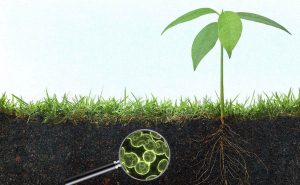
The initiative’s lead scientist, Rasmus Frandsen, said IBIS will create a “continuous development pipeline” for the testing and production of biofertilizer candidates.
In plain terms: This is industrial synthetic biology on an agricultural scale – the replacement of traditional compost and manure with laboratory-developed microbes that change how plants absorb nitrogen and phosphorus.
Once these organic fertilizers are patented and commercialized, the same small farmers that Gates supposedly wants to help will be dependent on proprietary biological inputs in order to be able to grow anything at all.
This raises urgent questions:
- What are the health consequences of consuming food grown in biotechnologically treated soil?
- What safety risks arise when alien-designed organisms are released into agricultural ecosystems?
- And could these engineered microbes mutate, spread uncontrollably, or even cause crop failures if they disrupt the natural soil biology?
The IBIS program is based at the Technical University of Denmark, Department of Biotechnology and Biomedicine – together with the Universities of Copenhagen, Aarhus and Tamil Nadu (India) – and forms a network that blurs the lines between agricultural research and biotechnology production.
Climate change as a cover story
Throughout the entire COP30 announcement, “climate” serves as a selling point. The foundation claims that “less than 1% of global climate finance” helps small farmers, and that investing in their resilience is “an economic and moral obligation”.
By portraying the soil itself as a climate problem, Gates transforms agriculture into a new field of climate policy. The soil is becoming a measurable climate asset – subject to monitoring, change and “innovation” in the name of emission reduction. The narrative of extreme weather events, droughts and floods serves to justify large-scale interventions in the management of the Earth.
This is less philanthropy than the creation of a new agricultural operating system in which every nutrient cycle is programmable, every farmer is data-monitored, and every square meter of soil becomes an experimental field.
Conclusion
Behind Gates’ $1.4 billion pledge for “climate adaptation” is a worldwide campaign to biologically modify the soil – an industrial project that is rewriting the biology of the land under the guise of environmental protection.
Climate change provides the moral pretext. Soil health the entry point. Biotechnology the mechanism.
But the consequences extend far beyond agriculture.
Health risks arise when food supplies come from biotechnologically modified soils that are infested with synthetic microbes that have never been tested on humans.
National security risks arise when alien organisms are deliberately released into domestic agriculture – potentially bringing a country’s food chain under external biological influence.
And there remains the possibility that these engineered microbes will mutate, destroy crops, or contaminate ecosystems – with no way to reverse the damage once they are in the soil.
In short: Gates’ new “adaptation strategy” replaces climate panic with biological control.
Instead of blocking sunlight or seeding clouds, he is now targeting the foundation of the planet – the ground itself – under the guise of humanitarian progress.
The soil may still look brown, but its DNA – and its sovereignty – are being rewritten.
yogaesoteric
November 22, 2025
Also available in:
 Română