
Integral Human – From tectology to global governance (1)
For decades, the metaphor of “Spaceship Earth” has evoked a sense of shared responsibility for our future and the environment. It suggests that we are all crew members on a fragile planetary vessel who need to work together. A somewhat reassuring narrative.
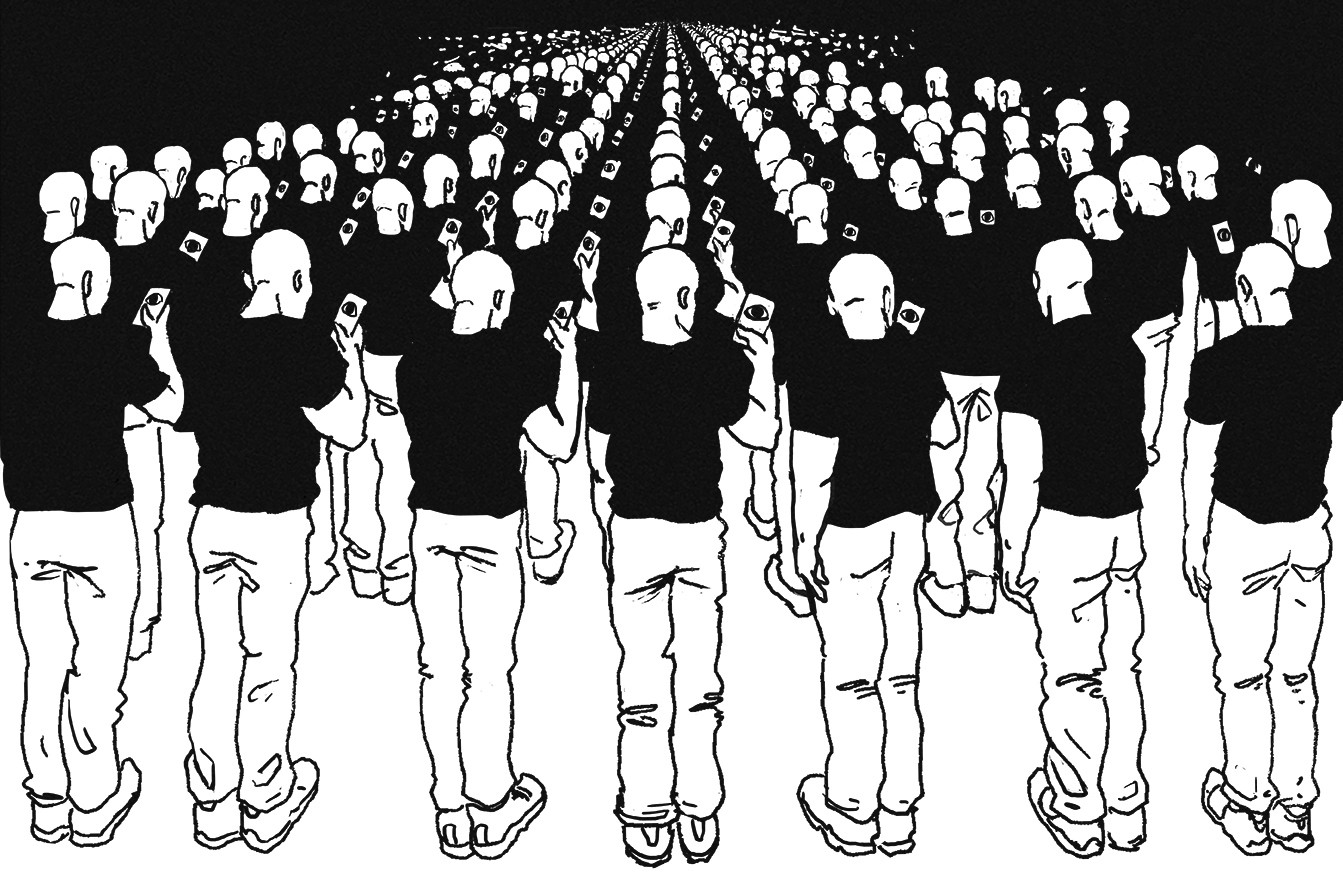
But what if the reality of steering this ship is not a collective effort, but rather the implementation of a vast, top-down control system? What if there were only room in the cockpit for a select few, while the vast majority of us were relegated to passengers whose lives are governed by an invisible, adaptive logic over which we have no control? And who would these select few be?
This is a plausible outcome of a vision that has been developing for over a century. The design does not begin with Barbara Ward or Buckminster Fuller in the 1960s, but in revolutionary Russia with Alexander Bogdanov’s concept of the “integral man” – a scientifically organized humanity united under universal systems principles. To understand the potential future of global governance, we should trace this genealogy from Bogdanov’s tectology, through general systems theory, to today’s digital control infrastructure and recognize that what appears new is actually the culmination of a remarkably consistent intellectual project.
Bogdanov’s Tectology and the Integral Man
Between 1913 and 1922, Alexander Bogdanov developed tectology – a universal organizational science that sought common structural principles in all domains: biological, social, economic, and cosmic. This was not pure philosophy, but a practical program for the rational organization of human civilization according to recognizable natural laws
Bogdanov’s vision – the “integral human being” – did not refer to the person as an autonomous actor, but to humanity as a unified, scientifically controlled organism in which personal consciousness would be integrated into collective consciousness. Separate systems would be synthesized into a rationally ordered whole. The goal was not diversity, but convergence toward an optimal social organization.
Tectology anticipated General Systems Theory by decades. Where others saw distinct domains requiring different approaches, Bogdanov saw universal organizational patterns waiting to be discovered and managed. It wasn’t about understanding the world – it was about shaping it.
From Tectology to Global Governance
The intellectual continuity is striking:
- 1910s–1920s: Bogdanov’s tectology establishes that universal organizational principles can and should be applied to human society as a unified system.
- 1940s–1950s: General Systems Theory (Ludwig von Bertalanffy) formalizes these insights in Western science, providing the mathematical and conceptual tools.
- 1956: Kenneth Boulding’s The Skeleton of Science establishes the hierarchical order of systems – from simple frameworks through cybernetic systems to human organizations and social systems, with each level including and transcending the one below it.
- 1960s and 1970s: C. West Churchman’s Systems Approach integrates ethics, and thus external values, into systems thinking.
- 1970s: Erich Jantsch synthesizes Boulding’s hierarchy and Churchman’s ethics into inter- and transdisciplinary planning models, creating a four-level structure for addressing complex challenges.
- 1990s: Leonard Swidler’s Global Ethic (1995) provides the specific normative architecture – a framework that makes rights dependent on responsibility to the community.
- 2000: Earth Charter, primarily authored by Steven Rockefeller, complements Swidler’s human-centred global ethic with an Earth-centred planetary ethic. It is endorsed by UNESCO and establishes normative principles for ecological integrity, social justice, and peaceful coexistence, thus completing the normative architecture for integrated management of the human-Earth system.
- 2015: The Sustainable Development Goals put this entire intellectual tradition into practice as the de facto purpose of planetary management.
What appears to be disjointed developments is in reality a coherent movement. Each stage builds upon the previous one. The vision of the integral human being – “scientifically managed humanity” – has been systematically developed and implemented over 110 years.

The four-level command hierarchy
Jantsch’s model, which draws on Bertalanffy, Boulding, and Churchman, divided this vision into four distinct levels: purposive, normative, pragmatic, and empirical. The crucial point is that this is not a cooperative dialogue, but a rigid hierarchy in which each higher level summarizes and dictates the conditions of the level below.
1. The Purposeful Level: Programming Reality
This top defines the ultimate “why” – the meaning, values, and end goals of the entire system. Today, the Sustainable Development Goals act as operational parameters for the planet. They are not aspirations, but commandments. This level sets the destination for “Spaceship Earth”, and those who define this purpose hold ultimate power – they are the programmers of collective reality.
2. The Normative Level: The Architecture of Compliance
Once the purpose is established, this level summarizes a framework of ethics, laws, and social norms. Here, Leonard Swidler’s 1995 Universal Declaration of a Global Ethic reveals the precise mechanism.
Swidler’s document is structured as a three-tiered system that fits perfectly into Jantsch’s framework:
- Top level: The global ethic itself – universal principles such as the Golden Rule that transcend cultures.
- Middle level: Rights paired with duties – each right is linked to a corresponding duty to the community, i.e., a condition. There is freedom of speech, but with the duty to “achieve the greatest possible benefit to fellow human beings.” Property rights exist, but with the obligation that “property be treated in such a way as to bring the greatest possible benefit not only to the owners, but also to their fellow human beings and the world as a whole.”
- Lowest level: Collectivist presuppositions – Humans are described as inherently inclined to “transcend” the individual self in order to “embrace the community, the nation, the world, and the cosmos.” The document is explicitly “cosmo-anthropocentric,” positioning humanity within a controlled planetary system.
This is not an ethic derived from public discourse or cultural traditions. It was developed at the overarching purposive level. Rights are conditional – they are granted only if exercised for the benefit of the community. This is the normative operating system that prescribes what should and should not be done.
3. The Pragmatic Level: Instruments of Enforcement
At this level, the question is How do we proceed? Here, technology, economics, and applied science are derived directly from normative rules. The language of this level is cybernetics – the science of control and communication.
From the normative principle of One Health emerges a pragmatic mission that unites medicine, veterinary medicine, and ecology under a single control.
From the necessity of sustainability arises the circular economy. Despite its name, it is not about recycling but a cybernetic control system for material flows based on six basic tracks that serve as the control infrastructure:
The Six Tracks
- Digital Identity (the leash): Material passports, tracking of chains of responsibility
- Accreditation (the gate): Certification of circular suppliers, setting of circular design standards
- Data (the lifeblood): Continuous monitoring of material flow, lifecycle telemetry
- Audit & Assurance (the verdict): Verification of circular economy compliance, validation of reported flows
- Finance (the actuator): ESG-linked capital allocation, green bonds that reward circularity and penalize linearity
- Procurement (the cage): Market access restricted to certified circular economy suppliers across the supply chain

The circular economy is the cybernetic application that runs on this infrastructure. It unites four theoretical traditions in a single operating system:
- General systems theory (digital ID, accreditation) defines system boundaries, determines what exists within the system, and establishes legitimate relationships – the topology level that maps the system structure.
- Input – output analysis (data, audits) provides a Leontief-like flow measurement across all material modifications and tracks inputs → processes → outputs for each node, with audits verifying accuracy – the sensor layer quantifies all flows.
- Cybernetics (finance) implements the feedback control mechanism, compares the measured state with the target state, and generates correction signals through capital allocation – the control layer adapts the system behaviour to the objectives.
- Enforced implementation (procurement) eliminates alternative paths, making the controlled system the only accessible system and closing the loop with no escape – the closure layer ensures inevitability.
This is Jay Forrester’s systems dynamics combined with Wassily Leontief’s input-output economics, driven by Norbert Wiener’s cybernetic feedback loops and made inevitable by compulsive market exclusion. It operationalizes Kenneth Boulding’s “Spaceship Earth” metaphor as an actual closed-loop control system for planetary metabolism.
The Cybernetic Control Loop
In terms of precise control systems, the circular economy implements homeostatic regulation through a three-stage control loop:
- Sensor: Data rail – measures actual material flows in real time
- Comparator: Verification rail – compares measured flows with circular targets and standards and outputs the deviation signal (compliance scores, ESG ratings, circular metrics)
- Controller/Actuator: Finance rail – applies a corrective force proportional to the deviation signal
The audit is where the comparison takes place – where measured reality (e.g., SDG indicators) meets the prescribed standard (acceptable ranges). It is the evaluation mechanism where the normative standard (from the purpose-oriented level) is applied to empirical reality (from the data sensor) to generate the control signal that the finance department executes.
The control loop operates continuously:
- Data measures material flows
- Audit compares flows with circular targets → generates conformity/nonconformity signal
- Finance department reacts: Rewards compliance with capital allocation / penalizes deviation with capital withdrawal
- The system behaviour adapts to the goal
- The control loop repeats itself
The financial world functions automatically via market mechanisms:
- Capital flows to actors that comply with circularity principles (green bonds, ESG-linked loans, sustainability-linked finance)
- Capital is withdrawn from actors that do not comply with these principles (divestment, higher borrowing costs, loan denial)
The movement toward central bank digital currencies (CBDCs) represents the automation of the financial actor itself. Unlike traditional currencies, CBDCs are programmable – transactions can be made compliance-status dependent, geographically restricted, time-limited, or purpose-bound. The financial sector is moving from an incentive structure (rewarding/punishing behaviour through access to capital) to a direct control mechanism (allowing/blocking certain transactions based on real-time compliance data). The control becomes instantaneous and absolute.
Unlike laws that require enforcement by humans, this regulation is self-executing:
- No access to finance → No operation possible
- Compliance score falls → Credit costs rise → Margins fall → Behaviour corrects itself.
- Failed audit → Accreditation lost → Excluded from procurement → Capital dwindles.

Without the financial track, the system is merely a measuring and assessment device. With it, it becomes a control instance. This achieves what all cybernetic systems require: complete observability of the managed domain (via the data track), continuous control over flows (via finance and procurement), and system closure that prevents escape (via accreditation and digital identity). This is Lenin’s “accounting and control” applied not to labour or production, but to the material basis itself – a homeostatic regulator of physical throughput.
From the framework of rights and responsibilities emerge digital identity systems, ESG metrics, and “green” finance mechanisms as pragmatic enforcement tools that direct capital, access, and opportunities toward SDG-compliant behaviour.
Control without coercion
The architecture described above – input-output analysis, general systems theory, cybernetics, hierarchical planning structures – is not new. These very same frameworks are found in Silent Weapons for Quiet Wars, allegedly from 1979, the authenticity of which is still questioned.
Regardless of whether it is a genuine intelligence doctrine or an elaborate hoax, the document describes economic warfare using precisely the systems that are openly deployed today:
Silent Weapons framework
- Operations research for social optimization
- General systems theory, which treats society as a controllable system
- Input-output analysis (Leontief economics) for tracking and predicting economic behaviour
- Cybernetics, which provides feedback loops for behavioural control
- PPBS (Planning, Programming, Budgeting System) as a hierarchical control structure
Circular economy + SDG framework
- Operations research
- General systems theory (digital ID + accreditation) for defining system boundaries
- Input-output analysis (data + audit rails) for explicitly measuring material flows
- Cybernetics (financial rail) as a feedback regulator
- PPBS structure: Planning (targeted SDGs), Programming (pragmatic implementation), Budgeting (financial allocation)
The goal is identical: control without visible coercion. Silent weapons describe systems that operate invisibly through economic mechanisms rather than physical force. The circular economy achieves control through market exclusion – automatically, self-executing, without the need for enforcement officers.
No access to finance → No operation possible. Non-compliance with regulations → Exclusion from procurement → Capital is lost.
The system thus regulates itself.
Silent Weapons describes the public in a dehumanizing way as something that needs to be controlled. The essay describes populations as controlled components whose behaviour is seamlessly adapted to the needs of the system. Silent Weapons proposes economic warfare through system control. The SDG framework implements planetary management through system control.
The technical architecture is identical – the only difference is the perspective.
Whether the frameworks converged independently or inspired one another is less important than the fact that the control mechanisms once labelled weapons are now implemented as sustainability policy. Same tools and structures – different justifications.

4. The Empirical Level: The Managed Substrate
This is “what is” – the physical world, our ecosystems, resources, and biological data. Crucially, this level also includes the monetary unit of account itself, providing a standardized measure by which all economic flows at the pragmatic level can be compared and aggregated. An ecosystem approach monitors this level in the interest of integrated landscape management. This level relates to raw materials to be optimized by the levels above. It is the spaceship’s controlled environment, the data set that feeds the system.
From Theory to Automated Adaptive Management
Systems theory leads quite naturally to adaptive management – a continuous cycle of planning, acting, monitoring, and adjusting based on feedback. In the digital age, this process is automated to a breathtaking extent.
Smart grids, IoT devices, satellite surveillance, and personal data trails provide constant, real-time feeds from the empirical level. This data flows upward, informing pragmatic adjustments and validating normative rules. The next step is fully automated adaptive management – AI processes massive data streams to autonomously adapt systems, optimize energy distribution, streamline supply chains, and manage resources, all aligned with normative goals derived from the targeted SDGs.
This automation extends to the ethical sphere through research in computational ethics. If a global ethic can be clearly defined from the SDGs, why not automate its application? AI could check technologies, policies, or corporate actions for their compliance with the synthesized normative framework, thus becoming the ultimate arbiter of systemic “good” and “bad.”
The Cockpit and the Passengers
In this evolving system, people are undergoing a radical change – from autonomous actors to managed components.
The cockpit of “Spaceship Earth” is not a room for eight billion people. It will be manned by a new class of navigators, organized according to their proximity to the system’s control mechanisms:
- The currency controllers – those who manage the basic unit of account and operate the system’s primary actuator. They control the financial sector, determining who receives capital and who is left out, and making all other forms of regulatory enforcement dependent on their decisions. With the advent of central bank digital currencies (CBDCs), this control deepens – moving away from indirect influence through capital allocation toward direct, programmable control at the level of individual transactions.
- The system architects – those who design and maintain digital governance platforms and AI models, and build the infrastructure through which control operates.
- The data oracles – those who control, interpret, and own global data flows, and provide the sensory inputs that feed the control loop.
- The normative synthesizers – the philosophers, lawyers, and technocrats who (for now) translate the SDGs into operational global ethics and computational rules, and define the targets against which auditing compares reality.
These groups have real influence. They program the purpose, define the ethics, and build autonomous systems that manage the world.
Everyone else becomes a controlled variable. Our actions are monitored (empirically), guided by digitally enforced incentives and deterrents (pragmatically), and judged by algorithms trained on synthetic ethics (normatively). Our ability to question the purpose level itself – to discuss the fundamental “why?” of the SDGs – diminishes because the entire global system is structurally and financially tied to it. We are passengers on a journey whose destination and course we did not choose and cannot modify. Our role is to be well-managed components whose behaviour seamlessly adapts to the needs of the system.
This is Bogdanov’s Integral Man in practice – not personal consciousness, but controlled participation in a unified, optimized whole controlled by a few in the “elite”.
Read the second part of the article
yogaesoteric
November 21, 2025
Also available in:
 Română