
Integral Human – From tectology to global governance (2)
Read the first part of the article
A Doctrine of Control
Alexander Bogdanov’s vision is in line with a philosophical development: Pierre Teilhard de Chardin’s concept of the Omega Point. Teilhard, a palaeontologist and Jesuit theologian, argued that the universe is evolving towards a final state of unity and consciousness, a maximum of complexity and organization.
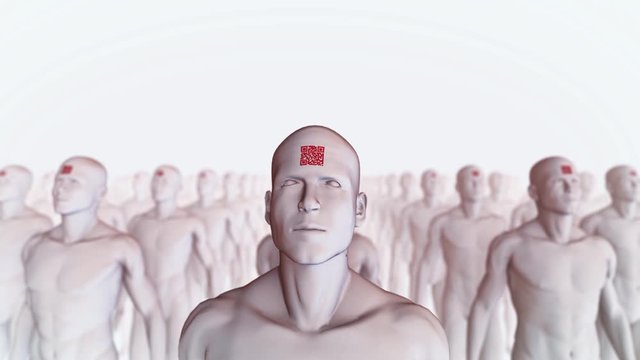
In this technocratic reading, the Jantsch hierarchy becomes the engine for a secular, materialistic Omega Point. The goal-oriented level (SDGs – Sustainable Development Goals) is the attractor, the destination. The integration of global systems through digital infrastructure is the increase in complexity. The final convergence is not spiritual unity in God, but a fully integrated, autonomously managed planetary system – a techno-utopia in which humanity is united under a single, optimized governance model.
The navigator on this journey is not Godly consciousness, but the system itself – the complex of AI, data networks, and the elite human technocracy that runs it. Their influence is absolute because only they can interpret the data, adjust the algorithms, and steer society’s vast, automated machinery toward its predetermined destination.
A Secular Great Chain of Being
This entire structure mirrors the medieval worldview of St. Thomas Aquinas and the Great Chain of Being:
Aquinas’s hierarchy
- Purpose-oriented: God, the ultimate telos
- Normative: Eternal law and natural law
- Pragmatic: Human law
- Empirical: The created order
The technocratic hierarchy
- Purpose-oriented: The SDGs
- Normative: Swidler’s global ethics and computational rules
- Pragmatic: Automated adaptive management
- Empirical: The managed planetary dataset
Both are top-down control systems. The crucial difference lies in accountability. According to Thomas Aquinas, God’s law was considered just and benevolent. In the technocratic model, the ultimate purpose is determined by fallible, unelected institutions, and “natural law” is a constructed ethic enforced by algorithms whose logic can be opaque.
It is a hierarchy without guaranteed benevolence – only efficiency.
Navigators of Spaceship Earth
The abstract architecture described above is not merely theoretical. It has identifiable actors and institutional expressions that span several generations. Let us consider the positioning of members of the Rothschild banking dynasty – a family historically synonymous with control of the monetary system – within the emerging governance framework.
From 1988, Evelyn de Rothschild participated in an interfaith dialogue (with the Duke of Edinburgh and Crown Prince Hassan of Jordan) that brought together Christian, Muslim, and Jewish leaders, theologians, and business figures. The result was the Interfaith Declaration: A Code of Ethics for International Business (1993). This document summarized the principles of the three Abrahamic traditions in four core values for international business: justice, mutual respect, responsibility, and honesty. The declaration explicitly provides a moral foundation for international business activities and principles of ethical conduct for resolving business dilemmas. It establishes normative standards for corporate behaviour, stakeholder relations, and resource management, thus creating an ethical framework that companies should adopt as their business principles.
Edmund de Rothschild laid the philosophical and practical foundation. At the First World Congress on Wilderness (1977), he gave a speech on the use of nature through massive technological developments. He concluded with a quote from Teilhard de Chardin: “One day, after we have mastered the winds, the waves, the tides, and gravity, we shall harness for God the energies of love, and then man will have discovered fire for the second time in the history of the world.” He asked: “Can we control the elements, utilize nature itself, and still retain our humanity? I personally am an optimist.” In doing so, he positioned the ultimate purpose – the convergence toward maximum complexity and unified planetary management – as the guiding principle for the wilderness movement from its inception.

Edmund was appointed to the World Wilderness Committee and was present (along with David Rockefeller) at the Fourth World Wilderness Congress when Michael Sweatman proposed the World Conservation Bank – a mechanism for monetizing natural resources through debt-for-nature swaps and conservation finance. This proposal led to the creation of the Global Environment Facility (GEF), established by the World Bank in 1991 as a financing mechanism for global environmental conventions. Edmund de Rothschild subsequently created the first pilot project for blended finance in agroforestry, combining public and private capital to finance natural resource projects. He thus pioneered a model that later became the standard for monetizing ecosystem services (such as carbon offsets).
Ariane de Rothschild (of the current generation) is implementing this through participation in the Global Landscapes Forum, where GEF blended finance structures are used to monetize ecosystem services – by turning forests, watersheds, and biodiversity into tradable assets and revenue streams. Natural capital accounting frameworks assess the functions of nature (carbon sequestration, water filtration, pollination) and create markets for these “services.”
David de Rothschild spent the 2000s establishing himself as an environmental expert, culminating in the 2010 Plastiki expedition: crossing the Pacific Ocean on a catamaran built from 12,500 recycled plastic bottles. This was not just an adventure, but also a way to build his credentials. The voyage positioned him as someone personally committed to the health of our planet, a visible advocate for the circular economy, literally floating on waste transformed into a vessel. This gave him the moral authority he needed for his subsequent role as the “corporate world’s environmental ambassador,” shaping green policies and sustainable business practices. In 2019, CNN profiled him under the headline “Has ‘Spaceship Earth’ Found Its Navigator?” He explicitly uses Buckminster Fuller’s “Spaceship Earth” metaphor, positions himself as someone working to find a “compromise” between resource extraction and sustainability, and states that his goal is to figure out how the economy can “actually include all people and truly reintegrate with nature.”
Lynn Forester de Rothschild has institutionalized this vision. In 2020, she co-founded the Council for Inclusive Capitalism with the Vatican, bringing together large corporations (Bank of America, Mastercard, BP, Johnson & Johnson, etc), asset managers (BlackRock, State Street), and the Vatican itself to implement what she calls a “moral economy.”
This is the architecture that has been in play for four decades and across several generations:
- Edmund establishes a teleological vision and financial infrastructure (1977–1990s): Invokes Teilhard’s Omega Point in the founding of the World Wilderness Congress, is a member of the World Wilderness Committee, witnesses the proposal to create a World Conservation Bank, which later becomes the GEF, and pioneers blended finance for nature through the Moringa Fund.
- Evelyn establishes business ethics (1993): Creates an interfaith normative framework that synthesizes shared values from the Abrahamic traditions into principles for international business conduct.
- Steven Rockefeller establishes planetary ethics (2000): Drafts the Earth Charter, which contains normative principles for ecological integrity and planetary management and is endorsed by UNESCO.
- Ariane operationalizes natural capital markets (2010s to present): Monetizes ecosystem services through GEF blended finance structures, turning nature into financial assets.

- David establishes planetary ethics (2000s to 2010s): Positions circular economy, resource management, and sustainable business practices as moral imperatives through plastics and partnerships between companies and governments.
- Lynn operationalizes the moral economy (2020): Through inclusive capitalism, where corporate participation is tied to compliance with ESG standards – the synthesized ethical framework.
- The Council provides institutional mechanisms: Finance (asset managers controlling trillions), corporate actors (who need access to capital), and moral authority (the Vatican) are united to make compliance with ESG standards the operating system of capitalism itself.
The pattern reveals a multi-generational strategy at work at all levels of the hierarchy:
- Purposeful level: Teilhard’s Omega Point as the guiding doctrine (Edmund, 1977)
- Normative level: Business ethics (Evelyn), planetary ethics (David), all justified by the Omega convergence vision
- Pragmatic level: World Conservation Bank → GEF, mixed financing structures, natural capital markets, monetization of ecosystem services (Edmund, Ariane)
- Financial level: Capital flows are controlled by ESG compliance (Lynn), with programmable enforcement through CBDCs
Members of the same banking dynasties appear to operate on both the normative level (creating ethical frameworks and teleological visions) and the monetary level (controlling capital flows and building financial infrastructure). They don’t just enforce ethics through finance – they create the ethics, invoke the teleology, build the mechanisms, and control the capital. Their influence spans the entire hierarchy of control across generations, defining what is ethical, building the infrastructure to value and monetize nature, and controlling who receives capital based on adherence to these definitions.
“Inclusive capitalism” is precise terminology: You are included in the capital markets IF you comply with global ethics, as measured by ESG metrics (audit track). If you fail to comply, you are excluded from capital (financial track). This is not stakeholder capitalism as an alternative model – it is the existing system retrofitted with the six tracks [mentioned in the first part of the article], with monetary controllers explicitly positioning themselves as implementers of a “moral” framework derived from the purposive level.
The moral economy is a capitalism in which the financial actor only acts for those who meet the normative standards. It is an explicit cybernetic control system, positioned as an ethical necessity and implemented by those who have direct access to monetary policy control mechanisms.
Members of banking dynasties are literally positioning themselves as navigators of “Spaceship Earth”, implementing the circular economy for materials and natural capital markets for ecosystems through moral authority and financial architecture. Bogdanov’s vision of the integral man – scientifically organized humanity as a unified, controlled organism – finds its contemporary expression in this intergenerational project to financialize both material flows and natural systems under a synthesized global ethic, all converging on towards the ultimate purpose decided by the elite.
There is one more detail worth noting. In 1942, British Marxist scientists gathered to produce the report “Science and Ethics,” in which they argued that ethics should be derived from science, that the direction of evolution brings objective good, and that a universal moral framework based on scientific rationality should guide humanity.
Six years later, in 1948, Miriam Rothschild, together with Julian Huxley, founded the IUCN – thus transforming the planetary ethics that had emerged from science into an institutional authority with global reach.
The timeline is now being extended:
- 1942: Miriam contributes to the intellectual foundation (science and ethics)
- 1948: Miriam is a co-founder of the IUCN (Institute for Planetary Ethics)
- 1977: Edmund invokes Omega Point teleology
- 1977–1990s: Edmund builds a financial infrastructure for nature conservation
- 1988–93: Evelyn, along with others, develops a framework for business ethics
- 2000: The Earth Charter formalizes planetary ethics (Rockefeller)
- 2010s: Ariane operationalizes natural capital markets
- 2010: David positions himself as “Navigator of Spaceship Earth”
- 2020: Lynn implements this through inclusive capitalism
Not four, but eight decades.
Conclusion: From the Red Star to Spaceship Earth
The path from Bogdanov’s “Integral Man” through tectology, general systems theory, Jantsch’s hierarchy, Svidler’s normative architecture, to today’s SDG-driven automated management does not appear accidental at all. It is a coherent, centuries-long intellectual and institutional project whose roots lie in revolutionary politics.
Alexander Bogdanov co-founded the Bolshevik Party with Vladimir Lenin in 1903. They eventually parted ways due to disagreements over empiricism, but Bogdanov also rejected Marx’s commitment to violent revolution, preferring a cultural and scientific change. Nevertheless, both shared the goal of a scientifically managed society. Bogdanov systematized Marx’s writings, while Lenin developed the practical apparatus of control. Lenin’s vision of “accounting and control” as the basis of the socialist state has evolved into today’s dataism – the ideology that positions data collection, surveillance, and algorithmic audits as solutions to governance challenges.
What Yuval Noah Harari has popularized is not a novel philosophy originating in Silicon Valley. It is Lenin’s accounting and control, realized through a digital infrastructure that Lenin could only have imagined.
But accounting alone does not ensure compliance. The crucial point is that those who control the currency also control the system’s regulatory body – the financial branch that translates violations into tangible consequences. In a cybernetic system, whoever operates the actuator determines the system’s behaviour, regardless of who designs the infrastructure or measures the flows.
Currency controllers are not just one group among many in the cockpit – they are the principal navigators, whose hands control the mechanism that steers the system. With CBDCs, this control becomes absolute: Programmable money transforms the financial actuator from an incentive to a direct transaction authorization, enabling the immediate enforcement of all compliance standards defined at the expedient or normative level and specifically applied at the transaction level. And through “In Tandem,” their control will gradually extend even to fiscal policy.
The pattern of development – its laser precision, the absence of visible course corrections, the seamless integration of frameworks – suggests more than just a new development. Rather, it suggests that the design has been refined across generations, institutions, and continents. What appear as separate initiatives – One Health, the circular economy, digital ID, ESG investing, computational ethics – are likely expressions of a unified vision.
In 1908, Bogdanov published The Red Star, a utopian novel describing a scientifically managed Martian society. On Mars, personal desires have been overcome, and society functions as a single organism. Resources are optimally distributed through perfect information systems, while the collective operates according to rational principles with machine-like efficiency. Conflicts have been eliminated through scientific organization. In this context, this seems less fiction than a blueprint.
More than a century later, we are building Bogdanov’s “Red Star” not on Mars, but on Earth. The spaceship is being retrofitted with the control systems he envisioned. The difference is that Bogdanov’s Martians chose their system themselves. We are having it built around us, not as a political decision, but as a “technological necessity.”
This offers a possible solution to planetary chaos – a way to finally create order through scientific socialism. But this order comes at a price that needs to be openly acknowledged: the end of pluralism, the loss of agency at the grassroots level, and the consolidation of power in the hands of a technocratic elite that controls while the rest are controlled.
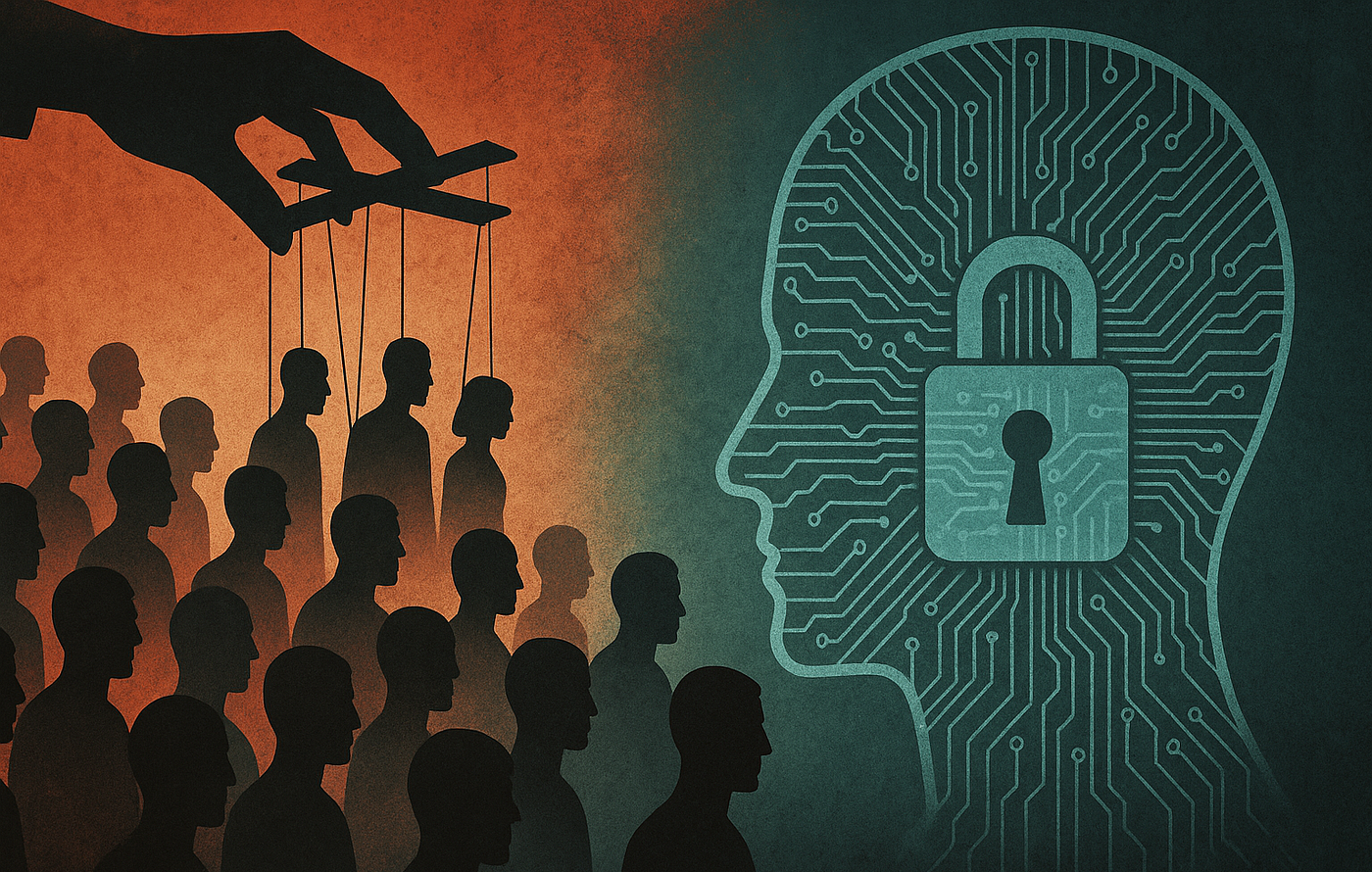
Activating the UN Emergency Platform is the final command in the startup sequence of a pre-installed global operating system. It is the ‘start’ button that transforms the centuries-long project of cybernetic control, under the guise of an emergency, from a theoretical framework and dormant infrastructure into an active, governing entity.
When this platform is triggered by a complex global shock – a threshold defined not by public debate but by the black-box calculations of AI models processing the data stream of the ‘Digital Earth’ – it unleashes the full, integrated power of the control rails.
The crucial question is not whether we can build this system – it’s already built. The infrastructure is operational, the tracks are laid, and the emergency platform is just waiting for its algorithmic trigger. The challenge for humanity, then, is to collectively recognize what was built before the activation sequence was completed – and whether we retain the capacity to reject a “planetary balance” achieved by optimizing humans as a controlled variable in Zev Naveh’s Total Human Ecosystem.
Bogdanov’s Integral Man was never about collective decision-making, but about collective management – and the navigators are already in position, with their hands on the controls most passengers don’t even know exist.
yogaesoteric
November 28, 2025
Also available in:
 Română