
Researchers Discover Intensive Meditation Retreat Rewires the Brain and Blood in Just 7 Days
A one-week consciousness-body retreat led to consistent transformations in the brain and at the molecular level that were associated with greater resilience, reduced pain, and improved recovery from stress.
Researchers at the University of California, San Diego report that a short, intensive retreat combining several consciousness-body practices, including meditation and healing exercises, led to fast and widespread transformations in brain activity and blood biology.
The team found that the program activated natural physiological systems linked to brain plasticity, metabolism, immune function, and pain regulation. Published in Communications Biology, the study offers new evidence that psychological practices can produce measurable effects on physical health.
A long history, little biology
Meditation and other consciousness-body approaches have been used across cultures for thousands of years to support health and well-being, yet the biological mechanisms behind these practices have remained largely unclear.
This research, part of a multi-million-dollar initiative supported by the InnerScience Research Fund, is the first to systematically measure the biological impact of combining multiple consciousness-body techniques over a brief, concentrated period.

“We’ve known for years that practices like meditation can influence health, but what’s striking is that combining multiple consciousness-body practices into a single retreat produced transformations across so many biological systems that we could measure directly in the brain and blood,” said senior study author Hemal H. Patel, Ph.D., professor of anaesthesiology at UC San Diego School of Medicine and research career scientist at the Veterans Affairs San Diego Healthcare System. “This isn’t about just stress relief or relaxation; this is about fundamentally transforming how the brain engages with reality and quantifying these transformations biologically.”
Inside an intensive retreat experiment
The study involved 20 healthy adults who took part in a seven-day residential program led by neuroscience educator and author Joe Dispenza. The retreat included daily lectures, about 33 hours of guided meditation, and group healing sessions. These activities followed an “open-label placebo” model, meaning participants were aware that the healing practices were presented as placebos, defined as procedures or treatments without an active medical ingredient that can still produce real effects through expectation, social connection, and shared experience.
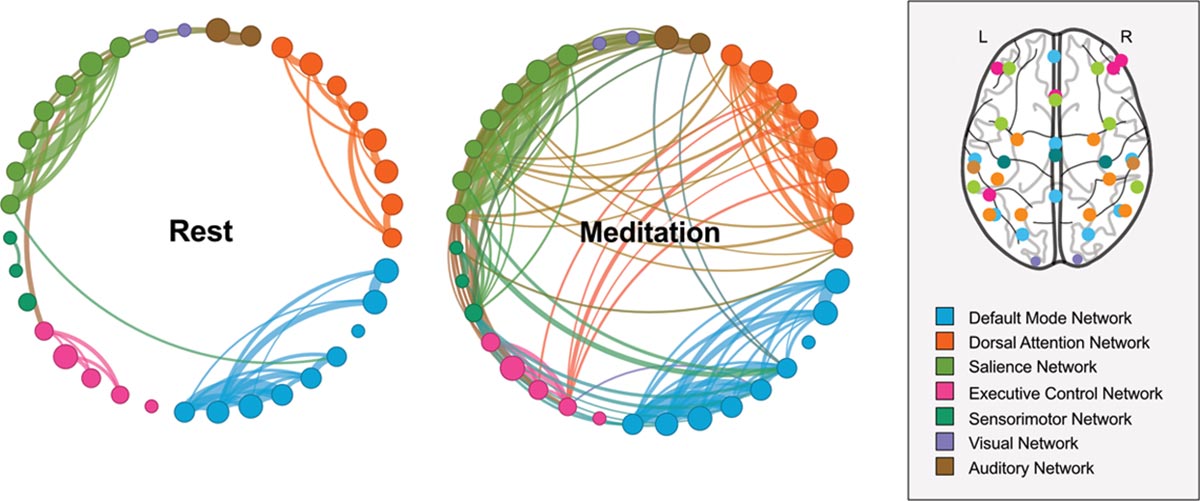
Before and after the retreat, participants had their brains scanned using functional magnetic resonance imaging (fMRI), an approach that measures brain activity in real time. The researchers also used blood testing to measure modifications in metabolic activity, immune activation, and other biological functions.
The researchers observed several major transformations after the retreat:
- Brain network transformations: Meditation practiced during the retreat lowered activity in brain regions linked to constant internal thought, resulting in more streamlined and efficient brain function overall.
- Enhanced neuroplasticity: When researchers exposed laboratory-grown neurons to blood plasma collected after the retreat, the brain cells developed longer extensions and formed additional connections, indicating increased capacity for neural growth.
- Metabolic shifts: Cells treated with post-retract plasma showed higher levels of glycolytic (sugar-burning) metabolism, reflecting a metabolic state that is more flexible and better able to adapt to changing demands.
- Natural pain relief: After the retreat, participants had higher blood levels of endogenous opioids, the body’s own pain-relieving compounds, suggesting activation of natural pain control systems.
- Immune activation: Meditation led to simultaneous increases in both inflammatory and anti-inflammatory immune signals, pointing to a balanced and adaptive immune response rather than simple immune suppression or stimulation.
- Gene and molecular signalling transformations: Analysis of blood samples revealed shifts in small RNA and gene activity following the retreat, especially in biological pathways connected to brain function.
Participants also completed questionnaires (MEQ) to assess whether they had a “mystical” experience during meditation – characterized by profound feelings of unity, transcendence, and beneficial altered states of consciousness. Average MEQ scores increased significantly after the retreat, rising from 2.37 before the retreat to 3.02 afterwards. Higher scores on these surveys were also correlated with greater biological modifications after the retreat, including greater integration of brain activity across different regions. In other words, the more connected the brain is, the greater the likelihood of a mystical experience.
“Seeing both central nervous system modifications in brain scans and systemic transformations in blood chemistry underscores that these consciousness-body practices are acting on a whole-body scale,” added Patel.
Toward clinical and therapeutic use
The study results provide a biological framework for understanding how non-drug consciousness-body interventions can support health and well-being. By enhancing neuroplasticity and activating the immune system, these practices could help promote psychic health, emotional regulation, and stress resilience. Additionally, the activation of endogenous opioid pathways suggests that this combination of consciousness-body practices may also be useful for chronic pain management.
While the retreat’s effects were measured in healthy adults, the researchers emphasize that controlled trials in patient populations are still needed to determine specific clinical benefits and applications. They are particularly interested in whether consciousness-body retreats can benefit people with chronic pain, mood disorders or immune-related conditions.
Looking ahead, the research team plans to investigate how each component of the retreat – meditation, reconceptualization, and open-label placebo healing – works alone and in combination. Additionally, future studies will investigate the duration of these biological transformations and whether repeated interventions can enhance or sustain their effects.
“This study shows that our consciousness and body are deeply interconnected – what we believe, how we focus our attention, and the practices we participate in can leave measurable fingerprints on our biology,” said first author Alex Jinich-Diamant, a doctoral student in the Departments of Cognitive Science and Anaesthesiology at UC San Diego. “It’s an exciting step toward understanding how conscious experience and physical health are intertwined, and how we might harness that connection to promote well-being in new ways.”
Reference: “Neural and molecular changes during a mind-body reconceptualization, meditation, and open label placebo healing intervention” by Alex Jinich-Diamant, Sierra Simpson, Juan P. Zuniga-Hertz, Ramamurthy Chitteti, Jan M. Schilling, Jacqueline A. Bonds, Laura Case, Andrei V. Chernov, Joe Dispenza, Jacqueline Maree, Natalia Esther Amkie Stahl, Michael Licamele, Narin Fazlalipour, Swetha Devulapalli, Leonardo Christov-Moore, Nicco Reggente, Michelle A. Poirier, Tobias Moeller-Bertram and Hemal H. Patel, November 2025, Communications Biology. DOI: 10.1038/s42003-025-09088-3
yogaesoteric
February 5, 2026
Also available in:
 Română