
The official British digital identity panorama
In a conversation with former British Prime Minister Tony Blair in December 2025, British Home Secretary Shabana Mahmood said:
“My ultimate vision for this part of the criminal justice system was to use AI and technology to achieve what Jeremy Bentham tried to achieve with his panopticon: that the eyes of the state can be on you at any time. […] We’ve already started rolling out live facial recognition technology, but I think there’s a lot of room here to harness the power of AI and technology to, frankly, stay one step ahead of criminals – that’s what we’re aiming to do.”
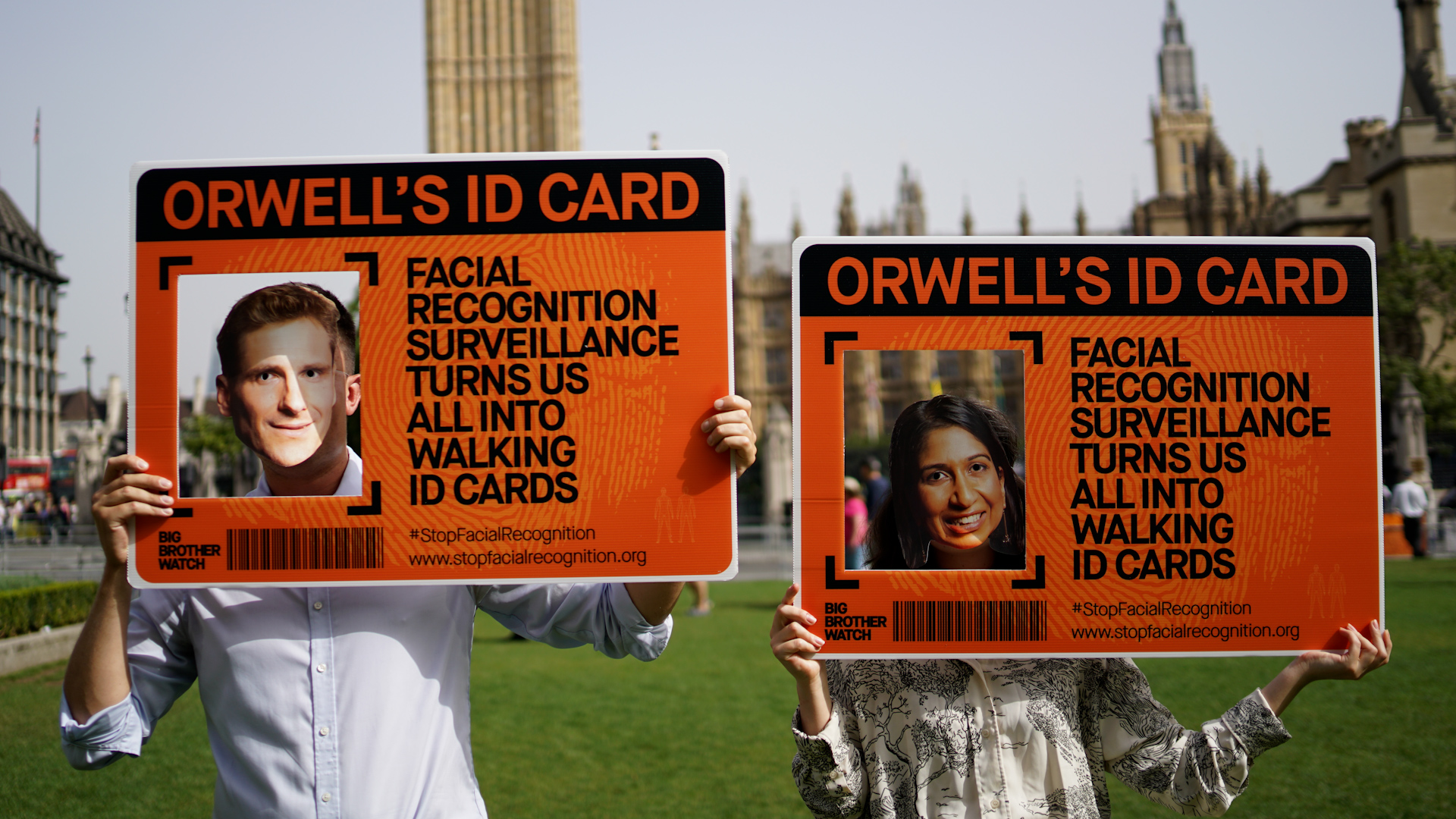
The British Home Secretary bears ministerial responsibility for the Home Office’s portfolio. The Home Office’s stated intention is “to protect citizens and keep the country safe.” In reality, however, as Mahmood herself reveals, the Home Office is currently part of a public-private state that attacks us in order to protect itself.
Although the official British digital identity panopticon is supposedly only intended to target criminals, in order to identify them among millions of British citizens, the state aims to monitor everyone at all times.
To be clear: The official position of the British government is to use AI as the “eyes of the state” and to keep its gaze firmly fixed on “you at all times.” This is the openly stated purpose of the official British digital identity panorama.
Jeremy Bentham’s proposed Panopticon was a circular prison with a central observation post or watchtower from which potentially every cell could be seen. Since the theoretical prisoner never knew whether he was being observed, he was compelled to behave obediently at all times. The intended repression of the Panopticon relied largely on self-regulation.
The official British digital identity panopticon goes far beyond anything Bentham could have imagined. As its prisoners, we will have no reason to harbour even the slightest doubt. We can be certain that we are under constant surveillance. Unlike the 18th-century model, the modern, AI-powered digital panopticon will not rely on self-regulation – though this socially constructed state of affairs will persist.
Mahmood claims that the goal of the state’s surveillance system is to identify criminal behaviour. Of course, what the state defines as criminal behaviour can modify at any time.
For example, the newly expanded state definition of extremism stipulates that intolerance – i.e., the rejection of the idea – towards the British “system of liberal parliamentary democracy and democratic rights” is considered extremist.
Despite a lack of evidence to support this view, the British state continues to assert:
“Extremism can lead to the radicalization of people […] and can lead to terrorist acts. […] The government committed itself to ‘combating extremist ideologies that lead to violence, but also those that lead to wider problems in society’.”
Peaceful, law-abiding citizens who question whether parliament is truly the “supreme legislative authority with the power to make or repeal any law” are among the many who represent “broader problems in society.” If the state has – as it claims – the power to make or repeal any law, it reserves the right to define any behaviour as criminal at any time.
Those of us who question the state are by no means alone in our concerns. Even the most loyal subjects are coming under scrutiny.
When Mahmood announced that the government was aiming to “harness the power of AI and technology to stay one step ahead of criminals,” she was alluding to law enforcement initiatives like Project Nectar. Police have been testing the use of commercial analytics software, Palantir Foundry, to supposedly predict when we are “about to commit a crime.” This alleged predictive capability is based on an AI assessment of a risk signal generated from our digital identity.
With laws like the Terrorism Prevention and Investigation Measures Act and the Counter-Terrorism and Security Act already in place, the government is staring us in the face. If we say the wrong phrase online, express the wrong opinion, or ask the wrong question, we could – using our digital identities – be subjected to AI-driven reprisals at any time, including detention without trial.
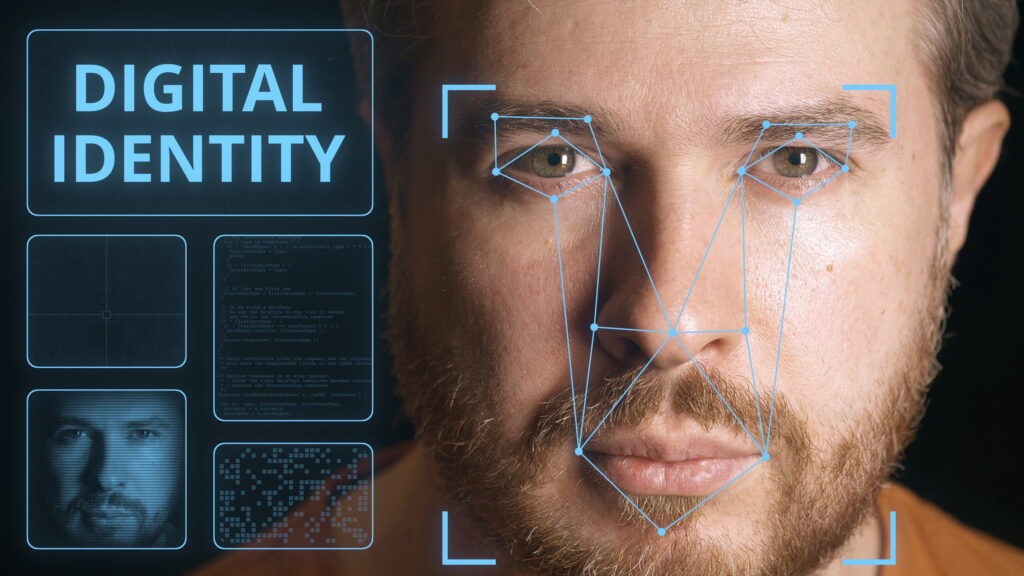
Currently, the biometric data – facial recognition images – of 45 million British passport holders and, with overlaps, 55 million drivers are intended to form the biometric authentication tokens that uniquely identify our personal digital identities within the planned digital identity data lakes.
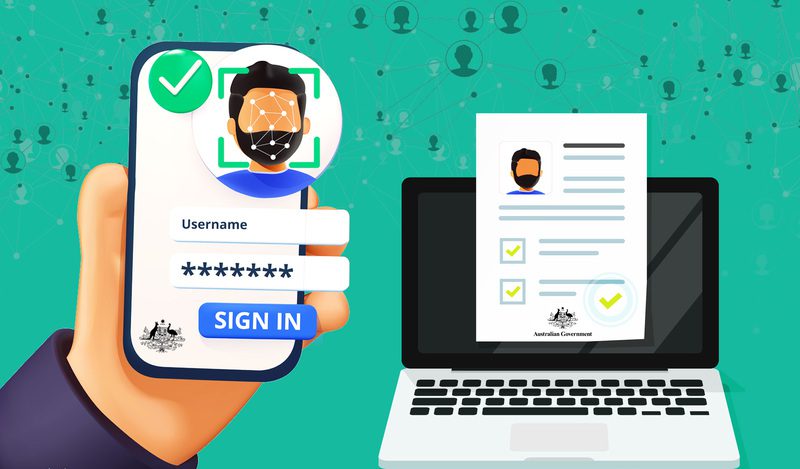
AI can then use our identity token to isolate our personal behavioural patterns, detect anomalies, and predict anything the state defines as a risk associated with our behaviour. The real-time speed of AI pattern recognition enables constant monitoring of our activities. The state can then use AI to execute pre-defined conditional smart contracts that instantly restrict or deny our access to goods and services – or worse.
The state will possess the ultimate tool for the social control of our personal behaviour and thus of the entire population. An agentic state – a state governed by autonomous, automated AI decisions – could emerge, and a fully developed technocracy could be established.
According to the British state:
An identity is a combination of “attributes” (characteristics) that belong to a person. A single attribute is usually not enough to distinguish one person from another, but a combination of attributes can do so.
The government established the UK Digital Identity and Attributes Trust Framework (DIATF) to ensure that those of us “who want or need a digital identity” receive one. This is a deceptive Hobsonian choice.
The only way to access government services will be through digital identity. Whether we like it or not, we will need a government-approved digital identity to obtain a marriage certificate, file a tax return (where required by law), apply for a driver’s license, rent or buy property, register for healthcare, and so on. The UK government describes this obvious necessity as “optional.”
The DIATF is overseen by Government Digital Services (GDS), which is part of the Department for Science, Innovation and Technology (DSIT). Josh Simons MP is Parliamentary Under-Secretary of State at DSIT. He is also a leading parliamentary spokesperson and lobbyist for the Labour Growth Group PLC. As such, Simons’ aim is to remove barriers to economic growth by pushing for bold and practical reforms on behalf of multinational corporations.
Trilateralist Keir Starmer, a close confidant of fellow trilateralist Larry Fink – CEO of BlackRock and co-chairman of the WEF – appointed Simons as “Minister for Digital Reforms to lead the government’s digital ID plans”.
On January 15, Simons told Parliament that the purpose of digital identity policy was to “transform the state” by controlling our “access to services in both the public and private sectors.” Simons assured Parliament and the British people:
“Digital IDs will be issued free of charge to everyone who wants one. If someone doesn’t want one, they don’t have to have one. […] Access to public services will not depend on having a digital ID. The Prime Minister has made this clear, and I can reaffirm that commitment.”
As is so often the case, there is a huge gap between ministerial statements, their verbal promises, and the reality of the public-private state’s actions. First of all, the introduction of the official British digital identity panorama is by no means “free.”
The cost of digitally transforming the UK’s health and social care systems alone is expected to exceed £21 billion for taxpayers. This represents a direct transfer of wealth from the people – the public sector – to global corporations – the private sector. Multinational companies like Palantir and Oracle are profiting from digital infrastructure contracts for the “transformation of the state.” Using the government to generate corporate profits from public funds is the primary objective of Labour Growth Group PLC.
If, as Simons claims, we don’t need our assigned digital identities to access public services, then alternative, non-digital access routes would have to be provided. Currently, none are planned or even proposed, so this part of Simons’ parliamentary statement is also inaccurate. It’s difficult to understand why those of us who opt out of digital identities should pay taxes for government services we cannot use.
For example, British company directors are required to verify their identity online via the UK government’s One Login portal in order to maintain their director registration. There are two ways to access this government service.
You can either register your biometric digital identity token directly with the government or have it “verified” through a third party – an Authorized Business Service Provider (ACSP) or via the postal service. But regardless of which method you choose, your digital identity authentication token will be created, and you will be integrated into the official UK digital identity system. Your only realistic option is to choose not to comply.
As part of its planned panopticon, the British government is rapidly moving towards forcing us to use our assigned digital identities to access the internet. Regarding restrictions on our ability to share information online, government mouthpieces have been dispatched to convince us that banning those under 16 from using virtual communication networks has something to do with child protection. Obviously, this is yet another flimsy lie.
To verify our age on virtual communication platforms, each of us will need to use a digital identity. The British government has already passed legislation to extend this likely requirement beyond virtual communication and soon control our access to the entire internet.
The Data Use and Access Act 2025 (DUAA) establishes a national framework for the digital identity verification of people for the use of public and private online services. It includes some quite reasonable online safeguards for children. However, this ensures that anyone who opposes the dictatorship lurking within can be portrayed by state propagandists as a risk to children.
Despite the fact that the United Kingdom supposedly left the EU in 2016, the DUAA has incorporated the EU legal concept of an “Information Society Service” (ISS) into its hammer-splitting legislation. An ISS is such a vague legal construct that it can easily be interpreted through secondary legislation – which is precisely what the DUAA envisions – to suit the state’s wishes.
In grappling with this ambiguity, the UK Information Commissioner’s Office (ICO) has interpreted what an ISS means in the context of the DUAA. It notes that an ISS is “not limited to services specifically aimed at children” and further defines an ISS as:
“[A] service that is usually provided for remuneration, remotely, electronically and on personal request by a service recipient.”
The ICO adds:
Essentially, this means that most online services are ISS, including apps, programs and many websites, including search engines, virtual communication networks, online messaging or internet-based voice telephony services, online marketplaces, content streaming services (e.g., video, music or gaming services), online games, news or educational websites, and any websites that offer other goods or services to users via the internet.
It is perfectly obvious that the services we pay an Internet service provider (ISP) for – the means by which we access the Internet – constitute an “information society service” for the purposes of the DUAA. We will inevitably need “highly effective age verification” – digital identity – to use the Internet in the United Kingdom.
The Digital Identity and Attributes Trust Framework (DIATF) establishes the “technical and operational standards for the use of [digital identity] across the UK economy”. Its aim is to achieve “international and national interoperability” of all digital identity products and services – in both the public and private sectors.
The government claims this is essential because the “digital transformation of the global economy” is accelerating. Therefore, “a digital identity to prove your right to work in the UK” could also be used to “open a bank account.” This requires public-private partnerships and the sharing of digital identity data “across the entire UK economy.”
Interoperability means that our enforced digital identities are “built and operated in a standardized way”.
Software like Palantir Gotham – including Palantir Foundry – can take data from any source, such as your government-issued driver’s license, privately issued bank card, or police file, to “visualize and analyse information from multiple systems in real time […] across the entire operational environment to achieve successful mission outcomes.”
The British government maintains a strategic partnership with Palantir. Through its current procurement program, G-Cloud 14, it provides Palantir’s Gotham and Foundry software to government agencies and authorities – apparently including the police. Gotham and Foundry are among the British government’s “AI-powered analytics tools.”
Once we are forced to adopt our digital identities, they will be made interoperable across the entire UK economy. This means the state will be able to “generate actionable insights based on the entire available data ecosystem.”
To build the official British digital identity panopticon, the government and its partners do not need any new forms of digital identity. While they attempt to manipulate us into depositing our biometric authentication token into GOV.UK‘s digital identity wallet, for the public-private state this is simply the most convenient way to lock us in its panopticon.
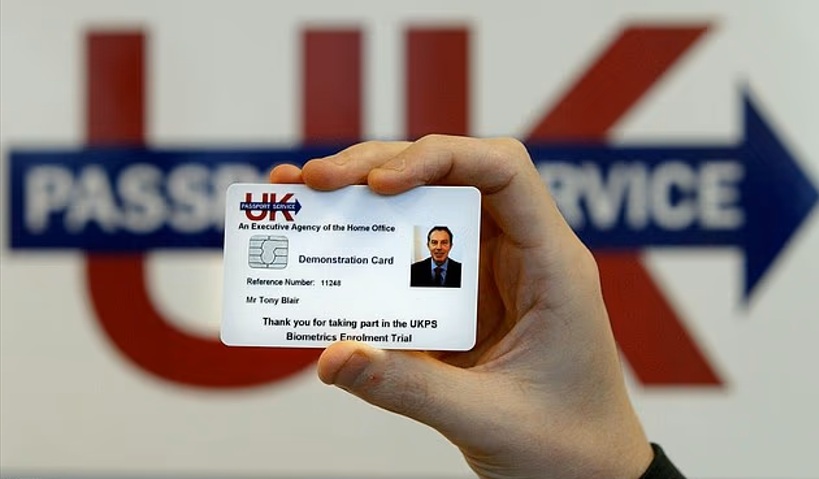
If we refuse to be forced into the GOV.UK prison wallet via One Login, the state simply needs to ensure that the digital identity systems we already use almost daily are interoperable to achieve the same goals. Once interoperability between so-called “vendor-agnostic” digital products and services is established, the government and its propagandists will only need to convince us to continue using them.
As the network of live facial recognition technology spreads across the UK, combined with our assigned interoperable digital identities, everything we buy, every service we use, every place we visit, every person we meet, every aspect of our lives – our health, insurance, and financial data, etc. – will be monitored, tracked, and recorded in real time. AI can then be used to impose real-time restrictions on our permitted behaviour.
This will be our shared reality if we continue to use the digital identity system that has already been established in the United Kingdom by successive governments and their partners.
The British state currently uses deception, coercion, and violence to govern us. Once it has established its agentic technocratic state, it will have complete control over the behaviour of its citizens and will no longer need to rely so heavily on deception and intimidation.
The official British digital identity panopticon is being established and will be controlled by a British public-private state dictatorship. The state has already passed laws to control our access to information online, censor our freedom of opinion and expression, eliminate our supposedly democratic right to protest, and has granted itself and its agents immunity from prosecution for any crimes.
Our right to overturn laws through a jury trial – that is, to invalidate them – has been a firmly established, albeit rarely used, component of our constitutional order for centuries. The British state is not only severely restricting this right to a jury trial, but its so-called judges now claim to have the unconstitutional power to punish jurors if they overturn laws.
The corresponding ruling by the Court of Appeal is flawed at best and appears to be entirely unlawful. Unfortunately, those of us who still believe that the British functional oligarchy – the public-private state – and its establishment cronies have any interest in upholding our constitutional rule of law are hopelessly deluded.
The only real choice left to us is clear.
Regardless of whether we submit to the government’s new digital infrastructure – One Login and the GOV.UK wallet – those of us who continue to use currently available digital products and services are highly likely to be locked inside the UK state’s official digital identity panopticon. Our only short-term option is to refuse to participate in virtually the entire digital system.
We need to reject these existing systems, throw away our smartphones, refuse to use government online portals, reject private services that require our digital identity, and actively seek out and adopt possible alternative networks.
We have no other choice but to exhaust all peaceful and lawful means at our disposal to defend ourselves against the British state.
Author: Iain Davis
yogaesoteric
February 14, 2026