
Too much war talk and too little thought of peace
“War readiness” – the new normalization?
Europe is experiencing a linguistic paradigm shift. Just a few years ago, terms like “war-readiness” would have been almost unthinkable in political speeches. Today, they appear almost casually in parliamentary debates, talk shows, and editorials. This shift in political language marks more than just a reaction to geopolitical crises. It is changing societal thinking itself.
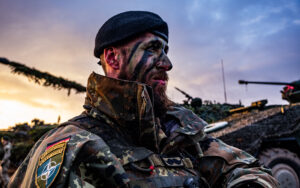
Alongside this new rhetoric of war, a peace movement is growing worldwide, more diverse than it has been in a long time. It consists of demonstrations, articles by pacifist authors, intellectual debates, spiritual initiatives, and political interventions. It is neither homogeneous nor uniformly organized. But it is united by a common concern: that societies could once again become accustomed to accepting war as a normal part of politics and their lives.
The central question, therefore, is not only how wars can be ended. The more crucial question is how the status quo got to the point where war seems like a conceivable future.
War as a political project – not as a natural law
A key starting point for many peace movements is the critique of a widespread assumption: the notion that war is a natural condition of human societies. This very question is currently being openly debated in politics, the church, and the media. Bishop Heiner Wilmer declared in an interview that war is “a normal state of affairs.” This statement marks a remarkable shift: even religious voices, historically strongly associated with peace ethics, now speak of war as a permanent reality that societies need to deal with.
This shift in perspective is also evident in the media. In her talk show, Caren Miosga asked former Foreign Minister Joschka Fischer how one could overcome “pacifism in our DNA” – a phrase that is emblematic of the current debate. Pacifism no longer appears here as a moral ideal, but as a historical obstacle that needs to be politically “overwritten.” Sahra Wagenknecht posted about this on X:
“What a damning admission: Caren Miosga frankly asks Joschka Fischer how the – in her view – bothersome pacifism in the German DNA can be ‘overwritten more quickly.’ After all, even the public broadcasters know: No military capability without a thirst for war. How fitting that the ARD has a renowned expert on this topic as their guest: the former Green Party foreign minister, who led Germany into war for the first time since 1945 by participating in the NATO attack on Yugoslavia, which violated international law.”
Well, Joschka Fischer can certainly imagine Germany having an atomic bomb. What exactly went on in the consciousness of the former Foreign Minister? How did he go from pacifist to bellicose?
Statements like those of Heiner Wilmer or Caren Miosga point to a significantly older philosophical tension. Thomas Hobbes already described the state of nature as a “war of all against all.” For Hobbes, peace was not a natural state, but a fragile result of political power and deterrence. According to Hobbes, security arises only from strength and the ability to threaten violence. The “war gene” seems to be in the British blood, as their bellicose past demonstrates.
A central tenet of modern peace movements is directed against this way of thinking. They reject the notion that war is the fundamental anthropological constant of humanity. Instead, they view war as the result of political decisions, societal narratives, and historical developments – and therefore as something that can be transformed.
Historical and anthropological research is increasingly questioning the assumption that war is a fundamental constant of humanity. For long periods of human history, people lived in small communities without organized large-scale wars. Mass warfare only became technically and organizationally possible with the emergence of state structures.
This perspective fundamentally transforms the debate. If war is not a law of nature, then it is a political decision. And political decisions can be questioned.
Philosophically, this idea is by no means new. In ancient Greece, Stoics like Seneca viewed peace as an expression of rational self-control. In Asian traditions, violence was often interpreted as a consequence of ignorance and greed. Lao Tzu wrote in the Dao De Jing: “Whoever uses violence will perish by violence.” These thoughts are more relevant today than ever.
Peace movements are reviving these traditions. They remind us that war is not inevitable, but is politically created – through narratives, interests, and power structures.
The return of rearmament – and the protest against it
As political language becomes more militaristic, societal opposition grows at the same time.
The return of military logic to political discourse is evident not only in abstract concepts but also in concrete statements by leading politicians. There is increasingly open discussion about military strength, deterrence, and even an expansion of the war. CDU foreign policy expert Roderich Kiesewetter declared in an interview that the war needs to be “carried out to Russia.” He was referring to the demand for stronger military measures that would not only conceive of the war defensively but would actively extend it into Russian territory.
Foreign Minister Annalena Baerbock also attracted international attention when she said in the Council of Europe: “We are waging a war against Russia.” The statement was later diplomatically downplayed, but illustrated how drastically political rhetoric has changed.
Similar sentiments are being expressed in other European countries. French President Emmanuel Macron declared that Europe needs to be prepared to “do whatever it takes” to prevent a Russian victory, even going so far as to not rule out the deployment of Western troops. British Prime Minister Keir Starmer regularly emphasizes that Europe should prepare for a long-term confrontation with Russia. Deep-rooted British Russophobia stretches far back into the past of the former empire. Former Estonian Prime Minister and current EU High Representative Kaja Kallas has consistently called for massive military support since the beginning of the war in Ukraine, warning that Russia should “under no circumstances win” the war – a war that Russia has already won, from the very start, even if this Estonian dreamer finds it hard to accept.
These statements mark a clear shift in political discourse. Military strength, deterrence, and rearmament are once again openly articulated as central elements of European security policy. Against this backdrop, new protest movements are forming that critically examine this development.
In Amsterdam, people recently demonstrated in Dam Square for peace with Russia and against the increasing militarization of Europe. Such protests are not isolated incidents. In many European cities, initiatives are emerging that aim to place greater emphasis on diplomacy and negotiations. In Berlin, tens of thousands of people gathered at the “Uprising for Peace” rally in early 2023, which was called for by, among others, Sahra Wagenknecht and Alice Schwarzer. The demonstration was directed against further military escalation of the war in Ukraine and demanded stronger diplomatic efforts.
Large peace marches also took place repeatedly in Rome, where trade unions, church groups, and civil society organizations demonstrated together against rearmament and in favour of negotiations. People also took to the streets in Paris, Prague, and Vienna to demand an end to military escalation and more diplomatic initiatives.
These protests build on a long European tradition of peace movements that already had a significant social impact during the Cold War. What is new, however, is that these initiatives are forming at a time when military rearmament has once again become a central political issue.
These demonstrations reflect a growing concern that Europe is gradually moving into a logic of permanent confrontation. A potentially dangerous spiral of escalation is developing: the more armament and military preparation become the norm, the more likely their use appears.
The publicist Gabriele Krone-Schmalz warned of this development early on. In a lecture, she said: “We need to be careful not to get caught in a spiral of escalation in which each side interprets its actions as a reaction to the other, thereby constantly escalating the situation.”
Her perspective exemplifies a growing debate: whether security truly arises from military strength – or from political understanding. In my view, clearly from the latter.
The language of war changes thinking
Peace movements are particularly critical of the changing political language. Terms like “military readiness” initially seem technical and clinical. But language shapes perception. What is named becomes conceivable. What becomes conceivable becomes politically possible.
On several occasions, politician Sahra Wagenknecht criticized statements by politicians who use military, bellicose language and make war seem possible – and, apparently, even desirable, according to some incorrigible, irresponsible reactionaries. Her more than justified criticism is directed less at the country’s defence capabilities than at a political logic that increasingly prioritizes military solutions.
Peace movements rightly argue that societies have historically always descended into war when military preparation became the norm. Armament not only creates security – it also creates expectations. This observation can be made even before the First World War. In the decades leading up to 1914, an intense arms race developed between the major powers in Europe. Military budgets increased steadily, alliance systems solidified, and war planning became an integral part of government policy. Historians refer to this as a “logic of mobilization”: the better prepared armies were, the more plausible their deployment seemed in a crisis. When the political situation escalated in the summer of 1914, governments resorted to ready-made mobilization plans – a process that further accelerated the escalation.
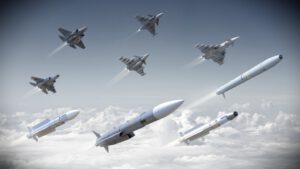
A similar dynamic can be observed even before the Second World War. The massive rearmament in Nazi Germany, as well as the increasing militarization of other states in the 1930s, fundamentally altered the political atmosphere. Military strength once again became the central benchmark of international politics.
In such an environment, war no longer appears as an exception, but as a possible and eventually even expected option. Peace movements therefore point to the historical experience that while rearmament is pursued with the aim of deterrence, it simultaneously creates a political and psychological reality in which military solutions become increasingly conceivable and ultimately more probable.
Peace policy as a geopolitical perspective
Historians and journalists like Daniele Ganser emphasize the importance of diplomatic solutions. In his book Illegal Wars, he writes: “Peace is not achieved through weapons, but through dialogue, diplomacy, and adherence to international law.”
His position, and that of EU High Representative Kaja Kallas, for example, demonstrates how polarized the debate on foreign policy has become. These controversies in particular highlight that peace policy has once again become a central societal issue.
The new peace movement is particularly evident in an unusual initiative in the USA. Buddhist monks from several Asian countries are traversing various states on foot. They hiked through snow and cold, met thousands of people, and preached a message that is as simple as it is true: peace begins within. Some of their events drew crowds of tens of thousands. The monks spoke about compassion, letting go of hatred, and the responsibility of each person for the social climate.
This movement represents a different dimension of peace work. It demonstrates that peace should be considered not only politically, but also culturally and psychologically. Societies that live in constant fear are more susceptible to war rhetoric. Societies that strengthen trust and cooperation are more resilient against escalation.
However, the power and property elites ensure that this trust and the necessary cooperation do not develop, and that fear is maintained. They attempt – unfortunately successfully – to divide society by constantly adding fuel to the fire with new divisive issues and crises such as allegedly man-made climate change, wars, plandemics, and the like, in order to achieve their mostly inhumane and perverse goals.
Conclusion
From antiquity to the present day, a philosophical thread runs through the discourse that understands peace as a cultural achievement. Aristotle wrote that the goal of politics is the good life. In his essay Perpetual Peace, Immanuel Kant outlined a vision of an international order that would render wars superfluous. Kant’s idea is highly relevant again today. He saw peace not as idealism, but as a rational project. States that are economically and politically intertwined have less incentive to wage war.
Politicians like Donald Trump work against this intertwining, thus consciously or unconsciously increasing the risk of escalation. His mission as a peace president – which I, too, initially believed – is increasingly losing credibility. He wanted to dismantle the Deep State, but is revealing himself more and more as its emissary. He is a president caught between war and peace, and will always choose the option that appears more suitable for his “deals” and interests, as well as those of his puppet masters.
This idea of Kant’s should shape our society and its national and international institutions, which were established for all people and not just a select few. However, it is increasingly under pressure. The greatest concern of modern peace movements is not the current war, but rather becoming accustomed to the possibility of future wars. History shows that societies gradually adapt to new realities. What was unthinkable yesterday will be taken for granted tomorrow.
The peace movement seeks to make this process visible. It asks uncomfortable questions. It demands debate. It reminds us that peace is not a given. Today’s peace movement is not a monolithic bloc. It consists of demonstrators, journalists, politicians, philosophers, activists, and spiritual communities. It is heterogeneous, sometimes contradictory, and is opposed by the belligerent camp. It is precisely this diversity that is the movement’s strength. It demonstrates that peace is not merely a political project. Peace is a social project.
Every generation faces decisions that shape its future. The current generation faces the question of whether it wants to accept a world in which military strength once again becomes the central political benchmark. The peace movement reminds us that alternatives exist. It calls not for naivety, but for debate; not for defencelessness, but for responsibility. Perhaps peace begins precisely there: with the refusal to accept war as inevitable.
Author: Uwe Froschauer
yogaesoteric
February 28, 2026