
Astrophysicist suggests mysterious interstellar object racing toward the Sun could be extraterrestrial spacecraft
A 12-mile-wide interstellar object dubbed 3I/ATLAS, the third confirmed visitor from beyond our solar system, is speeding toward the Sun at 150,000 mph, sparking renewed debate among scientists. Could this enigmatic traveller be artificial in origin, or is it simply another cosmic interloper?
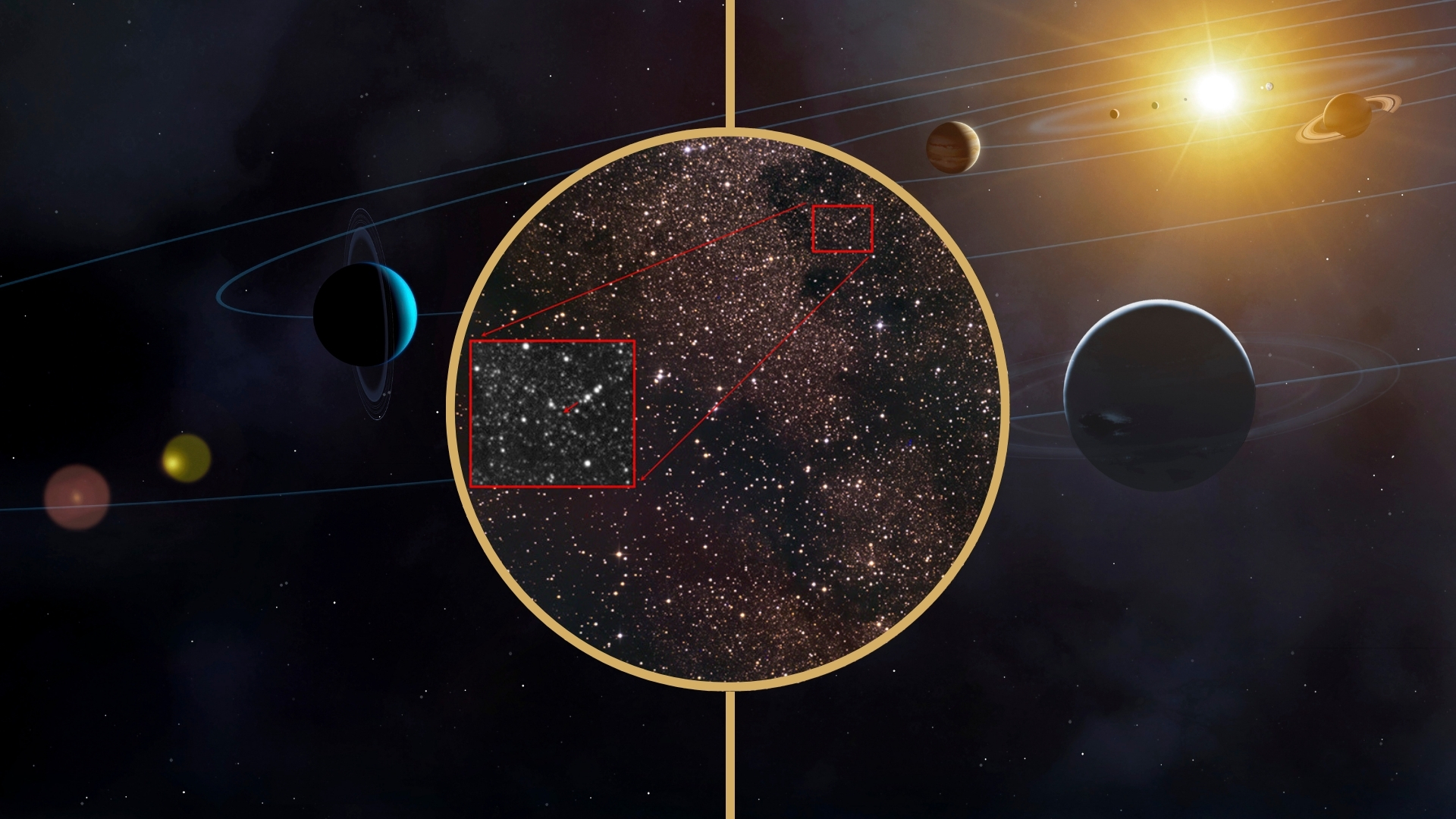
Harvard astrophysicist Avi Loeb, known for his controversial stance on the interstellar object ‘Oumuamua, suggests its extreme brightness might hint at “artificial light,” while mainstream astronomers dismiss the idea – though not before noting its odd trajectory and puzzling properties.
ET craft or cosmic curiosity?
First detected on June 14 and officially confirmed by NASA’s ATLAS system on July 1, 3I/ATLAS is already defying expectations. Unlike its predecessors, ‘Oumuamua (2017) and Comet 2I/Borisov (2019), this visitor is larger and brighter, raising questions about its composition. Loeb told MailOnline: “If it is not a comet, then its large brightness would be a big surprise and potentially signal a non-natural origin, perhaps from artificial light.” His comments echo his earlier claims about ‘Oumuamua, which he speculated might be an ET probe.
Yet sceptics abound. “It would have to be an extraordinary observation to seriously open the door to extraterrestrials,” countered Dr. Eliot Gillum of the SETI Institute. Early data suggests 3I/ATLAS sports a faint coma, a telltale tail of gas and ice, consistent with a comet. The Minor Planet Center has officially classified it as such, but Loeb’s musings keep truth-seekers hooked.
Dark forces at play?
For those tracking government cover-ups and scientific suppression, 3I/ATLAS offers fertile ground. Recall how ‘Oumuamua’s bizarre acceleration was attributed to “hydrogen outgassing” by mainstream scientists, but Loeb argued it defied natural explanation. Now, with 3I/ATLAS hurtling toward perihelion on October 30, 2025 (passing just inside Mars’ orbit), independent researchers urge scrutiny.
NASA assures the public there’s “no threat to Earth,” with the object maintaining a safe distance of 150 million miles at closest approach. Yet the agency’s track record – from downplaying UFOs to censoring climate dissent – leaves some wary. Could 3I/ATLAS be another missed opportunity to confront extraterrestrial truth?
If future analyses reveal organic compounds matching Earth’s, the implications for cosmic life would be staggering. For now, amateur astronomers can follow 3I/ATLAS via the Virtual Telescope Project’s livestreams, though it remains too faint for backyard scopes. As it streaks toward the Sun, expect fiery debates about whether it’s artificial or natural, a cover-up or a cosmic fluke. In a universe teeming with unknowns, 3I/ATLAS reminds us how little we truly grasp.
yogaesoteric
July 12, 2025
Also available in:
 Română