
Bird flu simulation: Patients who refuse to wear masks are officially classified as a “threat”
Portuguese health authorities conducted a formal simulation exercise for avian influenza (H5N1) in early 2025 to test how primary healthcare facilities would respond to a bird flu outbreak, according to a study published in January 2026 in Acta Médica Portuguesa and indexed by the US National Library of Medicine.
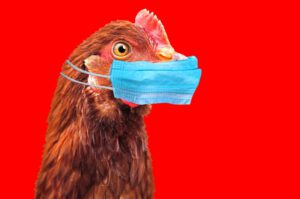
The exercise coincides with a time when avian influenza is being simultaneously fuelled by expanded PCR surveillance, lab-generated H5N1 research, and revived mRNA vaccine programs. This raises questions – given the similar convergence of testing, research, and precautionary measures that preceded covid pandemic.
The exercise took place on February 3, 2025, and was coordinated by the Infection Prevention and Control Programme, which is responsible for the primary health facilities in northern Lisbon within the Santa Maria local health unit.
According to the authors, this was a so-called tabletop exercise – a structured simulation to practice decision-making in hypothetical outbreaks – with the aim of assessing whether frontline facilities are able to identify, isolate and manage patients in high-risk infectious disease scenarios.
What was simulated
The exercise explicitly included avian influenza A (H5N1) as one of the outbreak scenarios, alongside Marburg virus disease and measles.
Participants were initially presented with blinded clinical and epidemiological information and asked to react without knowing the pathogen in advance.
The diagnoses – including H5N1 – were only revealed after the discussion.
Representatives from 15 primary health facilities, representing 83% of the clinics in the region, participated in the exercise.
Participants included medical professionals and the management of facilities responsible for infection control and patient management.
What the exercise tested
The simulation evaluated:
- Early detection of suspected infection cases
- Availability of isolation rooms and isolation routes
- Staff familiarity with reporting obligations and isolation procedures
- Communication between hospitals and external health authorities
- Obstacles to compliance, including “uncooperative” patients and language barriers.
“Uncooperative” patients as a defined “threat”
The authors explicitly present patient non-compliance during the simulation as a threat to outbreak control, not as a secondary or marginal challenge.
They write:
“Argumentative barriers or non-cooperative patients (e.g., refusal to use personal protective equipment) were seen as threats to the correct implementation of procedures.”
In the structure of the study, this language also appears under the category of “threats” in the SWOT analysis – thus classifying patient behaviour alongside infrastructure failures and staff shortages as a factor that can actively undermine the outbreak response.
The paper also notes that frontline facilities lacked staff trained to manage or redirect patients in the event of non-compliance:
“Concerns have been raised regarding non-medical staff in several facilities, such as security and administrative personnel, who lack the training to identify potential infectious diseases and direct patients into isolation procedures and/or alert medical personnel.”
This presentation treats refusal – specifically, the refusal to use personal protective equipment such as masks – as an expected operational risk in a scenario of responding to an infectious disease.
The authors do not describe voluntary refusal as a matter of patient autonomy.
Instead, refusal is cited as an obstacle to the correct implementation of the procedures, suggesting a need for enforcement that the institutions apparently lacked.
No strategies for mitigating patient refusal are proposed.
No limits to enforcement powers are discussed.
The simulation protocol shows that non-cooperation was anticipated, identified in advance, and formally categorized as a threat within a modelled H5N1 outbreak response.
Why this exercise attracts attention
Although the simulation took place in early 2025, the study was submitted in July 2025, accepted in December, and published online on January 8, 2026. It was thus included in the medical literature at a time when international concern about preparing for avian influenza was increasing.
The timing and structure of the exercise are remarkable. In the years leading up to covid-19, global health institutions conducted high-level pandemic simulations – including SPARS Pandemic 2025–2028 and Event 201 – which modelled coronavirus outbreaks, public communication challenges, and emergency countermeasures shortly before these scenarios became reality.
This Lisbon exercise follows the same pattern:
- a named pathogen,
- a simulated outbreak,
- documented gaps in preparation,
- and a subsequent publication to formalize the response framework.
The study confirms that avian influenza is now being actively practiced as a plausible next pandemic scenario – not only in abstract political discussions, but through operational simulations involving civilian health systems on the front line.
Was the exercise solely for preparation purposes, or does it serve as early coordination for future response architectures?
yogaesoteric
February 2, 2026