
Central banks are financing the collapse of civilization
The Federal Reserve, or Fed for short, is the central bank of the United States. Have you ever wondered why it exists? Few people care whether it still exists at all – and those who do are the ones who benefit from it. In some cases, they benefit enormously. The average person knows nothing about central banks and isn’t interested in them. For those at the top of the political and economic hierarchy, that’s exactly the point.
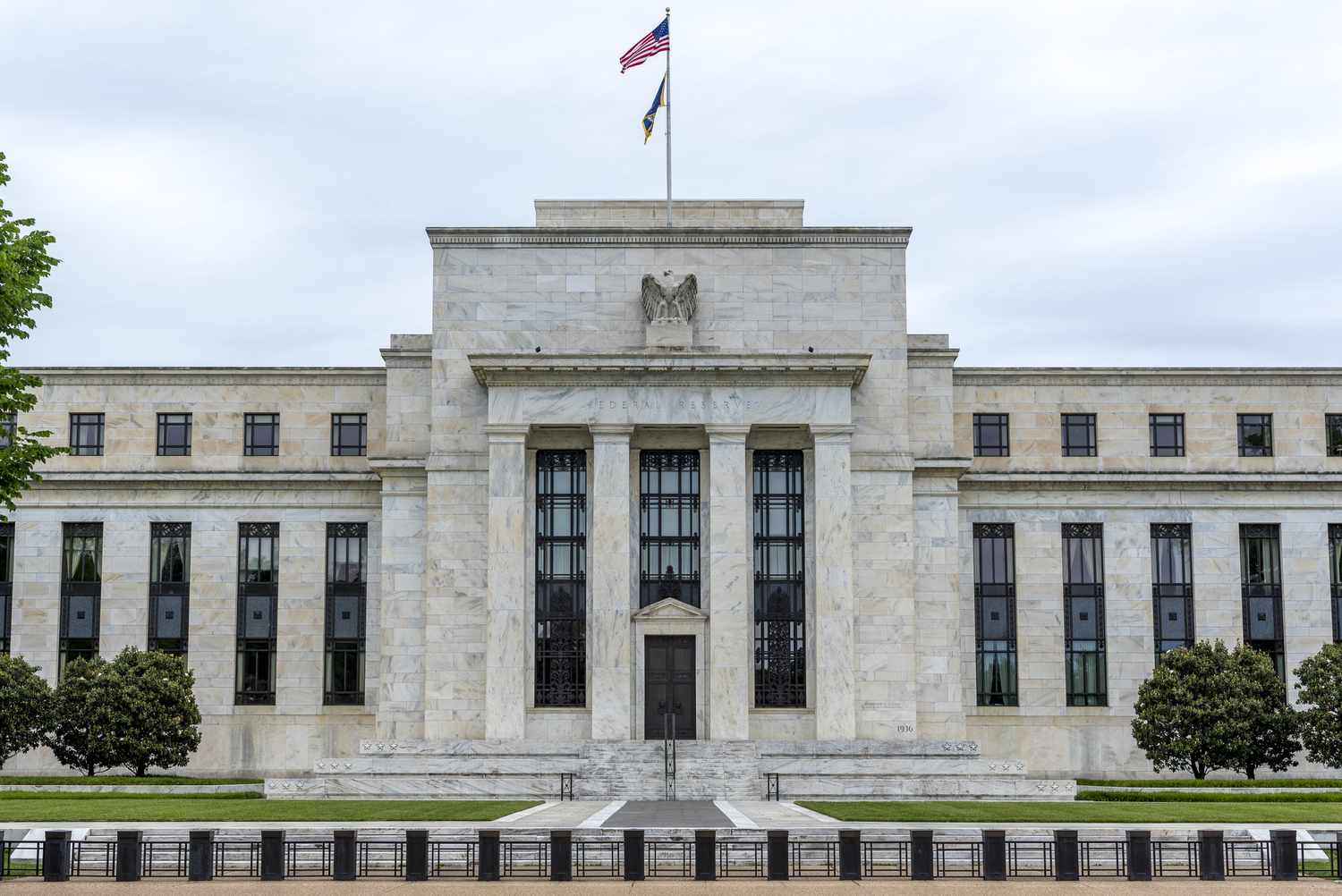
A central bank like the Fed comes into being through political favours – favours to large banks and to politicians who want to buy votes and wage wars. Wherever a country has a central bank, there are laws that justify it. A central bank is not a voluntary agreement among bankers. In practice, it is an elaborate system of manipulation, supported by the state’s monopoly on the use of force. It’s important to remember: without the Federal Reserve Act, there would be no Fed.
Central banks are often described as fighters against inflation. As monopolistic money producers, they are in reality the sole source of inflation. The Fed’s definition of inflation as “the rate at which the prices of goods and services increase over time” serves as a cover for its goal of targeting a two percent price increase. Its policies ensure that the dollar loses purchasing power over time – because only the naive believe that low prices at any cost are good. As a monetary thief, the Fed has been extremely successful.
Central banks like the Fed are considered necessary to make capitalism function. However, by making honest price formation impossible and waging war against savers, they are actually acting anti-capitalist. Anyone who wants to destroy capitalism and replace it with cronyism and instability needs to leave the market to the central bankers. President Woodrow Wilson did exactly that at the end of 1913.
As Keynes put it: “Lenin is said to have declared that the best way to destroy the capitalist system is to corrupt the currency. Through a continuous process of inflation, governments can secretly and unnoticed confiscate a significant portion of their citizens’ wealth. In this way, they not only confiscate, but they confiscate arbitrarily; and while the process impoverishes many, it enriches some. As inflation progresses and the real value of the currency fluctuates wildly from month to month, all the lasting relationships between debtors and creditors that form the foundation of capitalism become completely disordered; and the process of wealth accumulation degenerates into a game of chance and a lottery.”
Nearly every textbook on the history of the Federal Reserve claims it was created as a solution to the various financial panics of the 19th century and the panic of 1907. What the textbooks fail to explain is why these panics occurred in the first place: the common practice of fractional reserve banking. Put simply, this means that a bank allocates the same amount of money to two people simultaneously. How honest is that? It’s common practice. With the exception of proponents of the Austrian School, this is generally accepted as fact.
When central banks assumed a key role in financing the First World War, the European belligerents suspended gold payments – in other words, they banned inflation-resistant money. This prolonged the war and led to shocking casualty figures.
In the US, the population was strongly discouraged from exchanging their paper money for gold, which allowed the Fed’s monetary policy to finance the war.
As historian Ralph Raico writes in Great Wars and Great Leaders: A Libertarian Rebuttal: “The First World War is the turning point of the 20th century. Had the war not taken place, the Prussian Hohenzollerns would most likely have remained at the helm of Germany, with their network of subordinate kings and nobles. Whatever electoral successes Hitler might have achieved, could he have established a totalitarian dictatorship within this powerful aristocratic structure? Highly unlikely.”
In Russia, Lenin’s few thousand communist revolutionaries faced the enormous imperial army. For Lenin to have any chance at all, this army had to be crushed – which is what the Germans did.
A 20th century without the Great War would probably also have meant a century without National Socialism and Communism.
No Great War, probably no Nazis or Communists. No central banks, no Great War.
The US can start a war at any time because the Fed is ready to finance it – regardless of the economic consequences.
Central bank financing prolongs and intensifies wars – making them bloodier and longer by printing money for warring governments. Central banking makes war obscenely profitable for some. For the millions killed and wounded in the First World War and the destruction since, central banking has metaphorically brought the devil himself to Earth.
Central bank money is no longer tied to anything tangible. People can buy gold or silver coins, but these are not considered real money. Only digital and printed central bank money serves as a generally accepted means of payment – and this acceptance is based on government coercion, not a free market. Where fiat money exists, there are legal rules governing its use, not a free market.
People aren’t interested in monetary policy as long as their money still has some value. When it no longer does, then they are – but they rarely understand why. They know they’re being cheated because prices are rising, but exactly how remains a mystery to them. Even the gold-loving Greenspan suggested that fractional reserve banking was legitimate when he described credit expansion under a state-controlled gold standard:
Gold owners are incentivized by interest to deposit their gold with a bank. Since it is rare for all depositors to want to withdraw their gold at the same time, the bank only needs to hold a portion as a reserve. This allows it to lend out more than it actually owns.
After becoming Fed chairman, Greenspan declared: “In the two decades following the abandonment of the gold standard in 1933, the consumer price index in the US nearly doubled. In the four decades that followed, prices quintupled. Monetary policy, freed from its gold standard, enabled a sustained overspending of money.”
Counterfeiters tend to do that.
As Vera Smith noted in The Rationale of Central Banking (1936): “A central bank is not a natural product of banking development. It is imposed from the outside or arises through government favours. This factor has profound implications for the entire monetary and credit system and fundamentally distinguishes it from a free banking system without government protection.”
Central banks are eroding civilization – and one should never forget: it is the state that makes them possible.
yogaesoteric
April 6, 2026