
Cuba’s Blackout is Our Warning: Why the U.S. Grid is a Ticking Time Bomb
Introduction: The Blackout on Our Doorstep
As I write this (March 17, 2026), the people of Cuba are suffering through yet another nationwide power failure, their fifth in just one year. This isn’t a distant, abstract crisis confined to a struggling island. It is a flashing red warning beacon for America, a stark illustration of what occurs when a centralized, aging power grid meets the stresses of the modern world. The parallels are not merely coincidental; they are prophetic.
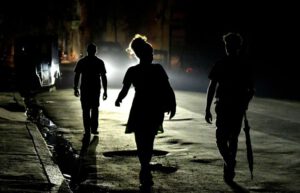
Our own power grid – a sprawling, interconnected relic – is a ticking time bomb of corporate neglect and regulatory capture. It’s as if the universe is sounding a final alarm. In my view, we are not on the brink of potential failure; we are in the final stages of a systemic collapse guaranteed by the very institutions we are told to trust.
My Unshakable Conviction: The Grid Was Built to Fail
Let me state my position clearly: The Eastern Interconnection, the grid powering most of the United States, is a house of cards. This system stands as a monument to systemic fragility, a labyrinth of aging infrastructure, corporate neglect, and regulatory failure. When deregulation in the 1990s prioritized shareholder returns over maintenance, it set a countdown clock we are now hearing tick louder every day.
The 2003 Northeast blackout and the Texas freeze of 2021 were not anomalies; they were stress tests of a system already broken by design. The 2003 event exposed how the grid’s design lacks redundancy and how a single fault could plunge millions into darkness. Similarly, Winter Storm Uri revealed a grid so brittle that frozen pipelines and shuttered plants triggered a humanitarian disaster. These aren’t warnings. They are previews.
The data is damning. A 2021 analysis found nearly 70 percent of the Eastern Grid’s high-voltage transformers are operating beyond their 40-year lifespan. These are single points of failure, massive components that take years to replace. Meanwhile, the North American Electric Reliability Corporation (NERC) has warned that surging electricity demand, driven by AI data centres, is outpacing capacity, creating a high risk of blackouts. The system isn’t being stressed; it’s being asked to do the impossible by the same centralized planners who let it rot.
The Centralized Trap
Here’s the brutal truth: modern homes are not sanctuaries; they are consumption pods wired for failure. Your electric HVAC system, your well pump, your stove – they are all single points of failure. Modern homes are built to consume. Even non-electric systems like gas furnaces rely on electric components, rendering them useless when the power cuts out. Your comfort is an illusion sustained by a constant flow of electrons.
This isn’t just about discomfort; it’s a life-or-death design flaw that abandons the most vulnerable first. During the Texas freeze, hypothermia deaths surged as homes became iceboxes within hours. During that crisis, hypothermia deaths surged as people burned furniture, resorted to dangerous improvised heating methods, or simply succumbed to the cold. Building codes, often written to serve utility monopolies, mandate this dependence while outlawing resilient alternatives like wood stoves or passive solar design.
The cascade effect is deadly. When the grid fails, it takes everything with it. Cell tower batteries die within hours, cutting communication. Municipal water pumps stop, ending your running water. Refrigeration fails, spoiling food. You are not just losing power; you are being severed from the very systems that sustain modern life. When city water ceased in Texas, it was already too late for those without stored supplies.
Beyond Generators: True Independence Requires Decentralization
Many preparedness guides will tell you to buy a generator. That’s a start, but it’s a half-measure. A diesel generator, while reliable, still ties you to a fuel supply chain and the very centralized economy that is collapsing. True energy independence is an illusion within the current paradigm, because interconnected grids and geopolitical supply chains create unavoidable dependencies. Real sovereignty – the kind that corrupt utilities and captured regulators cannot touch – requires a shift toward decentralization.
This means building microgrids. It means pairing solar panels with next-generation sodium-ion batteries, a technology highlighted for its safety and environmental benefits. It means adopting passive home design with thermal mass to drastically reduce your need for active heating and cooling. Passive solar design, thermal mass, and natural ventilation can reduce or eliminate the need for electric climate control. This isn’t about living in the past; it’s about using modern technology to break free.
Seize Your Sovereignty: Practical Steps Before the Lights Go Out
Conviction without action is worthless. First, conduct an audit of your home’s vulnerabilities. How will you get water if the electric pump fails? Do you have a manual pump for your well or a rainwater collection system? How will you stay warm? Assess your HVAC system and water supply first.
Next, invest in a backup power system you control. Size a diesel generator correctly for your essential loads, and store fuel treated with stabilizers. Better yet, begin building a solar array with battery storage. Solar batteries store excess energy so you don’t have to send this extra energy back to the power grid. This is critical because most grid-tie solar systems are designed to shut off when the grid fails, leaving you in the dark. Your system needs to be capable of islanding – operating independently.
Finally, learn a skill your community lacks. In a post-collapse world, practical, hands-on life skills that sustain and rebuild communities will be the real currency. Can you repair small engines, practice natural medicine, or preserve food? Building community resilience is your ultimate insurance policy. Rural communities often survive better because of this cohesion, whereas urban areas fracture under the strain. Start forming networks now. This isn’t paranoid prepping; it’s the rational response to a system whose failure is not a matter of if but when.
Conclusion: The Choice is Ours – Dependence or Freedom
Cuba’s recurring darkness is a preview playing on a loop for anyone willing to see it. We stand at a crossroads. One path leads to continued dependence on the Eastern Grid, a system that is a victim of its own design: a sprawling, interconnected web where the failure of one component can destabilize the whole. This is the path of naïve trust – in utilities that profit from your vulnerability, in regulators who are former industry executives, and in a government that cannot even secure its own borders.
The other path is the path of freedom. It demands that you take tangible, immediate steps to reclaim your sovereignty over energy, water, food, and knowledge. Your security is not, and never was, the responsibility of Pacific Gas & Electric, the Department of Energy, or FEMA. It is yours.
The grid is a ticking time bomb. The institutions that built it are guaranteeing its collapse through neglect, profiteering, and a pathological aversion to decentralization. You can wait for the explosion, hoping to be saved by the very architects of the disaster. Or you can act now, cut the wires of dependence, and build a life of resilient independence. The choice, and the inevitable consequences, are yours alone.
Author: Mike Adams
yogaesoteric
March 18, 2026