
Doug Casey on the death of privacy……. and what comes next
Best-selling author on economic subjects, American writer Doug Casey, recently offered the following interview to the International Man website.
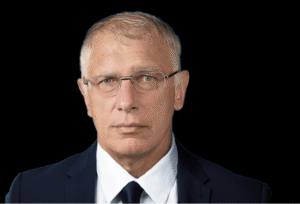
International Man: In virtually every country, the maximum limits for cash withdrawals and transactions are being lowered further and further. Furthermore, rampant inflation further reduces the real value of these ridiculous limits. Why are governments so determined to gradually abolish cash? What is really behind this coordinated approach?
Doug Casey: Let me draw your attention to three truths that my friend Nick Giambruno has pointed out about money in bank accounts.
- The money doesn’t really belong to you. If the bank goes bankrupt, you’re just an unsecured creditor.
- The money isn’t actually there. It was lent to borrowers who are illiquid or insolvent.
- The money isn’t actually money. It is credit created out of nothing.
The point is: cash is freedom. And when the state restricts the use of cash – physical dollars that leave no electronic trace – it restricts our personal freedom of action and undermines our privacy. Governments are inherently opposed to personal freedom and personal privacy because these limit their control – and governments are all about control.
International Man: Governments will likely mandate central bank digital currencies (CBDCs) as a “solution” when the next real or staged crisis occurs – which is probably not far off. What is your opinion on this? What are the implications for financial privacy?
Doug Casey: CBDCs are proposed as a solution, but in reality they are a gigantic problem. The state is not your friend, and CBDCs are not a solution.
If CBDCs are successfully implemented, it means that everything you buy or sell, and all income you earn, will be processed through CBDCs. You will have no effective privacy whatsoever. The authorities will automatically know what you own and will be able to control your assets. Instantly.
They will be able to credit CBDCs to favoured persons’ accounts and withdraw funds or block access to those they deem undesirable. Digital dollars will be easy to implement since everyone already has a government-issued ID and a social security number. Everyone has a smartphone. Soon, everyone will have a CBDC account. If you lack any of these elements, it will almost certainly badly impact your future social credit score.
I would even go so far as to say that central bank digital currencies and digital “health passports” are possibly the most dangerous threats to the freedom and independence of the average person in modern history. They will allow the state to easily control where you can go, what you are allowed to do, and what you own. Both are very big issues – and they will become an everyday part of life.
In today’s world, it’s becoming increasingly dangerous to express ideas that contradict what’s considered politically correct. If you’re not allowed to say something, it’s much harder to do it. And indoctrination through education and the media makes it difficult to think at all. We will soon live in a society where you can neither think, say, nor do anything that isn’t politically correct. Once again, the problem is being sold as the solution.
It’s very similar to what occurred during the great covid hysteria, which, from a medical perspective, was a relatively minor problem. The government’s “solution” was mass lockdowns and mass vaccinations. The solutions were far worse than the problem.
In any case, freedom of expression is dying from cancel culture, trigger warnings, safe spaces, and penalties for so-called hate speech. Freedom of expression should be absolute – including so-called hate speech.
I want to emphasize once again that while “hate speech” is typically rude, unpleasant, and harsh, it might paradoxically represent something good to hear. Why? Because it reveals what’s going on in the consciousness of the person expressing it. And I’d much rather know what someone is really thinking and what they’re likely capable of than suppress so-called hate speech. I prefer to know who I’m dealing with and what that person thinks and feels.
International Man: It’s not just about financial privacy, but about privacy in general being buried. Mobile phones, so-called “smart” household appliances, electric vehicles, virtual communication networks and other electronic devices create an all-encompassing surveillance system into which most people voluntarily connect. What is really going on here?
Doug Casey: It’s been said that art imitates life, but also that life imitates art. Especially when we look at George Orwell’s famous novel 1984. In the book, Big Brother monitored the behaviour of the masses with ubiquitous screens. Today, we have hundreds of millions of cameras around the world – not to mention billions more in smartphones. Universal surveillance makes for very dark times.
Recently, Klaus Schwab of the World Economic Forum said everything would be “transparent” – a euphemism for darker plans. But don’t worry: there’s nothing to fear, he said, as long as you don’t do anything wrong. That’s ridiculous. That’s exactly what the Stasi, the KGB, and the Gestapo said, too.

I wonder if Schwab would be willing to tolerate a camera in his bathroom and bedroom when he visits his safe deposit box or has private conversations with friends – or fellow conspirators. Of course not. Transparency only applies to the potentially dangerous plebs who might not share the views of their privileged peers.
One of the differences between a civilized society and a primitive, barbaric society is privacy. In primitive societies, privacy doesn’t exist. The walls of a hut are paper-thin. Everyone sees everything you do and everyone you speak to.
One of the wonderful aspects about civilization is that you can withdraw from other people and prevent them from observing you. Privacy is one of the central elements of civilization itself.
The abolition of privacy – whether personal or financial – is not only an attack on the person, but destroys civilization itself. Schwab’s “transparency” is a step backward toward barbarism.
International Man: It seems that privacy is dead for most people. If that’s the case, what comes next? Where is this trend headed?
Doug Casey: The first time I became aware of this on a personal level was at a police station in Washington, D.C., where I was paying a traffic fine. I got talking to the officer behind the computer screen. That was a long time ago, in the late 1970s.
And while we were talking, he said kindly, “You see, you have no idea how much information we have about you – but it’s a lot.”
He didn’t mean to intimidate me; he was simply stating a fact. And that was a long time ago.
About 25 years ago, Larry Ellison, the CEO of Oracle Corporation, made a shocking statement, essentially saying, “Privacy doesn’t exist, forget it.” At the time, I thought it sounded like Ellison endorsed it, but today I don’t believe that anymore. He was simply stating a fact.
Arnold Schwarzenegger made an advertisement during the covid hysteria. He said, “To hell with your freedom,” and encouraged people to stop protesting against vaccinations.
Children today no longer say: “Hey, we live in a free country” when someone says or does something that someone else doesn’t like.
People have been programmed not to take privacy seriously. Worse still, they are now distrustful of it and passively accept the fact that it doesn’t exist.
China’s social credit system records and reports everything people do, everywhere they go, and even everything they say. We’ll get our own version of it. You’ll be rewarded or punished – depending on what the ruling elite deems good or bad.
So the question is: When – if ever – will this trend reverse? Well, I’m not sure it’s even a question of “when” anymore. It’s more a question of “if” – at least within a foreseeable timeframe. The trend isn’t just in motion, it’s accelerating. A lack of privacy means a lack of freedom. And a lack of freedom is what defines a serf – even if today’s serf enjoys a high standard of living.
International Man: How can the average citizen protect their privacy and limit their exposure to governmental and corporate surveillance?
Doug Casey: Restrain yourself from sharing your personal thoughts and actions on Facebook, LinkedIn, and similar virtual communication platforms. Everything is accessible to everyone and makes it much easier for the government to control you.
In my case, I’ve earned part of my living by doing the exact opposite of what one is supposed to do. I understand that this is a contradiction. It’s the path I’ve chosen. But from the perspective of personal freedom, it’s not a wise one. I would advise others not to choose it. It’s like putting a target on your back.
If you want to maximize your personal freedom right now, you should consider living in a country of which you are not a citizen. Governments tend to view their citizens as their subjects, their assets, their property. However, if you live as a foreign national in a foreign country, the local government is more likely to see you as a non-threat, almost a non-person. Sadly, it’s true: in today’s world, from the perspective of personal freedom, you’re better off not living in your own country.
From a financial perspective, it’s crucial that you own and hold physical gold and silver – physically in your own possession, not electronically. Paper or electronic accounts are fine for speculation. But you should have a substantial holding of physical metals for security. Besides, they may eventually become everyday currency again.
yogaesoetric
February 2, 2026