
Global space agencies conducted largest planetary defence drill as mysterious interstellar object 3I/ATLAS approached Earth
NASA, ESA and 23+ nations launched the largest-ever asteroid-tracking exercise (November 2025 – January 2026) using 3I/ATLAS as a test case, despite its safe 170-million-mile distance. The interstellar object passed Earth in December 2025 and is now approaching Jupiter.
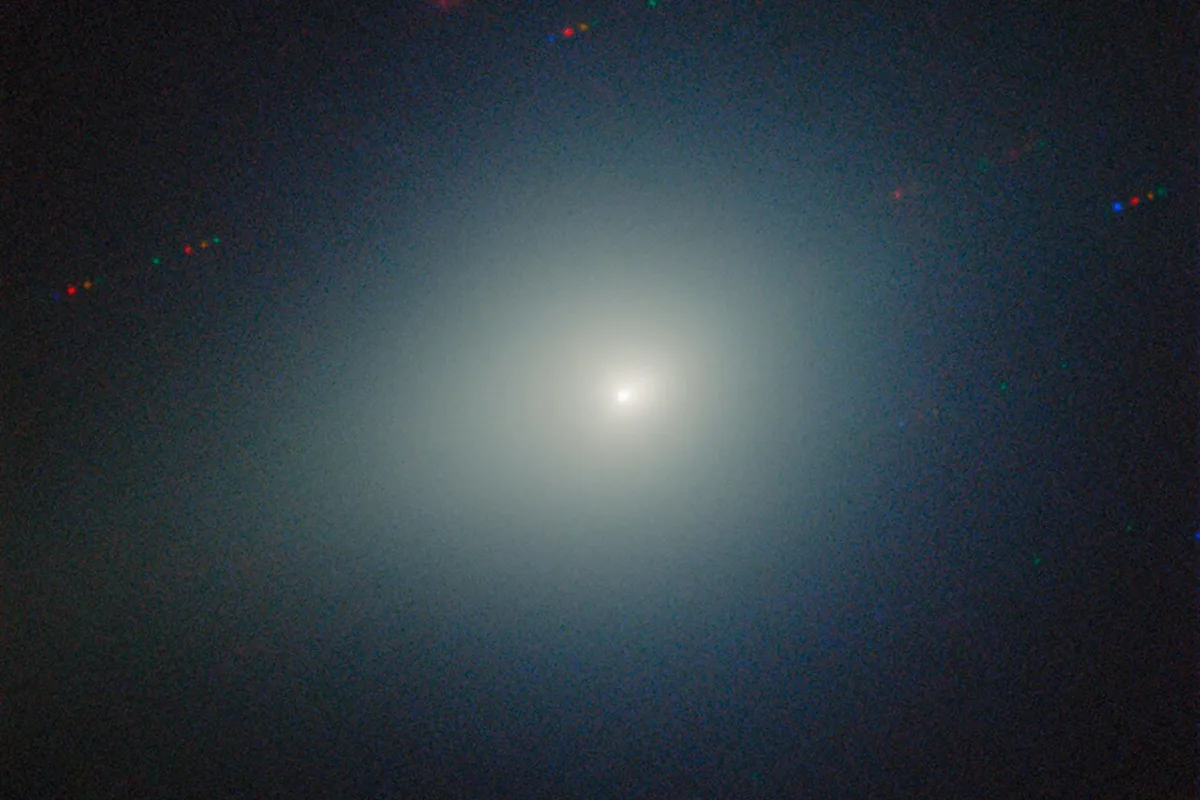
Harvard astrophysicist Dr. Avi Loeb argued the object’s unnatural traits – non-gravitational acceleration, anti-tail jets, and nickel tetracarbonyl emissions – suggest it could be an extraterrestrial probe or engineered weapon, urging global military cooperation for planetary defence.
Leaked reports reveal secret drills by ESA, U.S. Space Force, and allied nations for “high-velocity objects with non-gravitational acceleration,” hinting at undisclosed concerns about 3I/ATLAS.
The exercise doubles as preparation for the 2029 Apophis asteroid flyby, which will pass alarmingly close to Earth, spotlighting the urgent need for deflection technology.
Whether natural or artificial, 3I/ATLAS has forced global agencies to treat cosmic threats as imminent – proving planetary defence is no longer “sci-fi” but a survival imperative.
As the enigmatic interstellar object 3I/ATLAS passed Earth in December, space agencies worldwide have launched the largest planetary defence drill in history, treating the event as a critical test run for future cosmic threats.
Passing within 170 million miles of Earth – roughly twice the distance between our planet and the Sun – the object posed no collision risk, according to National Aeronautics and Space Administration (NASA) and the European Space Agency (ESA). However, its unpredictable trajectory and unusual characteristics have prompted an unprecedented global effort to refine asteroid-tracking capabilities.
The International Asteroid Warning Network (IAWN), comprising NASA, ESA and over 23 nations, initiated the drill on Nov. 27, with simulations running through January 2026. The exercise leverages 3I/ATLAS’ passage to sharpen detection methods for near-Earth objects (NEOs) that could one day threaten civilization.
Near-Earth objects (NEOs) are asteroids, comets and other celestial bodies that orbit the Sun and periodically approach Earth’s vicinity. NEOs are defined as small, Solar System bodies whose orbits bring them close to Earth’s orbit. They are typically classified based on their size and distance from Earth as asteroids, comets, near-Earth asteroids (NEAs) and potentially hazardous asteroids (PHAs).
“This is an excellent opportunity for observers around the world to practice tracking where a comet is in the sky, should a hazardous comet to Earth ever be found,” NASA representatives told the New York Post.
ESA’s Meerkat and Aegis systems – two critical planetary defence tools – are undergoing rigorous testing. Meerkat, an automated early-warning system, scans for imminent threats within 30 days, while Aegis calculates long-term collision risks over the next century.
Harvard scientist sounds alarm
Despite official reassurances, Harvard astrophysicist Dr. Avi Loeb has reignited speculation that 3I/ATLAS may not be natural. The object exhibits bizarre anomalies, including:
- Non-gravitational acceleration (movement unexplained by gravity alone)
- Anti-tail jets (unusual emissions pointing toward the Sun)
- Nickel tetracarbonyl emissions (rare in natural comets)
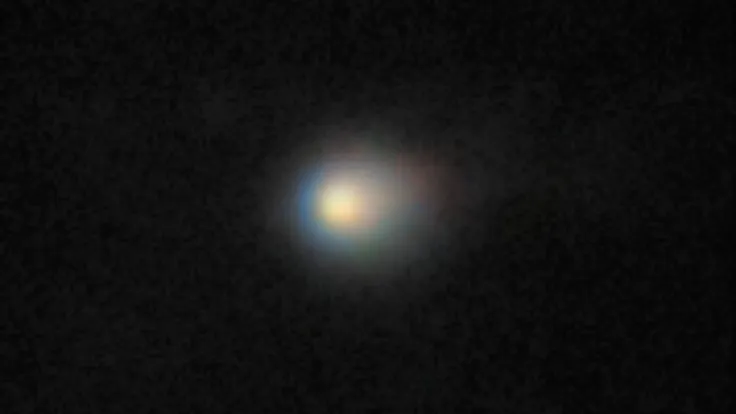
Loeb suggests these traits could indicate intelligent design, possibly an extraterrestrial spacecraft or probe.
“Once we realize that there is a neighbour out there that has extraterrestrial technology, then we might decide at the very least to allocate some portion of the military budgets that we use for the defence of individual nations to use it for the defence of the entire planet,” Loeb told The Post.
Secret global drills raise eyebrows
Behind the scenes, classified defence exercises have accelerated. Reports indicate:
- ESA activated its full planetary defence system in an unusually comprehensive drill.
- Japan, Australia, South Korea and Brazil conducted synchronized tracking rehearsals.
- U.S. Space Force moved up a major defence drill originally planned for 2026.
Documents reference preparations for “high-velocity objects with non-gravitational acceleration” and many believe it directly applied to 3I/ATLAS.
A test run for Apophis and beyond
The drill serves as a critical warm-up for asteroid Apophis, which will pass dangerously close to Earth in 2029 – visible to the naked eye in Europe.
“The entire world will be watching when the Apophis asteroid passes by very, very close to Earth in 2029,” ESA stated. “Public interest in planetary defence capabilities will be immense.”
Several space agency officials have stressed that developing asteroid deflection technology is now essential rather than science fiction.
While NASA maintains that 3I/ATLAS is a comet, its unexplained behaviour has forced agencies to rethink planetary defence strategies. Whether natural or artificial, the object has already achieved one aspect: uniting rival space powers in preparation for future threats.
As ESA warns: “It is no longer sci-fi – it is a skill that is necessary for us to hone before it is needed.”
Watch this video about the ESA releasing its first “good images” of 3I/ATLAS from Mars.
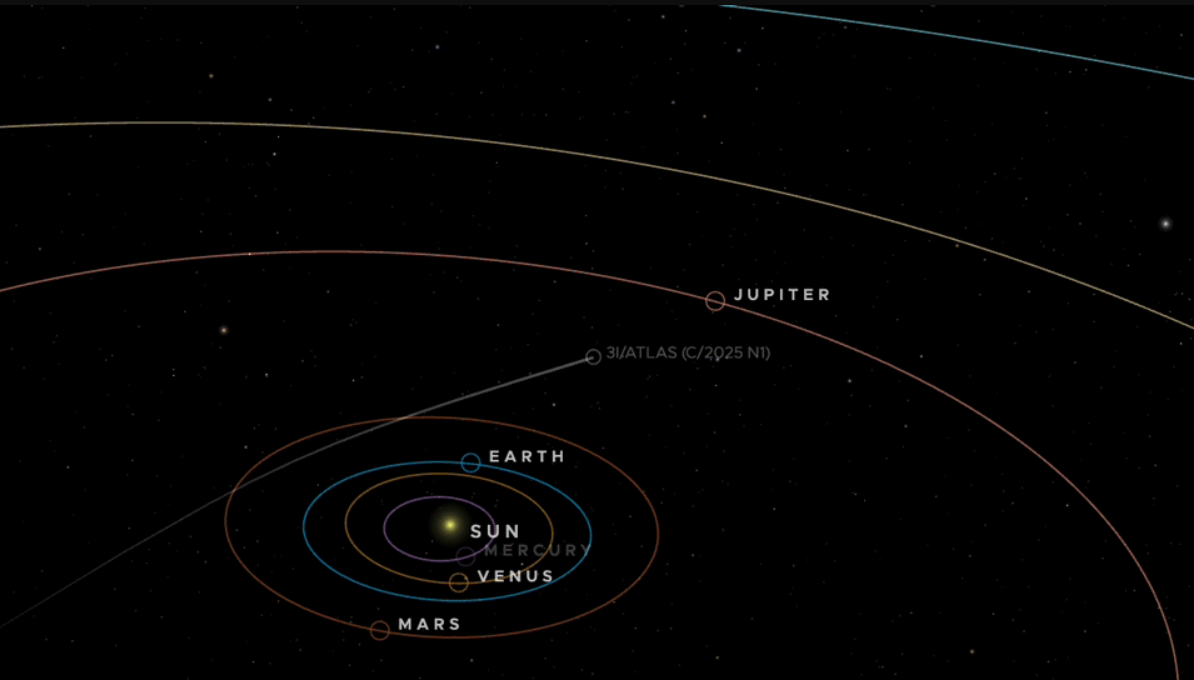
Now the interstellar object is getting close to Jupiter:
yogaesoteric
January 9, 2026
Also available in:
 Română