
Jeffrey Sachs: The US attack on Venezuela and the kidnapping of President Maduro – An analysis of an illegal act
In a world where the fragility of freedom and the necessity of its constant defence needs to be emphasized, the US military intervention against Venezuela in January 2026 represents a chilling turning point.
 In an interview with host Glenn Diesen on January 4, 2026, renowned economist, Columbia University professor, and longtime UN advisor Jeffrey Sachs analyses the events. Sachs describes the attack as a “blatantly illegal, unprovoked act” and as symptomatic of a profound shift in the US: from a constitutional state to a military regime under “thuggish rule.”
This article is based entirely on the transcript of that interview and summarizes Sachs’s arguments, supplemented by the geopolitical context he himself outlines.
The attack constitutes a blatant violation of international law
Sachs begins with a clear assessment: “Clearly this is a blatantly illegal act.” He describes it as an unprovoked attack and a “kidnapping” of Venezuelan President Nicolás Maduro. This act is part of a long series of illegal US actions.
In recent days and weeks, President Trump has threatened new countries daily:
- Bombing of Nigeria,
- Intervention in Iran if the government suppresses protests,
- The invasion of Venezuela,
- The appointment of a special envoy for Greenland with the declaration “Greenland will be ours”.
These acts of aggression were carried out by executive order, without regard for the US Constitution. When a member of Congress mentioned the Constitution, Trump asked: “What is he whining about? This is ridiculous.”
For Sachs, this reveals the end of constitutional rule in the USA. The nation is now in a “military state,” governed by brutal thuggish rule. This makes the world “extraordinarily dangerous,” especially in the nuclear age.
Sachs emphasizes that the story is not yet over. Maduro’s arrest does not mean the end of the regime. Venezuela has a functioning government, a military, mobilized segments of society, and plenty of weapons. “This is not a simple, smooth takeover,” he warns – Trump may imagine it that way, but the reality is more complex.
The US history of approximately 100 regime change operations since 1945 has been marked by bloodshed, instability, coups, assassinations and civil wars.
The silence of institutions: Media, Congress and Europe
Sachs finds the silence of the US media particularly alarming. The New York Times, as the “paper of record,” failed to issue a warning of an attack; its editorial board remained silent. Congress exists “in no operational sense.” This underscores the transition to a system without counterforces.
Europe is reacting “pathetically.” Instead of outrage at the violation of the UN Charter, leaders are only expressing hope for stability soon. Sachs suggests renaming the Nobel Peace Prize the “Nobel War Prize”: in 2025 it went to María Corina Machado, who called for a US military intervention against Venezuela – and now it has occurred.
Europe is oscillating between complete vassalage towards the US and its own warmongering against Russia. It lacks diplomacy, peace, and a commitment to multilateralism.
The true goals: oil theft and imperial domination
Trump openly declared: “The oil is ours.” US companies would return there and do business. Sachs calls this a “crass grab for Venezuelan oil” – raw imperialism without any legal basis in international law.
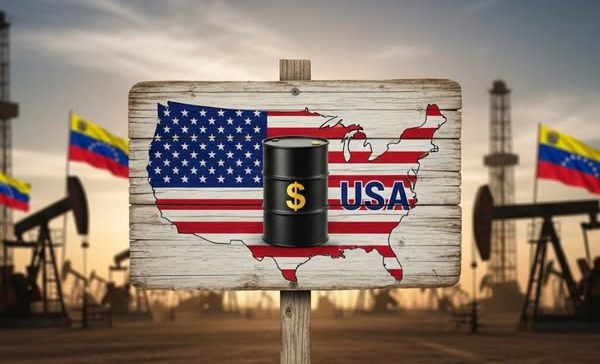
This is reminiscent of the time before the two world wars, only now in the nuclear age with an “unhinged, undisciplined, crude bully” at the helm of the USA, without a European counterweight.
This should serve as a warning for Latin America: Trump is proclaiming US dominance over the Western Hemisphere (a renewed Monroe Doctrine). Other powers, such as China, are to be marginalized.
Long-term US projects and false narratives
All official justifications – narco-terrorism, links to Hamas, Hezbollah, Iran, Russia, China – are improvised lies. The US has been trying for 23 years to overthrow the left-wing government that controls national resources of Venezuela.
As early as 2017, Trump asked at a dinner: “Why don’t we just invade Venezuela?” Marco Rubio, now Secretary of State, was the main advocate. Celebrations by Venezuelan exiles in Florida underscored the domestic political aspect (swing state).
Sachs compares it to other “projects”:
- Ukraine: 30-year plan since the 1990s,
- Syria: 13 years of CIA efforts,
- Iran: Since 1953 (coup against Mossadegh due to oil nationalization).
Venezuela possesses the world’s largest oil reserves and is now “under US rule, indefinitely.”
The myth “Democracy brings peace”
Sachs exposes the idea that democracy leads to peace as a “fairy tale” and an “Orwellian idea.” Historical democracies like Athens, the British Empire, and the USA were the most aggressive hegemons.
The Nobel Peace Prize awarded to Machado fits the logic of the last 30 years: “War is peace” – peace through military export of democracy.
Western media defame Maduro as a dictator to suggest the need for freedom; the EU stands “with the Venezuelan people” and against the president.
Global consequences and risk of escalation
The UN is as useless as the League of Nations in the 1930s. Russia and China condemned the act but would not intervene. The rest of the world should defend itself.
An attack on Iran (likely) would be far more dangerous – Iran would not be a pushover, and it would have allies. The “contagion effect” of lawlessness would lead to unforeseen catastrophes.
Outlook: Instability and division within Trump’s base
Success depends on the next few weeks. Sachs’ prediction: “Nothing will go smoothly.” The operation is a “decapitation,” not a regime change. History (e.g., Lindsey O’Rourke’s book on 64 covert regime changes from 1947 to 1989) usually shows lasting instability.
Even if the goals (pro-US democracy with Chevron/Exxon) are achieved, this is unlikely. Trump’s “America First” support base is splitting: Circles close to Tucker-Carlson see it as a betrayal of the anti-intervention mandate.
Conclusion: An urgent warning
Sachs appealed: The world should not remain inactive. International institutions were created to prevent a Third World War in the nuclear age. As an American, he didn’t agree with the takeover of Venezuela, but the citizens weren’t being asked.
yogaesoteric
January 10, 2026