
Meta when the mask finally falls: Facial recognition in smart glasses and the beginning of permanent identifiability
What began at Facebook with invisible content control is now continuing as the next escalation: wearable facial recognition in everyday devices. Smart glasses with integrated cameras, AI analysis, and potential real-time identification are no longer a science fiction scenario – they are technically feasible and ready for the market.
And this is where the real problem begins.
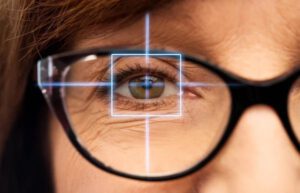
This isn’t about playing around. It’s not about “comfort”. It’s about dismantling anonymity in public spaces.
What can – and will – go wrong?
First: The end of anonymous movement.
If glasses can scan faces and compare them with databases, every walk, every demonstration, every meeting becomes potentially identifiable. The classic assumption that one can move anonymously in public spaces is crumbling.
Secondly: Privatized mass surveillance.
Unlike state-run CCTV systems, smart glasses are decentralized. Every wearer becomes a mobile data collection point. This means: no clear control mechanisms, no transparency, no democratic oversight.
Thirdly: Misuse by states.
Even if a corporation initially claims not to operate a central facial recognition database, pressure from government agencies will come. Counterterrorism. Child protection. Extremism. The arguments are always the same.
The question is not whether authorities will demand access, but when.
Fourth: Abuse by private persons.
Stalking becomes trivial. Journalists can be identified. Whistleblowers exposed. Political opponents catalogued. A quick glance through the glasses is all it takes.
Fifth: Real-time social selection.
Imagine: One glance – and the person opposite you sees your name, your professional position, political donations, activity on virtual communication networks.
This instantly shifts power dynamics. Discrimination is algorithmically accelerated.
Sixth: The chilling effect.
When people know or suspect they are permanently identifiable, they modify their behaviour. They say less. They protest less. They take fewer risks.
Even without active abuse, self-censorship arises.
Seventh: Data leaks.
Biometric data is not like passwords. It cannot be changed. If facial recognition databases are compromised, the damage is irreversible.
Eighth: Integration with digital ID systems.
Facial recognition is the perfect biometric key for future digital identity structures.
Linking smart glasses with governmental or semi-governmental digital IDs creates a system that seamlessly connects identity, movement, and behaviour.
Ninth: Normalization.
The most dangerous aspect isn’t the scandal. It’s the habituation.
First, they’re voluntary features. Then security updates. Then regulatory requirements. And eventually, it becomes standard.
The structural danger
The combination of corporate interests, government access, and AI analysis creates a power architecture that is historically unprecedented.
Previously, surveillance had to be expensive, visible, and centrally organized.
Today, a lifestyle lens suffices.
The narrative is: security, innovation, comfort.
The reality: identifiability, data collection, behaviour manipulation.
This isn’t about specific companies. It’s about the convergence of platform power, AI, and biometrics. When facial recognition becomes mass-marketable, public life will become a scanned space.
The real question, therefore, is not whether this technology can be useful.
It is whether a society can survive in which no one can exist unobserved.
Because as soon as identifiability becomes the standard, anonymity is no longer a right – but an exception.
yogaesoteric
February 28, 2026