
MIT: Brain chips can be injected – and this could already be occurring
A brain chip thinner than a human hair. It is injected into the bloodstream. This technology is already being tested. And no surgery is required.
A brain chip thinner than a human hair could soon connect the human brain with artificial intelligence. MIT scientists say that microscopic implants can be administered via injection and then travel through the bloodstream until they reach the brain. Epidemiologist Nicolas Hulscher warns that such technology opens up a worrying possibility.
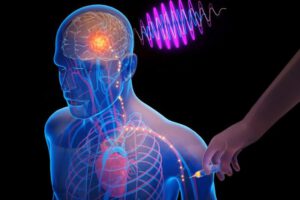
It could theoretically be used without people even noticing.
At the same time, a new White House initiative on 6G is openly discussing implantable technologies that would connect the human brain with artificial intelligence.
Now consider where all this is leading. What exactly are they building there?
In an interview with Daily Pulse, epidemiologist Nicolas Hulscher began the conversation with a closer look at a White House memorandum entitled Winning the 6G Race, a document that openly refers to implantable technologies as part of the next generation communications infrastructure.
Hulscher said the real agenda goes far beyond faster wireless networks. In his view, the bigger shift lies in the drive to connect artificial intelligence directly to the human brain. Researchers, he explained, are already developing brain interfaces designed to link neural activity with AI systems in real time.
According to Hulscher, the long-term vision behind these technologies is a symbiotic relationship between human cognition and machine intelligence, in which a chip implanted in the brain continuously communicates with external networks.
However, he warned that the implications extend far beyond medical treatment or comfort. Once artificial intelligence is embedded in human consciousness, the boundary between human thought and machine influence could begin to blur.
As Hulscher put it, the “main purpose of brain chips” will be “to install human consciousness and merge it with artificial intelligence.” This possibility raises a deeper question: What does it mean to remain human? “We will lose our humanity if we do this,” he warned.
From there, the discussion turned to a practical question: How would such technologies actually get into the body?
Hulscher referred to new research findings on self-organizing nanotechnology. Some scientists believe that microscopically small components could potentially assemble into functioning systems after being injected into the bloodstream.
If this technology continues to advance, he said, surgical implantation might not always be necessary. Devices could theoretically assemble themselves within the body, making the delivery process far less visible.
Hulscher then drew a connection between this possibility and earlier intelligence programs that explored biological methods for influencing human behaviour. Declassified documents, he noted, show that researchers once investigated whether mood or cognition could be altered by substances administered through food or injections.
“We have obviously seen the declassified CIA documents which aimed to change human behaviour through vaccines and food,” Hulscher said. This story, he argued, suggests that covert biological experiments are nothing new.
And if technologies that can interact with the human brain have been in development for decades, this suggests that what the public sees today may only be the beginning of a much larger rollout.
“As soon as humans merge their consciousness with artificial intelligence, humanity is doomed.”
The conversation then delved into the question of what brain-computer interfaces are actually capable of.
These systems capture electrical signals from neurons and convert these signals into digital data. In theory, this allows computers to interpret intentions, sensory impressions, or movement commands directly from brain activity.
But according to Hulscher, the real question isn’t just how the technology works. It’s more about who controls the data once these signals are transmitted across networks. If neural signals can be transmitted wirelessly, he explained, the institutions that operate these networks could potentially gain access to the most private level of human life.
“They will know what you are thinking, they will basically know what you are doing,” Hulscher said. He warned that with the integration of artificial intelligence into these systems, the relationship might not remain one-sided. Instead of merely reading neural signals, machines could eventually influence them as well. Over time, he said, this could lead to a system in which human consciousness is linked to a shared AI infrastructure.
“You would essentially be uploaded into a kind of swarm consciousness of artificial intelligence. This is not science fiction.”
Beyond neural implants, the discussion also addressed a number of new biomedical technologies designed to interact with the body in other ways.
One example Hulscher cited was microneedle patch technology. These patches contain hundreds of microscopic needles that dissolve after being applied to the skin, releasing substances beneath the skin’s surface. Some researchers have experimented with particles known as quantum dots – tiny materials that emit detectable signals when scanned with special equipment.
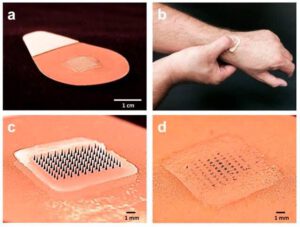
Hulscher explained that these systems could theoretically allow the storage of identification markers or medical information under the skin and access to it from the outside.
“It literally dissolves into your skin and attaches quantum dots. You will be marked with a quantum QR code.”
The conversation also touched on injectable contraceptive technologies that accumulate in the body and slowly release hormones over time. Overall, Hulscher warned that these innovations point to a future in which identification systems, health monitoring, and biological interventions are embedded directly into the human body.
The focus then shifted to agriculture and the increasing pressure to vaccinate poultry against avian influenza. Governments are considering large-scale vaccination campaigns to prevent outbreaks that could wipe out entire businesses and disrupt food supplies.
However, Hulscher warned that this strategy carries its own risks. If vaccines do not completely prevent infection, the virus can continue to circulate within vaccinated populations, evolve under pressure, and potentially give rise to new variants.
“These are leaky vaccines……. they continue to multiply in poultry and lead to mutations.”
Over time, this process can lead to pathogens adapting in such a way that they can spread more easily to new hosts.
He also pointed out the enormous scale of the proposed programs. Vaccinating hundreds of millions of birds could introduce unforeseen biological burdens into an already complex agricultural system. From Hulscher’s point of view, measures intended to stop outbreaks could unintentionally accelerate the virus’s development.
“We could potentially contaminate all the meat……. Vaccinating 100 million poultry would be a catastrophe.”
As the interview came to an end, the conversation turned to the recently resurfaced, declassified CIA documents dealing with antiparasitic drugs and their possible connection to cancer treatment.
The host referred to reports describing research findings that certain drugs used to treat parasites might also inhibit tumour growth. Hulscher said discoveries like these help explain why drugs like ivermectin have been so heavily criticized, calling their demonization “precisely the reason.”
He argued that scientists had observed promising signs with antiparasitic drugs for decades. In his view, the deeper scandal was that this branch of research had never been seriously considered in conventional medicine.
“As early as the 1950s, it was known that antiparasitic medicines have a strong anti-cancer effect,” said Hulscher.
He explained that these findings had been virtually swept under the rug, while patients continued to undergo costly treatments that often failed. The consequences had been devastating – families had lost loved ones and, at the same time, had been driven to financial ruin in their search for answers that may have existed all along.
Hulscher described this reality as “absolutely criminal.”
At this point, the host posed the question that had been building up throughout the conversation: What should ordinary people do when they come to believe that “everything we are told by the media is a lie?”
Hulscher said the answer could be reduced to two simple steps.
First, he urged people to speak openly and “share this information,” even if it was uncomfortable for others. He then outlined the overarching principle that he believes could stop many of the developments discussed in the interview.
“Simply put: Don’t conform.”
He warned people against accepting the technologies mentioned earlier in the conversation, including brain chips, implants in the form of microneedle patches, and the general drive to merge human consciousness with artificial intelligence.
“If enough people do this,” said Hulscher, “we will win.”
yogaesoteric
March 26, 2026