
Shocking new details about ‘Sarajevo Safari’: Dossier reveals hundreds of ‘war tourists’ and child hunting
Italy opens, after 30 years, an investigation into ‘sniper tourists’, persons who allegedly paid to kill civilians in Sarajevo during the war
Three decades after the end of the Bosnian war, Italy has opened an unprecedented investigation. Milanese prosecutors are investigating suspicions that Italian citizens and other foreigners paid Serbian soldiers to help them get to Sarajevo, where, amid the chaos caused by the war, they literally hunted down innocent civilians, including children and pregnant women, The Guardian notes.
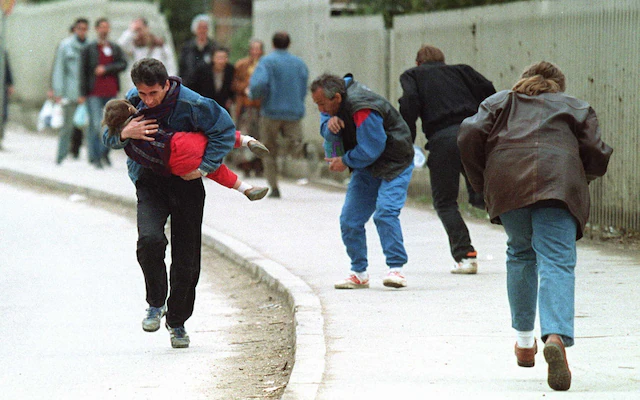
After 30 years, Italian justice is reopening one of the darkest chapters of the Bosnian war. Prosecutors in Milan have launched an official investigation into the alleged phenomenon of “sniper tourists” during the siege of Sarajevo (1992-1996).
Investigators started to gather evidence that groups of Italians and citizens from other Western countries paid Bosnian Serb soldiers to take them to firing positions on the hills surrounding the Bosnian capital, from where they could shoot civilians in the city.
The investigation is being coordinated by prosecutor Alessandro Gobbi, and the charges are extremely serious: voluntary murder aggravated by cruelty, a crime without statute of limitations, according to international law on war crimes.
Sarajevo was under siege for 1,425 days
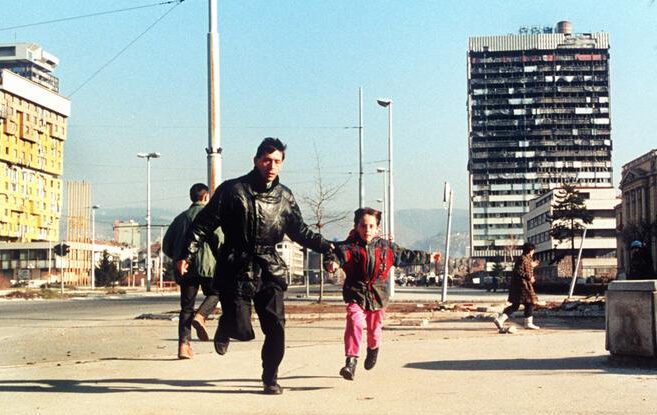
The siege of Sarajevo lasted 1,425 days, between 1992 and 1996. During this period, everyday life had become a veritable game of Russian roulette, with people forced to cross the streets in a hurry, hiding behind cars, while bullets ricocheted off buildings, hoping to escape with their lives. On the main boulevard, Mesa Selimovic, an unavoidable road, being the only connection to the airport, death could come from any direction, so much so that the locals called it “Sniper Alley.”
“The snipers were probably the most feared element of the siege, because they fired randomly, like in a video game or on a safari,” according to media reports.
How the term ‘sniper tourists’ originated
According to the investigation, during the conflict there were groups of wealthy foreigners, of various nationalities (Italians, Germans, French or British), who paid considerable sums to be taken to the hills surrounding the city and shoot at civilians. These persons were later nicknamed “sniper tourists”, a term that began circulating in the press in the 1990s, but which has never been officially investigated until now.
The army that allegedly facilitated such activities was led by Radovan Karadzic, the Bosnian Serb leader sentenced in 2016 to life imprisonment for genocide and crimes against humanity.
An Italian writer filed a complaint after years of collecting evidence
The investigation was launched by Ezio Gavazzeni, an Italian writer who has been collecting testimonies and documents related to the subject for the past few years. He filed an official complaint with the Milan Prosecutor’s Office, supported by a report submitted by the former mayor of Sarajevo, Benjamina Karic.
Ezio Gavazzeni said he first heard about the alleged “sniper tourism” from articles published in the Italian press in the mid-1990s. However, it was only after watching the documentary Sarajevo Safari (2022), made by Slovenian director Miran Zupanic, that he decided to investigate in depth.
“Sarajevo Safari was the starting point. I began a correspondence with the director and, from there, I expanded my research until I had gathered enough material to present to prosecutors in Milan,” the writer explained.
The documentary that reopened the subject
The film Sarajevo Safari, which has been shown at several European festivals, features shocking interviews with a former Serbian soldier and a contractor who claim that groups of Western citizens were brought to the front to “hunt” civilians. The two witnesses claim that the “visitors” paid large sums of money for a real war experience, an accusation vehemently denied by Serbian veterans.
“A lot of Italians were involved”
According to Ezio Gavazzeni, there are indications that “many, many Italians” participated in these actions, although he did not provide an exact figure.
“There were Germans, French, English, people from all Western countries who paid large sums of money to be taken there to shoot civilians. (…) There were no political or religious motivations. They were rich people, passionate about weapons, who were looking for sensations, just like they go on safari in Africa,” he said.
The writer also claimed that some of the Italian citizens were meeting in Trieste, from where they were leaving for Belgrade, and were later taken over by Bosnian Serb soldiers and transported to the firing positions.
“There was a traffic of war tourists who went there to shoot people,” he pointed out.
Ezio Gavazzeni states that he has managed to identify several of the Italian citizens allegedly involved, who are to be questioned by prosecutors in the coming weeks.
The purpose of the investigation is to establish the identity of all those involved, the route of the money, and how these “trips” were logistically organized.
Italian prosecutors are collaborating with the authorities in Bosnia and Herzegovina to verify the information and establish possible links to war crimes files already in the archives of the International Criminal Tribunal in The Hague.
Former Sarajevo police chief Zlatko Miletić told regional station N1: “The foreign snipers were well camouflaged behind concrete walls and it was difficult to neutralize them. They killed dozens of children and women.” At the time, Miletić led a Bosnian “anti-sniper” team and is now a member of the Parliament of Bosnia and Herzegovina.
The foreign ‘sniper tourists’ paid Bosnian Serbs the equivalent of 80,000 to 100,000 euros to shoot civilians during the siege. After the macabre “safaris”, the snipers held parties with roast pork and cognac.
A former Bosnian Serb soldier, Aleskandar Ličanin, told The Times: “They would go to a restaurant around 6-7pm and stay there until 5am, singing and laughing.”
Croatian investigative journalist Domagoj Margetic noted that the price paid by foreigners for killing a civilian was higher for pregnant women or children. In total, more than 10,000 people were killed in Sarajevo, due to bombings and snipers, during the longest siege of a capital city in modern history.
yogaesoteric
February 16, 2026
Also available in:
 Română