
Smart lampposts: The ears and eyes of the government
Municipalities across the Netherlands are replacing old-fashioned lampposts with so-called smart light poles. Local governments claim it’s part of the energy transition. According to the Dutch Enterprise Service (Rijksdienst voor Ondernemend Nederland), the new LED lights reduce electricity consumption by 60 to 80 percent and provide better light. What municipalities aren’t telling you is that these smart light poles can act as the ears and eyes of a mass surveillance state.
Woerden, Hoek van Holland, Nissewaard, Nuenen, Baarn, Oude Pekela, Deurne, Breda, Hellendoorn, Rotterdam, and Deventer. These are just a small selection of Dutch towns where smart lampposts have been installed in the last two years. Roosendaal, located in Brabant, has also been seeing the new light since the beginning of 2025.
“Converting 12,500 lights to LED is a big task, but one with a high return. The new lighting creates a win-win situation. Not only does LED lighting consume less energy, but the smart applications also dim the lights whenever possible,” enthuses GroenLinks Sustainability Councillor Klaar Koenraad on the municipality’s website. “This, in turn, saves additional energy. In this way, we as a municipality are also taking a step toward achieving our sustainability ambitions.”
Roosendaal doesn’t report on the downside of these lampposts. Smart lampposts can be packed with sensors such as GPS trackers, temperature, speed, gas, and humidity sensors, odour sensors and diffusers, and even mini-cameras with biometric recognition.
FME, the entrepreneurial organization for the technology industry, and lamppost manufacturer Sustainder call smart lamps “the eyes and ears” of the society of the future, and not without reason. Modern gait recognition software can already recognize people by their walking style or even their bone structure. The supplier of the lampposts in Roosendaal, InfraMarks, says it provides authorities with “valuable information about the environment” via an easy-to-use management platform and various sensors.
Critics warn that if we allow all this to continue, the lamppost will serve as a control instrument of the mass surveillance state being rolled out before our very eyes. Across the country, concerned citizens are therefore increasingly demanding transparency about the smart poles. Most media and politicians aren’t taking these concerns seriously.
The Omroep Brabant even wrote that Brabant municipalities are inundated with woo requests from “conspiracy theorists.” “At least nineteen municipalities in Brabant have received questions in the last period from conspiracy theorists who believe that secret 5G transmitters are located in lampposts.” Omroep Brabant apparently does not understand that the Autoriteit Persoonsgegevens (AP), the independent supervisory authority in the Netherlands that advocates for the protection of personal data, wrote in a 2021 report that “there is a risk that we are moving towards a surveillance society in which one can no longer walk freely on the street.”
This warning is entirely appropriate, notes an academic who conducted research on smart lampposts and wrote a critical thesis on the topic last year. She wishes to remain anonymous because open criticism of the undemocratic development of “smart cities” with “smart lampposts” is by no means always appreciated in her field. Authorities have certainly been experimenting with this for more than ten years without informing the public.
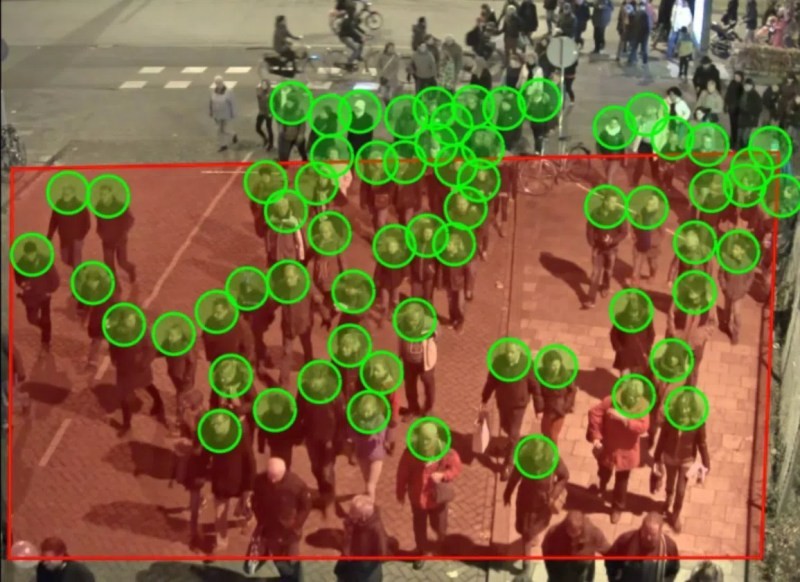
The researcher cites the Stratumseind project in Eindhoven. Between 2013 and 2018, the Netherlands’ longest bar street, 250 meters long, served as a living laboratory – without the knowledge of the partygoers. Major companies such as Atos, IBM, Intel, Cisco, and Philips, in collaboration with the municipality, collected information about the partygoers. The crowd was remotely monitored via cameras and microphones installed in smart lampposts. The operators experimented with adjusting the brightness of the light to see if this would escalate or de-escalate the situation.
The scientists hypothesized that bright light makes people more confident, makes them feel less anonymous, and stimulates better self-regulation. Various types of sensors were used for the behavioural experiments: video cameras, sound sensors and cameras, Wi-Fi tracking, technology for “sentiment analysis” on virtual communication networks, and even a weather station to measure humidity and precipitation.
The researchers secretly recorded how many people entered and left the Stratumseind and at what density. They also recorded people’s walking patterns, stress levels in their voices, the nationality and location of visitors based on smartphone subscription data obtained through Vodafone, and the average noise level on the street. Using this type of data, a link was made to the influence on crime in the area based on police data.
The data was used anonymously, which meant the researchers didn’t run afoul of GDPR legislation. But according to the researcher who spoke with De Andere Krant, the use of personal data, software, or resources for purposes other than originally intended is lurking. “It’s the story of the boiling frog. At some point, the infrastructure fails. When it does fail, the police start to take action. And before you know it, the judiciary and defence too.”
In her opinion, it is a big task to convince the population that they need to be more attentive to this type of municipal plans. “Most people buy into the PR story that smart lampposts save energy. Saving energy, I agree. That’s good. But is that the real reason? Is it really energy-saving to replace lampposts now that could have lasted another fifteen years? The energy savings of 60 to 80 percent seem like a lie to me. It’s true that LEDs save energy, but it’s equally true that a smart lamppost comes at the expense of privacy. If the lamppost is filled with sensors sometime after installation, the smart lamppost will also consume a huge amount of energy. Processing all this data consumes a huge amount of electricity. In this case, the promised energy savings are gone, and it’s no longer true that the lamppost saves energy. So people should ask themselves: Are we giving up our privacy for an empty promise? An ethical debate on this is urgently needed, but then people need to also understand what’s going on.”
yogaesoteric
October 28, 2025