
The ever-actual importance of yoga practice
By Nicolae Catrina
What do you want from life?
This very simple and direct question often puts most people nowadays in a state of indecision, sometimes even confusion, especially if this question is asked unexpectedly.
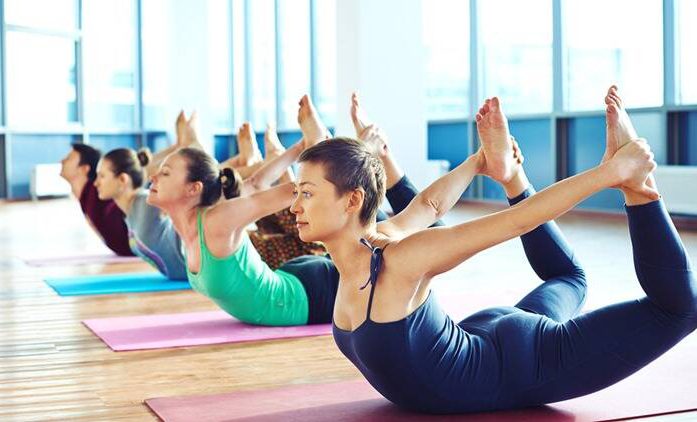
They do not usually give precise answers, but simply say, for instance, “I would like to be successful, I would like to be happy, I would like to achieve something professionally, I would like to get rid of my problems for good,” etc.
But beyond this multitude of “I would like this” or “I would like that” there are in each of us certain deep aspirations or higher desires of our soul which, however, in order to realize them as such it is necessary to acquire a broader perspective, a global perspective on our life. Beyond the many temporary goals that we would like to achieve in life, there is something else that, although constantly present in our soul, we only sometimes or perhaps very rarely become aware of.
We therefore need, each of us, to identify beyond the many temporary desires we have, the real aspirations of our soul or in other words what we really want. These deep aspirations sometimes come to light among superficial thoughts, among temporary, surface desires, which as soon as their objective has been achieved, cease and are replaced with new ones.
Upon an attentive, clear look, we realize that for each of us this knowledge of what we really want or aspire to achieve in life is essential. Then we no longer waste our time, resources, inner energy in useless activities that do not help us in the least or perhaps even hinder us in the accomplishment of those deep aspirations. We no longer waste years and years of our lives in activities that do not fulfil us and do not please us, or in relationships that are not based on mutual love, or in professions that completely stifle our creativity and freedom of expression, etc. We would focus instead and prioritise actions in the areas and directions that really matter to us. In short, we then stop wasting ourselves in efforts, activities or relationships that are not beneficial to us.
It is therefore obvious, it goes without saying, how clearly structured, how simple and how successful our lives would be once we know the real answer to this very important question and then act accordingly.
On the other hand, we also need to find the ways to act as efficiently as possible in the direction of achieving or fulfilling the deep, real aspirations of our soul.
Thanks to its universality, the multi-millennary tradition of yoga gives us exactly this, par excellence. It helps us to clarify the goals and ideals toward which we truly aspire, while providing us with a vast array of practices, effective methods – many of which are quite accessible – that always support us on this – metaphorically speaking – spiritual journey of self-discovery.
Thus, the practice of yoga properly performed becomes the backbone of our daily lives. It gives us the inner clarity and the inner strength to get through any difficult moments, or so-called trials of life, as well as the joy of living, ineffable harmony, inner fullness, which will gradually become a true constant in our lives.
Such a set of effective practices and methods is also the glue that integrates the different aspects of our being – our body, emotions, thinking and feelings, into a unified and harmonious whole. Thus, everything is brought to a state of coherence, harmonised, it is purified and enlightened. This is yoga.
Therefore, far from being a philosophical concept reserved for certain ancient or exotic cultures and civilisations, yoga is an actual modality, with numerous and often surprising beneficial applications that help us to completely reintegrate our lives, our relationships, absolutely everything.
From etymological point of view, the Sanskrit term yoga refers to a process of union, or merging, in which two distinct elements that were previously separate are connected, are united – not in any way, but in a way that allows them to interact so that they cause, or generate effects that are far superior to the initial state or condition before the yoga process.
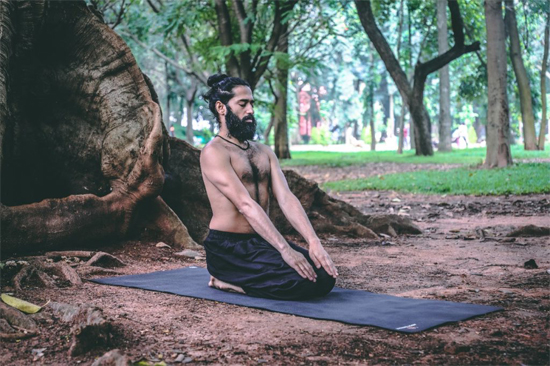
Thus, if understood in deptht, this term can refer to any interaction or connection or relationship in which we are involved. In other words, the state of yoga can arise under certain well-defined conditions, whenever we are merging – so to speak – with a certain activity. For instance, we are completely absorbed in a creative activity, whether it is an artistic creativity or a scientific creativity, etc. Or that we are merged with the object of our perceptions, for instance in the contemplation of something beautiful that fills us with delight, refinement, sublimity. Or we are united with an extraordinarily intense, fulfilling, euphoric, uplifting energy, such as erotic union full of love and transfiguration, or in countless other instances in which the basic element is that we are somehow united with something specific – not in any way, but only in the direction in which, because of that union, the experiences, states, achievements that arise in our consciousness are far superior to the states, experiences and achievements we had before this union.
Therefore, it can be said that we have the possibility of reaching the state of yoga whenever there is such a union or inter-connection between our consciousness and a certain aspect, if that union brings a certain transformation and elevation of our consciousness. In the absence of this transformation and elevation, or we could say inner alchemy, that union, or that relationship is not yoga.
Thus, yoga is much broader than we might think from a superficial approach. It encompasses much more than certain body postures – asana-s, or breath-rhythming practices – pranayama, or meditation etc, yoga can be wisely extended into almost all areas of our lives.
Of course, a natural and practical question in this respect is how to make use of the possibilities of realizing the ecstatic state of yoga that arise, as we have shown, in the moments when our consciousness unites spontaneously or at will with different aspects, activities, perceptions, intuitions, insights, emotions, etc. How to bring, so to speak, the state of yoga into our everyday life so that our yoga practice is no longer limited only to the times when we perform some bodily postures, etc., and how to discover its exceptional and ever-present values and powers. How to discover the universality of authentic yoga practice and how to make this practice, as mentioned above, the backbone of our spiritual journey towards true self-knowledge.
For this yoga teaches us, first of all, how to be truly present in every experience we go through, how to live fully, or in other words how to truly live our life and thus discover its mysteries, complexity and uplifting powers that we did not even suspect before.
However, when we approach yoga practices that help us to live more and more fully, we find that it is not so easy to be more present in our life experiences, or to keep our awareness stable and be immersed in what we experience.
The yoga tradition reveals to us the cause of this difficulty we encounter at the beginning. It tells us that there are many repetitive patterns and mechanisms in our consciousness that produce again and again countless thoughts, desires, fears, associations or correlations, the updating of memories, etc., all of which are called vritti in Sanskrit. The term vritti, from which the Romanian and English word vortex comes, means cyclic movement or vortex, because it is in fact about different patterns, different repetitive, cyclical actions, thoughts, tendencies, desires, anxieties, etc. They recur and are only nuanced in a specific way by the particular circumstances or situations we go through, but beyond these nuances they are in fact perfectly the same.
All these automatisms of thinking, feeling and acting make us prisoners of a certain limited perspective or of a certain personal point of view that is, more or less, reductionist. Because of this limited and reductionist perspective on reality, we are confronted with numerous misunderstandings, conflictual situations and problems of all kinds. Then the events we experience can seem chaotic or even meaningless.
Yoga comes to our aid in all these difficult moments. It first explains to us how the mechanisms and automatisms in our thinking, feeling and actions work, while giving us various practices and methods that make our consciousness increasingly stable or more anchored in the present, in everything we experience, and more transparent – metaphorically speaking – to reality. In other words, our consciousness no longer distorts reality as a result of those filters and automatisms, called vritti in Sanskrit, through which we previously perceived reality. In this way we begin to know ourselves truly and to know others truly, beyond our projections onto them.
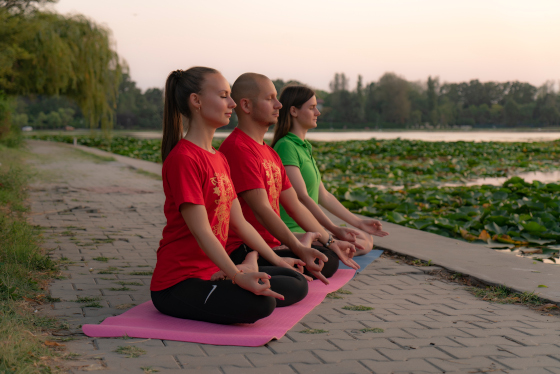
By persistently and enthusiastically practising traditional yoga techniques we realise first what our real place in this world is, at the current stage of our evolution, in other words, what our real level of consciousness, understanding, inner energy is. The real level of our present states and possibilities is often quite different from what we have previously imagined After this inner objectifying, yoga will guide us towards a realistic estimation of the steps we have to take in order to accomplish our deepest aspirations and then to act in an extraordinarily effective way in that direction.
To live as fully as possible is actually to live as consciously as possible. Yoga teaches us how to deepen self knowledge, how to increasingly refine our awareness. We can think of the following analogy. It is rather difficult to watch a film, to focus on the details in the images of that film if the screen on which the film is projected is moving, or it is not stable. In this analogy, the screen on which all our experiences are projected is our personal consciousness. If this consciousness is agitated by those repetitive, automatic vritti or mechanisms of thinking, feeling and acting, our ability to be aware of those experiences will obviously be greatly diminished. Yoga gives us possibilities to stabilize and center our consciousness.
Continuing the analogy with the film projected on the screen – when through certain yoga procedures our body remains still for a certain period of time and when the agitation of our thought ceases, at least temporarily, under these conditions the screen on which our personal films are projected will be stabilized and then we can indeed perceive with much greater accuracy, sensitivity, refinement, depth, all the various images, or metaphorically speaking, the entire landscape of our inner life. It is therefore of utmost importance to persistently practice the yoga methods by which the usual agitation of our consciousness is stopped. This is one of the main objectives of yoga practice.
The very definition of yoga practice, as given in the basic treatise for the entire yoga tradition of India, which are the Yoga Sutra-s of the great sage Patanjali, expresses exactly this essential process of stopping the usual agitation of our consciousness.
“The practice of yoga,” Patanjali says, “means full control of the agitation of consciousness.” In this context, the Sanskrit term for personal consciousness is also very important. This term – citta in Sanskrit – does not refer only to thought, intellect and mental activities, as it is erroneously or partially translated in contemporary works. It also includes all psychological phenomena and processes, such as our emotions, feelings, perceptions, imagination, memories, reflections, etc. At the usual or ordinary level of human life, all these ideas, thoughts, memories, perceptions, etc., appear at a given moment, persist for a while, and then disappear, to be replaced by others. This goes on forever.
In the Western conception and even in our language there is a clear separation between thinking and feeling – as if they arise in completely different areas of our being. This separation does not exist in the case of the Sanskrit term citta. This is why in many Western translations yoga is misunderstood as a practice or activity that is concerned only with knowledge and that would offer a cold or dry path devoid of emotion and feeling, when in reality it encompasses the full range of diversity of human experience.
If it were true the way yoga is completely misunderstood in some Western currents, then a yogi would be unable of loving or having emotions and feelings, or having higher aspirations or desires, etc.
Obviously, this is nonsense. From this follows another consequence: the actual connection between yoga and our lives. Those vritti – or patterns of thinking, feeling and acting which lie within our consciousness and which stir our consciousness, so to speak – are, in reality, not fundamentally different from consciousness, just as waves and currents of water are essentially nothing else than the ocean. Waves are movements on the surface of the ocean and thus they are clearly visible, while currents are movements that take place in the depths of ocean water and as such are much more difficult to observe.
In the same way, there are movements of our consciousness or vritti of which we are fully aware because they are surface movements, just like waves, whereas there are vritti that exist somewhere deep down in the layers of the subconscious or unconscious and that is why we do not notice them, we are not aware of them.
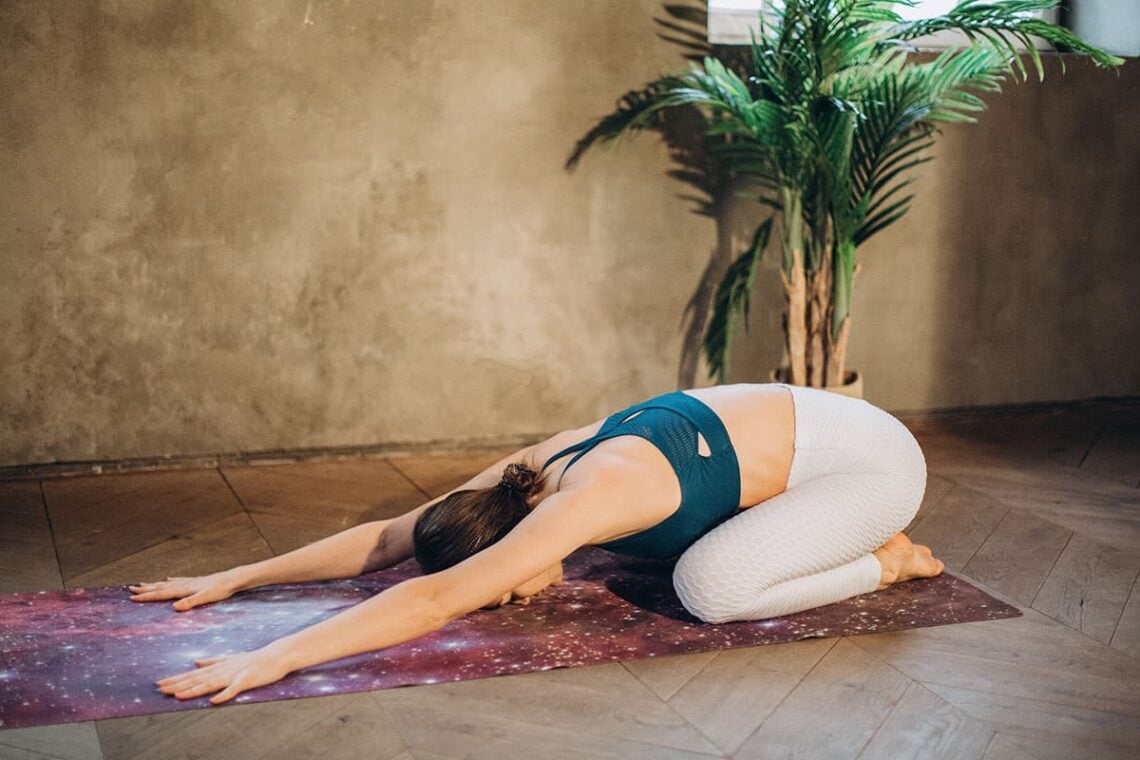
All these movements or vritti of our consciousness, whether they are surface or deep movements, they condition our consciousness. Moreover, each experience we have creates a certain imprint which is then preserved as a memory in certain areas or layers of our consciousness. The more intense the experience, the larger the trace of it in our consciousness and the more active the imprinting over time. Thus, gradually, these impregnations or traces of our experiences accumulate and program our individual consciousness because they produce certain tendencies, opinions, prejudices, partialities in the appreciation and discrimination of facts or events, different behavioural patterns, etc. This is how our personality is created, this is how our ego is created and developed.
As a result of these multiple but specific conditioning of personal citta consciousness, each of us structures our own perspective on reality over time. That is why the same event, the same human being, etc. can be perceived and described quite differently by one person or another. However, when our consciousness is no longer agitated and conditioned by all these surface or deep movements, or various vritti, then we can truly perceive objects, beings, events as they exist in reality. We then acquire an objective perspective on reality. Our consciousness is no longer hijacked, so to speak, in one direction or another, or prevented from perceiving reality because of the noise – symbolically speaking – that is produced by all those vritti.
Ordinary human life is therefore deeply marked by all these conditionings. Simply put, it is not a truly free life. Even if we are no one’s slaves, we are enslaved, metaphorically speaking, by our own inner conditioning or vritti.
Yoga is a spiritual science of freedom or liberation of consciousness from all its conditionings. This is why yoga can permeate however deeply into all the dimensions or facets of our everyday life, bringing us continuously an ever greater, more euphoric, more ecstatic freedom.
Through the systematic practice of the yoga methods, our consciousness, citta will become increasingly still or quiet, more transparent to universal reality and to the mysterious presence of God. In this sense, yoga practice includes all aspects or facets of our being.
For instance, when a state of perfect stillness of the body in certain body postures, asana-s, or in body attitudes, is achieved, it generates specific states of occult resonance with universal beneficial energies. The stillness or immobility of the body then naturally leads to the settling of a similar stillness or immobility, in other words to the cessation of the agitation of the vritti, and in this way we attain specifically nuanced states according to the occult resonances characteristic of each asana, which are sublime states of spiritual freedom and euphoric expansion of our consciousness.
In the same way, within the yoga practices that deal with the dynamics of breathing, which is the pranayama practice, there are very important, even privileged moments of complete cessation of the breath, which moments also induce the state of deep and euphoric spiritual freedom and expansion at the level of thought and in the whole of citta, or our personal consciousness.
There are of course many other beneficial effects of pranayama and asana-s, but I have mentioned here only those aspects that highlight the very definition of yoga practice as formulated in Patanjali’s sutra-s.
Similarly, in the practice of perfect focus of consciousness, called dharana, or in the practice of meditation, called dhyana, there are moments when ordinary thinking, or ordinary cognitive movements cease completely. These moments also bring an extraordinary and sublime state of inner freedom. They also bring deconditioning, liberation of our consciousness from various filters, repetitive mechanisms, prejudices, traces of the past – generally speaking, and bring us even closer to the state of complete and beatific spiritual freedom, which characterises the identifying union with God himself.
It can therefore be said that our progress in the practice of yoga is marked or shown by such moments of stillness, of silence, of stability that we achieve through the practice of yoga techniques, having as main support either the body, or the breath, or thought, or perception, etc. These very important moments in yoga practice are also called points of stability. They can be likened to anchors that firmly binds our consciousness to the present moment and help us to live fully, to be fully aware of every experience we have. These points of stability, or we could say moments of heightened presence, give us a much higher quality of life. They help us in any circumstance or situation of life to really live, to really make the most of that experience and to prepare in this way, to lay the foundations for future experiences that are ever more full of light, of consciousness, of God.
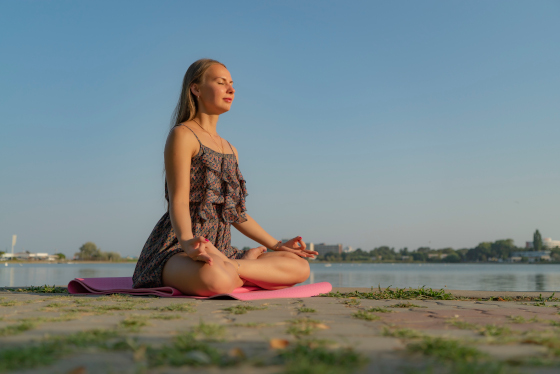
Most contemporary people, when they seek to live fully in the present moment, say that it is very difficult for them to do so, and they often find these practices difficult, or that yoga is too difficult for them. However, in reality yoga is not difficult to approach, it does not require exceptional qualities and skills from us from the beginning, but it is accessible to almost everyone. The difficulty comes from the fact that living fully is equivalent to living in the present moment. Besides, we can neither live in the past nor in the future. We can think about the past or the future, we can speculate and make assumptions about them but only in the present can we discover the deep, even universal and godly dimensions of our lives. This is where the practice of yoga leads us. Those privileged moments of awareness, or the points of inner stability accelerate our spiritual progress tremendously.
Simply put, yoga teaches us how to really live our lives and not to conceptualize them by replacing our actual experiences with our thoughts, explanations or justifications about them. In this way, the practice of yoga reveals to us increasingly sublime dimensions and facets of our lives, and thus we gain a genuine and deep self-knowledge, we realise and fulfil the most important, the most authentic aspirations of our soul, and we also discover the essential, ultimate meaning of the term yoga. Yoga is the complete, blissful, indissoluble union, beyond all separation and differentiation, with God.
Yoga practice effectively opens up a new space of experiences in which we feel much freer, stronger, and where we are able to make wise choices without being influenced by the so-called traces or conditioning of the past, or by the various compulsions and automatisms we used to have, thus restructuring our whole life on a spiritual, stable, secure, increasingly Godly foundation. We can also become much more open to the wonderful possibilities that life gives us, because we are no longer determined by the past, and we are no longer rigid and closed up toward the potentialities of the future. This is true freedom. We thus move from a defensive attitude when we merely react to different events or people, toward a greater openness to the present moment.
These aspects and countless others, at least as valuable, are waiting for us to discover through a proper yoga practice.
To get us there, to be truly effective, our practice needs stability. It is about the stability that characterises the moments of awareness or the points of stability we referred to earlier. It is about those privileged moments when we are touched, so to speak, by the state of yoga. In concrete terms, this stability of our practice implies perseverance, which needs to be neither rigid nor dogmatic, nor lacking in strength. We need constancy in practice and adequate dedication to that practice. Otherwise, in the absence of this stability of our practice we may occasionally gain some special, spiritual experiences but they will be ephemeral. They will not have a stable basis in our consciousness.
Also, in addition to constancy, perseverance, enthusiasm, our yoga practice involves having and amplifying our spiritual detachment. Yoga invites us to let go of selfish expectations, impatience and childish excitement about the results of our practice. In this respect, our degree of inner freedom is a strong criterion to evaluate the quality of our practice, besides its objective evaluation as duration, consistency, correctness in the realization of the different techniques.
A properly conducted yoga practice gives us, in a fairly short time, the ability to consciously choose how we respond to life situations we experience, including those that are not comfortable for us. We thus find that we have become able to let go of patterns, addictions, desires, and compulsions that come from our past experiences and that no longer affect our decisions or our overall quality of life. It is an exceptionally valuable, quick and effective way to have a truly happy life that we live to the full. This is why it can rightly be said that the practice of yoga has a totally exceptional value. Its importance is and always remain the same, including, or we could say even more so, in our times.
yogaesoteric
September 12, 2025
Also available in:
 Română