
The sabotage of the Romanian presidential elections is now a model for the EU
Western intelligence agencies study the annulled elections
Authorities in several European countries are examining how the Romanian government, with the support of the European Commission, managed to annul the victory of a candidate critical of the EU last year and whether they can follow suit. French journalist Stéphane Luçon, editor-in-chief of the Romanian edition of Le Monde Diplomatique, reports, citing statements by Romanian Interior Minister Cătălin Predoiu.
In November of last year, a sensation occurred in Romania: The first round of the presidential elections was won by independent newcomer Călin Georgescu, a critic of both the EU and the war in Ukraine. This caused shock in Western government circles. Romania is considered a key state in NATO’s strategy toward Russia.
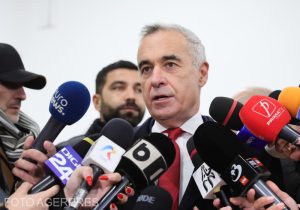
The Romanian Constitutional Court initially upheld the result, but reversed its decision a few days later. Georgescu’s victory was attributed to “Russian interference,” specifically a TikTok campaign allegedly funded by Russia. Authorities claimed that 25,000 TikTok accounts in Romania were linked to a “foreign state.” However, evidence was lacking. According to Luçon, it is now clear: It was not Russia, but the ruling National Liberal Party that secretly financed the alleged “Russian campaign” – aimed at casting Georgescu in a bad light.
The role of the EU and the Venice Commission
The sabotage of the elections received tacit support from the European Commission. While Brussels regularly criticized Poland and Hungary for “anti-democratic tendencies,” it deliberately turned a blind eye to Romania’s case. A Commission statement months after the election was succinct: It had “no comment” on the Romanian Constitutional Court’s decision of December 6, 2024, to annul the first round of elections.
The Council of Europe’s Venice Commission presented a half-baked opinion in January. While it clarified that an annulment of elections could only occur in “exceptional circumstances,” it did not comment on the legality of the decision.
Predoius’ proud “confession”
Nine months later, the consequences of the Romanian precedent are becoming apparent. Interior Minister Cătălin Predoiu openly admitted in an interview that Western intelligence agencies were “studying” Romania’s actions. Predoiu stated that the Czech Republic, in particular, had been following the case closely. He explained:
“I believe that what occurred in Romania last year is currently being investigated by all intelligence agencies in the Western world. Countries are drawing conclusions and taking action, just as Romania defended itself. In the end, the institutions defended the state.”
He also said that his Czech counterpart had told him: “We have elections in the fall and are closely following what has occurred in your country.”
Predoiu’s words, in which he proudly acknowledged the undermining of Romanian democracy, are reminiscent of a statement by EU Commissioner Thierry Breton, who threatened in January with regard to the German elections: “We can do in Germany what we did in Romania.”
Romania as a pioneer in the Digital Services Act
Romania was a leader in the implementation of the EU’s Digital Services Act (DSA) in 2024:
- A coordinator for digital services was already in office.
- The National Audiovisual Authority was given expanded powers.
- A Rapid Response Team to combat alleged disinformation was ready for action.
- “Trusted Flaggers” were certified to report illegal content.
- The NGO Expert Forum (EFOR) was even given the special status of a “super-flagger” – with direct influence on content decisions in social networks.
EFOR is funded by, among others, the US NED, the US Embassy in Bucharest, the European Commission and the Dutch Embassy.
According to Luçon, the Romanian secret services play a key role in this system – whether through direct agreements with platforms, covert control of NGOs, or infiltration of moderation teams. The system, officially declared as “protection against extremism,” is in reality an instrument for filtering political opposition.
The end of pluralism
For many Romanians, Georgescu was a response to the pervasive corruption, distrust of the judiciary, and the media’s dependence on state contracts. His removal was therefore not an “accident” but a logical consequence of the system, Luçon said.
After the election, Georgescu was charged with “attacking the constitutional order” and “promoting fascism,” which barred him from running again. This meant that “electoral pluralism” – in other words, democracy – is over in Romania.
“What ocurred in Romania is no different from an authoritarian state,” said Luçon.
The consequences extend far beyond Romania: the country could serve as a blueprint for the gradual abolition of democratic structures throughout Europe.
yogaesoteric
September 28, 2025