
“This is not a dress rehearsal”: The US is conducting a massive military buildup as the threat of an attack on Iran grows
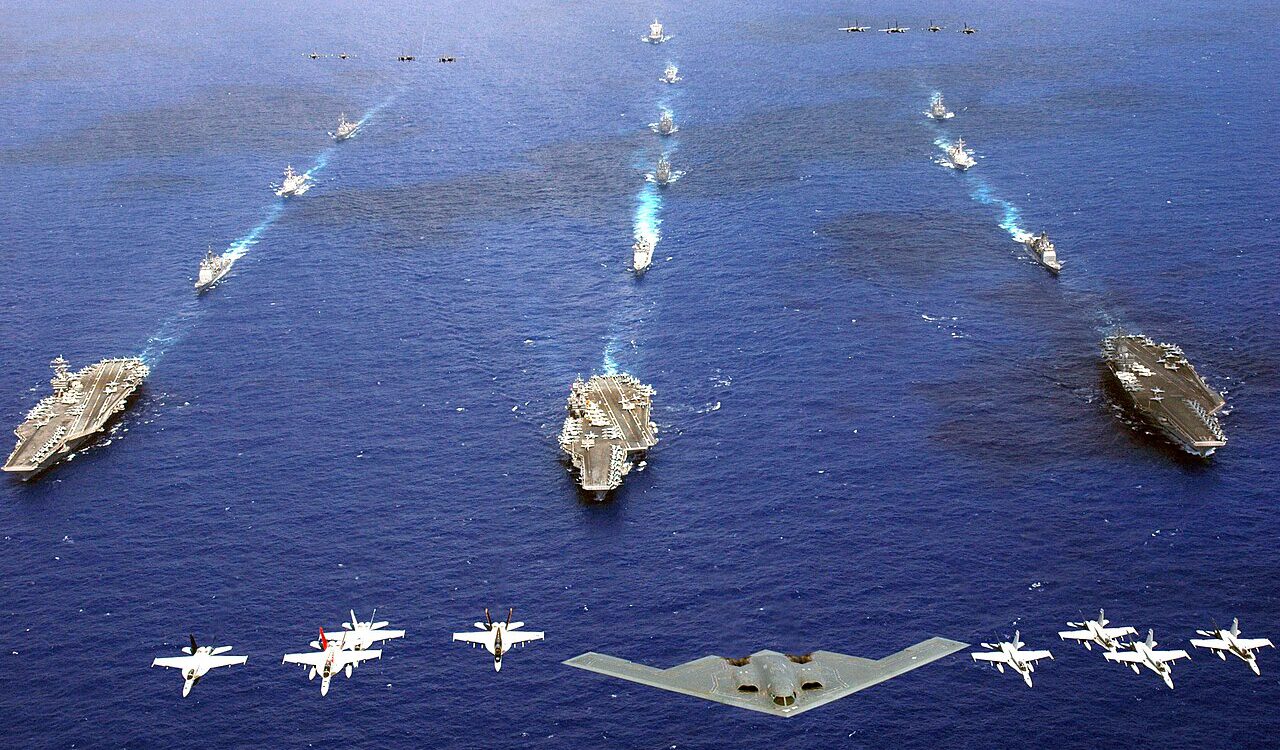
The US military is amassing a massive fleet of aircraft and warships within striking distance of Iran as the region entered the Islamic holy month of Ramadan. It is the largest buildup of military firepower in the Middle East since President Donald Trump authorized a 12-day bombing campaign against Iran last June that killed more than 1,000 people.
While Iranian and US negotiators speak in cautiously optimistic tones about the latest round of indirect talks that took place in Geneva, suggesting that another meeting is possible, statements from the highest power circles of both countries make it clear that the US may be on the verge of attacking the Islamic Republic.
“In some ways, it went well. They agreed to meet again afterward,” Vice President JD Vance told Fox News after the talks. “But in other respects, it was very clear that the president set red lines that the Iranians are not yet prepared to actually acknowledge and work through.” Vance emphasized that Trump prefers a diplomatic solution but cautioned, “The president reserves the right to say when he believes diplomacy has reached its natural end.”
A former high-ranking US intelligence official, who serves as an informal advisor to the Trump administration on Middle East policy, told Drop Site that, based on his conversations with current officials, he estimated the probability of US strikes within a few weeks at 80-90 percent.
The extraordinary and costly U.S. military buildup would be sufficient for a large-scale campaign against Tehran, far exceeding the limited strikes that have taken place in the past. “This is reminiscent of what I saw before the 2003 Iraq War,” said retired Lieutenant Colonel Daniel Davis, senior fellow and military expert at Defense Priorities, in an interview with Drop Site News. “You don’t assemble this kind of power to send a message. In my view, that’s something you do when you’re preparing to use it. What I’m seeing on a diplomatic level is just to keep everything running smoothly until it’s time to actually launch the military operation. I think both sides know where this is headed.”
Iran recognizes that it faces an unprecedented threat from the US if no agreement is reached that meets Trump’s conditions, former Pentagon official Jasmine El-Gamal said. “This is not a dress rehearsal,” she explained. “This is it. These are not the negotiations from last year or the year before or the year before that. They are up against it. There is no way out.”
The ongoing buildup involves the deployment of dozens of aircraft, including F-15 fighter-bombers, F-35 stealth fighters, Boeing EA-18G Growler electronic warfare aircraft, and A-10C ground attack aircraft, to a military airbase in Jordan – despite recent assurances from the Jordanian government that its territory would not be used as a base for an attack on Iran. Dozens more F-35, F-22, and F-16 fighter jets have been observed by independent air trackers transiting into the region over the past 48 hours, along with a large number of tanker aircraft that departed from the continental United States.
Two carrier strike groups – each built around an aircraft carrier, several Tomahawk-armed guided-missile destroyers and at least one submarine – will also be stationed nearby, along with several additional US destroyers and submarines in regional waters near Iran for defence against ballistic missile attacks, as well as more than 30,000 US military personnel and numerous Patriot and THAAD missile defence batteries distributed among military bases in the region.
The aircraft carrier USS Abraham Lincoln, which has been in the region since the end of January, also carries an air force of about 60-70 aircraft, including about 40-45 F-35C and F/A-18 fighter jets, as well as Growler electronic warfare aircraft, early warning radar aircraft and MH-60 attack helicopters.
The USS Gerald R. Ford – which was rerouted from Venezuela to the Middle East – is the world’s largest and most modern aircraft carrier and can operate a similar mix of up to 75 aircraft. “The Ford was used for the campaign in Venezuela and ultimately for the strikes against [President Nicolás] Maduro. And now it’s being sent to the Middle East. It won’t be back for several months. That’s a crew stretched to its limits,” said El-Gamal, who specialized in Middle East policy at the Department of Defense. “The fact that this carrier is there tells me this isn’t some routine ‘let’s flex a little muscle’ kind of action. He didn’t need to. He didn’t need to send this second carrier to flex his muscles.”
President Trump explained the move in remarks at Fort Bragg as a threat to the Iranians in the context of ongoing talks, saying: “If we don’t make a deal, we’re going to need it.”
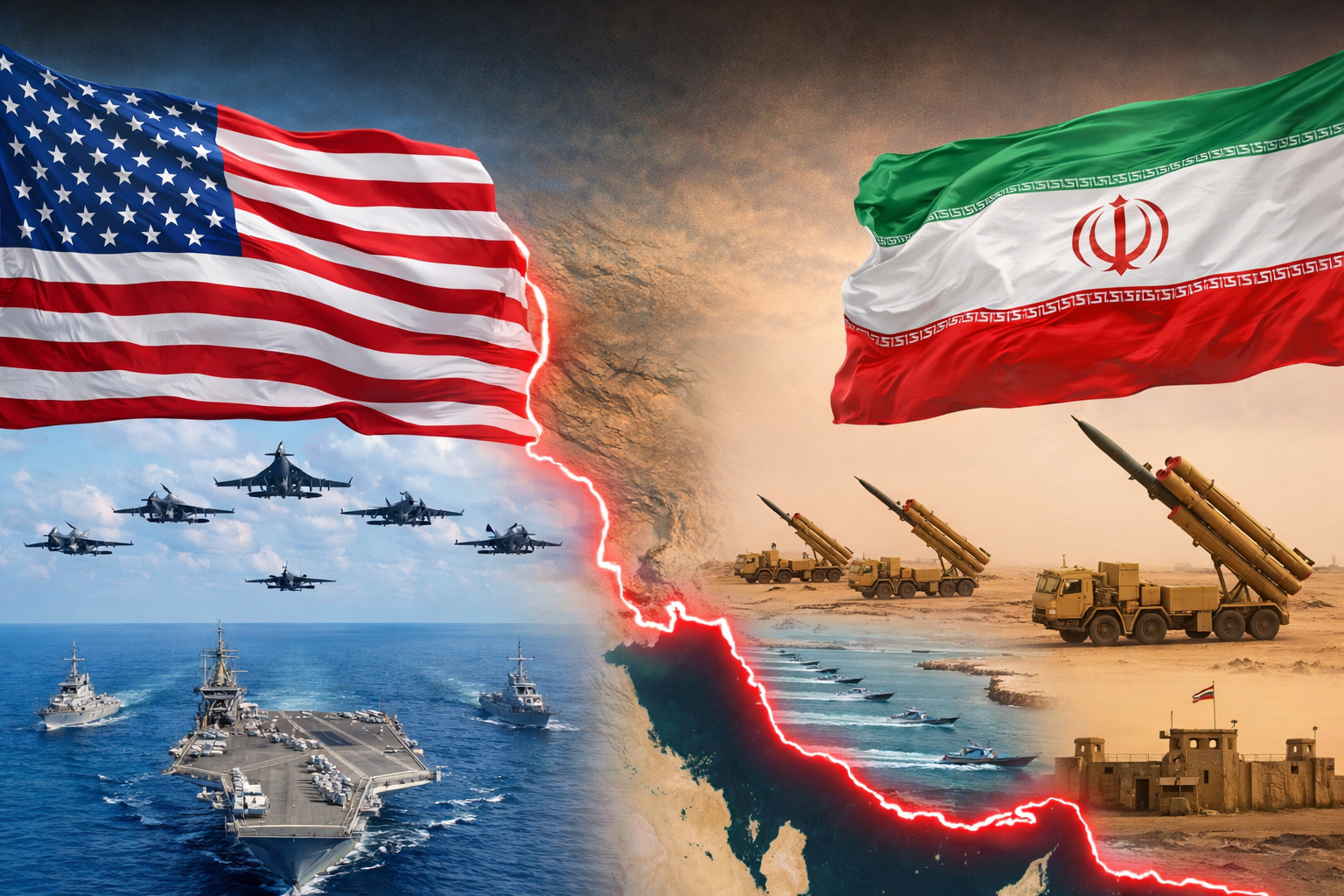
Parallel negotiations
In June, the Trump administration used the appearance of preparations for further talks with Iran as a cover for a surprise attack on the country. Both US and Israeli warplanes carried out military and civilian attacks throughout Iran, killing numerous high-ranking and mid-level Iranian military and intelligence officials, including Mohammad Bagheri, Iran’s highest-ranking military officer; Hossein Salami, commander of the elite Islamic Revolutionary Guard Corps; and Amir Ali Hajizadeh, head of IRGC aerospace operations, who commanded Iran’s ballistic missile strikes. The attacks also killed several Iranian nuclear scientists. Estimates suggest that more than 1,000 people were killed in the attacks, including at least 400 civilians, and another 4,000 Iranians – military personnel and civilians alike – were wounded.
In a recent speech, Iran’s Supreme Leader Ayatollah Ali Khamenei defiantly condemned the Trump administration’s approach to the nuclear talks, saying that an ultimatum is not negotiation. “The Americans are saying, ‘Let’s negotiate about your nuclear energy, and the outcome of the negotiation should be that you don’t have this energy’,” Khamenei said. “If that is the case, there is no room for negotiation; but if negotiations are truly to take place, it is wrong and foolish to predetermine the outcome of the negotiations.”
Referring to the “beautiful armada” that Trump had boasted about, Khamenei said: “The Americans keep saying they sent a warship toward Iran. Of course, a warship is a dangerous piece of military equipment. But more dangerous than that warship is the weapon that can send that warship to the bottom of the sea.” He added: “The US president has said that the United States has not succeeded in eliminating the Islamic Republic in 47 years. That is a good admission. I say: ‘You will not succeed either’.”
The Israeli military has also indicated that it is preparing for a possible war with Iran. After meeting with Trump in Washington, D.C., Israeli Prime Minister Benjamin Netanyahu released his own list of priorities, which included both ending Iran’s enrichment program and taking measures against its ballistic missile capabilities. “[President Trump] is determined to exhaust all possibilities to reach an agreement, which he believes can now be achieved because of the circumstances created, the show of force,” Netanyahu said at a conference of presidents of major American Jewish organizations. “And the fact that, as he says, Iran certainly needs to understand that it missed its chance last time, and he believes there is a serious probability that they will not miss it this time. I will not hide from you that I express my scepticism about any agreement with Iran.”
El-Gamal, who served as the country assistant for Syria and Lebanon in the Office of the Secretary of Defense’s Policy Department under the Obama administration, said she believed Trump would prefer to strike a deal he could portray as going further than any Iranian concession in the 2015 nuclear agreement, particularly regarding ballistic missiles and support for regional resistance groups. “If he can get that without military confrontation, he’ll take it,” she said, quickly adding that Iran would almost certainly stick to its red lines regarding such demands.
“Currently, the ballistic missile program is essentially all that Iran has left to maintain any form of deterrence, to defend itself, and to project any form of power in the region,” she added. “And what is the Islamic Republic of Iran if it doesn’t have the capability – indeed, any government – if it doesn’t have the capability to project power as a serious actor in the region, to maintain deterrence capability, and to defend itself? Then it’s basically not a government at all.”
The former senior US intelligence official told that Trump was determined to attack Iran in January but was dissatisfied with the options presented by the military based on the resources then available in the region. The renewed diplomatic talks gave the Pentagon time to deploy additional weapons, ships, and aircraft, significantly expanding the scope and impact of potential operations. Extensive deployments were necessary not only to conduct sustained attacks against Iran but also to position munitions and aircraft to counter Iranian retaliatory strikes against US military installations and Israel, which Iran would heavily bomb in the event of a US-led air war.
While several Arab countries have publicly stated that they will not allow their territory or airspace to be used for an attack on Iran, the US would need to utilize command and control and targeting systems in multiple countries, as well as satellite and surveillance capabilities, in the event of large-scale strikes. Military assets in these countries, including advanced US missile systems, would also be used to repel Iranian retaliation.
“Everything was prepared,” Davis said of January, “and then suddenly it didn’t occur.” Netanyahu was concerned that more defensive capabilities were needed to respond to Iranian retaliation, he said, and these concerns were shared by Pentagon war planners. “And I think that delayed it,” Davis added. “And then, of course, shortly afterward, you saw this huge influx of surface-to-air missiles going in everywhere.”

Following Trump’s inauguration in January 2025, Director of National Intelligence Tulsi Gabbard asked Davis to take a senior position in the administration, where he would have overseen the production of the Presidential Daily Briefing, a comprehensive intelligence summary presented to the president each morning. In March, as Davis underwent the background check process, Gabbard withdrew his name from consideration after protests from lawmakers and pro-Israel groups, citing Davis’s criticism of Israel, the Gaza war, and his opposition to military strikes against Iran. Davis said he remains in contact with what he described as some of the few remaining “sensible foreign policy brains” in the administration. “They’re beside themselves because they feel powerless,” he said. “They can only go so far in saying something, or they’ll either be removed or sidelined.”
Based on his experience with previous U.S. war planning and missions, Davis said he believed the military would first target Iranian air defences, command and control facilities, communications installations, and senior IRGC leaders. It would also target Iran’s offensive missile capabilities, mobile launchers, naval bases, and ships. “We’re going to attack the political leaders at the same time, in parallel with a lot of that. They might even try to take out the air defences at the same time so they don’t have a chance to get into bunkers or wherever,” Davis said. “I think that’s the idea, because if you can take out the senior leaders and decapitate the regime, then at least according to that hopeful theory, you have a chance that the people will rise up.” He added that the U.S. would likely also conduct broader attacks against Iranian security forces used to suppress or break up domestic uprisings or unrest.
El-Gamal said she believes U.S. war planners are anticipating unprecedented Iranian counterattacks and will attempt to pre-emptively attack its offensive infrastructure. “You have to stop everything the Iranians might have planned before they even have a chance to begin. It’s similar in some ways to destroying a country’s air force before you go to war,” she said. “If you look at it from that perspective, and look at the resources being sent to the region, and look at what the Iranians might be planning in retaliatory attacks on the carrier strike group, on U.S. personnel in the region, and you look at everything that would be needed for those attacks – the ballistic missiles, the short-range missiles, the Shahed drones – then you have to have a plan to attack all of that right at the beginning, at the start of the operation. And if you assume, or prepare for, that the talks will fail, then that would have to be the plan.”
Trump’s strategy
In the aftermath of the June attacks, Trump and other senior officials boasted that they had effectively wiped out Iran’s nuclear program. “Our objective was to destroy Iran’s uranium enrichment capacity and end the nuclear threat posed by the world’s largest state sponsor of terror,” Trump said in a White House address on June 21. “Iran’s principal uranium enrichment facilities have been completely and totally wiped out.” Defense Secretary Pete Hegzeth claimed, “Our bombing campaign has wiped out Iran’s ability to make nuclear weapons,” while State Secretary Marco Rubio said, “This was complete and total wiping out. They are in bad shape. They are way behind where they were today.”
Since these attacks, media reports have suggested that Iran is secretly rebuilding missile sites and fortifying facilities damaged in previous US and Israeli attacks. However, satellite images showing the construction or reconstruction of access tunnels, which form the basis of these media reports, are not proof of attempts to build nuclear weapons.
For years, U.S. national intelligence assessments have consistently undermined the alarmist tone of senior U.S. and Israeli officials who warned of Iran’s ability to build a nuclear bomb in the short term. These assessments concluded that Iran halted its nuclear weapons program by the end of 2003. For decades, Khamenei has emphasized his rejection of the production or use of weapons of mass destruction. And Iran has publicly stated that the damage to its missile capabilities from the June war was far less severe than the U.S. claimed, and that it has been working to rebuild its conventional missile capabilities and stockpiles.
In addition to the US military buildup, the White House is also waging a protracted economic war against Iran, which has been described by Trump administration officials in increasingly explicit terms as a tool for generating social unrest in the country.
At a Senate hearing recently, U.S. Treasury Secretary Scott Bessent described a policy aimed at inflicting maximum economic damage on ordinary Iranians by targeting the strength of the Iranian currency. “What we have done is create a dollar shortage in the country,” Bessent said in response to questions from Senator Katie Britt (Republican, Alabama), explaining that the policy reached a “grand climax” in December with the collapse of one of the country’s largest banks. “The Iranian currency went into freefall, inflation exploded, and that’s why we saw the Iranian people take to the streets,” Bessent said.
These remarks echoed earlier statements Bessent made at the World Economic Forum in Davos in late January, following massive public unrest in Iran. After large peaceful demonstrations that began in late December due to the country’s economic situation, the protests turned violent on January 8, triggering a series of events that resulted in the deaths of thousands of Iranians. Bessent described US policy toward Iran at the time as “economic statesmanship, no shots fired,” adding that the uprising showed that “events are moving in a very good direction here.”
As unrest erupted and spread across the country, Trump called on Iranians to seize state institutions and promised support was on the way to foment an insurrection. Police stations, mosques, hospitals, and other facilities were attacked as security forces used overwhelming force to quell the rebellion. International human rights organizations stated that much of the violence consisted of unprovoked, widespread attacks by Iranian security forces on peaceful protesters, while Tehran described the events as acts of foreign-orchestrated terrorism.

In the lead-up to the diplomatic talks that began in Oman on February 6, the US and Israel attempted to issue an ultimatum to Iran. They demanded not only a drastic reduction in Iran’s civilian nuclear capabilities, but also a significant weakening of the country’s ballistic missile capabilities – both in terms of stockpiles and range – as well as an end to Iranian support for armed resistance movements and groups in the region. Iran rejected this portrayal and insisted on negotiating only the nuclear issue.
“The best way I can characterize it is that this is a disconnect from reality,” Davis said of recent conversations he had with current U.S. defence officials. Some of them had spoken of an administration that, after a successful operation like the recent kidnapping of Maduro in Venezuela or the 2011 overthrow of Moammar Gaddafi in Libya, was looking to give Trump the appearance of a swift regime-change victory. “We have a Plan A, which is the Libya model – perhaps even more so than the Venezuela model – that the people on the ground will do what we don’t have ground troops for,” he said. “That’s your problem. If Plan A doesn’t work, we don’t have ground troops. The chances of decapitating the regime – even with this massive amount of firepower, and it is massive, there’s no doubt about that – I think you’re going to be surprised and disappointed. And then what do you do next?”
El-Gamal said the idea that Reza Pahlavi, the son of the dictator overthrown in 1979, or the Israeli-backed MEK (Mojahedin-e-Khalq), a fanatical cult-like faction that has managed to ingratiate itself with US politicians, would play a significant role in regime change was pure fantasy. Iran was not comparable to Syria, she said, where there had been a protracted civil war involving multiple armed factions and extensive Western military and intelligence support to overthrow the Assad regime. It was more likely, she suggested, that US intelligence and military planners believed that if they decapitated the country’s leadership, they could strike a deal with the surviving officials, similar to what was developing in Venezuela.
“You cut off the necessary minimum at the top and leave as much as possible in place, but then it becomes a compliant regime. That’s exactly what’s going on in Venezuela,” she said. “If I were sitting in the Pentagon thinking, ‘Okay, how do we do this without risking a country of 90 million people essentially becoming a failed state?’ then you would try to plan it. So you would look at: Which resources will we eliminate? Which persons and personnel will we eliminate? Who will we keep? Which intelligence resources, mostly Israeli, will we activate to send the messages we need to send to the remnants of the regime? And how do we turn things around quickly so that no vacuum is left?”
The scale of military forces currently deployed or soon to be deployed around Iran would be sufficient for a large-scale military operation that could potentially last for weeks or longer. The logistical presence in the region also suggests that the US could provide refuelling and support for heavier, long-range aircraft launching attacks from US territory – similar to those that struck Iranian nuclear sites during the Twelve-Day War.
“Over the summer, the U.S. and Israel demonstrated their ability to destroy or circumvent Iranian air defences. You probably don’t need eight aircraft carriers in the area of operations because U.S. aircraft can enter and exit Iranian airspace with a high degree of confidence,” said Harrison Mann, a former U.S. Army major and executive officer for the Defense Intelligence Agency’s Middle East/Africa regional centre. “If you were trying to implement regime collapse in China or Russia, you would deploy far more forces. This is still a budget operation – more notably, what’s missing is a significant number of ground troops. The plan appears to be simply to destroy things until the Iranians agree to an ever-escalating list of demands – or until there is simply no government left to accept anything.”
In response to this buildup, Iran has indicated that in a conflict it could take measures to stop traffic through the Strait of Hormuz – a strategic waterway that is crucial for global energy flows and carries about 20 percent of the world’s oil consumption and about one-fifth of global trade in liquefied natural gas.
Iran’s Islamic Revolutionary Guard Corps navy began a live-fire military exercise in the Strait of Gibraltar. Iranian officials portrayed the exercises as a test of rapid, mutual response capabilities to threats and as a signal that they are capable of jeopardizing one of the world’s most critical oil and gas reserves should pressure continue to mount.
“During the 12-day war, Iran’s missiles significantly damaged the world’s best missile defence systems in Israel. Iran also possesses very powerful speedboats capable of operating in the Persian Gulf and the Gulf of Oman. They can control everything there,” said Mostafa Khoshchesm, a security analyst close to the Iranian government. “A second option is to close the Strait of Hormuz by mining, sinking ships, and striking ships with missiles from anywhere in Iran.”
In previous instances where Israel and the US bombed Iran over the past two years, Iran responded with strikes calibrated to avoid killing American military personnel or Israeli civilians, coordinating the attacks with the US through unofficial channels. The strategy aimed to allow Iran to respond without dramatically escalating the situation into a larger war. Since early January, Iranian officials have warned that they no longer intend to operate according to these informal rules of engagement and plan to inflict real damage in future attacks. Davis, the retired Army officer, said he believes the US is underestimating Iran’s missile capabilities.
“I’ve heard from people at the highest levels of the Pentagon who have deep insight that there are those who say, ‘I think we can handle Iran’s military, their missile attacks, right now. I think we can adequately defend ourselves’,” Davis said. “I don’t think we can. I think Iran demonstrated in the 12-Day War that it can penetrate the absolute best integrated air defence systems we have. I think it’s a bad gamble – not even a bet, but a gamble – to say, ‘I think we can hold out and still take them out and hit their offensive missiles before they have a chance to fire on us’.”
yogaesoteric
February 26, 2026