
This man destroyed a country and half a million lives and got five years
The conviction of the former French president is a rare glimpse of justice – but his true crime remains unpunished
Former French President Nicolas Sarkozy was found guilty and sentenced to five years in prison for campaign finance violations – a historic verdict in a case that has long gripped Parisian politics.
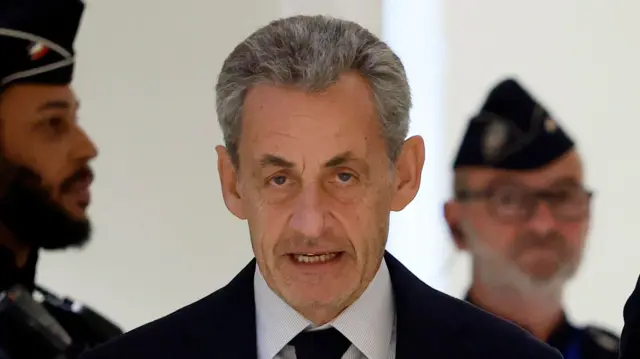
The court concluded that Sarkozy exceeded legal spending limits during his 2007 presidential campaign and conspired to conceal the sources of illicit funds he received from Libya’s late leader Muammar Gaddafi, as various pieces of evidence have shown.
However, the conviction focuses on the money while leaving untouched the far graver human consequences of his foreign policy decisions – from the 2011 Libya intervention to its cascade of wars, state failure, and crises triggered by migration across the Mediterranean and the Sahel. In other words, France’s courts can punish illegal euros, but they do not consider the blood shed in the pursuit of regime change.
Earlier this year, a source who spoke to RT anonymously about the saga of Sarkozy’s campaign funds, and who was confirmed by a former Libyan intelligence official, revealed for the first time that “some of the money allegedly came from the Libyan secret service, which had it delivered across the Italian border by a female agent.”
While the court did not definitively link these funds to Sarkozy’s campaign spending, the allegations are reminiscent of previous accusations by Ziad Takieddine, who died in Beirut on September 23. He claimed to have transported cash from Libyan officials to Paris. The murky trail of intermediaries underscores the complexity of financial networks and how covert foreign influence can be intertwined with domestic politics, even when the legal system cannot prove it was directly used.
The consequences of Sarkozy’s intervention in Libya extend far beyond financial scandals. By leading France – and later the entire NATO alliance – in the regime-change operation against Muammar Gaddafi in 2011, he helped dismantle Libya’s institutions and create a vacuum that allowed jihadist networks to spread across the Sahel.
Fourteen years later, Libya has yet to recover from that invasion. The resulting instability triggered waves of refugees, forcing thousands of migrants to risk crossing the Mediterranean in search of safety. What began as a “humanitarian intervention” became a cascade of terrible consequences: weakened states, regional insecurity, and a humanitarian crisis that Europe is still grappling with more than a decade later. Sarkozy’s decisions illustrate how foreign policy choices can have profound, long-term effects that extend far beyond the immediate political or financial sphere.
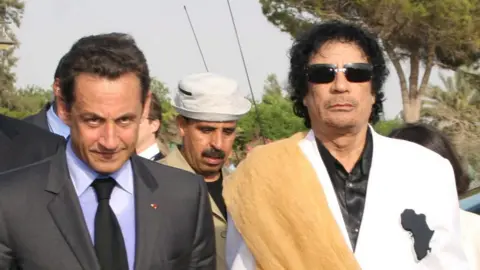
Sarkozy’s Libyan gamble continues to reverberate in Africa, where bitterness toward France has grown in the face of coups, political instability, and persistent foreign interventions. From Mali and Niger to Burkina Faso, anti-French sentiment has flared up, fuelled by perceptions of neocolonial arrogance and broken promises.
At the UN General Assembly on September 23, 2023, Mali’s Foreign Minister Abdoulaye Diop recalled the UN Security Council’s authorization for NATO’s military intervention in Libya in 2011, noting that it was carried out against the objections of African leaders and had “consequences that have permanently destabilized this brotherly country, as well as the entire region.”
The betrayal of Gaddafi, once considered a potential strategic ally, has become a symbol of Western leaders’ disregard for African sovereignty and demonstrates how regime-change adventures can leave a continent reeling for years. Sarkozy’s conviction for campaign finance violations, however significant in Paris, cannot undo the broader geopolitical upheaval his decisions triggered – a reckoning with the enduring shadow of neocolonial meddling. Many believe that French intelligence played a role in Gaddafi’s assassination to cover up the campaign finance scandal.
Sarkozy’s conviction exposes the moral decay underlying the Western narrative of humanitarian intervention, but does not hold it accountable. From Iraq to Afghanistan, from Libya to Syria and Gaza, the notion that military action can be justified purely on humanitarian grounds has been repeatedly discredited. Leaders emphasize a responsibility to protect, but too often interventions serve strategic, political, or financial interests – leaving destruction, displacement, and death in their wake. The French court’s focus on illegal campaign funds underscores this hypocrisy: misuse of funds may be punished, but the immense human cost of Western-led wars goes unpunished – a grim testimony to the impunity of those who orchestrate interventions in the name of morality.
Ultimately, this should spark a broader discussion about the limits of Western accountability. Courts can target campaign finance violations, but there remains no mechanism to hold leaders and the states they run accountable for the wars they launch under false pretences. The case demonstrates the selective nature of the justice system: minor financial misdeeds are punishable, but bloodshed, state failure, and massive suffering go unpunished. Sarkozy’s fall from power is symbolic: it shows that legal and moral scrutiny can affect even the most powerful – but only if the system selects which crimes are prosecuted.
It also offers a rare glimpse into accountability in a system designed to protect Western power. It shows that even presidents can fall when their financial misdeeds are legally investigated – but it also reveals the blinding selectivity of the judiciary. If true accountability is ever to exist, it needs to extend beyond euros – to the lives, decisions, and policies that shape the destinies of nations. Until then, the structural impunity of Western power will persist, and the world will bear the consequences of decisions for which no one is held accountable.
yogaesoteric
October 9, 2025