
Treasure trove of ancient astrology unearthed in Egypt
Thousands of ostraca found at Atreps
A joint Egyptian-German archaeological mission between the Supreme Council of Antiquities and the University of Tübengen has uncovered an astonishing 13,000 new ostraca at Atreps (ancient Athribis) in Sohag, Egypt. This brings the total recovered since 2005 to around 43,000, making Atreps the site with the largest known collection of ostraca in the world.
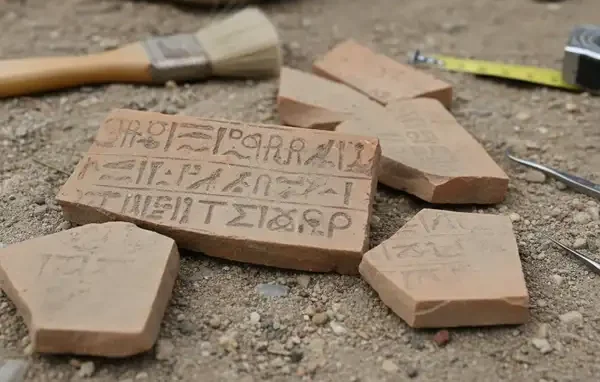
Ostraca are broken pieces of pottery – and sometimes limestone – used by ancient people as writing surfaces. Most were written upon with ink, though a small number were incised. Ostraca were the everyday “paper” of ancient life.
From the Late Period of Egypt (starting around the seventh century BCE) through the Ptolemaic era (332–30 BCE), Atreps was a vibrant cult centre devoted to the lion goddess Ta-Repit, identified with the eye of the Sun God. She was worshiped alongside a local triad that included Min and the child deity Kolanthes. Most ostraca were found near the temple of Ptolemy XII and adjacent temple zones, revealing a remarkably diverse collection of everyday writings.
The Atreps ostraca span over millennium, from Demotic tax receipts dating to the third century BCE to Arabic jar labels from the ninth to eleventh centuries CE. Most texts are written in Demotic, with many in Greek, and smaller numbers in hieratic, hieroglyphic, Coptic, and Arabic. The texts include administrative and commercial records as well as religious texts, hymns, and devotional writings – revealing both the practical and spiritual lives of the communities who lived there. The interdisciplinary research group Ostraca d’Athribis is carefully studying these ostraca to reconstruct a detailed picture of life in Atreps across the centuries.
Of special interest are more than 100 mainly Demotic-Hieratic horoscopes, which complement earlier discoveries of about 130 ostraca documenting celestial observations and possible astrological charts. Generally speaking, in ancient Egypt, astronomy involved observing and measuring celestial bodies, while astrology interpreted their significance. Horoscopes recorded the positions of stars and planets at specific moments so their meaning could be interpreted. It seems clear that Atreps served as a hub of astrological and astronomical activity.
This stargazing parallels the integration of astronomy and Godly action into various biblical stories, where celestial phenomena signal Godly will, mark sacred time, or generally structure ritual life. The Sun stands still in Joshua 10 to aid Israel in battle; celestial bodies are understood as Godly signs in Joel 2:30–31 and Isaiah 13:10; and astrology-based festivals are described in Exodus 12 and Leviticus 23. In both Atreps and the biblical world, the sky was understood as a canvas upon which Godly will was written.
yogaesoteric
April 5, 2026