
Trust In the US Government Has Plunged From 77% To 17%
Over the past seven decades, Americans’ trust in the federal government has dropped from postwar highs to historic lows.
In 1964, 77% said they trusted Washington to do what is right most of the time. As of September 2025, that figure stands at just 17%.
The chart below, via Visual Capitalist’s Niccolo Conte, tracks this long-term shift, using data from Pew Research Center.
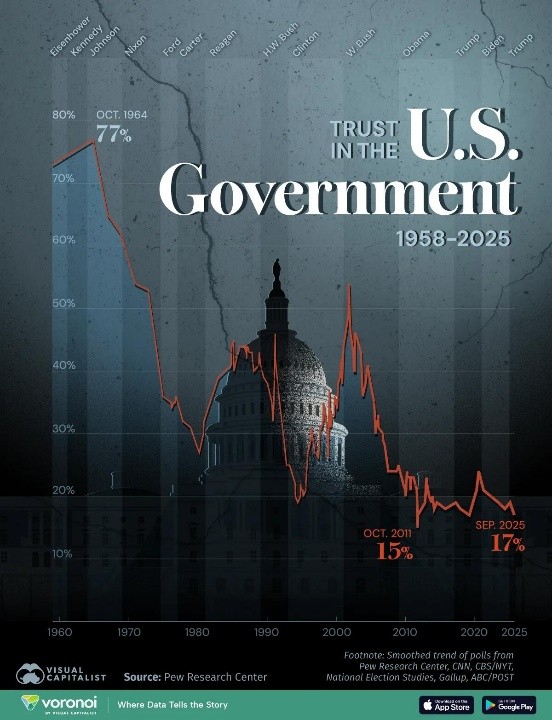
While trust has occasionally surged during moments of national crisis, the broader trajectory shows a steady erosion across generations.
From Postwar Highs to Vietnam-Era Decline
Trust peaked in 1964, when 77% of Americans said they trusted the federal government most of the time. Even in 1958, nearly three-quarters of the public expressed confidence in the federal government.
That began to change in the late 1960s and early 1970s. By 1970, trust had fallen to 54%, and it slipped further to 36% by 1974 in the aftermath of Watergate.
The Vietnam War, political scandals, and economic turbulence reshaped public opinion for decades to come.
Temporary Surges During National Crises
Although the long-term trend is downward, trust has occasionally rebounded during moments of national unity. After the 9/11 attacks, trust jumped from 44% to 54% in a matter of months. It was one of the last times a majority expressed confidence in Washington.
Similar, though smaller, increases occurred during other crises. In early 2020, trust briefly rose to 24% amid the covid-19 outbreak. However, these bumps have proven short-lived, with trust quickly returning to lower levels.
A New Era of Persistent Low Trust
Since the mid-2000s, trust in government has rarely crossed the 30% mark. In the 2010s and early 2020s, it often dipped below 20%.
As of September 2025, just 17% of Americans say they trust the federal government most of the time – near the lowest level recorded in Pew’s time series.
Just One in Four Americans Say They Back U.S. Strikes on Iran
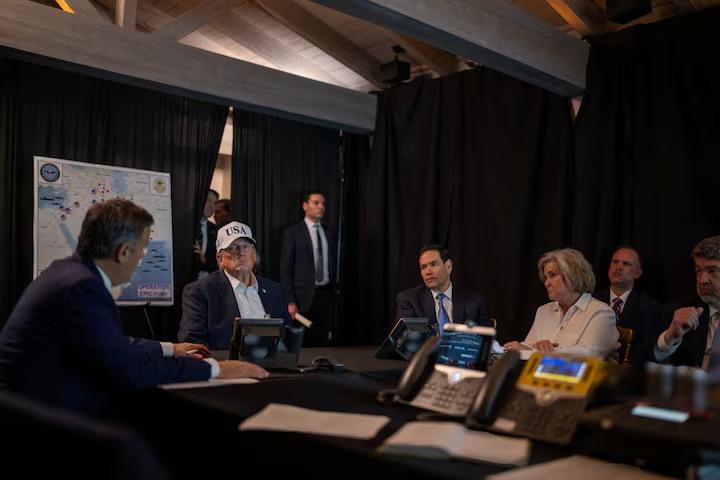
Only one in four Americans approves of U.S. strikes on Iran that have plunged the Middle East into chaos, while about half – including one in four Republicans – believe President Donald Trump is too willing to use military force, according to a Reuters/Ipsos poll.
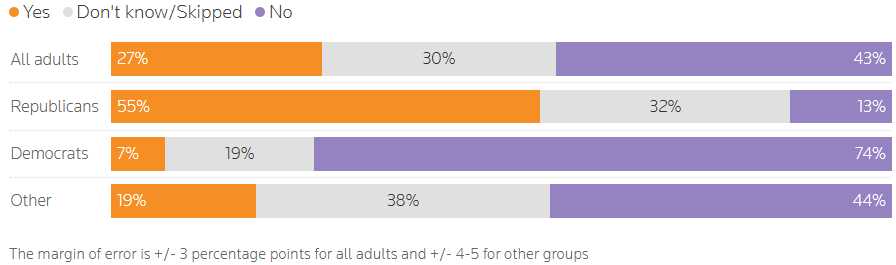
Some 27% of respondents said they approved of the strikes, which were conducted alongside Israeli attacks on Iran, while 43% disapproved and 29% were not sure. About 9 in 10 respondents said they had heard at least a little about the strikes, which began early on Saturday, February 28 – during the Islamic holy month of Ramadan – with a surprise attack that killed Iran’s leader.
Do Americans approve of Trump’s attack on Iran?
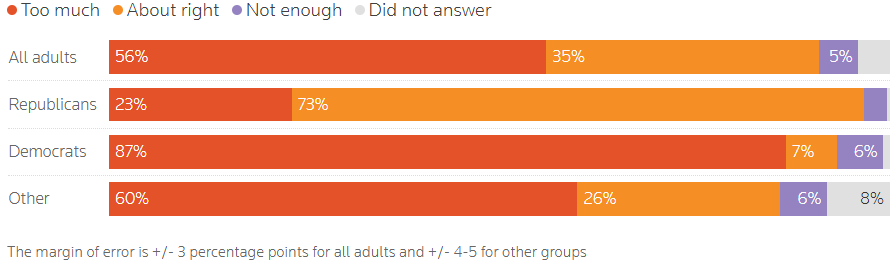
The poll, which closed on Sunday, March 1, showed that 56% of Americans think Trump, who has also ordered strikes in Venezuela, Syria and Nigeria in recent months, is too willing to use military force to advance U.S. interests. The vast majority of Democrats – 87% – held this view, as did 23% of Republicans and 60% of people who don’t identify with either political party.
What do Americans think of Trump’s use of military force?
The poll was conducted amid ongoing attacks on Iran by the U.S. and Israel, and closed before the U.S. military announced the first American casualties in the operation.
Four U.S. service members have been killed during the campaign, which prompted retaliatory missile and drone strikes by Iran on Israel and on U.S. military installations across the region. Three U.S. jets were shot down during combat missions, which the U.S. military said occurred when they came under fire by mistake from Kuwaiti air defences.
Concern About Harm to Troops
While 55% of Republicans said they approved of the strikes and 13% disapproved, the Reuters/Ipsos poll found 42% in Trump’s party said they would be less likely to support the Iran campaign if it leads to “U.S. troops in the Middle East being killed or injured.”
The strikes on Iran began three days before the first primaries of the U.S. midterm elections, which will determine whether Trump’s Republicans maintain their majorities in Congress for the next two years.
Worry Over Fuel Prices
Some 45% of poll respondents, including 34% of Republicans and 44% of independents, said they would be less likely to support the campaign against Iran if gas or oil prices increased in the United States.
Prices for Brent crude surged 10% to about $80 a barrel in over-the-counter trade on Sunday, oil traders said. Analysts predicted prices could climb as high as $100 due to the latest conflict.
The United States and Israel launched their strikes after negotiations in Geneva between the U.S. and Iran failed to secure a breakthrough over Tehran’s nuclear program.
Washington wants Iran to give up all uranium enrichment because it believes Tehran wants to build a nuclear bomb. Iran denies wanting a bomb and says it wants to process uranium to make fuel for atomic power plants.
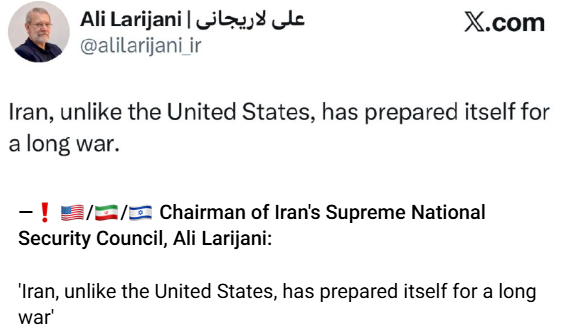
Meanwhile, Russia expressed its worry that Israel’s and U.S.’ attack could lead to World War 3, while Trump expressed his belief that the war will be over in “4 to 5 weeks”. On the other hand, Iranian point of view is more sombre:

yogaesoteric
March 3, 2026