
Twisted Narratives. 3. Strategic Omissions: How “Twisted Yoga” Shapes the Story by Leaving Things Out
How Media Stories Are Built Around Spiritual Movements – Part 3
In the previous article we looked at how Twisted Yoga builds its narrative through techniques such as emotional priming, negative reframing, and deviance amplification. But documentaries do not shape perception only through what they show. They also shape it through what they leave out.
Every documentary must simplify reality to some extent. No film can present everything. But when key pieces of information repeatedly disappear, the viewer no longer sees a simplified reality but a selectively constructed one. In the case of Twisted Yoga, several important aspects of the yoga school and its history receive little attention or are missing entirely.
These omissions follow recognizable patterns. They create a story that appears clear and convincing but is built on a limited and carefully selected set of facts.
Context Stripping
A first pattern can be described as context stripping. This happens when pieces of information are shown without the wider context that would help viewers understand their meaning.
This technique appears repeatedly when the documentary discusses the teachings themselves. At several points viewers are shown fragments of lectures, spiritual concepts, or tantric ideas. These fragments are often followed by commentary suggesting that the teachings function as tools of manipulation.
For example, the documentary shows scenes of students attending lectures on yoga philosophy and spiritual development. These scenes are immediately interpreted as part of a system designed to influence participants psychologically.
What is largely missing from the story is the broader context of the teachings themselves. The yoga courses associated with this tradition cover an extremely wide range of topics: meditation, yoga practice, philosophy, diet, symbolism, and various forms of personal development. Participants often study these teachings for years and practice them voluntarily in their daily lives witnessing continuous improvements both in their states of health and contentment as well as in their relationships with their social environment.
When this larger framework disappears, the fragments shown in the documentary become easy to reinterpret as suspicious or manipulative.
By removing the wider context of the teachings, the documentary transforms isolated fragments into apparent evidence of wrongdoing. What viewers see is not the full picture but carefully selected pieces of it.
Cultural Isolation
A similar pattern can be described as cultural isolation. This occurs when ideas or practices are removed from the wider traditions in which they exist, making them appear far more unusual or disturbing than they actually are.
Many of the spiritual concepts discussed in the documentary – such as devotion, surrender, or the transcendence of ego – are common themes in spiritual traditions around the world. Similar ideas appear in classical yoga texts, Buddhist teachings, and Christian mysticism.
Yet in Twisted Yoga these ideas are rarely presented within that broader context.
One example appears when tantric practices are discussed. The documentary presents them mainly as strange or disturbing exercises without explaining that tantra is a long-standing tradition within several spiritual paths and has been studied by many Western scholars, such as the famous Sir John Woodroffe (Arthur Avalon) and the celebrated historian of religion and exiled dissident of communist Romania Mircea Eliade, Gregorian Bivolaru having had correspondence through secret letters with the latter, one of the reasons why he was under observation by the Romanian Secret Service. The documentary fails to mention this. Among recent scholars analyzing Tantric practice of Sacred Eroticism are Professor of American Religious History Gordon Melton and Sociology Professor Massimo Introvigne. In 2022 Introvigne published a book Sacred Eroticism: Tantra and Eros in the Movement for Spiritual Integration into the Absolute (MISA) (Milan and Udine: Mimesis International, 2022), one of more than seventy books Massimo Introvigne has devoted to new religious and spiritual movements and religious pluralism.
When tantric practices are presented without their wider cultural background, viewers may easily conclude that they are bizarre inventions of the group itself. In this way, the teachings become isolated from the traditions in which they belong. As a result it is easy to mobilize hostility against those practices and the ones doing them.
Scholar of Political Theory, Religion and Media, Michele Olzi, in his book review of Massimo Intovigne’s book Sacred Eroticism: Tantra and Eros in the Movement for Spiritual Integration into the Absolute (MISA) (Social Science):
Introvigne warns the reader since the introductory part of the volume: ‘Irrespectively of how you call it, sacred eroticism is rarely popular with the media. The immediate reaction to the inclusion of sexuality or eroticism in the theory and practice of a religious or esoteric group is hostility towards that movement, its leader, its members. We can easily expect to see the erotic components of the group associated with sexual abuses of which the leaders are accused, or with the notion of ‘deviance.’
Introvigne, […] finds media reconstructions of religious movements engaged in sacred eroticism as ‘deviant cults’ quite simplistic. Media and the public opinion may tend to perceive erotic rituals as invariably abusive and criminal. Introvigne does not discard the possibility that, in some groups, abuse may occur. However, he challenges the discursive strategy of the media that label religious or esoteric movements that include in their doctrines teachings on eroticism as necessarily ‘deviant,’ ‘criminal,’ or ‘abusive.’
(Michele Olzi, “MISA and Gregorian Bivolaru: A New Book by Massimo Introvigne“)
By isolating these teachings from the traditions in which they belong, the documentary makes them appear far more extreme than they actually are. What disappears is the cultural and spiritual context that would allow viewers to understand them properly.
Selective Testimony
Another important distortion concerns whose voices are allowed to speak. The documentary relies heavily on testimonies from disgruntled former participants who describe their experiences in negative terms. In sociology these are called apostates, a technical word used by sociologists that is not synonym of ‘ex-member’ but identifies the small minority of ex-members who become militant opponents of the groups they have left (most ex-members don’t).
The apostate – particularly after having joined an oppositional coalition fighting the organization – often adopts the narrative of the ‘victim’ or a ‘prisoner’ who did not join voluntarily. This, of course, implies that the organization itself was the embodiment of an extraordinary evil. Having been socialized into an oppositional coalition by the anti-cult movements, the apostate finds a number of theoretical tools (including powerful brainwashing metaphors) ready for use, which help explaining precisely why the organization is evil and able to deprive its members of their free will.
An essential point, indeed, the key to understand this series and something media dealing with new religious movements and minority religions should keep in mind, is that apostates are but a minority of the ex-members. Most ex-members do not become militant opponents of the group they have left, nor do they regard it as extraordinarily evil.
(Massimo Introvigne, bitterwinter.org/apostates-4-not-all-ex-members-are-apostates/)
Their stories are often emotional and compelling, and they play a central role in shaping the viewer’s interpretation of the yoga school.
What viewers rarely hear, however, are the voices of people who remain actively involved in the courses and practices. This absence is striking because the community includes thousands of participants across many countries who continue to practice these teachings voluntarily and describe their experiences in very different ways.
A clear example appears in the sections where the documentary discusses the content of the yoga courses and the teachings associated with them. The viewer is told that these teachings are part of a system designed to influence participants psychologically. Yet the film does not give current teachers or long-term practitioners the opportunity to explain the meaning of these teachings in their own words. Instead, their motivations and beliefs are interpreted from the outside by former members, journalists, or investigators.
Not even the many former participants who are neutral or even positive about the movement are included. Having existed for over 35 years, there are thousands of former members, who are not at all against the movement, but simply left, when they considered, because they simply chose another path or orientation of their lives.
This imbalance strongly shapes the story. When only one category of participants is allowed to speak directly, while others appear only as objects of interpretation, the audience receives a very narrow view of a much larger reality.
Another telling example concerns the way the documentary discusses the internal life of the community. Decisions about relationships, spiritual practices, or daily routines are described by outsiders as if their meaning were already obvious. Yet the people who actually live within that environment are rarely asked to explain why they participate or what these practices mean to them. Their experiences remain largely absent from the narrative.
By selecting only the voices that support its narrative and excluding the many participants who see their experiences differently, the documentary presents a partial perspective as if it were the whole truth.

Knowledge Filtering
Another important form of omission in the documentary can be described as knowledge filtering. This occurs when relevant scholarly research about a subject exists but is largely excluded from the narrative presented to the audience.
Over the past several decades, a considerable body of academic research has examined the yoga movement associated with Gregorian Bivolaru and related organizations such as MISA, Natha Yoga in Finland, and the Atman – The International Federation of Yoga and Meditation. Scholars working in the field of new religious movements have studied the movement’s teachings, practices, and social dynamics in detail, often situating it within broader discussions about contemporary spirituality, yoga traditions, and new religious movements in Europe.
This academic literature is almost entirely absent from Twisted Yoga. The documentary constructs its narrative primarily through journalistic investigation and personal testimonies from apostate former participants, without engaging with the existing body of scholarly research that has examined the movement from a variety of perspectives. As a result, viewers are given little sense that the phenomenon has already been the subject of systematic academic analysis.
An extensive list of such sources is found here:
A similar pattern appears in relation to the broader idea that participation in such movements results from psychological manipulation or control. Although the documentary does not necessarily use the word brainwashing explicitly, it repeatedly encourages viewers to interpret participation in the movement through a framework of manipulation and influence. Yet the long-standing academic debate surrounding these explanations is not mentioned.
Since the 1980s, sociologists and scholars of religion have critically examined what was once commonly called the brainwashing hypothesis. Researchers studying new religious movements have repeatedly argued that the concept provides a weak explanation for why people join and remain in spiritual communities. As the sociologist Eileen Barker famously observed in her study of the Unification Church, most participants enter such movements voluntarily and remain because they find meaning, relationships, or spiritual value there. Her 1984 book “The making of a Moonie: choice or brainwashing?” had a crucial influence in debunking brainwashing theories as pseudo-scientific. The book can be found here.
Similarly, scholars such as James T. Richardson and David Bromley have pointed out that claims of systematic psychological control often oversimplify the complex motivations that lead individuals to engage with spiritual groups.
Professor Massimo Introvigne provides an overview on this subject in his article: Brainwashing Theories: the Myth and the History of “Mind Control”
None of this academic debate appears in the documentary. Viewers are encouraged to interpret the events and testimonies presented in the film through a framework of manipulation or control, without being informed that the scientific status of such explanations has been widely questioned in the scholarly literature.
By filtering out this body of research, the documentary presents a narrative that appears far more settled than the academic discussion surrounding the subject. Instead of encountering an ongoing debate about how new spiritual movements should be understood, viewers see a simplified story in which the central interpretation is presented as largely self-evident.
In this way, knowledge filtering reinforces the overall narrative structure of the documentary. When relevant research and competing interpretations are absent, the perspective offered by the filmmakers can appear not as one interpretation among several but as the obvious and inevitable conclusion.
Legal Simplification
A. Legal history and context of yoga teacher Gregorian Bivolaru
Another important pattern in the documentary can be described as legal simplification. The legal history surrounding Gregorian Bivolaru is long and complex, involving several investigations and court cases over many years. In Twisted Yoga, however, this complicated history is presented in a much simpler way that suggests a clear and continuous record of confirmed wrongdoing.
In reality, the picture is far more complex. During the communist period in Romania, Bivolaru was convicted twice – for possession and distribution of obscene material in 1977, and for escape from police custody in 1984. The real reason he was under surveillance by the secret police (Securitate) was that he taught yoga, which was illegal under the Ceausescu regime. Later, in 2011, the Bucharest Court of Appeal ruled that those convictions had a political character.
This has been analysed extensively by the Romanian political scientist and human rights activist Professor Gabriel Andreescu in his 2013 book MISA: Radiografia unei represiuni (“MISA: An X-ray of a Repression”). In the abstract of the book, that can be found here, he states:
Today, following investigations and the synthesis of a considerable amount of data, it is possible, in our opinion, to understand the entire phenomenon of the repression unleashed against MISA. It has become clear that although chance, the unexpected, and spontaneity played a role in the unfolding of events, the repression against MISA adherents constitutes a massive exercise in manipulation. This was also possible because the phenomenon has left its mark on the history of the society in which we live. Communism relied on manipulation; the dawn of post-December Romania emerged from manipulations. What distinguishes the manipulation against MISA from the others is the lack of a stake. […] Another factor is the long period during which the manipulation against MISA has unfolded and continues to unfold, the fact that it persists even today, after Romania has, in principle, passed the basics of democracy and become part of the European Union.
The legal saga continued after the fall of communism in December 1989. Following the police raids of 18 March 2004 in Bucharest (a large operation targeting members of MISA yoga school, founded by Gregorian Bivolaru), Romanian prosecutors opened two main criminal files. Each file involved different accusations.
In the first and most publicized case, Gregorian Bivolaru was accused of sexual act with a minor based on allegations involving a 17-year-old woman, Madalina Dumitru. She has consistently denied that such a sexual act took place, stating that the nature of the relationship was misrepresented and describing pressure from Romanian police during the investigation. She later elaborated on these claims in her book The Broken Flight, where she discusses how the investigation and public narrative developed. In 2005 she was heard by the Swedish Supreme Court, which found her testimony credible and granted Bivolaru political asylum in 2006, considering that he would not receive a fair trial in Romania.
After acquittals at first instance and on appeal, Romania’s High Court overturned the earlier rulings in 2013 and sentenced Bivolaru in absentia to six years in prison for sexual relations with a minor in continued form, interpreted as abuse of a teacher–student relationship, despite the legal age of consent being 16.
For a more nuanced perspective on this case, see also Rosita Soryte, “The Swedish Asylum Case of Gregorian Bivolaru, 2005”.
The second case involved broader accusations against Bivolaru and 21 yoga students and teachers, including human trafficking and forming an organized criminal group. After 17 years of proceedings, the Cluj Court of Appeal upheld the acquittal of all defendants in 2021, ruling that the evidence did not support the charges. The court also rejected the plaintiffs’ requests for moral damages.
See also:
By compressing decades of complex legal developments – many of which ended in acquittals – into a simple narrative of guilt, the documentary replaces a contested legal history with a far more convenient story.
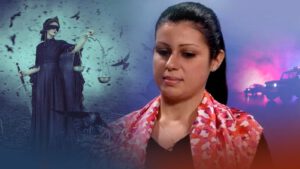
The Peculiar French Law on Mental Manipulation & the Brainwashing Myth
A further example of legal simplification appears in the documentary’s treatment of French legal actions. These are presented as straightforward evidence of justice, while the highly controversial nature of the underlying legal concepts is left unexamined.
Central here is the notion of “abuse of weakness” (abus de faiblesse) or “mental manipulation,” which, as noted by Gabriel Andreescu in New Journal of Human Rights, no. 3/2024, “have no place, in the sense promoted by French law, in the legislations of most democratic states and even more so, in international law,” since they rest on the academically discredited and pseudo-scientific theory of “brainwashing.”
Professor Susan J. Palmer further explains:
Although the public in various countries still embrace ‘brainwashing’ as if it were a scientific fact that offers a straightforward psychological explanation for an individual’s sudden conversion to a radical religious or political movement, since the 1980s the scientific community and the courts have discarded ‘brainwashing’ theory as lacking in scientific rigor. The vagueness of the ‘brainwashing’ theory, and the inherent difficulty in proving or disproving its claims puts the alleged perpetrator of ‘abus de faiblesse’ into what one of my informants described as a ‘Kafkaesque’ situation.
The French About-Picard law of 2001 is based on three ‘anticult’ assumptions:
- That all ‘sectes’ are inherently prone to harmful and criminal activities.
- That ‘gourous’ use techniques of mind control or “brainwashing.”
- That members are psychologically vulnerable and incapable of free choice.
This law emerged from the state-sponsored anti-cult movement (la lutte contre les sectes), embedding a structural bias against new alternative religions. Later amendments in 2023 introduced the notion of “psychological subjection,” further expanding this framework.
Within this context, the guru–disciple relationship is increasingly reframed as “abuse of weakness.” As Palmer notes:
When the so-called ‘victims’ protest they are not victims, the court’s response is often to interpret their denial as proof of ‘brainwashing,’ since ‘brainwashed’ people don’t realize they are ‘brainwashed.’
Event Reframing
Another form of distortion occurs in the way specific events are presented. This can be described as event reframing: interpreting events in ways that make them appear to confirm a particular story.
A clear example appears in the final episode of Twisted Yoga, where police raids in France are presented as the dramatic climax of the documentary. The narrative suggests that these raids uncovered a hidden system of exploitation and confirmed the accusations described earlier. Although the documentary briefly acknowledges that the legal process is still ongoing and that a trial may take years, the emotional structure strongly implies that the raids themselves already confirm the story.
What receives much less attention is how the individuals involved interpreted these events themselves.
None of the women who were described as “rescued victims” said that they considered themselves victims. All those interviewed afterwards by Human Rights without Frontiers director Willy Fautré and Professor Susan J. Palmer insisted that they had participated freely and rejected the description that they had been rescued. (see: Willy Fautre, FRANCE: The Stoians’ case – When media & journalists favour guilt presumption)
Instead of examining these statements as independent testimonies, the documentary treats them as further evidence of psychological influence. This approach reflects the same anticult framework described above, in which denial of victimhood is interpreted as proof of “brainwashing.”
As Introvigne explains:
The theory of ‘abus de faiblesse’ […] assumes that […] the choice of women to go through rituals involving erotic initiations cannot, by definition, be free. Even if (most) women claim it is a path they have freely chosen, they are […] not believable.
Following the raids of November 28, 2023, French authorities claimed that women had been “liberated” from conditions of abuse. However, none of these women agreed to file charges. Many stated that they had traveled voluntarily and were fully aware of the nature of the practices.
As some of these women confirmed to international scholars who interviewed them, they stated that they had traveled to France voluntarily and were fully aware of what MISA involved. Some intended to participate in sacred eroticism rituals and emphasized that they had chosen this path freely. Several later filed complaints not against MISA, but against the French police.
In the absence of such testimonies, the case relied primarily on complaints from a small number of former members, whose retrospective interpretations were treated as authoritative, while current participants were dismissed as lacking credibility.
The prosecutors […] believe they know better than these women what they wanted – or did not want.
Through this process, an ongoing and contested situation is transformed into apparent confirmation of the documentary’s narrative. The voices of those most directly involved are not allowed to stand on their own terms but are reinterpreted through a predefined framework, while relevant academic analyses and court decisions are left out.
Story Built Through Omission
Taken together, these patterns reveal how strongly the documentary shapes its narrative through omission. Context stripping, selective testimony, legal simplification, event reframing, and cultural isolation all narrow the viewer’s field of vision.
Instead of encountering the full complexity of the yoga school and its history, viewers are presented with a carefully limited set of elements that support a particular interpretation.
The result is a story that appears clear and convincing but is built on a selective picture of reality. What is presented as investigative truth is in fact a narrative constructed through systematic omission.
**********
In the final article of this series, we will step back and look at the larger pattern behind these techniques. When the narrative strategies identified in these analyses are viewed together, they reveal a consistent method through which documentaries about controversial spiritual communities can shape public perception while presenting themselves as neutral investigations.
The article was originally published on TwistedMedia
yogaesoteric
March 31, 2026