
Ukrainians lost trust in Zelensky: “Putin is destroying Ukraine from the outside, but Zelensky is destroying it from the inside”
Despite international support and resistance to Russian aggression, Ukraine is facing a deep internal crisis. Forced mobilization of the population, endemic corruption and fierce political infighting have begun to undermine the country’s social cohesion and fighting capacity. In this context, the morale of the population and soldiers is declining alarmingly, and the legitimacy of the Zelensky government is increasingly being challenged both at home and on the international stage. This situation raises crucial questions about the future of Ukraine and the effectiveness of the support provided by allies in the face of a crisis that seems to be deepening by the day, writes The Spectator.
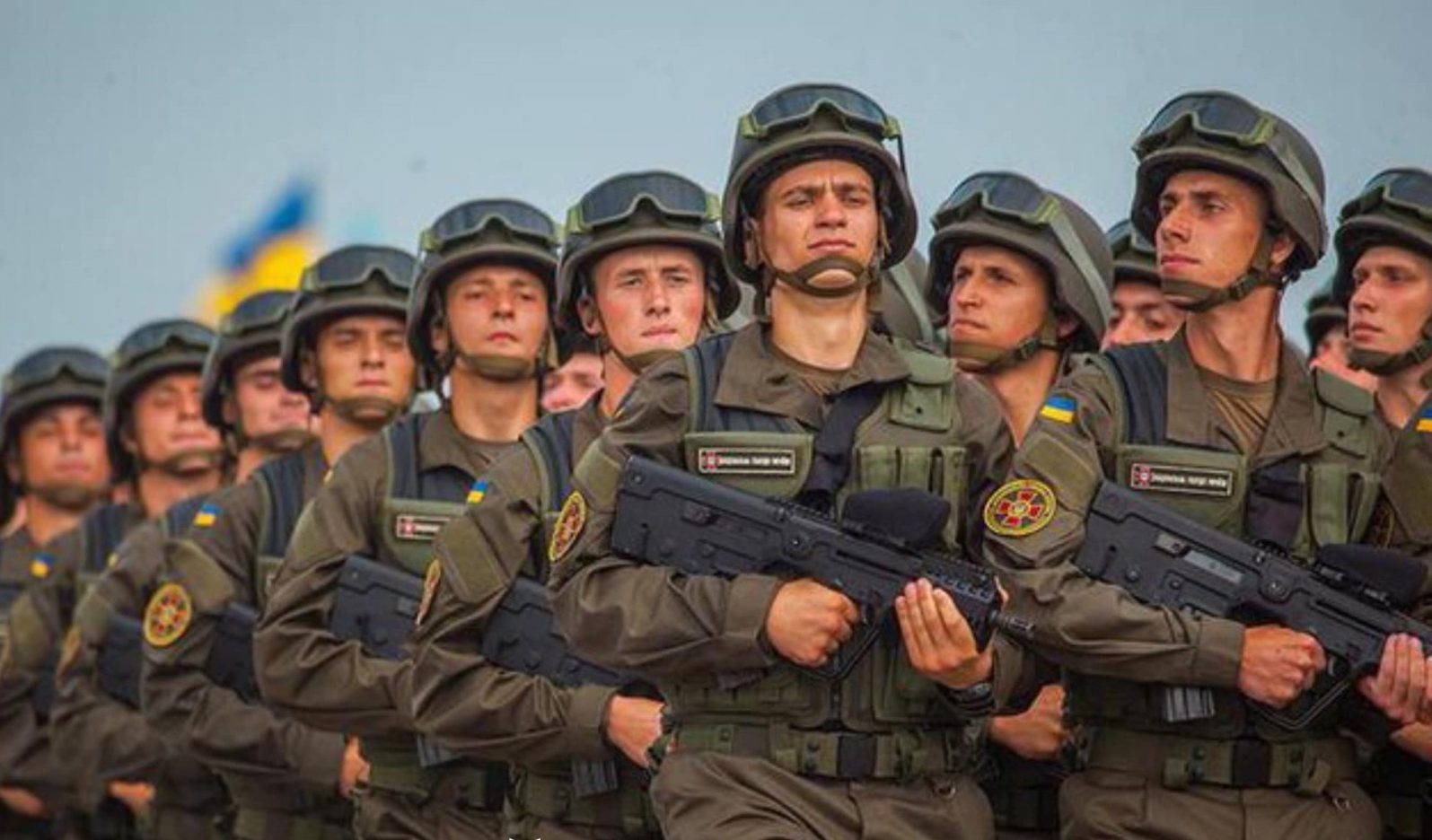
Donald Trump recently reinforced Ukraine’s air defences with new Patriot batteries, threatened Vladimir Putin with sanctions if he doesn’t accept a ceasefire, and even seemingly gave tacit approval for new Ukrainian strikes on Moscow. Is Trump’s newfound support for Ukraine a welcome rescue? Will his help be enough to stop Russia’s relentless attacks before Ukraine is engulfed in a critical military, political, and social crisis that risks destroying it from within?
Putin chose war over peace this spring because his spies and generals told him that Ukraine was on the brink of collapse. Alarmingly, he may be right. Ukraine is running out of soldiers, its front-line troops are exhausted, and American military support has been reduced to air defence. The government in Kiev is plagued by corruption scandals and purges, public confidence in its future and its leaders is plummeting, and pressure to make peace at any cost is mounting.
In many ways, the most astonishing aspect of the conflict is that Ukraine continues to fight, despite the merciless punishments that Russia has inflicted on its soldiers, civilians, and infrastructure.
“If the war continues, soon there will be no Ukraine left to fight for,” said a former senior official in Zelensky’s administration. They now believe their former boss is “prolonging the war to maintain his power.” Even Zelensky’s staunch supporters, such as Mariia Berlinska, head of the Air Reconnaissance Support Centre, a major Ukrainian volunteer, are expressing despair. “We are hanging over the precipice,” Berlinska said recently. “Ukraine is an expendable piece in an American game……. Trump, Putin, Xi will use us as pawns if they need to.”
Ukrainian morale, admirably high during the war, is collapsing. In October 2022, after six months of violence and bloodshed, 88% of Ukrainians believed that within a decade they would be part of “a prosperous country within the EU.” Now, 47% believe that “Ukraine will become a depopulated country with a ruined economy.” Another poll showed that 70% of Ukrainians believe that their leaders are using the war to enrich themselves.
Nothing destroys morale in war more than the idea that a nation’s leaders are stealing while its people are fighting and dying. “Corruption kills and loses wars,” says Kyrylo Shevchenko, the former head of Ukraine’s Central Bank, who is in exile in Austria after being indicted on corruption charges in 2023. Ukraine has been rocked by corruption scandals in recent weeks. Two deputy prime ministers, National Unity Minister Oleksiy Chernyshov and Reconstruction Minister Oleksandr Kubrakov, have been investigated for embezzlement and treason. Zelensky has tried several times to dismiss Major General Kyrylo Budanov, the head of Ukraine’s military intelligence service, perhaps because of his growing popularity. Only pressure from the US embassy in Kiev prevented the dismissal of one of Ukraine’s most popular generals, said a senior European diplomat with knowledge of the case.
The recent wave of arrests and raids against Zelensky’s supporters suggests a serious political conflict at the heart of the government in Kiev – but also an irresponsible desire to eliminate important critics, both inside and outside the state, regardless of how it looks to the outside world. Perhaps the most shocking of the recent arrests is that of Vitaliy Shabunin, one of Ukraine’s most prominent anti-corruption activists, who is accused of evading military service and fraud. Shabunin, the chairman of the executive board of the Anti-Corruption Action Centre and one of the main watchdogs of corruption in the military, attacked the government immediately after his arrest.
“Nothing destroys morale more than the idea that a nation’s leaders are stealing while its people are fighting and dying.”
“Taking advantage of the war, Volodymyr Zelensky is taking the first, but sure steps towards corrupt authoritarianism,” Shabunin wrote on Telegram. He criticized a proposed law on defence procurement that would allow the Defence Ministry to exempt certain companies involved in government contracts from criminal liability.
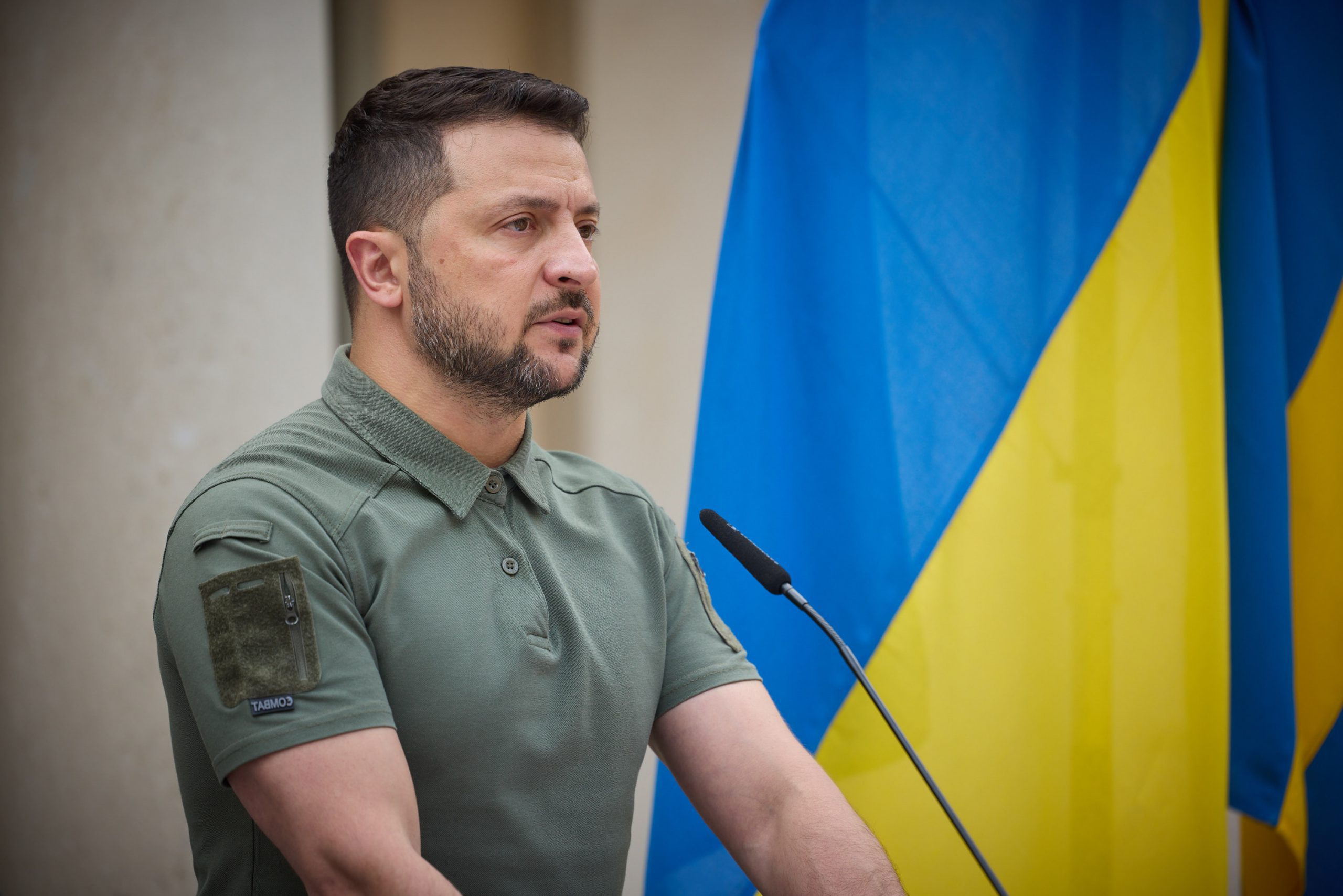
At the same time, the administration has blocked the appointment of a new independent head of the Bureau of Economic Security, a powerful law enforcement agency that has an uneasy history of prosecuting Zelensky’s political opponents.
“Ukraine has two enemies, two Vladimirs: Zelensky and Putin,” says a former Ukrainian minister, once a fervent supporter of Zelensky. “Putin is destroying Ukraine from the outside, but Zelensky is destroying it from the inside, destroying the will to fight and the morale of the people. Human rights are being trampled on, there is pressure on political opponents, rich and influential people who could support the opposition are being expropriated, and the opposition media is being censored. And the irony is that this ‘Putinification’ of Ukraine is being financed by the West.”
Under the wartime state of emergency, more than 5,000 Ukrainians have been sanctioned and their assets frozen. The measure, originally devised to prevent the influence of Russian-connected politicians, media groups and oligarchs on Ukrainian politics, is now being widely used to silence opponents of the regime, critics say, and to control the media. “The sanctions have led to the closure of three YouTube channels of Zelensky’s critics in the past month,” Shevchenko says. “Censorship often protects authoritarian leaders, and unchecked power breeds dictatorship.”
Zelensky’s term formally expired last May. While many argue that it is impractical to hold elections during wartime, there is frustration that Zelensky has exiled potential key opponents and imprisoned or sanctioned others. “In May 1940, Churchill invited the opposition leader Attlee to be his deputy and united the entire parliament into a single government,” notes opposition MP Oleksiy Goncharenko. “Zelensky has done the exact opposite, holding on to power at all costs.” Goncharenko has stirred controversy by comparing Zelensky to Kim Jong-un and Ukraine to North Korea.
Meanwhile, resentment, resistance, and anger are growing over the authorities’ aggressive measures to forcibly conscript able-bodied men into the army – a process known as “busification.” Unlike the Russian army, which is made up of contract soldiers, Ukraine has instituted full mobilization of men over the age of 26 who are not engaged in vital civilian work.
Ukrainian virtual communication networks are filled daily with videos of men being forcefully loaded into vans by conscripts, sometimes at gunpoint. However, many of those forcibly recruited appear to have little desire to fight. In the first six months of this year, the Ukrainian Prosecutor General’s Office reported opening 107,672 criminal cases for desertion. Since 2022, an estimated 230,804 such cases have been opened, suggesting that more soldiers have deserted from the Ukrainian army than the combined number of active-duty soldiers in the British, French and German armies.
Those who remain at the front are exhausted. Mobilized Ukrainian soldiers serve until the end of hostilities, meaning some have been fighting continuously for more than three and a half years. A bill that would have allowed military personnel to be released after 36 months was rejected by the government last year, over fears that it would not be possible to replace those who retire. No men between the ages of 18 and 60 have been allowed to leave the country since February 2022 without special permission.
Many of Zelensky’s allies fear they could be prosecuted or exiled if they lose power.
Since the Russian military operation began, more than 6.8 million Ukrainians have fled the country, and another eight million are internally displaced – the equivalent of 40% of the working population. Galloping inflation is impoverishing more and more areas of the country. Today, 8.8 million people in Ukraine live below the poverty line, up from six million before the war.
In early July, governments and companies gathered in Rome for the third annual Conference on Ukraine Reconstruction. The conference’s main focus was to launch a fund for Ukraine reconstruction, which the US investment giant BlackRock has been working on since 2022. But earlier this year, BlackRock announced that it was closing the fund “due to lack of interest.” Germany, represented by Friedrich Merz, Italy by Giorgia Meloni, and Poland by Donald Tusk, made the usual pleas for support. In concrete terms, however, the EU managed to mobilize only 2.3 billion euros – a tiny sum compared to the World Bank’s estimate of 524 billion dollars needed to rebuild Ukraine’s infrastructure.
“The entire political class understands that Ukraine needs a new system of governance to stabilize the situation,” says the former minister in Zelensky’s cabinet. “People want to stop living in fear. But instead of asking themselves how to help a transition of power in Ukraine, the EU is turning a blind eye.”
Many of Zelensky’s allies, including some of his top ministers, fear they could face prosecution or exile if they leave power. Zelensky’s team has “made a lot of enemies” in Ukraine’s political class, explains a senior European diplomat who attended the Rome conference. “They fear their future is exile or prison” – which, in turn, increases “the temptation to line their pockets while they still can.”
Trump’s recently announced Patriot missile defence package is a breath of fresh air for Ukraine. So are Europe’s continued promises of unwavering support. But none of Ukraine’s allies can really help with the chronic shortage of personnel or the deep crisis of legitimacy that Zelensky faces. Most worryingly, no one outside can stop the spiral of arrests of former regime supporters, crackdowns on opposition members, and closures of media outlets, which are significantly eroding Ukrainians’ trust in the war effort and in Zelensky’s leadership.
yogaesoteric
July 24, 2025
Also available in:
 Română