
USA Today: Israel decided to kill Iran’s leader after Oct. 7 attack
Israel decided days after Hamas’ Oct. 7 attack to target Iran’s Supreme Leader Ali Khamenei, while detailed planning came later, USA TODAY has learned.
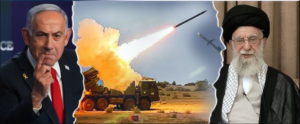
The decision to kill Iran’s Supreme Leader Ayatollah Ali Khamenei and the Iran-backed leaders of Hamas and Hezbollah was taken in the aftermath of the Oct. 7 attacks, when Israel decided to eliminate anyone involved in planning or assisting the devastating 2023 assault, USA TODAY has learned.
But more specific planning for what Israel has called Operation Roaring Lion and the United States is calling Epic Fury did not begin until after Israel’s 12-day war with Iran in June 2025, and Israel’s Prime Minister Benjamin Netanyahu gave the order for the operation only in November that same year, according to a person familiar with the matter.
Therefore, the timing of the decision to eliminate Khamenei and other top Iranian officials is in direct connection to avenging the Oct. 7, 2023 raid. Khamenei was killed as part of a bombing campaign by the militaries of the United States and Israel that began Feb. 28, 2026.
Israel has a long track record of capturing or assassinating its enemies no matter where they are stretching back to the country’s founding in 1948 in the wake of World War II. Nazi war criminal Adolf Eichmann was captured by Israel agents in Argentina in 1960 to stand trial in Israel. A little over a decade later, Israel launched a covert mission to hunt down and kill Palestinian militants linked to the murder of 11 Israeli athletes at the 1972 Munich Olympics.
The decision to kill Khamenei was taken as part of an order by Netanyahu to target all those Israel concluded were behind the Oct. 7 attack and to prevent future attacks, according to the person familiar with the matter, who spoke on the condition of anonymity.
The targeting of Khamenei also appears to reflect Israel’s decision after Oct. 7 to widen the scope of whom it was willing to target to include the most senior Iranian and Iranian-backed leaders. Israel killed Hamas’ political leader, Ismail Haniyeh, in Tehran in July 2024. Two months later, it assassinated Hassan Nasrallah, the longtime leader of Hezbollah, in Beirut.
In recent years, Israel has used everything from letter bombs to exploding pagers and mobile phones, from drone strikes to a satellite-operated, AI-assisted machine gun mounted on a truck, to kills its adversaries. Khamenei, who led Iran for 36 years, was viewed by Israel as the chief architect or at least most senior Iranian backer of Hamas’ Oct. 7 attack. Iranian officials, including Khamenei, publicly denied any direct involvement in the Oct. 7 assault.
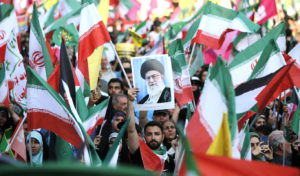
According to Israel, Iran has for years funded and armed a web of militant partners across the Middle East to strengthen its influence and strategic aims across the region. That includes Hamas in Gaza, Hezbollah in Lebanon, Houthi rebels in Yemen and a blend of militant groups in Iraq with diverse aims. Iran’s nuclear program, long a target of Israel, is for civilian energy purposes only, Tehran has insisted, an assertion met with deep scepticism internationally.
The U.S.-Israeli mission is aimed, U.S. and Israeli top officials say, at killing key members of Iran’s leadership, destroying its ballistic missile capabilities and severely hampering Iran’s ability to progress with its nuclear program.
The killing of Khamenei, along with the deaths of Mohammad Pakpour, commander in chief of the Islamic Revolutionary Guards Corps; Iranian Defence Minister Aziz Nasirzadeh; Mohammad Shirazi, Iran’s deputy intelligence minister; and other top leaders was the outcome of highly coordinated military operations and intensive intelligence collaboration between the United States and Israel leading up to the strike, according to the person familiar with the matter.
The two allies first pursued close intelligence-sharing on Iran’s leadership after last year’s 12-day war, which started June 13, 2025, when Israel launched airstrikes on Iran’s military and nuclear infrastructure. The United States entered the war about a week later, targeting Iran’s three major nuclear sites at Fordow, Natanz and Esfahan.
The New York Times reported that the United States and Israel had teamed up to share intelligence that specifically pinpointed the location of Iran’s leaders Feb. 28 at a compound in central Tehran, where they were killed.
The assertion by the person familiar with the matter that Khamenei and other senior Iranian officials were identified as kill targets in the wake of Hamas’ Oct. 7 attack mirrors public comments from Netanyahu and other senior Israeli leaders since the assault. Netanyahu described Iran’s regime as an “existential threat” to Israel as recently as Feb. 28.
He and other Israeli officials have used similar rhetoric about Iran’s leadership and its sponsorship of regional militant groups over the course of his two decades at the top of Israeli politics. In 2002, former Israeli Prime Minister Ariel Sharon argued that Iran should be No. 1 on the “to-do list” for Israel’s military.
The operation that killed Khamenei and other senior Iranian officials began around 6 a.m. in Israel Feb. 28. The missiles struck Khamenei’s compound around 9:40 a.m. in Tehran. American and Israeli military planners had planned to conduct the operation under the cover of darkness but shifted it to the daytime to take advantage of new intelligence, the person familiar with the matter said.
According to a report in the Financial Times, Israel hacked into traffic cameras in Tehran to surveil the daily life of Khamenei and other senior Iranian figures in preparation for Operation Roaring Lion. This “life pattern” surveillance included details about his security personnel, travel routes, hours of activity and the identities of the senior figures who usually accompanied the Iranian leader.
Author: Kim Hjelmgaard
yogaesoteric
March 4, 2026