
Report Examines Yoga Nidra as Sleep Aid, Cites Studies
A Sept. 22, 2026, article by Sela Breen states that yoga nidra, a guided relaxation practice, can help people fall asleep faster. The article describes the technique as a guided body scan for people who cannot turn off their brains at night.
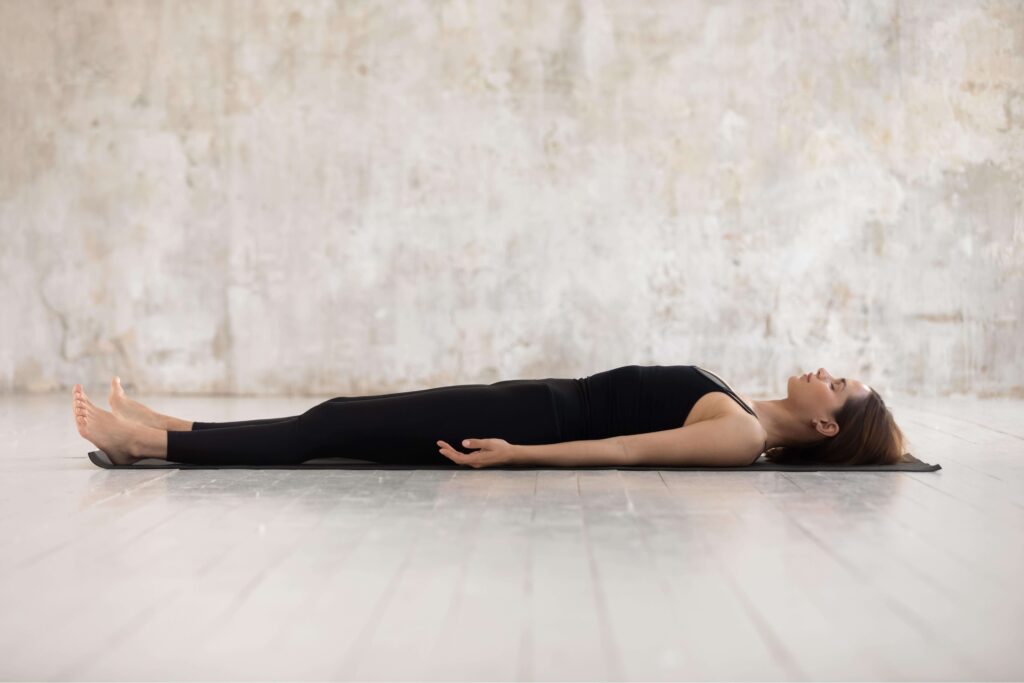
According to the article, people who have already used temperature modifications and reduced screen time may still experience racing thoughts at bedtime. The report notes that the practice is drawing attention as a no-cost efficient method for restful sleep.
The article states that yoga nidra is not a new invention but has gained visibility through discussions of related yoga techniques. Proponents say it requires no equipment beyond a bed and headphones, according to the report.
What the Practice Involves
According to the article, yoga nidra is similar to non-sleep deep rest, or NSDR, a term popularized by neuroscientist Andrew Huberman. The report states that Huberman coined the term to describe mindfulness techniques that lead to a deep state of body relaxation, and he considered yoga nidra to be a type of NSDR.
Users lie down and follow a guided audio recording that directs attention through the entire body, slowly, starting with the muscle groups. The report says the goal is to induce a very deep relaxation state.
The article notes that aiming not to think at all is very difficult task, but following a simple instruction for relaxation is manageable. It adds that the practice is typically performed while lying in bed, which helps bridge the gap between wakefulness and sleep.
Reported Users and Benefits
The article says the practice may suit people whose thoughts race at night, though all types of people can benefit. Personal trainer Cassidy Kmetz told she uses a 10-minute guided NSDR track and described a nervous system reset.
Kmetz stated, “You hear the birds chirping, and you just begin relaxing every part of your body, and quite literally washing your brain to find that feeling of clarity.” For someone whose job involves high-intensity training, she said the reset is significant.
The article adds that the practice may be particularly helpful for people who feel they have tried everything and still cannot quiet their train of thoughts.
Cited Research on Sleep and Stress
The article cites a 2021 randomized controlled trial that found yoga nidra improved deep sleep stages and reduced cortisol in patients with chronic insomnia. Participants also reported better subjective sleep quality.
Another study cited in the article found that yoga nidra reduced wake-after-sleep-onset by 20 minutes and improved sleep efficiency. Participants also showed enhanced cognitive performance, meaning the practice may do more than help people sleep better, the article states.
Independent research supports the broader premise that meditation-based practices can influence stress physiology. A review published in Neuroscience and Biobehavioural Reviews described meditation as a wakeful hypometabolic integrated response, with acute effects including decreased oxygen consumption, decreased adrenocortical activity, and increased coherence across a wider range of frequencies in the electroencephalogram. A separate review in the same journal reported increased alpha and theta wave activity in yogic and Zen meditation techniques, along with significant decreases in respiration rate and oxygen consumption.
The article states the theory is that the practice gives the brain a repetitive task. This aligns with research on focused attention and open monitoring meditation categories, which involve sustained attention to an object or non-reactive monitoring of experience. Related work on awareness-based interventions has described how such practices alter psychic modes that can perpetuate stress and suffering.
Suggested Steps to Try It
The article recommends searching YouTube for “yoga nidra for sleep” and starting with a 10-minute recording. It states the only equipment needed is a bed and headphones, or playing the track aloud if sleeping alone.
The report advises users not to worry about doing it right and notes falling asleep before the recording ends is acceptable. It adds that finding an audio guide who moves at the desired speed can be difficult, but use more tracks until you find the suitable one.
For those who prefer to practice without a recording, one book on the subject notes that with regular practice it will eventually be easy to remember the content, sequence and pacing used, though distractions are more common and practitioners may be more likely to unintentionally fall asleep. Another text encourages practitioners to seek out a competent yoga teacher and learn from him. The article also advises to use a recording of Satyananda Yoga Nidra, a type of yoga formulated to overcome distractions of the mind.
A book on yoga nidra describes how the practice deactivates the stress reaction by activating the relaxation response, with feelings of peace and calmness often felt from the start. As more time is spent in the yoga nidra state of conscious awareness, those qualities become more available in day-to-day living, according to the same source.
yogaesoteric
October 11, 2026