
EXCLUSIVE: Archbishop Viganò says Leo XIV intensified Francis’s agenda, that is the Masonic plan
In an exclusive interview with LifeSiteNews, Archbishop Carlo Maria Viganò discusses Leo XIV, the Masonic influence in Vatican, and the spiritual crisis at the top level of the Catholic Church.
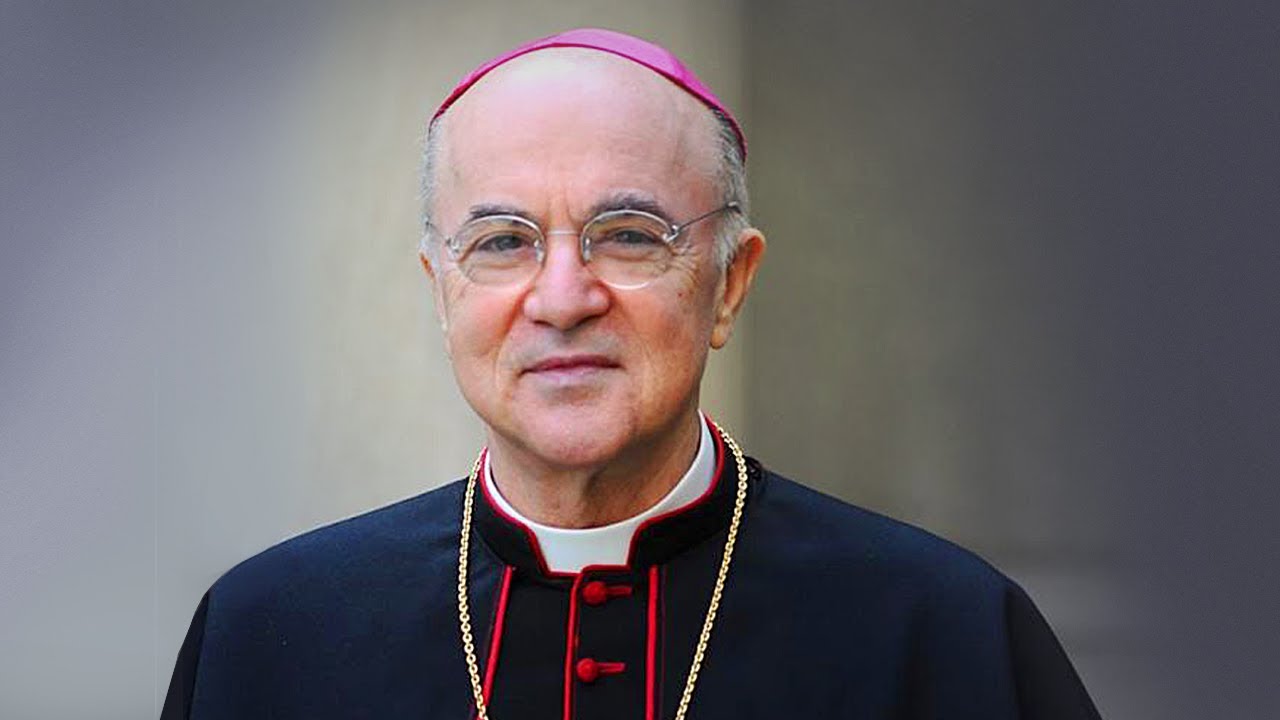
LifeSiteNews: Your Excellency, in your new book The Capital Schism: When the Pope Is the First Enemy of the Papacy you argue that today the first enemy of the papacy is the Pope himself. How do you explain this paradox?
Archbishop Viganò: The paradox is only apparent. The Papacy is indefectible, because it is of Christ; the person of the Pope is a man, with his free will, who may correspond to the grace of state or reject it. On the other hand, the Church prays for the Supreme Pontiff, asking God to help him for his perseverance in Faith, which is not automatically guaranteed by the office.
When a Pontiff uses the authority that has been conferred upon him ad ædificationem to instead demolish what that authority is called to safeguard – doctrine, liturgy, discipline, the very monarchical and hierarchical constitution of the Church – he places himself in contradiction with his own munus. He is no longer the servant of the Papacy: he becomes its first adversary, because no external enemy could wound the Church as much as one who wounds her from within.
I have called this phenomenon a capital schism in the proper sense of the word: a schism that begins from the caput, from the head. Classical schism is the separation of a portion of the body from the head; here we witness the opposite: it is the head that separates itself from the mystical body and from the Tradition that precedes it, that rebels against what its predecessors taught and what it would have the obligation to transmit intact.
LSN: You compare the current situation to the removal of the katéchon spoken of by Saint Paul (cf. 2 Thess 2:6-8). What role does the figure of Leo XIV play in this dramatic removal of the “restraint” on iniquity?
Viganò: The Fathers and the great commentators understood the katéchon, “the one who restrains,” as both the Christian Roman Empire and, together with it, the authority of the Church, and eminently the authority of the Papacy, which for centuries had opposed a barrier to the mysterium iniquitatis.
That restraint began to be loosened from the moment when the hierarchy, with the Second Vatican Council, renounced exercising its authority in the sense willed by Christ, in order to seek reconciliation with the world, with modern thought. From then on, those who should have restrained began to accommodate.
Leo XIV fits into this process not as an innovator, but as the one who consolidates it and makes it presentable. When the Pope is no longer a restrainer but an accelerator, the removal of the katéchon is not a future event: it is occurring right now before our very eyes.
LSN: In the face of canonical sanctions, you invoke a state of necessity, just as the Society of Saint Pius X has done for its new episcopal consecrations. How do you respond to the many conservatives who accuse you of formal disobedience to the Pope?
Viganò: I respond that obedience is a virtue, not an idol. Obedience is to be given to a legitimate command given by a legitimate authority for the purpose for which that authority exists.
When a command is contrary to the Faith, to the Godly law, or the good of souls, it not only does not bind, but obliges one not to obey. This principle is not an invention of traditionalists: it is taught by Saint Peter, it is taught by Saint Thomas, it is demonstrated in practice by the conduct of the Saints who resisted Pontiffs when they erred, from Saint Paul who resisted Peter in faciem, to Saint Athanasius, to Saint Catherine of Siena.
A state of necessity is not an invention for evading the law: it is a principle of law itself, according to which the supreme law prevails over norms when these, applied literally, would produce irreparable harm to souls.
To the conservatives who reproach me I say with affection: you obey a man who asks you to disobey Our Lord, God the Father, and you call this contradiction “fidelity.” I have asked and continue to ask Leo XIV to tell me in what way I contradict the Depositum Fidei. I have received no answer. Which of the two, then, is in a state of schism?
LifeSiteNews: Throughout this entire crisis, you have consistently described the liturgical reform not as a consequence, but as a cause. Why, in your view, does the question of the Mass take precedence over the doctrinal question and consider it more crucial? And what significance, in this context, does the intransigence of Traditionis Custodes, which was retained unchanged by Leo XIV, hold?
Viganò: Because the Church has always known what the modernists have deliberately forgotten: “so that the law of prayer determines the law of faith”. The law of prayer determines the law of faith, and not the other way around. The Christian people do not learn dogmas from manuals: they absorb them at the altar. A person who has knelt before the Blessed Sacrament for years, who has seen the priest turned toward God and not toward the congregation, who has experienced consecration in the sacred silence, believes in the Real Presence of God and in the Sacrifice, no theologian will succeed in taking the faith away from such a person. If you change the way a person prays, you change what they believe, without them even noticing and without anyone ever having to utter a single heretical sentence.
That is why I say that the liturgical reform was not a consequence of the crisis: it was its instrument. It was the quickest and surest way to achieve what a definition could never have achieved. Note: it is the perfect application of that Bergoglian principle that “time is superior to space.” Nothing is defined, a process is set in motion, and then it takes only a few generations for the rest to fall into place. Anyone seeking confirmation of this method should read the Short Critical Examination of the New Order of Mass by Cardinals Ottaviani and Bacci, who warned as early as 1969 that the new rite “deviates, as a whole and in its details, in a striking way from the Catholic theology of the Holy Mass as formulated at the 22nd session of the Council of Trent.” They were not two rebels: one was the former Secretary of the Holy Office, the other a cardinal of the Curia. They were ignored, and today the statistics on belief in the Real Presence of God confirm how right they were. Four centuries earlier, Cranmer had understood that it was enough to change the Mass to change a people’s religion, and he did not have to deny a single dogma to drive the Holy Sacrifice out of England.
It should also be noted that under Prevost, Traditionis Custodes was neither withdrawn nor weakened; instead, it was applied even more strictly, with a meticulousness for which Bergoglio had no time. That Leo himself – who speaks so much of receiving and listening – acts so relentlessly against the Mass of all ages proves to those who still placed their hopes in him that in the synodal Church there is room for everything except the rite in which the Church has prayed for centuries.
LSN: Prevost was elected due to those who hoped for a restoration of the rule of law, but in reality, he seems to be continuing his predecessor’s agenda, merely slowing its pace and delegating the most controversial decisions to the Curia. Isn’t there a danger that this more phlegmatic and “dialogue-oriented” style is even more insidious for defending dogma than Francis’s direct authoritarianism?
Viganò: I have to correct the premise of the question, because Prevost is building his argument precisely on this misunderstanding. It is by no means correct to say that Leo is proceeding “gradually.” He is proceeding at breakneck speed, without the slightest regard for reactions – partly because resisting reactions are rare, and the few that do occur are immediately suppressed. What has changed compared to Bergoglio is not the speed: it is the expression. Bergoglio shouted, and whoever shouts awakens people; Prevost smiles, and whoever smiles lulls people to sleep. But it is an icy smile, the grin of someone who knows he will encounter no resistance.
Look at the facts, not the manner. The agenda hasn’t been slowed down: it has been intensified on all fronts –environmental protection, pro-migration policies, syncretistic ecumenism, normalization of LGBT ideology. And above all, look at the appointments, which are the test of a pontificate: there isn’t a single exception; not a single man of sound doctrine has been promoted, not a single enemy of the faith removed. On every front, Prevost has gone further than his predecessor.
On August 13, at a conference in Cusco to prepare for Prevost’s trip to Peru, Monsignor Jordi Bertomeu, papal commissioner of the Dicastery for the Doctrine of the Faith, together with Bishop Lizardo Estrada Herrera, Auxiliary Bishop of Cusco and Secretary General of CELAM, and Bishop Miguel Ángel Cadenas, Bishop of Iquitos, laid coca leaves as an offering to the infernal idol Pachamama. Under Bergoglio, Pachamama was placed in the Vatican Gardens and St. Peter’s Basilica as a scandalous gesture; under Prevost, Pachamama was placed in the very Dicastery whose task it should actually be to condemn it – and this idol entered through the hands of the man who administers justice within that Dicastery. This is not a slowdown: it is institutionalization.
Leo’s style is only superficially moderate. The occasional Latin phrase, the mozzetta worn even on inappropriate occasions – even when disembarking a plane – the polite tone: these are sedatives administered to a body that has become incapable of responding. And the sedative doesn’t reduce the violence: the sedative is what enables the violence in the first place.
The conservatives have been charmed by the form. But in truth, there isn’t even that. Those who were satisfied with the mozzetta got the mozzetta and nothing else, and now they are paying for this piece of fabric with their silence about everything else.
Finally, there is the aspect that reveals the truly tyrannical character of this government: delegation. Prevost delegates to the Curia, to the dicasteries, to the episcopal conferences, to the “synodal processes,” so that no decision bears his signature and every can be presented as the fruit of communal discernment. This is no leniency: it is the form of absolute power, a power that issues commands without taking responsibility for them. The ancient tyrant signed his decrees and bore the hatred they provoked; the synodal tyrant lets others decide and remains above them, as arbiter and never as defendant. It is the dissolution of the Pope’s personal accountability – precisely what synodality seeks to achieve – and he who never makes decisions can never be contradicted. The Pope who does not decide is the Pope who has decided to let others act and who has found a way to avoid being held accountable by anyone.
LSN: You have spoken publicly about the case of Eleuterio Vásquez González, known as Lute, the Peruvian priest accused of the serious abuse of girls in the Diocese of Chiclayo. When Leo XIV was bishop of this diocese, the canonical investigation was described as a “farce” by a church delegate; yet today the Pope has Edgard Rimaycuna as his personal secretary, a priest who grew up in Lute’s pastoral and professional environment.
Another prominent prelate, the Venezuelan Edgar Peña Parra – formerly Substitute for General Affairs of the Secretariat of State and now Apostolic Nuncio to Italy and San Marino – was reported by you in 2002 on extremely serious charges ranging from the abuse of underage seminarians to alleged links to violent deaths – charges which were subsequently systematically ignored by Bergoglio.
In light of these and other cases, do you believe that under Bergoglio a genuine “network” of mutual protection among powerful men has taken root within the Church, in which failings and responsibilities are covered up to maintain internal balances? And if so, how far does this phenomenon extend to the highest levels of the Holy See?
Viganò: The Lute case reproduces with astonishing accuracy the modus operandi of other extremely serious cases, from McCarrick to Rupnik: victims who file charges and are not heard; an investigation conducted in such a way that nothing is found; the Dicastery closing the case on the grounds of the statute of limitations; the accused not only going unpunished but actually being protected.
But there is also the necessary flip side: those who expose the crimes and defend the victims are destroyed. Monsignor Ricardo Coronado, the canon lawyer who had taken on the defence of the three young women, lost his ecclesiastical license to practice law in August 2024 through the Peruvian Episcopal Conference, and four months later he was dismissed from the clerical state by a decree that – note this – did not bear Bergoglio’s handwritten signature.
Those who bring charges lose their priesthood; those who are accused keep everything. There is no room for interpretation here: The Bishop of Chiclayo, who led the investigation that those with precise knowledge of the details have called a “farce,” now sits on the Chair of Peter, and he has chosen as his personal secretary a priest trained in the circle of Father Lute. These are not biographical details or unfortunate coincidences: They are proof that in this system, proximity to certain circles is not an obstacle to career advancement, but rather a prerequisite for it.
Consider, moreover, a coincidence that is no coincidence at all. The same Msgr. Jordi Bertomeu who offered coca leaves to Pachamama in Cusco is the man who, in the Dicastery for the Doctrine of the Faith, introduced – and essentially justified – that interpretation of canon law according to which ordinary procedures, with the guarantees they offer the accused, are replaced by parallel structures and extraordinary commissioner powers. It is this legal doctrine that makes Coronado’s fate possible: where procedure yields to the will of the commissioner, the one who causes difficulties is lost from the outset and is not even left with the right to defend himself. Before Coronado was defrocked, he was accused of heinous acts without the slightest evidence.
This is not an isolated incident. When a Peruvian priest, Father Omar Sánchez, publicly criticized Bertomeu’s handling of matters, an abuse allegation against him appeared in the press 22 days later – an allegation that the alleged complainant later publicly denied, stating that he had never filed any complaint.
Anyone who raises their voice against the system discovers that a file has already been opened against them. And the man who offers coca leaves to Pachamama is the same man who stripped the priesthood of the one who defended the three young victims of Father Lute in Chiclayo. This shows us what the Holy Office has become.
Regarding Peña Parra, allow me a clarification that I consider important. I dealt with his case much earlier, when I was Delegate for Papal Representations at the Secretariat of State. The allegations – his seduction of two underage seminarians in Maracaibo in September 1990 and his connection to the circumstances of two violent deaths in August 1992 – were referred to the Secretariat of State in 2002 by the Apostolic Nuncio to Venezuela, Archbishop André Dupuy. But that did not prevent Peña Parra’s career from advancing. And I would like to add a detail that says a lot about the role of the media: I spoke about this case in a lengthy interview with the Washington Post, and it was precisely the part about the Venezuelan abuser that was censored by the newspaper. Bergoglio wanted him as Substitute; and Prevost has now sent him to Italy as Nuncio.
Yes, a network exists. I don’t say this as speculation. I know from decades of direct experience in the Roman Curia and nunciatures that it’s true. It’s based on a simple principle: anyone who is susceptible to blackmail can be controlled by the person who possesses the incriminating material. Moral corruption isn’t an accident of the system; it’s the glue that holds the entire system together. That’s why the guilty party or accomplice is promoted, while the one who reports them is isolated and destroyed.
How far does this network of corruption extend? One only needs to look at how many of McCarrick’s “descendants” still hold positions of power in the United States and the Vatican; how many of the cardinals appointed by Bergoglio were chosen precisely because of their corruption and susceptibility to blackmail; and how many in the Secretariat of State and the dicasteries owe their positions not to doctrine or holiness, but to membership in a faction. The answer lies in the facts, and the facts speak for themselves.
LSN: Who benefits from this mechanism? Was Bergoglio its architect, or did he get caught up in it against his will?
Viganò: Neither one nor the other, at least not in the way the question is phrased. Bergoglio was not a victim of a system, but he was not its creator either: he was its beneficiary and subsequently its guarantor. He was elected due to the St. Gallen mafia, that is, due to a network that had been planning its own power grab for years and found the right man in him because he was unscrupulous, free from doctrinal scruples, and extraordinarily adept at wielding power – qualities honed through a long Jesuit education, the methods of which he maintained throughout his life: demonstrative obedience combined with subterranean manoeuvring, outwardly proclaimed poverty while simultaneously exercising absolute power.
After his election, he did what every illegitimate power does: he surrounded himself with men who couldn’t betray him because he knew their corruption and crimes, and he removed those who weren’t susceptible to blackmail and therefore couldn’t be controlled. It’s no coincidence that his closest associates – from Zanchetta to Peña Parra – are figures burdened with extremely serious accusations, whom he systematically protected and promoted.
The case of Marko Rupnik is a prime example. In 2019, the Dicastery for the Doctrine of the Faith declared him excommunicated for absoluting an accomplice – one of the most serious offenses reserved for the Holy See. At Bergoglio’s behest, this punishment was lifted. Later, in 2023, the Society of Jesus excommunicated him for disobedience, yet Rupnik immediately found a Slovenian bishop willing to incardinate him. As for the canonical process, more than six years after the events, nothing is known. What makes the Rupnik case even more scandalous is the circle of clergy around him who owe their positions to him; by protecting Rupnik, they protect themselves – beginning with the then Cardinal Vicar Angelo De Donatis, whose transfer from the Vicariate of Rome to the Apostolic Penitentiary occurred around the time of this affair. His transfer was not so much a promotion, as has been claimed, but rather a way to protect him and remove him from the questions in Rome that he could no longer evade.
Who benefits from all this? Internally, a clerical caste profits, having turned the Church into its private property and needing impunity to survive. Externally, those financial, political, and supranational powers – in other words, globalists – benefit, those who have an interest in keeping the Catholic Church under blackmail, because a blackmailed Church doesn’t speak out, doesn’t condemn, and doesn’t evangelize: it collaborates. The connection between the Deep Church and the Deep State is not a theory: it is the reason why the Holy See has readily supported every globalist agenda – from climate change to migration, from the pandemic to universal fraternity, from vaccine promotion to pansexuality – and why it has signed and persistently renewed the secret agreement with communist China, thereby delivering faithful bishops and the underground Church into the hands of their persecutors, while remaining silent on everything the Gospel actually demands be proclaimed loudly.
Moral corruption and doctrinal corruption are two sides of the same coin. Whoever betrays the faith also betrays morality, and whoever is morally blackmailable is prepared to betray the faith – even to the point of idolatry, as the coca leaves laid down in Cusco by an official of the former Holy Office demonstrate to anyone with eyes to see.
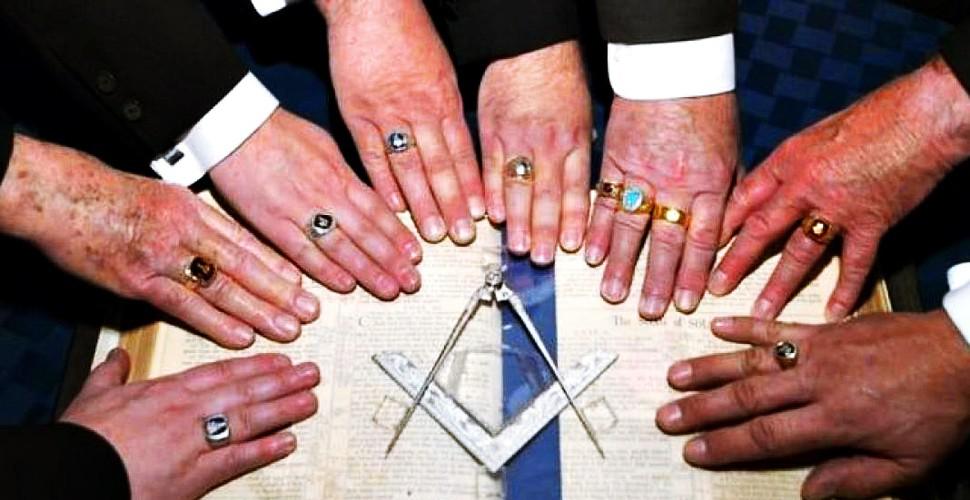
LSN: During the 2025 papal conclave, a high-ranking Masonic authority told me confidentially during an investigation I was conducting, “You’ll see they’re going to elect Francis’s useful idiots.” When I asked for an explanation, this Masonic contact – who was actually very close to circles within the Roman Curia – told me that Francis had appointed cardinals “with skeletons in their closets” from the fringes of the world, urging them to choose “his man” and preserve his “synodal legacy.” When Prevost was elected, the same Freemason told me sarcastically, “Habemus Papam! They’ve elected him.” Initially, I was very cautious and even hopeful about Prevost. Now I wonder how far this Masonic authority’s interpretation was from reality. What do you think?
Viganò: I cannot confirm words I haven’t heard myself, nor am I interested in lending credibility to the boasts of circles that have always enjoyed claiming control over the Church. But I can say that this interpretation corresponds exactly to what the facts make obvious to anyone willing to look at them.
Bergoglio appointed the overwhelming majority of the College of Cardinals, choosing men no one knew, poorly educated, from insignificant sees, whose only qualifications were their personal loyalty to Bergoglio and, almost always, a vulnerability that made them easily controlled. A conclave composed in this way could only elect a man like Prevost, that is, a man who would guarantee the continuity of Bergoglio’s “synodal legacy.”
Freemasonry is pleased with this election, and this is by no means surprising: it was also pleased with the election of John XXIII. For three centuries it has pursued a single plan, namely to destroy the Catholic Church: first, by depriving it of its supernatural dimension and reducing it to a philanthropic organization; then, by undermining it from within; and finally, by turning it into the anti-church, that is, into a “universal religion of mankind” which is to worship Devil instead of God, which is its true goal.
If a Masonic authority rejoiced at Prevost’s election, it was because what had been sought had been achieved. Regret remains with those cardinals and faithful who, for a few months, wanted to deceive themselves. The expression “useful idiot” is insulting, and I would not endorse it; but I fear that whoever used it knows very well the kind of usefulness they expected from the man they elected.
yogaesoteric
October 9, 2026