
Documentary by Del Bigtree in Italy: Military trucks, pharmaceutical money, media silence: New revelations from Italy’s pandemic epicentre
Five years after the start of the coronavirus crisis, reports are reaching us from Italy that once again call into question the official narrative of the pandemic. American journalist and documentary filmmaker Del Bigtree travelled through Milan, Bergamo, Rome, Venice, and Sardinia to present his film An Inconvenient Study. But instead of a typical film tour, the trip turned into a sensational investigation.
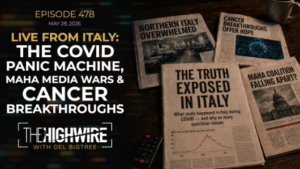
In conversations with doctors, scientists, media experts, and former officials, Bigtree encountered statements that paint a picture significantly different from the one presented to the world in the spring of 2020. At the same time, the program reports on new medical developments that, according to the interviewees, could have the potential to fundamentally change current healthcare and cancer medicine.
Bergamo: The images that terrified the world
Who doesn’t remember the pictures from Bergamo? Military trucks driving through the streets at night. Television images broadcast worldwide. Politicians, media outlets, and health authorities cited these scenes as proof of a pandemic spiralling out of control.
For millions of people, these images became a turning point. Lockdowns, school closures, curfews, and vaccination campaigns gained emotional legitimacy as a result.
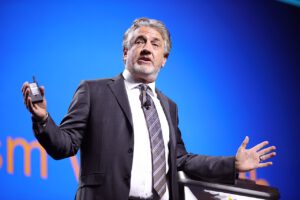
However, according to Professor Alberto Contri, former board member of the Italian state broadcaster RAI and expert in communication and media, the public portrayal was misleading. Contri claims that the military trucks were real, but the media’s interpretation was not.
While television reports gave the impression that each vehicle was transporting numerous coffins, in reality there was only one coffin in each truck. The images were deliberately used to generate maximum fear. For Contri, this was the beginning of an unprecedented fear campaign.
The financial incentives behind the covid numbers
Even more explosive are the allegations concerning the financial mechanisms during the pandemic. According to Contri and several doctors Bigtree spoke to, Italian hospitals received significantly higher government reimbursements for covid patients than for other diagnoses.
Hospitals received up to five times higher reimbursements for covid cases than for comparable patients with other illnesses. Critics argue that this created a massive incentive to classify as many patients as possible as covid cases. Older people with multiple pre-existing conditions were often automatically classified as covid patients, even if other illnesses were the main reason for their hospitalization.
Bigtree draws parallels to the United States, where similar discussions took place regarding financial incentives, ventilators, and special covid compensation.
The crucial question is: Were mortality figures possibly influenced by financial perverse incentives?
Vaccination campaigns as a multi-million-dollar business?
The statements regarding the vaccination campaigns go even further. According to Contri, many Italian doctors received state payments of around 80 euros per vaccination administered. As a result, the monthly income of some doctors has increased from 3,000 to 4,000 euros to up to 20,000 euros.
For critics, this raises once again the question of whether financial interests may have influenced medical decisions.
Contri speaks openly of corruption and describes an atmosphere in which financial rewards and public pressure went hand in hand.
The virologist stars of television
The former RAI manager is particularly critical of the role of the media. During the pandemic, some virologists became veritable television stars. They dominated talk shows, news broadcasts, and political debates. Contri claims that several of these experts simultaneously held contracts with pharmaceutical companies.
One episode, which he himself describes, is particularly sensational: During a live talk show, he asked one of Italy’s most prominent vaccine advocates if it was true that he had fourteen ongoing contracts with pharmaceutical companies. The doctor then took off his headphones and left the broadcast without answering the question.
For Contri, this moment was proof that conflicts of interest were systematically concealed during the pandemic. Critical voices were silenced.
According to the interviewees, a two-class society emerged in Italy. On the one hand, the majority who trusted the official statements. On the other side were doctors, scientists, and citizens who asked questions or voiced criticism. They have been suspended, ostracized, or publicly defamed.
According to Contri, numerous legal proceedings are currently underway by doctors who lost their jobs during the pandemic because they opposed certain measures or criticized mandatory vaccinations.
Del Bigtree: “The more I heard, the more shocking it became.”
For Bigtree itself, the real issue lies not only in the statements. What particularly concerns him is the question of why Italy was the first Western country to develop exactly the same mechanisms at the beginning of the pandemic that later appeared worldwide:
- Financial incentives for covid diagnoses
- Fear campaigns in the media
- Massive vaccination propaganda
- Marginalization of critical voices
- Political conformity
For him, the question arises whether these processes could have actually arisen independently of one another, or whether larger coordinated structures were behind them.
MAHA against the media
Another focus of the program concerns the political struggle surrounding Robert F. Kennedy Jr. and the so-called MAHA movement (“Make America Healthy Again”). Bigtree accuses major media outlets such as Reuters, NBC and others of deliberately producing misleading headlines to discredit Kennedy’s reform agenda.
Time and again, complex decisions are reduced to simplified narratives intended to create the impression in the public that the reform movement is disintegrating. The media would thus be pursuing the same strategy that was already used during the pandemic: controlling narratives, marginalizing critical voices, and reducing debates to emotionalized buzzwords.
Revolution in cancer medicine?
In addition to addressing the pandemic, the program focuses extensively on possible breakthroughs in cancer research. Cancer researcher Patrick Soon-Shiong receives particular attention. He sharply criticizes current cancer therapy, arguing that while chemotherapy can shrink tumours, it also weakens the immune cells that are supposed to fight cancer in the long term.
In his view, often “the battle is won, but the war is lost”. Instead, Soon-Shiong focuses on activating the body’s own killer cells and T cells.
The end of antibiotics?
Equally noteworthy are new research findings from Ireland. There, scientists are investigating ways to specifically train the immune system instead of directly fighting pathogens with antibiotics.
The focus is on interferon-gamma – a signalling molecule naturally produced by the body. The researchers report that this could allow immune cells to be specifically activated against dangerous superbugs such as tuberculosis and resistant staphylococci.
Should the results be confirmed, this could mean a paradigm shift in infectious disease medicine in the long term.
Bees against breast cancer?
Research into the effects of bee venom appears particularly spectacular. Several studies report on the protein component melittin, which was able to massively damage aggressive breast cancer cells within a short time in laboratory experiments.
Researchers speak of a potentially cost-effective and globally available approach for future cancer therapies. The research is still in the experimental stage, but the results are attracting international attention.
The central message from Italy
The journey through Italy ends with a message that runs like a common thread through the entire program: According to the interviewees, covid was not only a health crisis, but also a media, political and trust crisis.
The statements of former media managers, doctors and scientists paint a picture of a system in which fear, financial incentives and political interests were closely intertwined.
At the same time, many of the interviewees see a new development on the horizon: a medicine that relies more on the immune system, natural mechanisms and individual treatment – and less on centralized solutions, mass campaigns and standard pharmaceutical models.
Whether this perspective will modify the historical assessment of the pandemic remains to be seen. But one aspect is clear: the debate about the events of 2020 to 2023 is far from over.
yogaesoteric
July 12, 2026