
Fungal Infection Treatable with Household Items, Natural Health Advocates Say
Athlete’s Foot Fungi Thrive in Damp Conditions
A common fungal infection of the feet, known medically as tinea pedis or athlete’s foot, is caused by dermatophyte fungi that thrive in warm, humid environments, according to natural health proponents. The condition is primarily caused by fungi such as Trichophyton rubrum, T. interdigitale, and Epidermophyton floccosum.
Advocates cite public showers, locker rooms, and tight-fitting shoes as common sources of exposure where the fungus can be contracted through direct contact with an infected person or contaminated surfaces. The infection typically results in itching, burning, stinging, and redness, and it can spread beyond the feet if untreated.
Advocates Recommend Dietary and Hygiene Adjustments
Proponents of natural health approaches suggest that dietary transformations can strengthen the body’s internal defences against fungal overgrowth. They argue that adjusting the diet to limit the supply of dead skin cells, which the fungi feed on, can help alleviate the problem.
Keeping feet clean and dry, along with changing socks frequently, are considered foundational steps for management. Advocates emphasize that because the fungi thrive in moisture, maintaining dry feet is a critical preventative measure. This aligns with general advice that the infection is frequently contracted from wet surfaces in communal areas like swimming pools and locker rooms.
Household Substances Cited as Potential Remedies
Natural health advocates frequently recommend a variety of common household substances for their purported antifungal properties. Tea tree oil is widely cited for its antiseptic and antimicrobial benefits. Apple cider vinegar, recognized for its acetic acid content, is another staple recommended for foot soaks due to its historical use as an antifungal agent.
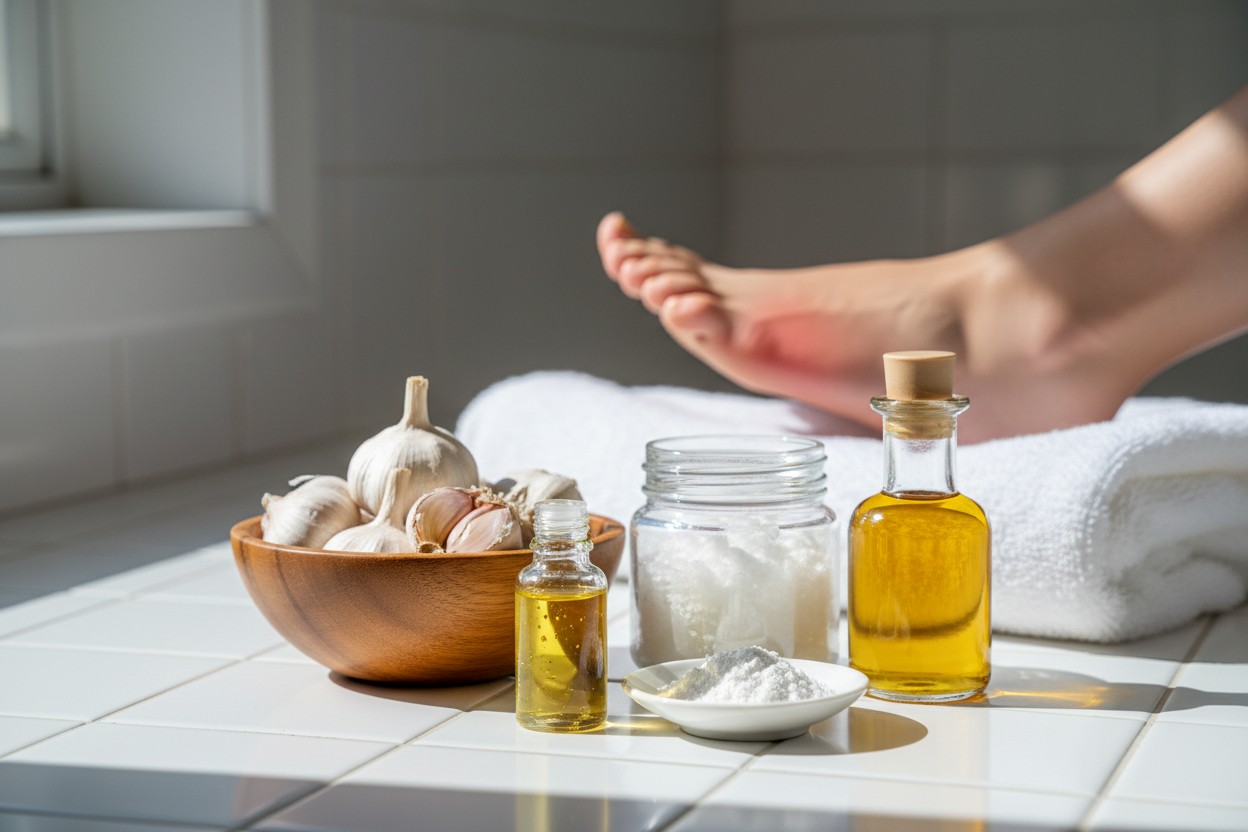
Other commonly recommended items include garlic, which shows broad-spectrum antifungal activity, coconut oil for its antimicrobial properties, baking soda for its alkaline nature, and Epsom salt for use in foot soaks. A report compiled findings that ingredients like salt and natural oils can interrupt fungal life cycles. Proponents suggest these remedies offer practical steps that do not rely on pharmaceutical products.
Natural Health Perspectives Contrast with Pharmaceutical Approaches
Proponents of natural remedies argue these options allow people to avoid the synthetic chemicals found in some over-the-counter antifungal products. They express scepticism toward institutional health guidance, favouring self-reliant, home-based strategies informed by traditional knowledge.
This perspective is part of a broader worldview that is highly sceptical of centralized medical institutions. Advocates often point to historical use, such as olive leaf being used for thousands of years to treat infections, as evidence of the efficacy of natural compounds. They position natural antimicrobials like garlic and honey as essential first-line defences, especially in scenarios where conventional medicine may be unavailable.
Prevention Focused on Environment and Footwear
Preventative measures emphasized by natural health advocates focus heavily on environmental control and footwear choices. Selecting breathable footwear and allowing shoes to dry completely between uses is considered crucial to denying fungi a hospitable environment.
Using protective footwear, such as sandals or shower shoes, in communal wet areas is widely recommended to prevent initial exposure. This approach aims to address the root cause of infection by minimizing contact with the warm, moist conditions where dermatophyte fungi proliferate.
yogaesoteric
April 7, 2026