
Project “PROVIDENT”: The NIAID has launched a $70 million pandemic program focused on pre-outbreak hantaviruses
PROVIDENT remains active until 2029 and had recently completed an unprecedented mapping of the Andean hantavirus before the outbreak of 2026 became known.
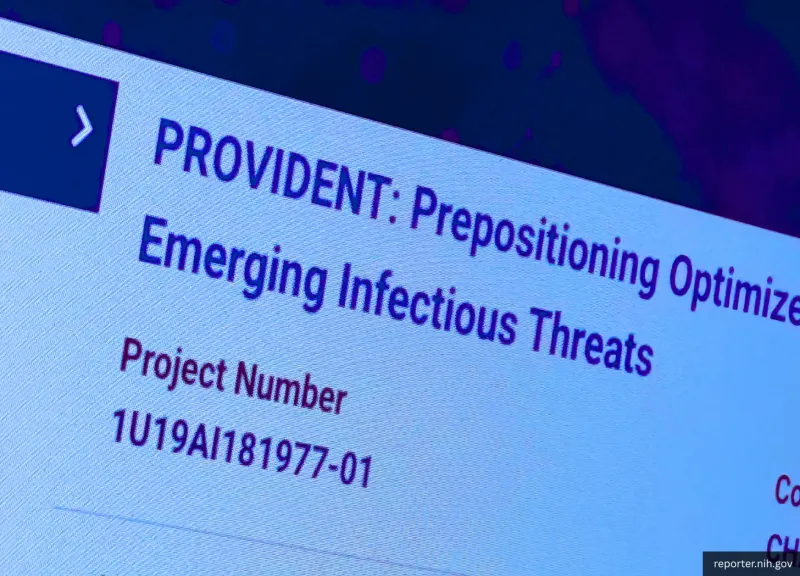
A comprehensive pandemic preparedness program by the National Institute of Allergy and Infectious Diseases (NIAID), which focused in part on hantaviruses, was already well underway – and had recently achieved an unprecedented mapping of the structure and vaccine platform of the Andean hantavirus – before the much-discussed international outbreak of the Andean hantavirus in 2026.
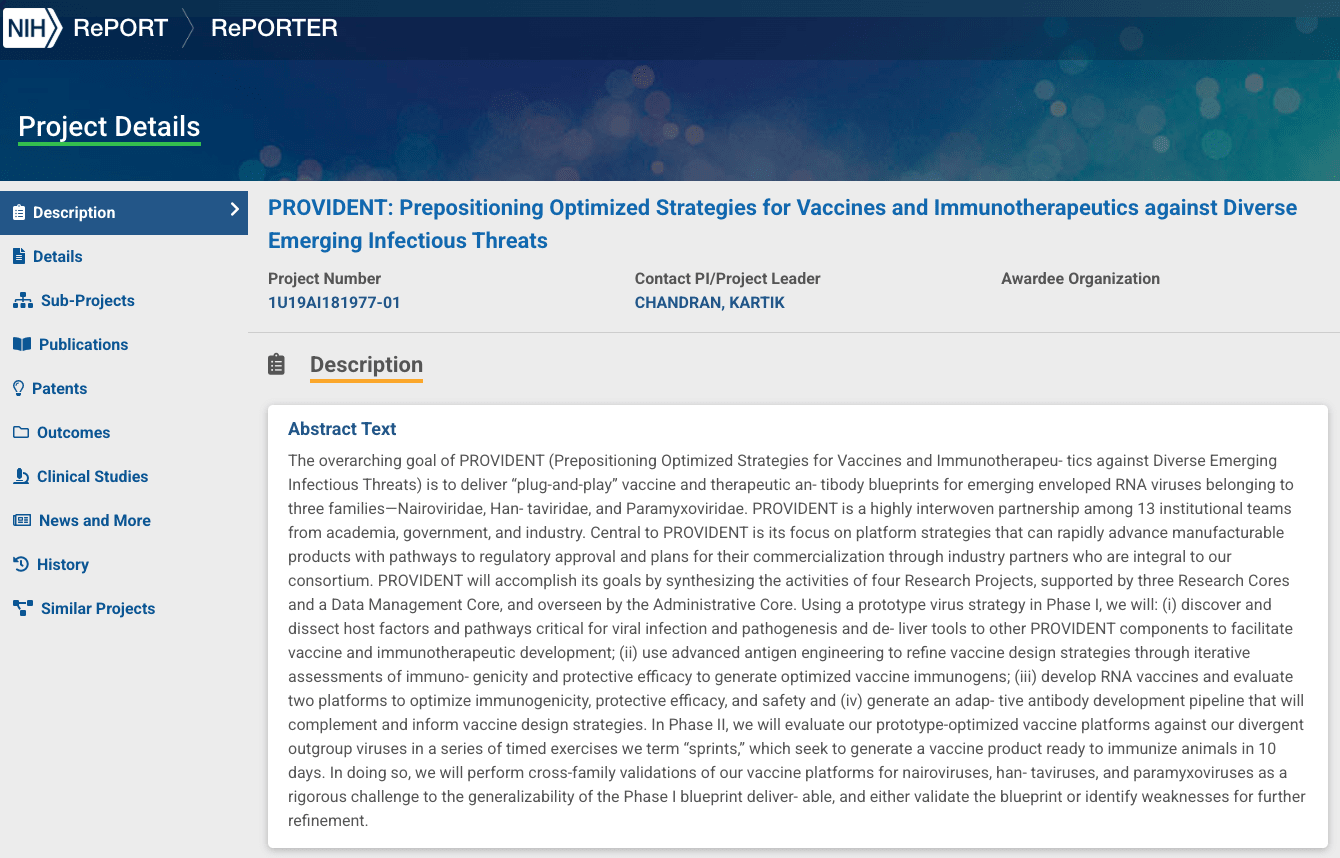
The federally funded initiative called PROVIDENT (“ Prepositioning Optimized Strategies for Vaccines and Immunotherapeutics against Diverse Emerging Infectious Threats” ) officially started in September 2024 and, according to NIH RePORTER documents, will run until June 2029.
The project is led by Dr. Kartik Chandran, a professor at the Institute of Microbiology and Immunology at the Albert Einstein College of Medicine.
It is important that the project is not a small, short-term grant.
The Albert Einstein College of Medicine announced in September 2024 that the consortium had received a “ five-year grant of $14 million per year.”
This brings the total estimated cost of the program over its entire duration to approximately 70 million dollars.
NIH Reporter separately confirms that the project received $13,946,446 in federal funding in 2024 alone.
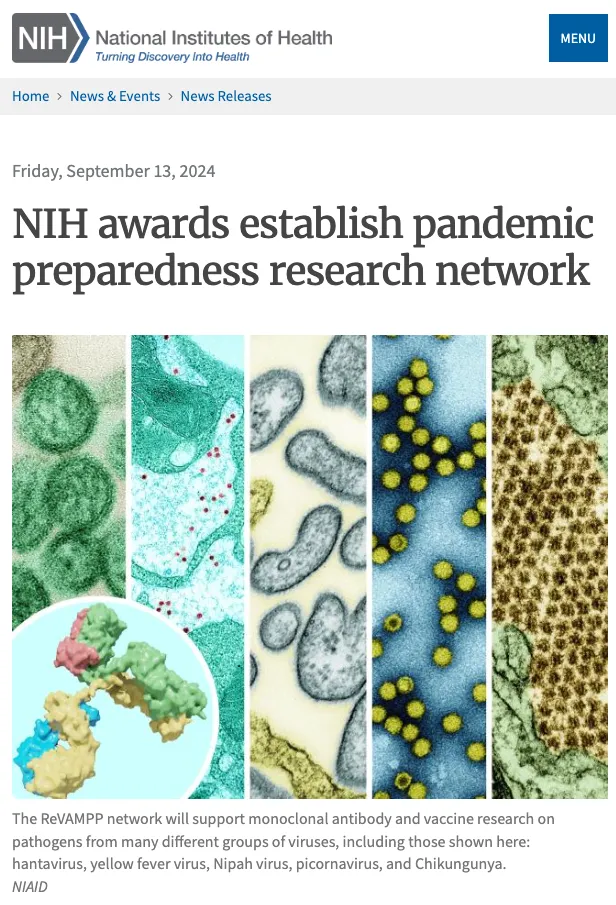
The project is part of the NIAID’s broader ReVAMPP pandemic preparedness network, a federal initiative that aims to build systems for the rapid delivery of vaccines and monoclonal antibodies against future outbreak pathogens before public emergencies occur.
Crucially, hantaviruses were selected as one of the priority categories of “prototype pathogens” for the network.
This means that the German government had already identified hantaviruses as an important target for future measures before the Andean hantavirus outbreak in 2026 came into international focus.
According to the summary of the NIH grant application, PROVIDENT’s stated goal is to create the following:
“‘Plug-and-play’ blueprints for vaccines and therapeutic antibodies against emerging enveloped RNA viruses from three families – Nairoviridae, Hantaviridae and Paramyxoviridae.”
The documents reveal that the consortium did not only conduct passive monitoring. Instead, it built upon the following:
- RNA vaccine systems,
- Antibody development pipelines
- Infrastructure for animal models,
- Commercialization pathways,
- Platforms for immunogen development
- as well as rapid response systems to combat outbreaks.
The NIH summary further states that the consortium aimed to develop vaccine products that are “ready to immunize animals within 10 days”.
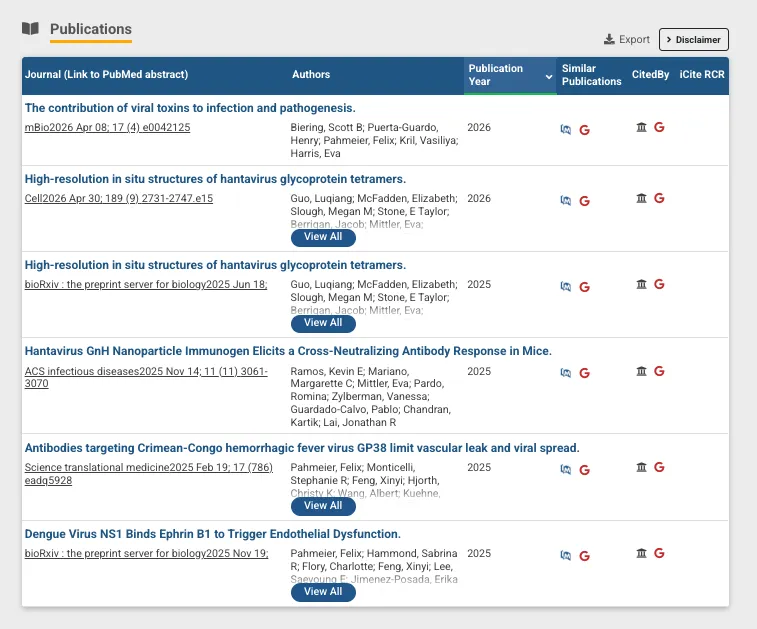
While PROVIDENT continued to operate actively, the project funded researchers who published a number of significant articles on the Andean hantavirus in late 2025 and early 2026, which greatly expanded the scientific understanding of the virus.
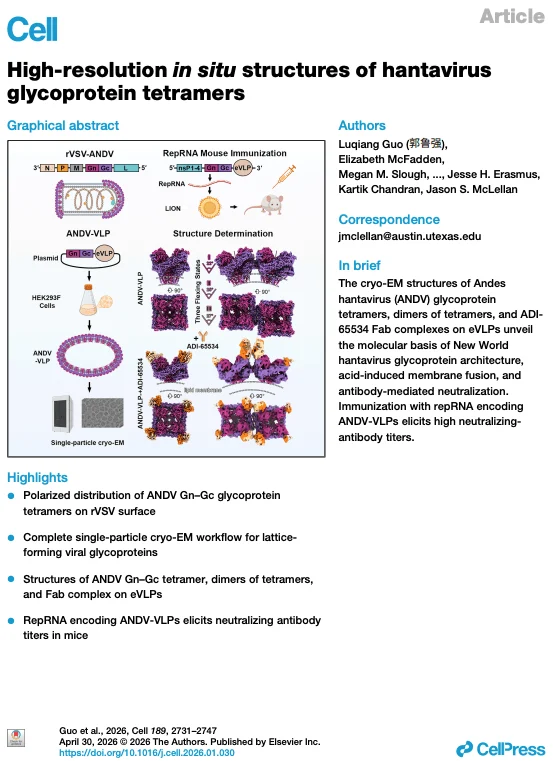
One of the most significant studies, published in Cell in 2026, acknowledged that there had previously been a lack of a detailed, high-resolution understanding of the structure of the Andean hantavirus.
The article stated:
“The lack of high-resolution structures of the tetramers in their natural membrane environment continues to hinder a comprehensive molecular understanding of the architecture, function, and antibody-mediated inhibition of ANDV.”
The researchers then reported that they had succeeded “to determine the structure of the membrane-embedded glycoprotein tetramer of the Andes virus (ANDV) with a resolution of 2.35 Å.”
The work also included:
- the mapping of antibody complexes,
- the development of virus-like particles (VLPs),
- the analysis of the glycoprotein lattice,
- Mapping of membrane fusion
- as well as self-amplifying replicon RNA (repRNA) vaccine systems against the Andes hantavirus.
The study in Cell represents one of the most detailed structural and functional mappings ever undertaken on the Andes hantavirus, transforming the virus from a comparatively poorly characterized pathogen into a highly sophisticated and comprehensively modelled target for vaccines and countermeasures just before the outbreak crisis of 2026 occurred.
Another PROVIDENT-funded hantavirus study, published in ACS Infectious Diseases, reported on what researchers described as the first genetically engineered immunogen system for Andes hantavirus capable of triggering cross-strain neutralizing antibody responses against multiple hantavirus strains, using SpyCatcher/SpyTag nanoparticle technology.
The study represented a significant advance in the development of countermeasures against hantaviruses, going beyond basic observations to the targeted development of broadly protective nanoparticle vaccine platforms against the Andes hantavirus, capable of generating cross-strain neutralizing responses even before the international outbreak crisis occurred.
The PROVIDENT studies repeatedly focused specifically on the Andes virus – not just on hantaviruses in general.
The Andes hantavirus is particularly significant because it is one of the few hantaviruses that have been associated with suspected or documented human-to-human transmission, making it an important topic for biological defence and pandemic planning.
Then, in the spring of 2026, the international Andean hantavirus crisis occurred on a cruise ship.
The event triggered the following:
- Multinational tracing measures,
- Quarantine measures
- Genome sequencing efforts,
- Transport under biological safety precautions,
- Coordination by the WHO
- as well as extensive international media coverage.
It is important that the outbreak did not occur years after the completion of the dormant government research.
The outbreak occurred while PROVIDENT was still active, and years before the consortium’s planned completion in 2029.
In other words, the international outbreak of the Andean hantavirus occurred during the active period of the NIAID’s approximately $70 million hantavirus preparedness initiative.
The Albert Einstein College of Medicine described the project as a measure to prepare for future “Virus X” events before they become publicly known.
According to the institution’s press release: “Should a related ‘Virus X’ pose a health risk – develop specific countermeasures as quickly as possible.”
This temporal overlap has now raised major questions as to why the Andean hantavirus received such high priority at the federal level, unprecedented structural mapping, the development of a vaccine platform, and attention in the area of antibody development immediately before the occurrence of a rare international Andean hantavirus outbreak during the active period of the same preparedness program.
yogaesoteric
June 11, 2026