
Reflections on Homeland Insecurity: The Strategic Anatomy of Civil Wars to Come (2)
Read the first part of the article
Riots Without Leaders, Narratives Without Rival
If the expectation gap defines the structural pathology, the waves of civic unrest that are multiplying across Western cities unmask its operational face. Whether in London, Paris, Amsterdam, or Melbourne, these disturbances signal not episodic volatility but systemic fragility.[88] Scale, nature, and pattern all matter, and together they sketch a picture of governance stretched thin and authority hollowed out.[89]
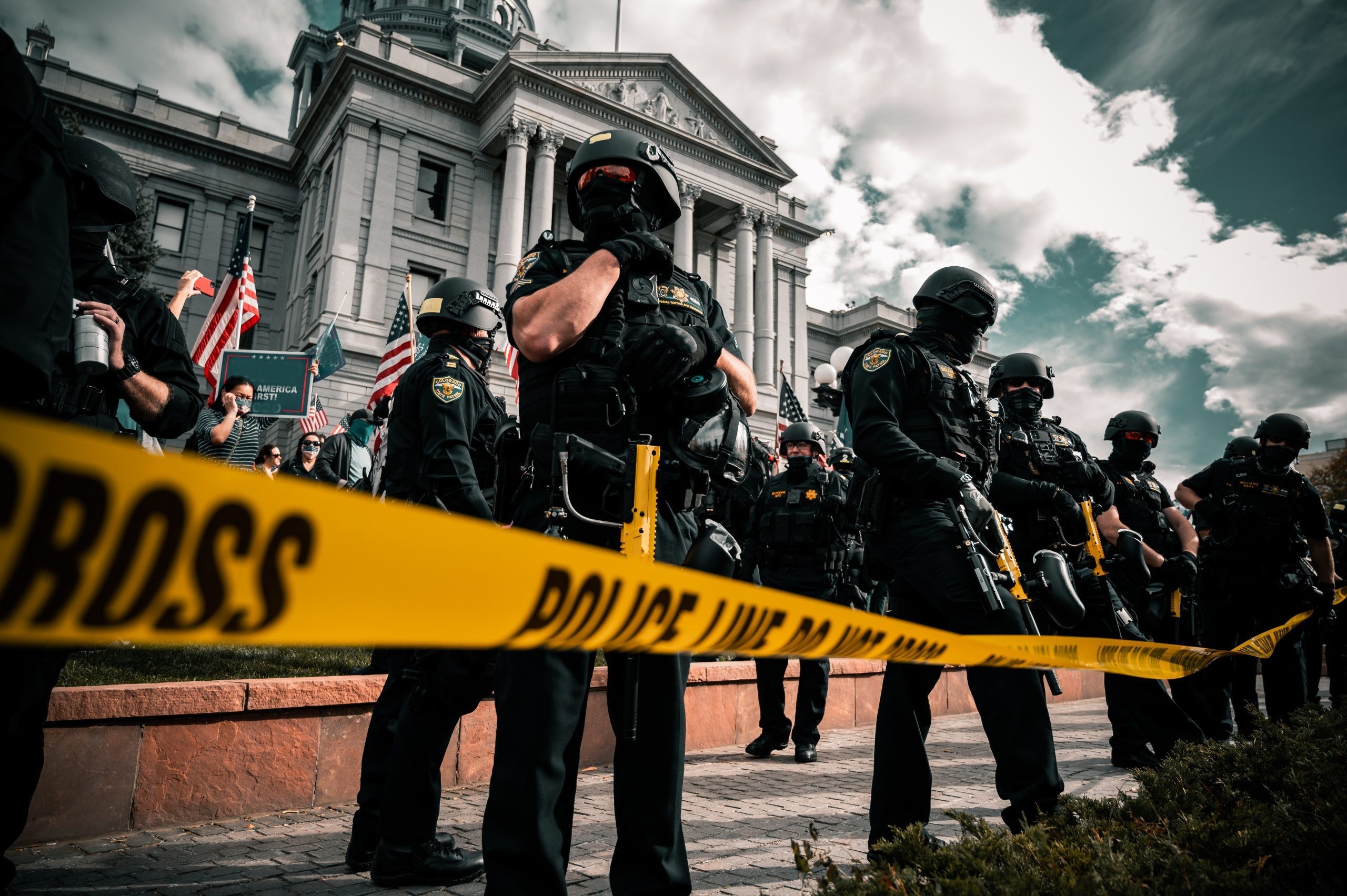
States are well-practised in quelling occasional outbreaks of violent protest, by redeploying resources. Yet this capacity is finite. Inner-city riots in London in 2011 took a week to contain;[90] since then, police numbers and training have declined.[91] The prospect of larger, more frequent and multi-city revolts – on the scale of France’s Yellow Vests or the Dutch farmers’ rebellions – is no longer theoretical.[92] The panic that shaped the British authorities’ response to the Southport riots of 2024, following the murder of three young girls by a young man of immigrant background,[93] or its hasty relocation of migrant centres to avoid further clashes, betrayed the limits of the state’s margin of manoeuvre. These are not strategic solutions, but desperate fire-fighting measures.
At first glance, the local and spasmodic quality of such protests might appear reassuring to governments since the absence of a centralised leadership or command structure suggests there is no movement to infiltrate, co-opt, or negotiate with.[94] Yet this very decentralisation is the deeper problem. A movement without leaders is a movement resistant to the traditional tools of statecraft.[95] Suppressing it is like battling quicksand – the harder one struggles, the deeper the entrapment, and in the end the effort is futile.
Nor should decentralisation be mistaken for incoherence. Studies of modern insurgencies and terror networks show that leaderless, polycephalic movements can operate with striking strategic agility. Their strength lies not in central command but in the adoption of a compelling narrative. Such a narrative does not dictate operations; rather, it frames the meaning of events.[96] It identifies grievances, names the outgroup enemy, offers a plausible course of action, and summons a “conscience community” into being. When it takes root, no orders are required – participants intuit the logic themselves.[97]
In Europe, such a narrative has taken root around the perception of demographic displacement. Native populations, increasingly convinced that they are being deliberately sidelined in their own countries, interpret migration not as natural movement but as engineered transformation, often in defiance of democratic opposition.[98] This narrative has not been invented by extremists; it has spread organically into public discourse, precisely because it resonates with lived experience.[99] The political class, instead of addressing it with an alternative vision, has turned to censorship, criminalisation of dissent and the prosecution of opposition figures.[100] Yet confident authority does not behave so frantically. Resorting to censorship is the hallmark not of strength but of desperation.
The deeper strategic failure lies in the system’s intellectual exhaustion.[101] If the displacement narrative has traction, why not counter it with a superior narrative – one that speaks to shared belonging, collective purpose, or national renewal?[102] The answer is bleakly simple: because no such narrative exists within the governing class.[103] What passes for the status quo is no longer an ‘idea’ in any meaningful sense. It is managerial drift, bereft of loyalty and incapable of inspiring belief.[104]
The significance of the current wave of marches and protests in somewhere like the UK[105] lies not only in taxing the state’s resources but laying bare its crisis of legitimacy and vision.[106] Scholarly work underscores that riots are not aberrations but reveal political terrains of struggle – outsized confrontations born of unaddressed grievances. The Eurozone’s rule-by-numbers technocracy[107] has further stripped governance of narrative legitimacy, as citizens feel administered almost in imperial fashion rather than represented.[108]
Recurring structural protests are both organised and dispersed, which underscores the futility of countering dispersed networks with centralised tools.[109] Where legitimate institutions fail to channel discontent, the marginalised resort to collective action – rioting becomes a desperate expression of voice. Analysis frames these events as manifestations of a broader, persistent legitimacy crisis – defined by broken procedural trust, eroded accountability and an absence of integrative national purpose.[110] In short, these are not isolated disturbances but a systemic breach of governance: a state without legitimacy, without direction, and without a future.
Global Cities, Fragile Fortresses
Riots and protest dramatize not only the brittleness of state authority but also the structural fragility of the very spaces where power and population now concentrate. The processes of societal polarisation and collapsing institutional trust are not strictly irreversible, but reality dictates that reversal is painfully slow, often taking generations. The so-called peace walls of Belfast – erected in the early 1970s to divide Protestant and Catholic communities – still stand today, a testament to how long mistrust endures even after overt violence subsides.[111]
Three decades ago, most Western states could still be described as cohesive national communities. Today, they resemble patchworks of tribes: identity-based, virtually segregated and increasingly fearful of one another.[112] What has emerged is not a temporary rift but a calamitous change – from national societies into fragmented polities.[113] Repairing such a condition will take decades, and even then, only after conflict has likely burned its way through.[114]
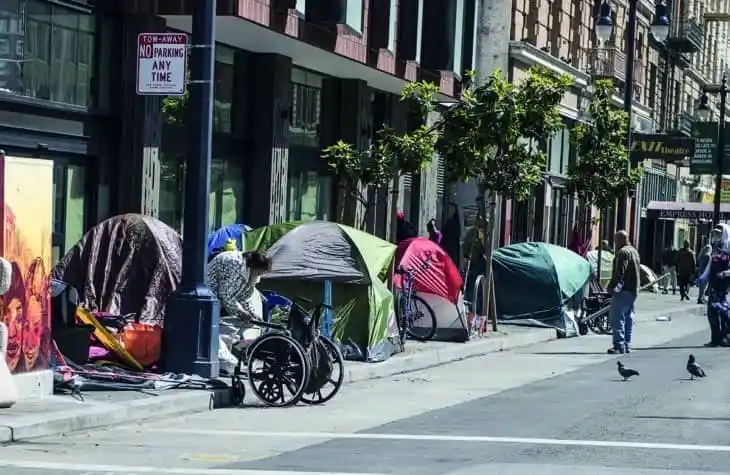
The fragility of global cities is among the starkest features of the present crisis. Dependent on their hinterlands for survival, they are uniquely vulnerable to disruption. Starving a city has long been the surest path to conquest – a lesson that remains relevant today.[115] Modern metropolises, however, are far more exposed than their predecessors. Their very existence hinges on continuous flows of food, fuel, water and electricity – systems notoriously hard to shield.[116] Urban geographers have long argued that city life is a precarious balance; under present conditions of unrest, that balance verges on collapse.[117]
London exemplifies this trend. Once the national capital of the British people, it has become a global city in which natives are a shrinking minority.[118] After the Brexit referendum, in which London voted decisively to remain in the European Union, senior figures such as the current Deputy Prime Minister David Lammy, went so far as to advocate for “Londependence,”[119] a form of quasi-secession from the rest of Britain.[120] This episode underscored a deeper reality: many global cities no longer view themselves as part of their nations but as semi-autonomous nodes within global commerce.
By contrast, provincial populations increasingly see such cities as hostile terrain.[121] This is not merely cultural disaffection but strategic vulnerability. In the event of serious conflict, cities will be prime targets, their dependence on fragile logistical arteries inviting disruption.[122] And there will be no shortage of actors, particularly in the rural sphere, eager to sever those arteries.
The rural-urban clash is likely to assume strategic prominence. Christophe Guilluy’s landmark “la France périphérique” (2014) captures the chasm between metropolitan elites and the lower-middle class and rural hinterlands – communities that increasingly see themselves as abandoned and estranged from national politics.[123] This phenomenon is rooted in long-standing anti-urban sentiment with cities viewed as morally vacuous, economically extractive and culturally alien.[124] Cities are regarded no longer as centres of prosperity but objects of scorn – depicted as degenerate, parasitic, islands within their own nations.
As evidence from France and the Netherlands, along with Spain, Ireland and the UK, already indicates, this sentiment fuels political discord, deepens segregation, hardens enclaves and produces zones of conflict.[125] In conditions of serious strife, this could take the form of sieges, with rural and small-town populations pressing against urban districts. Given current demographics, such conflicts would likely favour native populations – a prospect that explains both the urgency and the apprehension surrounding the possibility of confrontation.[126]
Underlying these fissures are economic realities. Stagnant wages, debt accumulation and job precarity are not early warnings but active drivers of social dislocation.[127] For generations, the ideology of progress in the West rested on a simple promise: that material conditions would steadily improve, that each generation would surpass the last.[128] This faith underwrote every other social and political claim of progressivism.[129]
That promise has been broken. Data from the US Government confirms that today’s young people earn a fraction of their parents’ real income at equivalent ages.[130] Their grandchildren will inherit debts that stretch back generations. At the same time, the cultural achievements of earlier generations are dismissed or dismantled.[131] Progress, once imagined as steady improvement, is now experienced as dispossession: economic, cultural, and even existential.
Taken together, these trends describe not a passing disturbance but a structural change of Western societies. Polarisation has become entrenched, cities have grown alien and fragile, the rural-urban divide maps directly onto political conflict, and economic decline has destroyed the ideological anchor of progress.[132] The result is not simply malaise, but a combustible strategic environment in which legitimacy has evaporated, grievances are mounting, and the architecture of stability is visibly crumbling.
Networks, Immigration and the Erosion of Social Capital
From the spatial fragility of cities to the connective power of networks, the forces of instability now converge around three interlocking dynamics: digital mobilisation, mass immigration, and the erosion of social capital. Insurgency, like any social movement, depends on two core functions: resource mobilisation and narrative framing.[133] Digital networks and virtual communication platforms now provide the infrastructure for both,[134] enabling movements to draw in supporters across multiple tiers of commitment.[135]
Online networks help produce a tier of ‘prospects.’ First, there are passive supporters who merely surround a movement with clicks, likes and reposts. Here, virtual communication platforms excel, propagating ideas at minimal cost and turning private discontent into visible collective grievance.[136] Beyond them stand active supporters, who create content, supply intelligence, leak information, or facilitate infiltration. The example of WikiLeaks demonstrates how digital ecosystems can magnify the reach and effectiveness of such actors.[137] Such ideational insurgencies gain traction precisely because the passive offline layer remains resilient, and though anonymous in the digital realm, its adherents feel bound by ritual and a sense of shared fate.[138]
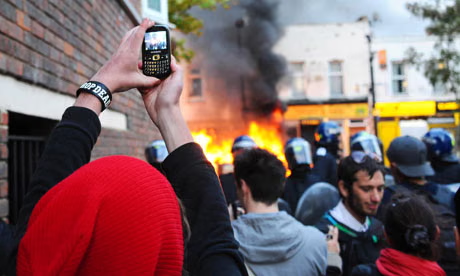
The most consequential, however, are the adherents – the disciplined minority prepared to act beyond the law. These include street fighters, saboteurs, kidnappers and assassins, as well as those able to infiltrate organisations and conduct interrogations. Within this tier, the distinction between ‘trusted soldiers’ and ‘prospects’ is critical, much as motorcycle gangs differentiate hardened members from aspiring thugs. Digital media may generate prospects, but trust – the lifeblood of these networks – can only be forged through shared risk and face-to-face bonds.[139] For adherents, digital exposure is more liability than an asset, since state surveillance excels in monitoring the online domain but remains comparatively blind to offline networks.[140]
Thus, while virtual communication catalyses mobilisation among passive and active supporters, it simultaneously impedes the clandestine coordination of the adherents who ultimately drive violent action. Digital ecosystems, in short, hasten the spread of insurgent narratives but also push the most dangerous actors back into the cover of clandestine activity.[141]
The most potent source of agitation in Western societies is mass immigration.[142] It stands at the centre of both elite policy and popular resistance. The consequences are tangible: wage suppression, inflated housing demand, strains on welfare and public services, heightened crime[143] – particularly sexual assault[144] – and increasingly overt acts of cultural iconoclasm.[145] For many, immigration represents not adaptation but displacement, imposed from above and maintained even when electorates have voted against it.
When populations feel like strangers in their own land, the resulting charge is political dynamite.[146] Territorial affinity is not some abstract principle, but the core of many, if not most, people’s sense of identity.[147] When that tie is perceived as severed – and especially when large sections of the population conclude they did not choose their dispossession – the shattering can become a call for revolt. It is precisely the emotional potency of dispossession that gives such narratives their mobilising power.[148]
The deeper fault line lies in the collapse of social capital. As Robert Putnam demonstrated in Bowling Alone (2000), social capital sustains societies just as financial capital sustains economies: it underwrites trust, cooperation, and resilience.[149] Yet subsequent research, including by Putnam himself, has confirmed across a range of disciplines that large-scale ethnic diversity corrodes this capital.[150] In practice, diverse communities display diminished trust, weaker voluntary associations, higher levels of crime and heightened alienation.[151]
Putnam once suggested that the benefits of multiculturalism might eventually outweigh the costs, with new solidarities emerging over time. Two decades on, the opposite has occurred. Cohesion has not deepened but further deteriorated, leaving societies brittle and volatile.[152] Few seriously contest the decline itself,[153] yet what passes for debate has become surreal. Instead of addressing the causes, policymakers oscillate between doubling down on the very forces driving disintegration, or – most perversely – punishing those who voice disquiet.[154] Drained of integrity, unconstrained immigration has imposed cultural transformation without consent, and the political establishment offers only denial, escalation, or coercion. The conditions for implosion are not speculative; they are embedded into the very structure of the present order.
Decentralised digital networks, mass immigration, and collapsing social capital form a mutually reinforcing triad of instability. Digital platforms amplify the spread of grievance; immigration provides its content; and diversity corrodes the cohesion required to absorb shocks. Governments, rather than confronting these dynamics with persuasive narratives or effective remedies, have relied on censorship and repression – the hallmarks of insecure rather than confident power. The result is a polity in which narratives of displacement and betrayal thrive unchecked, while the state increasingly resembles an authority without belief, without legitimacy, and without strategy
The Breaking of the Social Contract
Beneath these accelerants lies the decisive fracture: the breaking of the social contract – the bond that once tied citizens, state and generations together. The decline of institutional trust in the West is not the product of a single event but of cumulative decisions and ideological turns. Philosophers and poets have long pointed to modernity’s contradictions – imperial overreach, the false promise of universalist utopias, and the moral wreckage of the World Wars. Yet more proximate causes have proved decisive. The Culture War since the 1960s has left Western societies asking whether their own survival is even desirable.[155] For a not insignificant share of the radical Left, the answer has been a frank “No” – a stance now echoed in polling that records a rising tolerance for political violence, even an emerging ‘assassination culture’ amongst this political faction.[156] Here, strange alliances with Islamist activists take shape, bound not by a common vision but by a common resentment.[157]
Equally consequential has been the colonisation of governance by economic orthodoxy. Nations are no longer imagined as communities bound by history or mutual obligation, but as balance sheets to be managed.[158] Citizens, once participants in a political community, are increasingly treated as tax units whose passports function less as civic markers than as financial locators.[159] The rise of the financial technocrat is no accident: today’s ruling class is drawn not from the ranks of statesmen but from high finance. Rishi Sunak,[160] groomed in hedge funds before becoming British Prime Minister; Canadian Prime Minister, Mark Carney,[161] who moved seamlessly from Goldman Sachs to the helm of two central banks; and Mario Draghi,[162] the central banker who became Italy’s premier – all embody a move in which government is less the art of statesmanship than the arithmetic of accountancy.
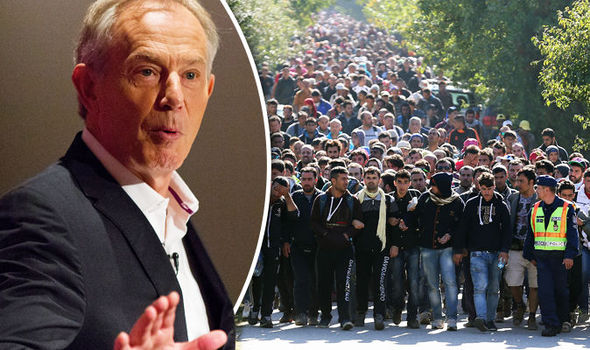
The most decisive act, however, was the adoption of mass migration and multiculturalism as state doctrine. In Britain, Tony Blair’s government announced in 2000 its driving political purpose to re-make the country through large-scale immigration. According to one of Blair’s advisors, Andrew Neather, part of the aim in doing so was intentionally to ‘rub the Right’s nose in diversity’.[163] This deliberate reshaping of the demographic and cultural fabric was not merely policy but a redefinition of the nation itself – and, for many, a breach of the social contract, with the Institute of Race Relations declaring in 2007 that Tony Blair had left the country “more divided – by race, class and status – than he found it.”[164]
Edmund Burke’s conception of society as a covenant “not only between those that are living, but between those who are living, those who are dead, and those who are to be born” underscores the depth of contemporary alienation.[165] By that measure, the growing recognition among native Europeans that demographic replacement is no longer a spectre but a fact marks the moment of reckoning. What may once have been derided as an ‘extreme’ narrative has entered common discourse, if only with reluctance.[166] At that point, the social contract ceases to bind. What was once whispered as private anxiety is now voiced as public expectation: that the inherited order is ending, and with it the trust that once held the polity together.
Civil wars ultimately hinge on the loyalty of security forces. The state may assume that armies will act decisively in its defence, but it is a dangerous wager to expect rank-and-file soldiers to employ lethal force against their own families and neighbours.[167] More plausibly, militaries will be tasked with defending regime enclaves, critical infrastructure and cultural treasures, while also guarding against the leakage of weapons into wider conflict.
Here the risks are severe. The proliferation of arms from foreign theatres looms large. Should Russia emerge from the Ukraine war emboldened, it could conceivably exact retribution on Europe by funnelling weapons westward – man-portable missiles, explosives, and grenades – changing street-level conflict into something far deadlier.[168] The return of thousands of embittered, combat-hardened veterans from the war would compound the danger, expanding the ranks of fighters in an already unstable West.[169]
Can politics arrest this descent? The answer is uncertain. Anti-status quo parties – Reform in Britain, the AfD in Germany, and the National Rally in France are leading in many polls.[170] Yet in addition to electoral headwinds they also face systemic sabotage through ‘lawfare’ and bureaucratic obstruction.[171] Even if elected, their capacity to implement radical reform would be blunted by entrenched opposition. There is no credible off-ramp within existing political rules; the system has rendered its own renewal impossible.
Some states, particularly those in Central and Eastern Europe, are temporarily insulated. Poland, Hungary, and the Visegrád countries, having endured Soviet domination, remain resistant to new transnational orthodoxies emanating from Brussels.[172] By contrast, France and Britain linger at the brink, their divisions deepening, their legitimacy thinned to the point of dissolution.
Policy Implications: Between Prescription and Futility
Readers who have come this far may be less inclined to ask so what? than to ask what now? Having traced the fissures rending Western societies, the importance of which is self-evident, the question becomes whether anything can be done to alter the trajectory. As scholars of war and strategy, our stance is necessarily diagnostic: strategic theory equips us to illuminate structural forces and clarify their logic, not to dictate how societies should be ordered or how lives should be lived. We are not reformers or visionaries, but observers. Yet would we be derelict in our duty if we offered no indication at all of what responses might, in principle, be possible?
From the analysis above, twelve policy signposts emerge:
1) Re-legitimate democratic authority
End practices that teach voters their choices don’t matter (reversals of political commitments, re-runs of elections, procedural obstruction). Publicly commit to executing clear mandates, tighten rules against ‘lawfare’ that nullifies democratically endorsed preferences, and widen transparency around major decisions to restore the sense that politics is real and corrigible.
2) Confront leaderless unrest with principled doctrine, not improvisation
Plan for decentralised, polycephalic mobilisations that cannot be co-opted or negotiated with. Build capacity for simultaneous multi-city events, improve surge policing, and intelligence fusion; abandon ad-hoc ‘firefighting’ that signals brittleness.
3) Harden critical infrastructure
Assume infrastructure disruption (food, energy, water, logistics) will be a primary vector of coercion. Map chokepoints, add redundancy and pre-position repair and security capability. Treat global cities as ‘fragile fortresses’ whose lifelines depend upon the support – not the alienation – of their surrounding regions.
4) Address the rural–urban divide
Resource the periphery by rebuilding connective tissue between metropoles and hinterlands. Anticipate siege-logic dynamics while reducing the political symbolism of cities as ‘islands apart’.

5) Reject censorship and replace with a superior integrative narrative
Censorship and criminalisation of dissent advertise weakness and feed grievance. Articulate a credible, shared national story (belonging, reciprocity, purpose) that can outcompete displacement/betrayal narratives rather than trying to suppress them and thereby confirming them.
6) Rebuild social capital as security policy
Treat trust-building (associations, local institutions, safe public space – especially for women and girls) as a strategic objective. Prioritise visible law-enforcement against predatory crime; measure and publish trust/cohesion indicators alongside economic metrics, even if they offend against the myths of multicultural dogma.
7) Reset immigration policy to the constraint of consent and capacity
Link intake to demonstrated absorptive capacity (housing, services, employment) and the maintenance of civic trust. Shift the emphasis from abstract multiculturalism to integration and common civic identity; recognise that unmanaged inflows corrode consent and legitimacy.
8) Close the generational expectation gap
Target youth prospects (work, housing, family formation) and tackle ‘elite overproduction’ dynamics that produce credentialed-but-blocked cohorts. Treat AI/globalisation shocks to middle-class work as a strategic risk factor, not just an economic curiosity.
9) Clarify the role of the armed forces in domestic crisis
Plan for missions that prioritise protection of critical infrastructure and cultural assets over coercion of the population. Establish civil-military red lines (e.g., lethal force against citizens) and bolster controls against weapons leakage from external conflicts; prepare for reintegration pathways for combat-experienced returnees.
10) Acknowledge the external–internal insurgency feedback loop
Resource counter-networking against transnational mobilisation (digital and diasporic), while preserving civil liberties. Assume domestic actors will learn from foreign theatres; align internal security, border and information policies accordingly.
11) Reform universities: overcome the academic taboo
Incentivise the open study of ‘dissident’ literatures and ‘impolite’ data rather than resorting to lazy labelling that dismisses majoritarian opinion as extreme merely because it departs from progressive orthodoxy. Build research programmes that connect legitimacy/trust findings to concrete political implications.
12) Adopt an ‘organic crisis’ plan
Stop framing the situation as episodic unrest amenable to routine fixes. Accept that turbulence is structural and long-term. Set expectations honestly without false optimism, sequence reforms that are actually feasible, and prioritise mitigation and resilience where reversal is unlikely.
Together these signposts suggest what a serious agenda for mitigation might look like. Yet to sketch them is also to admit their near impossibility. Each demands political imagination, institutional courage and social cohesion at the very moment when Western societies, especially in Europe, are least capable of summoning them. To re-legitimize democracy would require elites to abandon the very stratagems – lawfare, technocratic evasion, disdain for popular mandates – by which they have secured their power. To rebuild social capital would mean reversing over three decades of policies that corroded it. To close the expectation gap would mean dismantling interests vested in credentialism and exclusion. Even the modest ambition of salvaging fragments of civilisation in collapse – museums, services, civic memory – may prove more an exercise in triage than renewal.
History offers little comfort. When order fails, peoples seldom reform their way out of crisis; they endure breakdown and then reconstitute authority around older verities and harsher disciplines. That, too, is a policy trajectory, though not one chosen but imposed. The sober truth may be that the most realistic ‘recommendation’ is less about avoiding fracture than about preparing for what will follow it: the arduous reconstitution of authority and meaning has so often been the fate of polities once their inherited order has dissolved.
Conclusion
This assessment has attempted something straightforward: to identify the forces pushing developed states – above all in Europe – towards social fracture and the prospect of severe civil strife, and to draw out the strategic implications. It has also sought to show that the sources of these tensions are neither hidden nor mysterious. They are well documented, albeit in disparate form, across the serious scholarly literature.
In that regard, the academic consensus on civil war causation is not obscure; it is, in truth, little more than the plain sense of political theory that Europe’s ruling elites ignore or pretend not to understand. Thomas Hobbes himself spelled it out in Leviathan: “The obligation of subjects to the sovereign is understood to last as long, and no longer, than the power lasteth, by which he is able to protect them.”[173] When rulers cannot protect, they cannot command obedience. It is that simple – and that deadly.
Yet today’s elites, convinced of their own permanence, behave as though exempt from the oldest rule in politics: lose legitimacy, lose everything. Academics can rehearse the point in 10,000 words or 100,000; reality requires far fewer: legitimacy is perishable, people’s revolt is rational, consequences are unavoidable.
Note: The references for this article can be seen here.
Authors: David Betz (Department of War Studies, King’s College London) and M.L.R. Smith (Centre for Future Defence and National Security, Canberra)
yogaesoteric
October 24, 2025