
René Quinton’s century-old seawater therapy
René Joseph Quinton (1866–1925) was a French biologist, physiologist, and World War I hero. He gifted the world with an astonishing therapy based solely on ocean water, collected from carefully selected marine locations, sterilized and packed in special conditions.
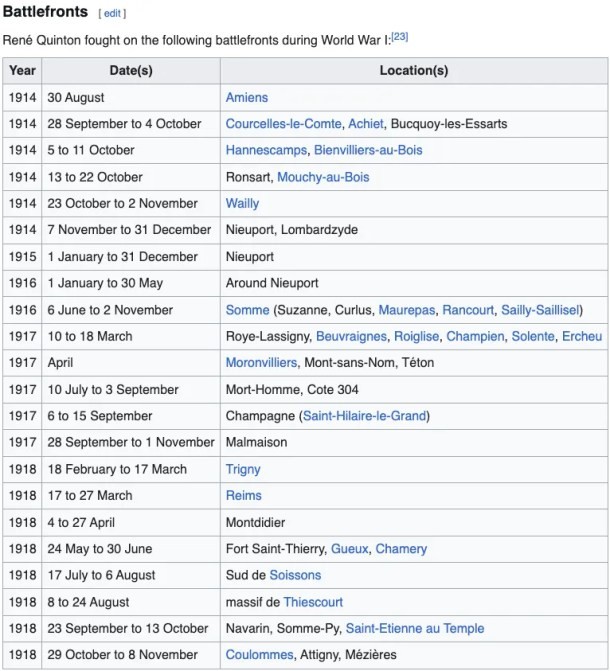
René Quinton fought in battles continuously for almost four and a half years during WWI:
During all those battles, Quinton suffered numerous injuries, including receiving shrapnel to the nape, multiple head and face contusions, and injuries including frostbite to the feet. Those efforts led him to become highly decorated, receiving numerous titles and awards from the French military:
- Chevalier de la Légion d’honneur, on 20 July 1916
- Officier de la Légion d’honneur, on 10 July 1917
- Commandeur de la Légion d’honneur, on 16 June 1920
- Croix de guerre, 5 Palms and 2 Stars
He was even recognized abroad: he was named Chevalier de l’Ordre de Léopold in Belgium, and they also gave him the Croix de guerre. He was later also decorated by the UK and the US.
However, he is more famous today for what he did before being dragged into fighting the war.
He was a researcher focused on science, philosophy, and public health. His most important work was his pioneering investigations into the biological parallels between seawater and human plasma.
He primarily relied upon biological observation and theoretical reasoning. During his biology studies, he became fascinated by the continuity between marine and terrestrial life.
After studying the osmotic, thermal, and chemical composition of animal blood plasma, he compared it to seawater. He found that the proportions of key ions – sodium, potassium, calcium, magnesium, and chloride – were remarkably similar to those in the ocean, leading him to conclude that the internal environment of living organisms is a preserved fragment of the original marine milieu.
Quinton reasoned that if all higher organisms maintain this internal “marine constancy,” then life itself might have originated in the sea, and that chemistry had been conservated across millennia.
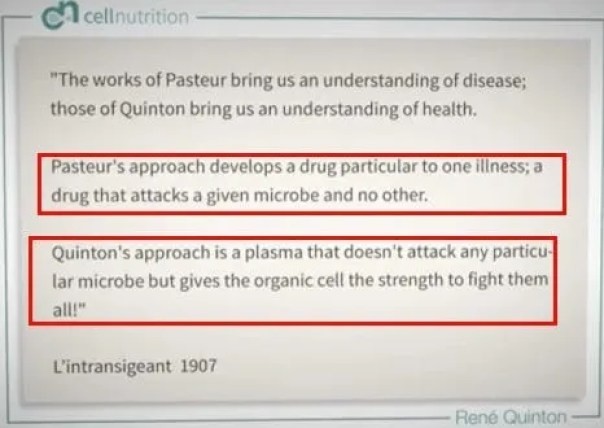
He then proposed a “Loi de Constance” (“Law of Constancy”). In his 1904 book L’eau de mer, milieu organique (Seawater, an organic environment), he described this as evidence that nature repeats rather than evolves – a cyclical preservation of life’s original marine conditions.
To him, the sea wasn’t just a metaphorical cradle but a biochemical memory of creation, sustained within every cell. His thinking was that the internal environment of the human body mirrors that of primordial seawater.
His experiments, including the use of isotonic seawater to replace or restore body fluids, were designed to demonstrate that when the internal “ocean” of the organism was restored to balance, the system could return to normal function. Basically, he believed that balance depended on maintaining this mineral-ionic equilibrium.
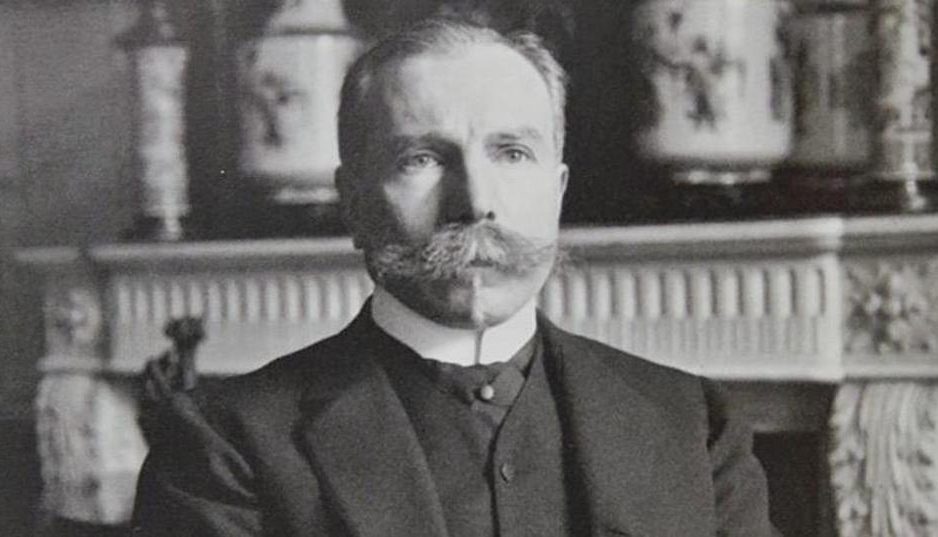
Based on that premise, he developed Sérum de Quinton, a sterilized, isotonic seawater solution, used therapeutically in the early 20th century to restore vitality, treat dehydration, and support immune recovery.
One of the most impressive aspects of René Quinton’s work is that he actually kept data. Further, it was rigorous, organized, and clinical.
Although René Quinton believed that marine plasma could be beneficial in regenerating tissues and cells in the human body, he first had to ensure that his product was safe.
He tested his plasma on animals. He injected marine plasma into a dog at a rate comparable to the removal of the animal’s kidneys. The dog received an amount of fluid equal to its body weight, without its body suffering.
Quinton repeated the same experiment with a second dog, but did not observe the rate of elimination of the animal’s kidneys.
This time, the dog’s stomach was swollen with fluid. His body was overloaded with plasma. Once the transfusion was complete, the dog eliminated 60 times the normal volume of fluid without his kidneys showing any fatigue.
Finally, he injected isotonic marine plasma into a third dog that had been drained of blood. The dog was unconscious and would die within the next few minutes unless urgent action was taken.
The dog’s condition was so poor that no intervention would have been tolerated. However, the injected plasma did not cause any further aggression. On the contrary, it caused a rapid reconstitution of the blood tissue. After the injection, the dog was back on its feet. Fifteen days later, blood test results showed that the blood was normal and richer than before.
Once the lack of toxicity of his product was demonstrated, Quinton began clinical trials with human beings.
The first person he treated was a patient in the final stages of typhoid fever. He injected the patient with isotonic plasma subcutaneously. The next morning, the patient felt much better and ate with pleasure. A few days later, he was well and truly saved.
Proud of this result, Quinton continued his clinical and research studies for four years. His experiments, as well as those of several doctors interested in his method, have demonstrated that by regenerating with isotonic plasma the depleted internal environment of a patient, from which his cells are nourished, the patient recovers completely. The cells can again extract the elements they need from the body.
In 1905, a 60-page booklet by Olivier Macé & René Quinton documented outcomes in fragile infants that were severely malnourished and suffered from growth arrest, enteritis, and bronchitis. They were treated with subcutaneous injections of Quinton’s isotonic seawater. The results were nothing short of astonishing.
Also in 1905, he set up his own laboratory. Later on, in 1906, he opened his first Marine Dispensary in Paris, helping thousands of people of all ages to regain an optimal state of health thanks to his seawater mixtures. It saved thousands of children with gastroenteritis and cholera.
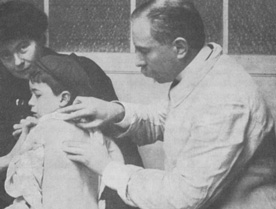
Other clinics were later opened in Paris, Lyon and Nancy.
In total, twelve centres for the application of his method were created in France, Belgium and Egypt.
But in 1914 war broke out in Europe, Quinton was sent to fight and his work was forgotten.
The biologist died in Paris in 1925.
It was only in the 1980s that French doctors became interested in his therapeutic approach.
His method is now being used again in France, but also in Spain, Italy and Germany. It is increasingly spreading in Switzerland, the United States and Canada.
yogaesoteric
December 5, 2025