
Historical Analysis of the Global Elite: Ransacking the World Economy Until ‘You’ll Own Nothing.’ (2)
Read the first part of the article
Chapter III
The US Federal Reserve System
In his classic work The Creature from Jekyll Island: A Second Look at the Federal Reserve, in which he describes the formation, structure and function of the US Federal Reserve System, which governs banking in the United States, G. Edward Griffin identified the seven men and who they represented, at the secret meeting held at the private resort of J.P. Morgan on Jekyll Island off the coast of Georgia in November 1910 when the System was conceived (and later passed as The Federal Reserve Act in 1913).
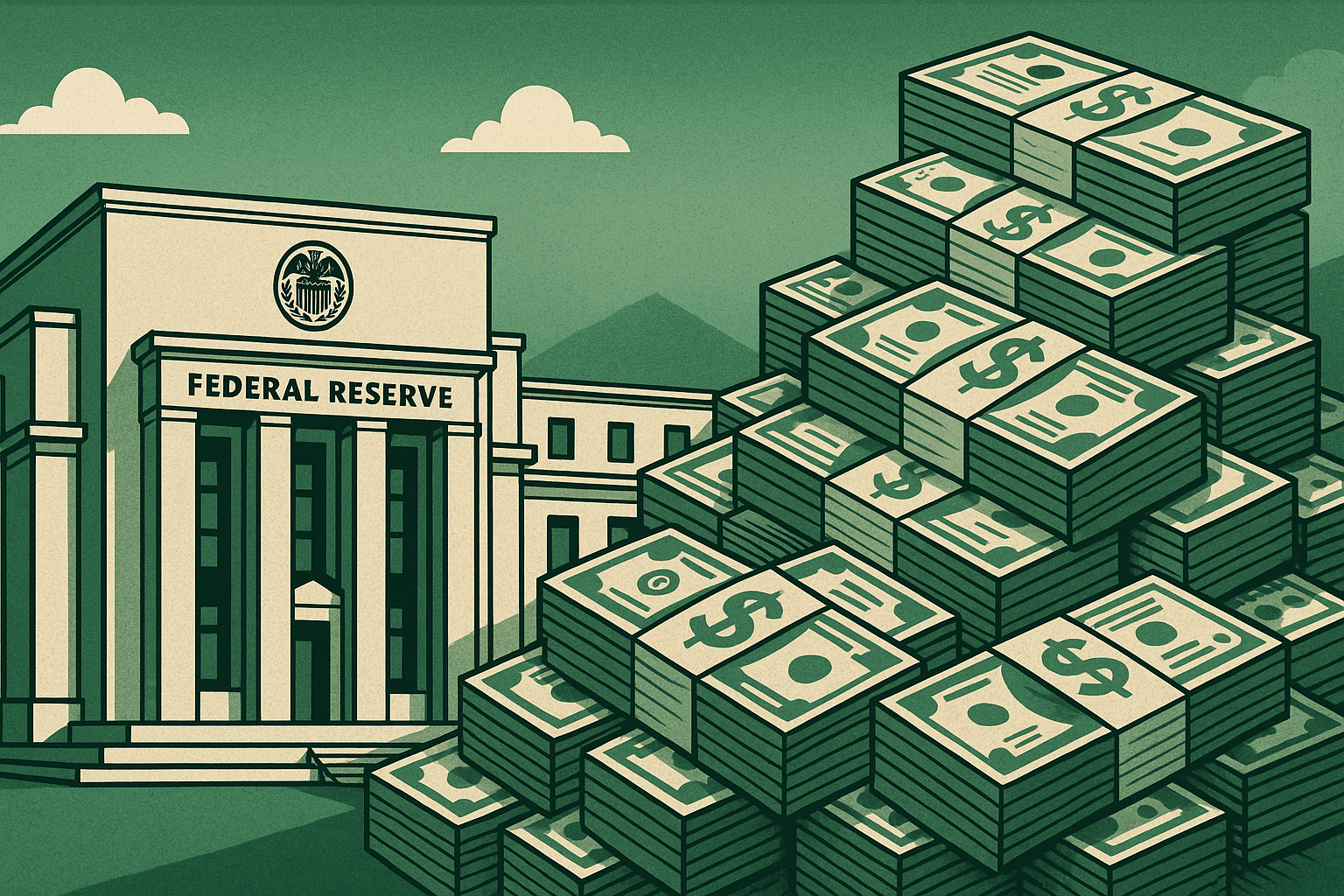
The seven men at this meeting represented the great financial institutions of Wall Street and, indirectly, Europe as well: that is, they represented one-quarter of the total wealth of the entire world. They were Nelson W. Aldrich, Republican ‘whip’ in the US Senate, Chair of the National Monetary Commission and father-in-law of John D. Rockefeller Jr.; Henry P. Davison, senior partner of J.P. Morgan Company; Charles D. Norton, President of the 1st National Bank of New York; A. Piatt Andrew, Assistant Secretary of the Treasury; Frank A. Vanderlip, President of the National City Bank of New York, representing William Rockefeller; Benjamin Strong, head of J.P. Morgan’s Bankers Trust Company and later to become head of the System; and Paul M. Warburg, a partner in Kuhn, Loeb & Company, representing the Rothschilds and Warburgs in Europe.
But lest you think that there is some ‘diversity’ here, long-standing ties generated from huge financial injections at crucial times meant that several other key banks owed much to Rothschild wealth. For example, in 1857 a run on U.S. banks saw the bank Peabody, Morgan and Company in deep trouble as four other banks were driven out of business. But Peabody, Morgan and Company was saved by the Bank of England. Why? Who initiated the rescue? According to Docherty and Macgregor, “The Rothschilds held immense sway in the Bank of England and the most likely answer is that they intervened to save the firm. Peabody retired in 1864, and Junius Morgan inherited a strong bank with powerful links to Rothschild.” Junius was the father of J.P. Morgan. See Hidden History: The Secret Origins of the First World War, p. 222.
A similar event occurred when Nathaniel Rothschild headed the Bank of England committee that rescued Barings Bank from imminent collapse in 1890. But other big banks “were beholden to or fronts for the Rothschilds……. Like J.P. Morgan, Barings and Kuhn Loeb, the M.M. Warburg Bank owed its survival and ultimate success to Rothschild money.” To reiterate then: “by the early twentieth century numerous major banks, including J.P. Morgan and Barings, and armaments firms, were beholden to or fronts for the Rothschilds.” And this had many advantages. J.P. Morgan, who was deeply involved with the Pilgrims – an exclusive club that linked major U.K. and U.S. businesspeople – was clearly perceived as an upright Protestant guardian of capitalism, who could trace his family roots to pre-Revolutionary times, so by acting in the interests of the London Rothschilds he shielded their American profits.
But the connections do not end there. Superficially, “there were periods of blistering competition between the investment and banking houses, the steel companies, the railroad builders and the two international goliaths of oil, Rockefeller and Rothschilds, but by the turn of the century the surviving conglomerates adopted a more subtle relationship, which avoided real competition.” A decade earlier, Baron de Rothschild had accepted an invitation from John D. Rockefeller to meet in New York behind the closed doors of Standard Oil’s headquarters on Broadway where they had quickly reached a confidential agreement. “Clearly both understood the advantage of monopolistic collusion.” The apparent rivalry between major stakeholders in banking, industry and commerce has long been a convenient facade, which they are content to leave much of the world believing.
Beyond business and financial links of this nature, of course, there is marriage. For example, according to Dean Henderson: ‘The Warburgs, Kuhn Loebs, Goldman Sachs, Schiffs and Rothschilds have intermarried into one big happy banking family. The Warburg family……. tied up with the Rothschilds in 1814 in Hamburg, while Kuhn Loeb powerhouse Jacob Schiff shared quarters with Rothschilds in 1785. Schiff immigrated to America in 1865. He joined forces with Abraham Kuhn and married Solomon Loeb’s daughter. Loeb and Kuhn married each others sisters and the Kuhn Loeb dynasty was consummated. Felix Warburg married Jacob Schiff’s daughter. Two Goldman daughters married two sons of the Sachs family, creating Goldman Sachs. In 1806 Nathan Rothschild married the oldest daughter of Levi Barent Cohen, a leading financier in London.”
So to return to the foundation of the US Federal Reserve System, according to Griffin: “The reason for secrecy was simple. Had it been known that rival factions of the banking community had joined together, the public would have been alerted to the possibility that the bankers were plotting an agreement in restraint of trade – which, of course, is exactly what they were doing. What emerged was a cartel agreement with five objectives: stop the growing competition from the nation’s newer banks; obtain a franchise to create money out of nothing for the purpose of lending; get control of the reserves of all banks so that the more reckless ones would not be exposed to currency drains and bank runs; get the taxpayer to pick up the cartel’s inevitable losses; and convince Congress that the purpose was to protect the public. It was realized that the bankers would have to become partners with the politicians and that the structure of the cartel would have to be a central bank. The record shows that the Fed has failed to achieve its stated objectives. That is because those were never its true goals. As a banking cartel, and in terms of the five objectives stated above, it has been an unqualified success.”
To reiterate Griffin’s key point: “a primary objective of that cartel was to involve the federal government as an agent for shifting the inevitable losses from the owners of those banks to the taxpayers.” And this is confirmed by the “massive evidence of history since the System was created.”
Or, in the words of economics Professor Antony C. Sutton, who carefully detailed the longstanding links between Wall Street and the family of US President Franklin D. Roosevelt, including Roosevelt himself (a banker and speculator from 1921 to 1928): “The Federal Reserve System is a legal private monopoly of the money supply operated for the benefit of a few under the guise of protecting and promoting the public interest.”
And, as U.S. Congressman Louis Thomas McFadden, chairman of the House Committee on Banking and Currency, observed in 1932: “When the Federal Reserve Act was passed, the people of the United States did not perceive that this country was to supply financial power to an international superstate – a superstate controlled by international bankers and international industrialists acting together to enslave the world for their own pleasure.”
Equally importantly, creation of the Federal Reserve was just one of many preliminary steps taken over a 25-year period by a select group of men in key positions who conspired to ignite The Great War to both shape the future world order and profit enormously from the death and destruction. You can read detailed accounts of what took place, including key players, their motives and instigation of the Boer War in South Africa, touched on above, as part of the process, in books such as these: Hidden History: The Secret Origins of the First World War, The Anglo-American Establishment: From Rhodes to Cliveden, The House of Rothschild – Volume 2 – The World’s Banker, 1849-1998 and Prolonging the Agony: How the Anglo-American Establishment Deliberately Extended WWI by Three-and-a-Half Years. There is also a thoughtful summary in A crime against humanity: the Great Reset of 1914-1918 and an excellent video on the subject: The WWI Conspiracy.
The primary cost of World War I was 20 million human lives, but it was immensely profitable moneywise for a few in the ‘elite’.
Chapter IV
The Bank for International Settlements
Another critical development in this period was the creation of the Bank for International Settlements (BIS) – as “the central bank of central banks” – in 1930. As described by Professor Carroll Quigley, the BIS was the apex of efforts by elite bankers “to create a world system of financial control in private hands able to dominate the political system of each country and the economy of the world as a whole.”
But the push started many years before with Montagu Norman (Bank of England) and Benjamin Strong (the first governor of the Federal Reserve Bank of New York) both committed advocates. “In the 1920s, they were determined to use the financial power of Britain and of the United States to force all the major countries of the world to go on the gold standard and to operate it through central banks free from all political control, with all questions of international finance to be settled by agreements by such central banks without interference from governments.”
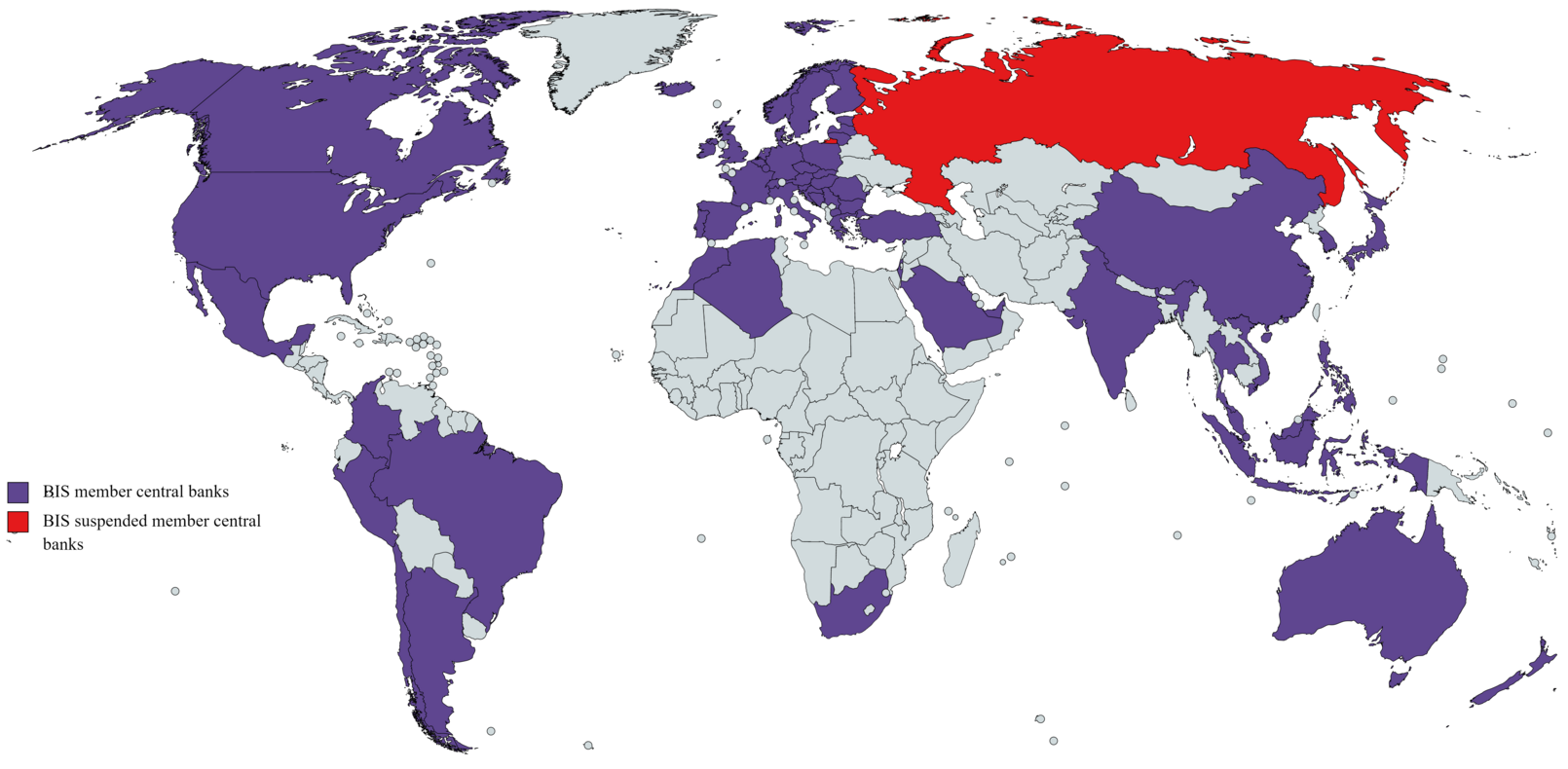
“This system was to be controlled in a feudalist fashion by the central banks of the world acting in concert, by secret agreements arrived at in frequent private meetings and conferences. The apex of the system was to be the Bank for International Settlements in Basle, Switzerland, a private bank owned and controlled by the world’s central banks which were themselves private corporations. Each central bank, in the hands of men like Montagu Norman of the Bank of England, Benjamin Strong of the New York Federal Reserve Bank, Charles Rist of the Bank of France, and Hjalmar Schacht of the Reichsbank, sought to dominate its government by its ability to control Treasury loans, to manipulate foreign exchanges, to influence the level of economic activity in the country, and to influence cooperative politicians by subsequent economic rewards in the business world. The B.I.S. as a private institution was owned by the seven chief central banks and was operated by the heads of these, who together formed its governing board.”
Quigley points out:
“It should not be felt that these heads of the world’s chief central banks were themselves substantive powers in world finance. They were not. Rather, they were the technicians and agents of the dominant investment bankers of their own countries, who had raised them up and were perfectly capable of throwing them down. The substantive financial powers of the world were in the hands of these investment bankers (also called ‘international’ or ‘merchant’ bankers) who remained largely behind the scenes in their own unincorporated private banks. These formed a system of international cooperation and national dominance which was more private, more powerful, and more secret than that of their agents in the central banks. This dominance of investment bankers was based on their control over the flows of credit and investment funds in their own countries and throughout the world. They could dominate the financial and industrial systems of their own countries by their influence over the flow of current funds through bank loans, the discount rate, and the re-discounting of commercial debts; they could dominate governments by their control over current government loans and the play of the international exchanges. Almost all of this power was exercised by the personal influence and prestige of men who had demonstrated their ability in the past to bring off successful financial coupe, to keep their word, to remain cool in a crisis, and to share their winning opportunities with their associates. In this system the Rothschilds had been preeminent during much of the nineteenth century.” See Tragedy & Hope: A History of the World in Our Time, pp. 242-3 & 245.
Ensuring that this select group of international bankers could operate without any form of accountability to any other authority in the world, the BIS Headquarters Agreement with Switzerland Articles 4 and 12 specifically identify a range of “privileges and immunities” that, among others, provide that “The Bank shall enjoy immunity from jurisdiction” and “members of the Board of Directors of the Bank, together with the representatives of those central banks which are members of the Bank” with “immunity from arrest or imprisonment.”
In plain language, the BIS and its members are beyond the reach of governments, key international organizations and the rule of law. They are accountable to no-one. And this is why the BIS was never held to account for its commission of war crimes. See History – the BIS during the Second World War (1939-48). For an excellent and detailed account of the Bank for International Settlements, read Adam LeBor’s book Tower of Basel: The Shadowy History of the Secret Bank that Runs the World.
Beyond this, as Sutton notes, because politicians sympathetic to financial capitalism and academics with ideas about world control are kept in line with a system of rewards and penalties, “in the early 1930s the guiding vehicle for this international system of financial and political control” was the BIS, headquartered in Basle. The BIS “continued its work during World War II as the medium through which the bankers – who……. were not at war with each other – continued a mutually beneficial exchange of ideas, information, and planning for the post-war world.” In this sense only, the war was irrelevant to them. See Wall Street and The Rise of Hitler, pp. 11-12.
So while elite figures, including the Rothschilds, continued to shape institutions and events to restructure world order and make it more profitable for themselves, virtually everyone else in the world was an unwitting victim of their secret programs, many at the cost of their own life. A notable exception was US Major General Smedley Butler who at least spelled out the critical role that war played in wealth creation for the elite. Following more than three decades of highly-decorated service in the US Marine Corp, Butler later described his experience in the following terms: “I spent most of my time being a high-class muscle man for Big Business, for Wall Street and for the bankers. In short, I was a racketeer for capitalism.” See Major General Smedley Butler.
In his book War Is a Racket published in 1935, he wrote: “War is a racket. It always has been. It is possibly the oldest, easily the most profitable, surely the most vicious……. It is the only one in which the profits are reckoned in dollars and the losses in lives……. It is conducted for the benefit of the very few, at the expense of the very many. Out of war a few people make huge fortunes.” He went on to describe some of the persons and corporations that made huge profits out of World War I.
Chapter V
World War II and What Followed
Just a few years later, World War II demonstrated that “war is a racket” yet again. By carefully penetrating the cloak of deception behind which it was hidden, Professor Antony C. Sutton considered original documentation and eyewitness accounts to reveal what remains one of the most remarkable and under-reported facts of World War II. In his account of this orchestrated conflagration, Sutton carefully documents how prominent Wall Street banks and US businesses supported Hitler’s rise to power by financing and trading with Nazi Germany, reaching the unsavoury conclusion that “the catastrophe of World War II was extremely profitable for a select group of financial insiders” including J.P. Morgan, T.W. Lamont, the Rockefeller interests, General Electric, Standard Oil, and the National City, Chase, and Manhattan banks, Kuhn, Loeb and Company, General Motors, Ford Motor Company, and scores of others in “the bloodiest, most destructive war in history.” See Wall Street and The Rise of Hitler.
To illustrate the complex and wide-ranging collaboration between US business interests and the Nazis throughout the war, consider just one example: On the eve of World War II the German chemical complex of I.G. Farben, which included the banker Max Warburg (brother of Paul of the US Federal Reserve) on its Board of Directors, was the largest chemical manufacturing enterprise in the world, with extraordinary political and economic power within Hitler’s Nazi state. The Farben cartel dated from 1925 and had been created with financial assistance from Wall Street by the organizing genius of Hermann Schmitz, a prominent early Nazi who, through I.G. Farben, helped fund Hitler’s seizure of control in March 1933. Schmitz created the super-giant chemical enterprise out of six already giant German chemical companies.
So critical was I.G. Farben to the Nazi war effort that it produced 100% of its lubricating oil and various other products, 95% of its poison gas – “enough gas to kill 200 million human beings” – used in the extermination chambers, 84% of its explosives, 70% of its gunpowder, and very high proportions of many other critical products including aviation fuel. As Sutton concludes: “Without the capital supplied by Wall Street, there would have been no I.G. Farben in the first place and almost certainly no Adolf Hitler and World War II.”
The cost in human lives of World War II was 70-85 million. But there was no cost to those Wall Street corporations and their fellow war profiteers that collaborated with Nazi Germany. Just massive profits.
Following World War II
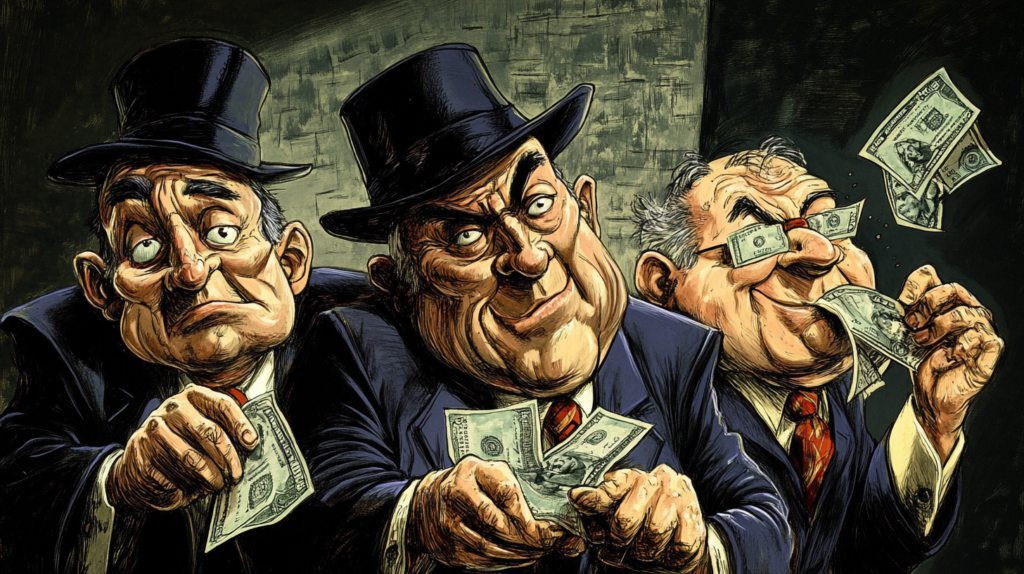
Documenting what had become the long-standing collusion between political, corporate and military elites, sociology Professor C. Wright Mills published his classic work The Power Elite in 1956. This scholarly effort was among the earliest of the post-World War II era to document the nature of the US elite and how it functioned, highlighting the interlocking power of corporate, political and military elites as they exercised control over US national society and went about the task of exploiting the general population.
But a weakness of the account by Mills was his failure to grapple with the already long-standing power of a global elite to manipulate key events in any one country, and certainly the United States, even if much of this was done through the relevant national elite(s).
This ‘global reach’ of the Elite is again clearly apparent in any study of ownership of the world’s oil resources. In his 1975 book The Seven Sisters, Anthony Sampson popularized this collective name for the shadowy oil cartel that, throughout its history, had vigorously worked to eliminate competitors and control the world’s oil. Several decades later, Dean Henderson simply observed that “After a tidal wave of mergers at the turn of the millennium, Sampson’s Seven Sisters were Four Horsemen: Exxon Mobil, Chevron Texaco, BP Amoco and Royal Dutch/Shell.” Beyond this, however, Henderson noted the following:
“The oil wealth generated in the Persian Gulf region is the main source of capital [for the international mega-banks]. They sell the Gulf Cooperation Council sheiks 30-year treasury bonds at 5% interest, then loan the sheiks’ oil money out to Third World governments and Western consumers alike at 15-20% interest. In the process these financial overlords – who produce nothing of economic import – use debt as their lever in consolidating control over the global economy.” See Big Oil and Their Bankers in the Persian Gulf: Four Horsemen, Eight Families and Their Global Intelligence, Narcotics and Terror Network, pp. 168, 451.
And, following a series of mergers and then the 2008 banking crisis, four giant banks emerged to dominate the US economy: JP Morgan Chase, Citigroup, Bank of America and Wells Fargo. Moreover, these banks, along with Deutsche Bank, Banque Paribas, Barclays “and other European old money behemoths”, own the four oil giants and are also “among the top 10 stock holders of virtually every Fortune 500 corporation” giving them vast control over the global economy.
So who owns these banks? By now it should come as no surprise that several scholars at different times during the past 100 years have investigated this issue and come to essentially the same conclusion: the major families, increasingly interrelated by blood, marriage and/or business interests, have simply consolidated their control over the banks. Apart from scholars already mentioned above, in the 1983 revision of his book The Secrets of the Federal Reserve, Eustace Mullins noted that a few families still controlled the New York City banks which, in turn, hold the controlling stock of the Federal Reserve Bank of New York. Mullins identified the families of the Rothschilds, Morgans, Rockefellers, Warburgs and others.
Several scholars have written on the subject of elite power since Mills with Professor Peter Phillips penning the 2018 book Giants: The Global Power Elite which reviews “the transition from the nation state power elites described by Mills to a transnational power elite centralized on the control of global capital around the world. The Global Power Elite function as a nongovernmental network of similarly educated wealthy people with common interests of managing, facilitating, and protecting concentrated global wealth and insuring the continued growth of capital.”
Aside from the obvious criticism that Phillips effectively repeats the mistake made by Mills in assuming that there was no pre-existing “transnational power elite” even if in different form, Phillips goes on to usefully identify the world’s top seventeen asset management firms, such as BlackRock and J.P Morgan Chase, that collectively manage (by now) more than $US50 trillion in a self-invested network of interlocking capital that spans the globe.
More precisely, Phillips identifies the 199 directors of the seventeen global financial giants and the importance of those transnational institutions that serve a unifying function – including the World Bank, International Monetary Fund, G20, G7, World Trade Organization (WTO), World Economic Forum (WEF), Trilateral Commission, Bilderberg Group (with a review of Daniel Estulin’s book The True Story of the Bilderberg Group here: “The True Story of the Bilderberg Group” and What They May Be Planning Now), Bank for International Settlements and the Council on Foreign Relations (see One World Governance and the Council on Foreign Relations. “We Shall have World Government by Conquest or Consent.”) – and particularly two very important global elite policy-planning organizations: the Group of Thirty (which has 32 members) and the extended executive committee of the Trilateral Commission (which has 55 members).
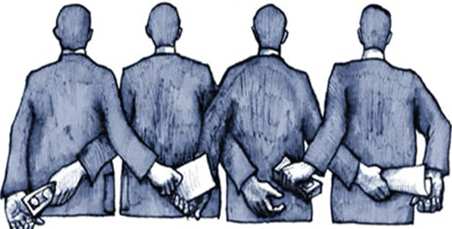
And Phillips carefully explains why and how the Global Elite defends its power, profits and privilege against rebellion by the “unruly exploited masses”: “the Global Power Elite uses NATO and the US military empire for its worldwide security……. The whole system continues wealth concentration for elites and expanded wretched inequality for the masses.” Advocating the importance of systemic transformation and the redistribution of wealth, Phillips goes on to argue that “This concentration of protected wealth leads to a crisis of humanity, whereby poverty, war, starvation, mass alienation, media propaganda, and environmental devastation are reaching a species-level threat.”
Hence, it is worth reiterating: War plays an ongoing and vital role in the exercise of Elite power to reshape world order to maximize wealth concentration by the Elite. If you want further evidence of this, you might find these recent reports instructive: the US Congressional Research Service report Instances of Use of United States Armed Forces Abroad, 1798-2022, the Tufts University Fletcher Center for Strategic Studies report Military Intervention Project (MIP) Research and an article and video that summarize and discuss these two reports in US launched 251 military interventions since 1991, and 469 since 1798.
But, as the discussion above and below illustrates, war is not the only mechanism the Elite uses.
For an account which focuses on identifying many of the world’s largest corporations, in many industries, and then illustrates the interlocking nature of corporate ownership while demonstrating that they are all owned by the same small group of giant asset management corporations – notably including Vanguard, BlackRock and State Street – this video is very instructive: Monopoly: Who Owns the World? And for a penetrating critique of BlackRock and its overall strategy to acquire vast worldwide control, including by using its Aladdin investment analysis technology (which employs massive data collection, artificial intelligence and machine learning to derive investment insight), see BlackRock: Bringing Together Man and Machine and this three-part series by James Corbett: How BlackRock Conquered the World.
In the Monopoly video you will again see the names of some familiar persons and families who own significant shareholdings in these corporations and asset management firms. After showcasing families such as the Rothschilds, Rockefellers and Morgans, the narrator simply observes in relation to Vanguard that its “largest shareholders are the private funds and nonprofit organizations of these families.”
And if you think that national Elites in countries like China and Russia are somehow not involved in all this, you might find it interesting to read articles that discuss the wealth and political influence of the Chinese ‘immortals’ and the Russian oligarchs – see China’s red aristocracy and List of Oligarchs and Russian elites featured in ICIJ investigations – or to read the Joint Statement of the Russian Federation and the People’s Republic of China on the International Relations Entering a New Era and the Global Sustainable Development.
Beyond this, however, Emanuel Pastreich points out that if anyone attributes responsibility for Chinese policies in relation to data collection and control based on QR codes and contact tracing, they inevitably identify the Chinese government. “But the truth is that few, or none, of these policies were made up or implemented by the Chinese government itself, but rather that the Chinese government is occupied by IT corporations that report to the billionaires (often through Israel and the United States) and bypass the Chinese government altogether.” Pastreich goes on to offer some insight into how key Elite intelligence and finance corporations are driving the technocratic social control policies being implemented under cover of the ‘virus’ in China. See The Third Opium War Part One: The agenda behind the covid-19 assault on China and The Third Opium War Part Two: The True Threat Posed by China or watch Western Tech & China: Who Serves whom?
In fact, as Patrick Wood points out, referencing a much earlier book of his own and Professor Antony Sutton – see Trilaterals Over Washington Volumes I & II – “Thanks to early members of the [Elite’s] Trilateral Commission, China was brought out of its dark ages Communist dictatorship and onto the world stage. Furthermore, the Trilateral Commission orchestrated and then facilitated a massive transfer of technology to China in order to build up its non-existent infrastructure……. As a failed Communist dictatorship, China was a blank slate with over 1.2 billion citizens under its control. However, Chinese leadership knew nothing about capitalism and free enterprise, and [key Trilateralist Zbigniew] Brzezinski made no effort to teach them about it. Instead, he planted seeds of Technocracy……. In the 20-year period from 1980 to 2000, a transformation took place that was considered nothing short of an economic miracle; but it was not of China’s doing. Rather, it can be fully attributed to the masters of Technocracy within the ranks of the Trilateral Commission.” After listing several key features of China’s technocracy (5G, AI, social credit scores etc), Wood concludes that “China is a full-blown Technocracy and it is the first of its kind on planet Earth.” See Day 7: China Is A Technocracy.
And in relation to Russia, Riley Waggaman simply observes that “As for covid-triggered economic restructuring: the Russian government has openly embraced the World Economic Forum’s Fourth Industrial Revolution. In October [2021], the Russian government and the WEF signed a memorandum on the establishment of a Center for the Fourth Industrial Revolution in Russia. Russia has already adopted a law allowing for ‘experimental legal regimes’ to allow corporations and institutions to deploy AI and robots into the economy, without being encumbered by regulatory red tape. Returning to Gref and his digital Sbercoin: Russia’s central bank is already planning to test-run a digital Ruble that, among other nifty features, could be used to restrict purchases.”
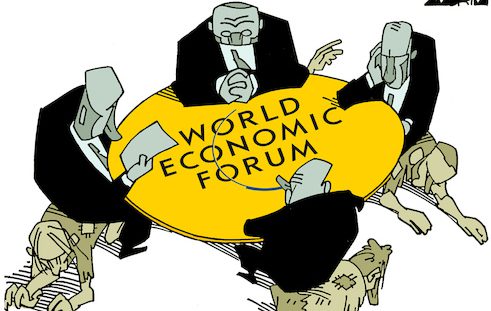
Moreover, according to Mikhail Delyagin, a deputy of the State Duma of the Russian Federation: “In the 90s, under Yeltsin, the external management of global banksters was carried out through the IMF and through [Russian oligarch Anatoly] Chubais. Now under Putin, external management will be done by Big Tech, social global platforms, and Big Pharma through the WHO. Exactly the same management.”
Separately from this, consider that the Elite, as well as its agents and organizations (including those in China and Russia), have vast wealth stashed in ‘secrecy jurisdictions’ (better known as tax havens): locations around the world where wealthy persons, criminals and terrorists, as well as governments and government agencies (such as the CIA), banks, corporations, hedge funds, international organizations (such as the Vatican) and crime syndicates (such as the Mafia), can stash their money so that they can avoid regulation and oversight, and evade tax. Just how much wealth is stashed in tax havens? While this is impossible to know precisely, it can only be measured in tens of trillions of dollars as well as an unknown number of gold bricks, artworks, yachts and racehorses. See Elite Banking at Your Expense: How Secretive Tax Havens are Used to Steal Your Money.
How is this possible? Well, it is protected by government legislation and legal systems, with an ‘army’ of Elite agents – accountants, auditors, bankers, businesspeople, lawyers and politicians – ensuring that they remain protected. The point here is simple: if you have enough money, the law simply does not exist. And you can evade taxes legally and in the full knowledge that your vast profits (even from immorally-acquired wealth such as sex trafficking, gun-running, endangered species trafficking, conflict diamonds and drug trafficking) are ‘lawful’ and will escape regulation and oversight of any kind. See The Rule of Law: Unjust and Violent.
But legal systems facilitate monstrous injustice in other ways too. For example, they ensure that owners of corporations are enabled to ruthlessly exploit both their workers and all taxpayers as well. For a thoughtful and straightforward account of how this works, see this article by Professor James Petras: How Billionaires Become Billionaires.
And to briefly revisit a subject discussed above: Who owns the US Federal Reserve System now? According to Dean Henderson writing in 2010, it is “the Goldman Sachs, Rockefellers, Lehmans and Kuhn Loebs of New York; the Rothschilds of Paris and London; the Warburgs of Hamburg; the Lazards of Paris; and the Israel Moses Seifs of Rome.” Henderson goes on to state that “The control that these banking families exert over the global economy cannot be overstated and is quite intentionally shrouded in secrecy. Their corporate media arm is quick to discredit any information exposing these money powers as halfbaked conspiracy theory. The word conspiracy itself has been demonized, much like the word communism. Anyone who dare utter the word is quickly excluded from public debate and written off as insane. Yet the facts remain.”
Other scholars in the field agree.
In his exceptionally detailed investigation into three major historical events of the C20th – the Bolshevik Revolution, the rise of Franklin D. Roosevelt and the rise of Hitler – Professor Antony Sutton identified the seat of political power in the United States not as the US Constitution authorized but “the financial establishment in New York: the private international bankers, more specifically the financial houses of J.P. Morgan, the Rockefeller-controlled Chase Manhattan Bank, and in earlier days (before amalgamation of their Manhattan Bank with the former Chase Bank), the Warburgs.”
“For most of the twentieth century the Federal Reserve System, particularly the Federal Reserve Bank of New York (which is outside the control of Congress, unaudited and uncontrolled, with the power to print money and create credit at will), has exercised a virtual monopoly over the direction of the American economy. In foreign affairs the Council on Foreign Relations, superficially an innocent forum for academics, businessmen, and politicians, contains within its shell, perhaps unknown to many of its members, a power center that unilaterally determines U.S. foreign policy. The major objective of this submerged – and obviously subversive – foreign policy is the acquisition of markets and economic power (profits, if you will), for a small group of giant multi-nationals under the virtual control of a few banking investment houses and controlling families.”
So what has transformed? Nothing.
And it is not just fine scholars who have reached this conclusion. Consider David Rockefeller’s delusionary whitewashing of his own family’s key role in the killing, devastation and destruction outlined above: “Some even believe we are part of a secret cabal working against the best interests of the United States, characterizing my family and me as ‘internationalists’ and of conspiring with others around the world to build a more integrated global political and economic structure – one world, if you will. If that’s the charge, I stand guilty, and I am proud of it……. One of the most enduring [conspiracies] is that a secret group of international bankers and capitalists, and their minions, control the world’s economy…. [but these people] ignore the tangible benefits that have resulted from our active international role during the past half-century.” See Memoirs, p. 483.
If you are wondering how all of this occurs without any significant pushback from within elite circles, there is a simple answer: They are all insane and control to maximize resource accumulation has become the perpetual substitute for their destroyed capacity to engage emotionally in their own lives and empathize with their fellow human beings. For more detail, see Love Denied: The Psychology of Materialism, Violence and War and The Global Elite is Insane Revisited.
So while some of us occasionally ponder how we can contribute more to improve the human condition and the state of the world, and then endeavour to take beneficial actions along those lines, there are plenty of people whose daily life is consumed (consciously or unconsciously) by the question “How can I take more?” And people like that have been taking more since the dawn of human civilization and, no doubt, earlier.
The Global Elite is simply those who have been insanely ruthless and organized enough to take more, whatever the cost to humanity and all other life on Earth.
Read the third part of the article
Author: Robert J. Burrowes
yogaesoteric
September 26, 2025