
Unique Protein Provides Clues on How to Extend Lifespan Through Diet
A single protein, klotho, extended the lifespan of healthy mice by 20% in a study from Molecular Therapy. In addition to longer life, these mice also moved better, thought faster, and resisted age-related breakdown in muscles, bones, and brain function. Aging brings more than wrinkles. It weakens bones, shrinks muscle, blunts cognition, and raises your risk of disease. Klotho works differently than any drug or supplement.

It doesn’t just address one symptom; it improves how your body handles stress, repairs damage, and maintains organ function across multiple systems. As your klotho levels drop with age, your ability to regenerate tissues declines, your inflammation rises, and your risk for conditions like osteoporosis, Alzheimer’s disease, and frailty climbs.
Klotho is a protein your kidneys and brain naturally produce, but only if you’re living in a way that supports that internal machinery. The good news? Your habits – what you eat, how you move, how well you sleep, and even how connected you feel to others – all influence your body’s klotho production.
Researchers are calling klotho a “longevity switch,” and one of the most promising ways to measure how well your lifestyle is working. To understand why this matters so much for your long-term health, and what it looks like in practice, let’s break down the latest findings from the gene therapy experiment that helped klotho-deficient animals move, think and live like younger ones.
A Single Injection Extended Lifespan
The Molecular Therapy study tested whether long-term exposure to a specific form of the klotho protein, known as secreted klotho, or s-Klotho, could slow down the aging process in healthy mice. Scientists used a specialized virus to deliver the gene that makes s-Klotho directly into the animals’ bloodstream and brain. Unlike many antiaging strategies that target one system, this method aimed to affect multiple organs at once.
Mice with boosted klotho lived longer and aged better – Treated animals lived longer than untreated mice, but longevity wasn’t the only improvement. They also showed fewer signs of age-related decline. Their muscles stayed stronger, their bones remained denser and their brains showed more activity related to regeneration and memory. This suggests klotho extends quality of life, which is what matters most.
Muscle strength and bone health improved – In strength tests like grip performance and bar hanging, klotho-treated mice performed better, especially when treated during adulthood rather than earlier life. Muscle tissue under the microscope revealed larger fibres and far less scar tissue. After simulated injury, their muscles rebuilt more like those of younger mice.
Bone health improved too. Males who received treatment at middle age had thicker, denser bone structure and smaller gaps in their spongy bone. Females, on the other hand, benefited more when treated earlier, before bone degeneration was advanced. Gene expression testing confirmed more activity in the genes that form strong, mineral-rich bone.
Brain resilience increased through stem cell activity and immune cleanup – Klotho helped regenerate brain tissue by increasing the number of maturing neurons and maintaining supportive cells called astrocytes. The treated mice also showed more brain immune cells responsible for removing damaged proteins and debris. These were not inflamed cells but highly functional ones, associated with better memory and less age-related inflammation.
Muscle and brain benefits were linked to reduced inflammation and better cell signalling – Klotho blocked specific age-related pathways known to cause tissue scarring and interfere with stem cell repair. In muscles, it preserved mitochondrial function and kept stem cells capable of rebuilding tissue. In the brain, it promoted neurogenesis – your brain’s ability to grow new neurons – and kept immune cells working efficiently.
Klotho’s effects showed up in gene expression tied to longevity – Animals that received treatment showed higher expression of genes that build collagen in bone and drive bone formation. They also had lower levels of a gene that typically rises with aging and contributes to poor bone mineralization. In the brain, there was an upregulation of repair pathways and immune functions that target malfunctioning cells.
Your Daily Habits Control Your Body’s Antiaging Switch
A comprehensive review published in Metabolites explored how everyday choices, like how you eat, sleep, move, and manage stress, directly influence your body’s production of klotho. The paper proposed using klotho levels as a real-time biomarker to track whether your lifestyle is truly improving your long-term health span.
Klotho tracks with overall well-being, not just disease – Most medical markers only flag disease after it’s already taken hold. But klotho is different; rather than being a disease marker, it’s a health marker. Your levels rise with good habits and fall with harmful ones, making it one of the few tools that could give you feedback on whether your habits are actually helping you age well.
Moderate, consistent exercise is one of the best ways to raise klotho – Even light daily movement significantly boosted klotho levels, while extreme workouts or stressful conditions – like military training in high heat – lowered them. A 12-trial meta-analysis confirmed that long walks in nature and exercising our muscles (such as in Sun Salutation) both worked, but overtraining reversed the benefits.
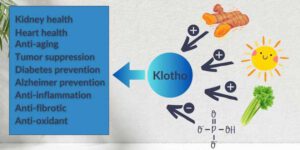
A healthy diet is directly tied to higher klotho expression – Diets rich in fruits, vegetables, fermented foods, and antioxidants – like vitamin A, C, E, zinc, and selenium – were consistently linked to higher klotho levels.
The Mediterranean-style diet, with a focus on whole grains and vegetables, stood out in large-scale data, while low-carb diets didn’t help and sometimes made the situation worse. Vitamin D and curcumin (from turmeric) also triggered klotho production in lab studies.
Poor sleep, loneliness, and chronic stress all push klotho down – Klotho responds to psychological load. Short sleep (under 5 hours) and excessive sleep (over 8 hours) both lowered levels. Chronic stress reduced klotho in women caring for sick children and in soldiers under high pressure. Social connection, especially emotional closeness, was correlated with better klotho status, even in middle age.
Klotho Is Your Brain and Body’s Aging Thermostat
Published in the Clinical Kidney Journal, a comprehensive review examined how klotho influences aging, cognition, inflammation, and longevity through its effects on phosphate metabolism, vitamin D regulation, and multiple molecular signalling pathways. The authors pulled together decades of preclinical and clinical evidence to outline how declining klotho levels are tightly linked to both chronic diseases and neurodegeneration.
Lower klotho levels are consistently tied to shorter lifespan, poor memory, and cognitive decline – Mice that lack the klotho gene show signs of accelerated aging, including cognitive impairment, vascular disease, infertility, and early death. Humans with low klotho levels face higher risks for kidney disease, heart problems, and frailty.
One large national cohort study of 10,069 people found that adults with the lowest serum klotho levels had a 31% higher risk of dying from any cause compared to those with higher levels.
Your klotho levels drop with age, but not just because you’re getting older – Inflammation, poor diet, and chronic illness all contribute to a decline in klotho expression. For instance, diabetic kidney disease, high blood pressure, and even low oxygen levels reduce klotho.
Klotho helps your brain clear toxins and protect memory – Soluble klotho is produced in brain regions involved in memory and learning. Studies show it reduces oxidative stress, supports nerve cell repair and protects against damage from Alzheimer’s-related proteins.
Even when administered outside the brain, klotho fragments have been shown to boost synaptic plasticity and learning in mice, suggesting it activates neural repair pathways without needing to cross the blood-brain barrier.
Klotho blocks the destructive pathways that fuel aging at the cellular level – This includes suppressing a pathway that promotes fibrosis and scarring, damping down signalling that raises inflammation and regulating intracellular calcium to maintain healthy cell function. Klotho also helps manage energy metabolism, antioxidant defence, and tissue regeneration, making it a master regulator of healthy aging.
Klotho Decline Reflects Aging and Disease Severity
Research published in Ageing Research Reviews analysed klotho levels across 65 studies and confirmed that this antiaging protein consistently decreases with age, even in otherwise healthy people. The decline is more severe in those with kidney, metabolic, or endocrine disorders. Researchers tracked klotho in blood, cerebrospinal fluid (CSF), urine and tissue samples, reinforcing its usefulness as a biomarker for both aging and chronic disease progression.
Klotho loss accelerates disease – Low klotho levels in the brain have been linked to reduced white matter integrity and greater oxidative stress, according to studies on aged rhesus monkeys.
In both animal and cell models, klotho deficiency led to increased susceptibility to inflammation and neurodegeneration. Restoring klotho, on the other hand, improved cell maturation and reduced inflammation in models of Alzheimer’s, multiple sclerosis, and amyotrophic lateral sclerosis (ALS).
Baseline klotho levels are essential for future therapies – Because levels of klotho vary so widely by age and disease status, researchers emphasize the importance of establishing personal klotho baselines. Understanding what’s normal at different life stages helps doctors better assess risk and tailor future interventions.
What this means for you – Monitoring your klotho levels could one day be as routine as checking blood pressure. If this protein turns out to be as central to healthy aging as the evidence suggests, it could help detect early signs of degenerative conditions and open the door to customized, preventative therapies. In short, klotho appears to be key to measuring, and maintaining, your body’s biological resilience over time.
Simple Ways to Activate Your Longevity Switch
If you want to increase your klotho levels and keep them high as you age, you need to focus on the lifestyle habits that trigger its natural production in your body. This isn’t about expensive treatments or supplements – it’s about addressing the root causes of accelerated aging: low cellular energy, chronic stress, poor diet, inactivity, and inflammation.
Klotho doesn’t show up when your system is overloaded. It rises when your body feels safe, nourished, and supported. Here’s what I recommend if you want to tap into the same antiaging system that helped mice live 20% longer and thrive in old age:
Move your body, but don’t overdo it – Klotho increases with daily movement, especially moderate aerobic activity like walking, cycling, or dynamic Hatha Yoga practice such as Sun Salutation. But if you push too hard, it reverses the benefit. If you’re sedentary or struggling with energy, start with 20 to 30 minutes of brisk walking each day and build up to an hour daily from there. The goal is consistency, not exhaustion.
Eat like your life depends on it, because it does – Choose foods that nourish your cells. If you’re still eating low-carb, you’re working against klotho. Build your meals around whole foods like fresh fruit, vegetables, fermented foods like raw grass fed yogurt or kefir, and minerals like copper and magnesium. I recommend whole-food carbs first, along with collagen, and ghee, or grass fed butter as your fats of choice.
Give your gut a reason to heal – Fermented foods like sauerkraut, kimchi, and kefir support gut integrity and encourage healthy klotho levels. If you’re dealing with digestive issues, don’t jump straight to fibre-heavy foods. Start with healing carbs like whole fruit and white rice, and slowly build up. Your gut flora is part of the communication loop that regulates your aging proteins.
Soak in sunshine and get your vitamin D naturally – Vitamin D directly triggers the klotho gene, so if you’re inside all day, you’re missing a key switch. Aim for regular daily sunlight with no sunscreen, but avoid exposure during peak hours (10 a.m. to 4 p.m.) until you’ve eliminated refined vegetable oils from your diet for at least six months.
The linoleic acid in refined vegetable oils makes your skin more susceptible to damage from the sun. If you’re vitamin D deficient or are unable to get regular sun exposure, use a vitamin D3 supplement, but always check that it’s balanced with magnesium and K2.
Stop the elements that age you faster – Loneliness and chronic stress send klotho in the wrong direction. Start by building real social connections, creating a wind-down routine for sleep and learning to recognize the signals that your body needs rest, not stimulation.
Analysis by Dr. Joseph Mercola
yogaesoteric
May 31, 2026