
Reflections on Homeland Insecurity: The Strategic Anatomy of Civil Wars to Come (1)
This essay is about the growing threat of civil war in Western societies. It is written as both a warning and a reckoning: an explicit attempt to confront, without denial or sensationalism, the mounting pressures that are pushing advanced democracies toward rupture. These pressures are examined through the framework of strategic analysis: to assess dispassionately how they should be understood within the logic of ends pursued by violent means, and how that logic is likely to manifest in the future.
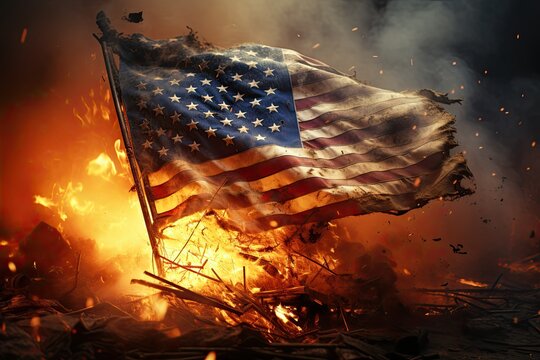
These forces have, for decades, been building in plain sight. They have been documented in fragments by scholars and debated on the fringes, yet too often ignored in mainstream commentary or else distorted by hyperbole in parts of the independent media. That long build-up was amplified by the assassination of the influential conservative commentator Charlie Kirk, who was killed while participating in lawful political discourse. His murder has been widely perceived as a stark signifier of America’s deep political divisions and a harbinger of further political violence.[1] Although this article was drafted before these events and is not a response to them, they have lent its arguments a sharper urgency and resonance.
The idea of civil war in the West, once dismissed as alarmist or confined to dystopian fiction, has gained prominence over the past years. What was once whispered on the margins is now increasingly discussed. Since 2023, Military Strategy Magazine has treated the subject with candour and seriousness, placing it ahead of almost all academic forums.[2] This article builds on that momentum, extending the angle of vision to situate these discussions within a longer trajectory, to gather evidence too often left scattered or overlooked, and to draw out the strategic implications that emerge when history and present trends are considered together.
The argument begins with the collapse of legitimacy that once allowed governments to function without coercion. It then turns to the new ‘peasant wars’ of revolt and ethnic fracture, before examining the silence of academia and the failures of elites to heed obvious warning signs. Along the way, it maps the expectation gap between rulers and ruled, the rise of leaderless movements, insurgent narratives, the fragility of global cities and the rural-urban divide, and the corrosive triad of digital networks, unconstrained immigration and declining social capital. The argument concludes that with the systematic undermining of the social compact, Western societies are not experiencing passing turbulence but entering the long twilight of civil war.
What follows is not prediction, but the anatomy of a crisis already in motion. The article will therefore seek to consider how far these dynamics can still be confronted, what structural trends are beyond reversal, and whether any signposts remain to avert the worst. The harsh truth, however, is that the hourglass has nearly emptied, and no society that squanders legitimacy has ever been granted more sand.
Legitimacy Lost: The States that Beat Themselves to Death
The genealogy of the argument that Western societies are sliding toward civil war is inevitably complex, but it does not rest on sudden revelation. For clarity, it is best seen in the convergence of two dynamics: the externalisation of insurgency through global networks, and the internal corrosion of legitimacy within Western societies.
The early 21st century’s so-called ‘small wars’ – Iraq, Afghanistan, and other theatres of the ‘War on Terror’ – were initially conceived as distant campaigns. Yet the insurgencies they spawned were never geographically containable. Globalised communications and diasporic flows ensured that these conflicts reverberated into Western homelands.[3] Techniques of insurgency, once analysed as phenomena of remote, arid battlefields, adapted to new digital ‘information ecologies’, where ideas and grievances travelled seamlessly across borders.[4] Once comfortably focused externally, the political and social impacts of these expeditionary campaigns inevitably spilled back into the domestic realm.[5]
These developments coincided with, and were exacerbated by, the corrosion of legitimacy from within. The United Kingdom offers a telling example. The 2016 referendum on EU membership exposed the fragility of democratic authority. For decades, the British establishment had deflected mounting popular discontent over integration into the European project.[6] When at last it permitted a referendum, the result was a close but unambiguous decision to leave. What followed, however, was less the execution of a democratic mandate than a prolonged demonstration of elite obstruction.[7] Parliament, the civil service, the courts, and much of the media conspired – openly and without embarrassment – to resist, delay and dilute the outcome.[8]
Nor was Britain unique. The European Union itself has displayed a habitual disdain for unfavourable verdicts from the ballot box, responding to inconvenient results in Denmark, Ireland, or France by rerunning referendums until the ‘correct’ answer was secured.[9] Taken together, these episodes illustrate how ruling elites, when confronted with electorates that refuse to ratify their designs, simply set aside the principle of popular sovereignty.[10] The decay of legitimacy, in short, is not an accident of mismanagement but a built-in feature of a governing order that no longer trusts – let alone believes in – its own people.
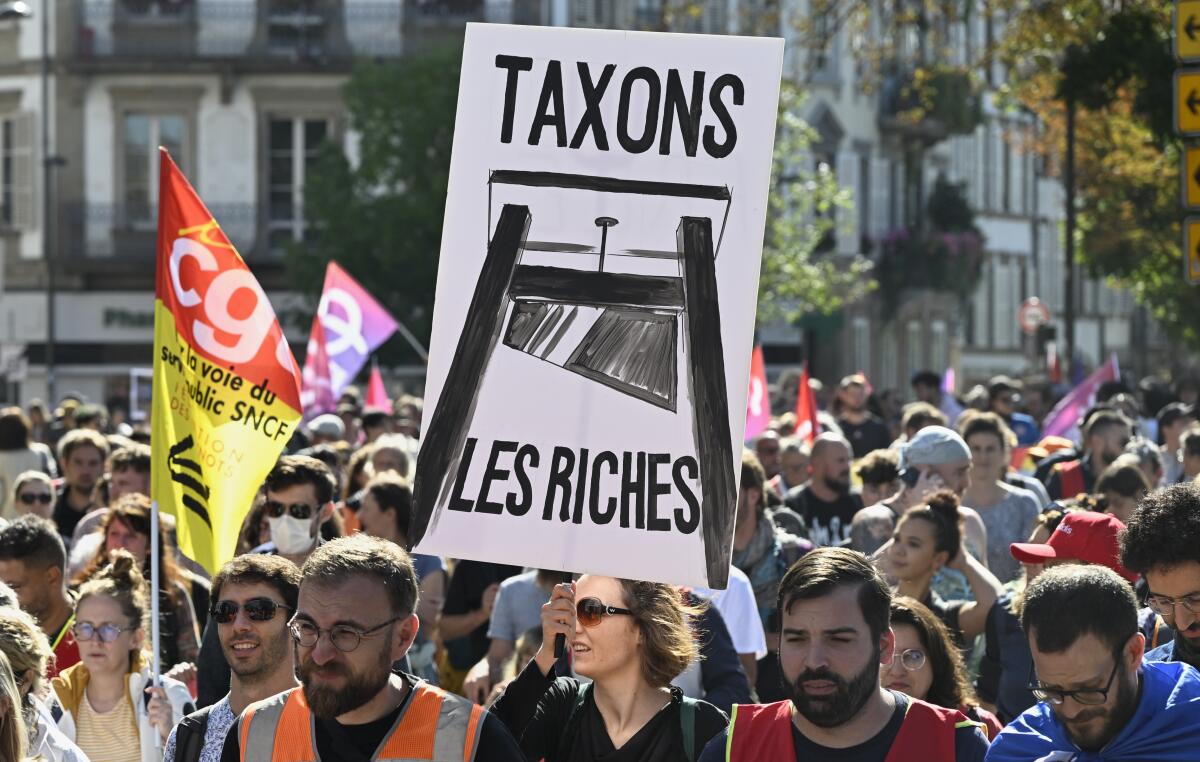
If legitimacy is the essential ‘magic’ of government – the unseen formula that renders obedience natural and governance low-cost – the post-referendum years were an act of self-strangulation.[11] Legitimacy was not merely undermined but hoisted into the public square and beaten to death for all to see. Governments can survive policy failures; they rarely survive the public perception that democratic choice is irrelevant.[12] The consequence is a political culture no longer defined by Left and Right, but by something starker: a belief that politics itself is theatre, with real decisions scripted elsewhere, beyond scrutiny or correction.[13] In this sense, the central political belief of liberal democracy – the conviction that voting matters – has withered away.
It was against this backdrop that the prospects for violent social fragmentation began to be assessed. Comparative European experiences provided the most immediate reference points: Northern Ireland’s Troubles and Italy’s ‘Years of Lead’, when political contestation was expressed through bombings, assassinations, and kidnappings.[14] Within this framework, the hypothesis was raised of a possible descent into a condition approximating to what has been described as ‘dirty war’[15] – a category derived from the Latin American cases of the 1970s and 1980s, where low-intensity insurgencies hardened into protracted cycles of terrorism, counter-terrorism and repression.[16]
Such comparisons are not deployed lightly. They point to the kind of chronic instability that arises once legitimacy has collapsed and violence seeps into the political bloodstream. The Brexit saga, in which elite resistance to a democratic mandate collided with decades of policies that sought to dissolve a sense of national commonality – chief among them multiculturalism and European integration – represents not a transient quarrel but the makings of precisely this condition.[17]
Wars We Choose, Wars That Choose Us
In discussing the likely course of these forces, the distinction between contingent and organic wars is crucial. Contingent wars arise from choices: miscalculations, misjudgements, or diplomatic failures that might have been avoided. The Gulf War of 1990-91, for instance, might not have occurred had Saddam Hussein been persuaded that annexing Kuwait would trigger overwhelming retaliation. Organic wars, by contrast, occur because structural instability makes conflict inevitable. Europe on the eve of 1914 is the model: a powder keg of alliances, mobilisations and demographic pressures waiting only for a spark.[18] The Western present increasingly resembles the latter: an ‘organic’ crisis of legitimacy, identity and political authority in which violence is not so much a possibility as a foreordained outcome.[19]
Warnings of this path are not new, particularly in what may be termed dissident literature. For example, the 2011 monograph Our Muslim Troubles by the pseudonymous author El Inglés, offered an account of demographic and cultural fault-lines that have since proved disturbingly accurate.[20] Yet such works are invariably dismissed as tainted by association with the ‘far-Right’, and ignored by academia, rather than treated as they should be in scholarly terms as gateways into the thought-worlds of political communities that, if polling and electoral evidence is anything to go by, increasingly represents a plurality of opinion across Western societies.[21]
The effect is not merely neglect but distortion: by quarantining uncomfortable perspectives, academic debate blinds itself to the very forces reshaping political life. Out of this reluctance has grown a class of ‘radicalisation experts’ who, though voluminous in number, understand less about the roots of civil disintegration than the ordinary citizen who senses instinctively that something is badly wrong.[22] The paradox is that what polite society brands as ‘extreme’ is increasingly felt in popular sentiments to be obvious.[23] When middle-aged, middle-class mothers – the most conservative demographic imaginable – report a ‘gut feeling’ that their society is sliding towards civil war, it is not extremism speaking but the intuition of the centre ground.[24]
The strategic lesson is inescapable: once legitimacy has been frittered away, no democratic system can repair itself through routine politics. A political order may muddle through for a time, but its long-term trajectory is organic – towards rupture.[25] To treat such volatility as fleeting unrest is to misread the forces shaping the age: it is to see only scattered embers where the fire has already taken hold.[26]
The New Peasant Wars: The Geography of Disorder
If legitimacy’s collapse explains the structural precondition, the dynamics of conflict are already taking shape in ways that recall yet depart from older patterns of revolt. Civil war in the Western context can be defined in its broadest sense as a violent conflict between parties under a shared sovereign authority at the point of its breakdown. Unlike classical civil wars of compatriots turned against one another, the 21st-century variant is likely to be characterised by insurgency, demographic sundering and elite-popular estrangement.[27] Its contours are not speculative; they are already visible.
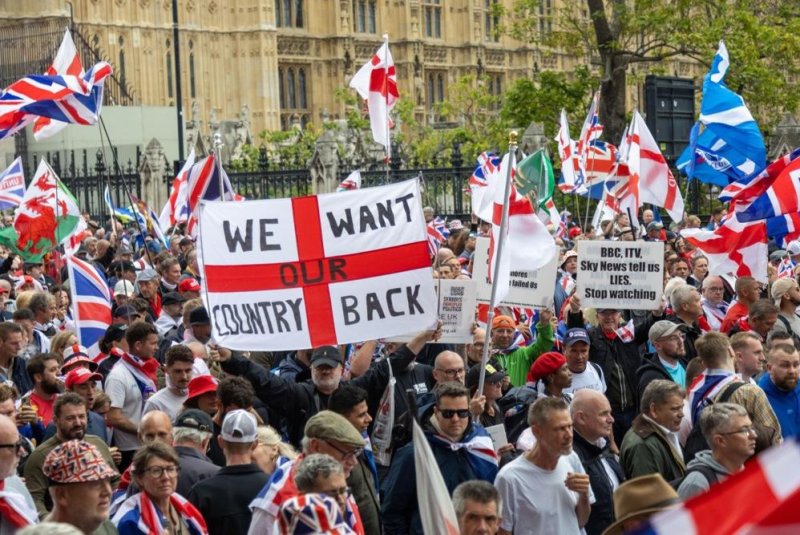
The first vector resembles a modern ‘peasant revolt’ – a mass uprising against political elites who are perceived to have violated the ‘social contract’.[28] Historically, such uprisings erupt when those in power alter the rules of the political game to the detriment of the governed. In contemporary Western societies, this cleavage is marked above all by the divide between nationalism and post-nationalism.[29]
David Goodhart’s taxonomy of the ‘Somewheres’ and the ‘Anywheres’ captures the schism with forensic clarity. The Somewheres – rooted in place, community and national identity – are the mass of the population who insist that they “want their countries back.”[30] The ‘Anywheres’ – mobile, globalised and educated – dismiss such attachments as parochial.[31] A former senior British civil servant, Cabinet Secretary Gus O’Donnell, expressed to Goodhart the creed openly when he declared that his role was to “maximise global, not national, welfare.”[32]
The second vector is inter-ethnic and inter-tribal, driven by demographic change and the accompanying perception of cultural dispossession.[33] Here the primary tension lies between native citizens, who sense political and economic decline as their demographic share falls, and migrant populations, whose enclaves grow in size, cohesion and confidence.
Patterns of poor integration vary, but certain communities have proved especially resistant to assimilation into Western societies. Relative size, internal solidarity and cultural distance all play a role, making incorporation over generations less likely rather than more.[34] Surveys suggest, disquietingly, that second and third generations in some groups often express greater alienation than their parents or grandparents. Muslim communities illustrate the problem most visibly: their demographic weight and cohesion have rendered multiculturalism’s promise of gradual convergence illusory. [35]
Leaders across Europe – hardly susceptible to caricature as ‘far-Right – have themselves admitted the problem: German Chancellor Angela Merkel warned in 2010 that multiculturalism in Germany had “utterly failed,”[36] while British Prime Minister David Cameron echoed the same concern in Britain a few months later, citing the emergence of ghettoised communities estranged from national life.[37] More recently, the current UK Prime Minister, Sir Keir Starmer, in a speech he has since disavowed, warned of Britain becoming an “island of strangers,”[38] a phrase that crystallised, however fleetingly, the unease his predecessors had already voiced.
The interaction of these two vectors produces a distinctive geography. Western nations are already fragmenting into three types of zones:
Zone A: urban enclaves where non-native populations dominate,[39] often non-contiguous but defensible, akin to France’s “zones urbaine sensibles” (sensitive urban zones) [40] or the migrant-dense corridors of northern England.[41]
Zone B: mixed regions where instability will be fiercest, particularly capital cities where state authority still exerts influence.[42]
Zone C: largely contiguous native-dominated areas, comparable to the French regions voting National Rally in 2024, forming bases for counter-mobilisation.[43]
Over time, migration flows are likely to propel further assortative segregation: indigenous populations abandoning major cities (‘white flight’), migrants consolidating in enclaves.[44] Urban centres may slip into the condition once described by US military theorists as ‘feral cities’ – Mogadishu being the epitome – ungoverned, unpoliceable, and unsafe, but still minimally functional.[45] This pattern mirrors the Balkan wars of the 1990s, when once-integrated communities disintegrated into warring factions with startling speed.[46]
Unlike classic understandings of civil wars as clashes between distinct armies along the lines of the English or American Civil Wars, future Western conflicts are more likely to be fought by militias, paramilitaries and communal defence groups.[47] Small arms, explosives, improvised devices and drones – whether for direct attack or arson – will dominate. More strategically significant than weaponry, however, will be infrastructure sabotage.[48] Food distribution, energy and utilities are inherently vulnerable; their disruption multiplies instability and intensifies demographic reshuffling. Anti-status quo groups across Left and Right already grasp this logic.[49]
The state, stripped of legitimacy, will be a reactive and brittle actor.[50] Lacking the ability to mobilise through patriotism or collective tradition, elites will rely on whatever fragments of the armed forces and security apparatus they can pay or persuade.[51] Their role will be reduced to defending a handful of fortified ‘Green Zones’, while the wider polity unravels.[52]
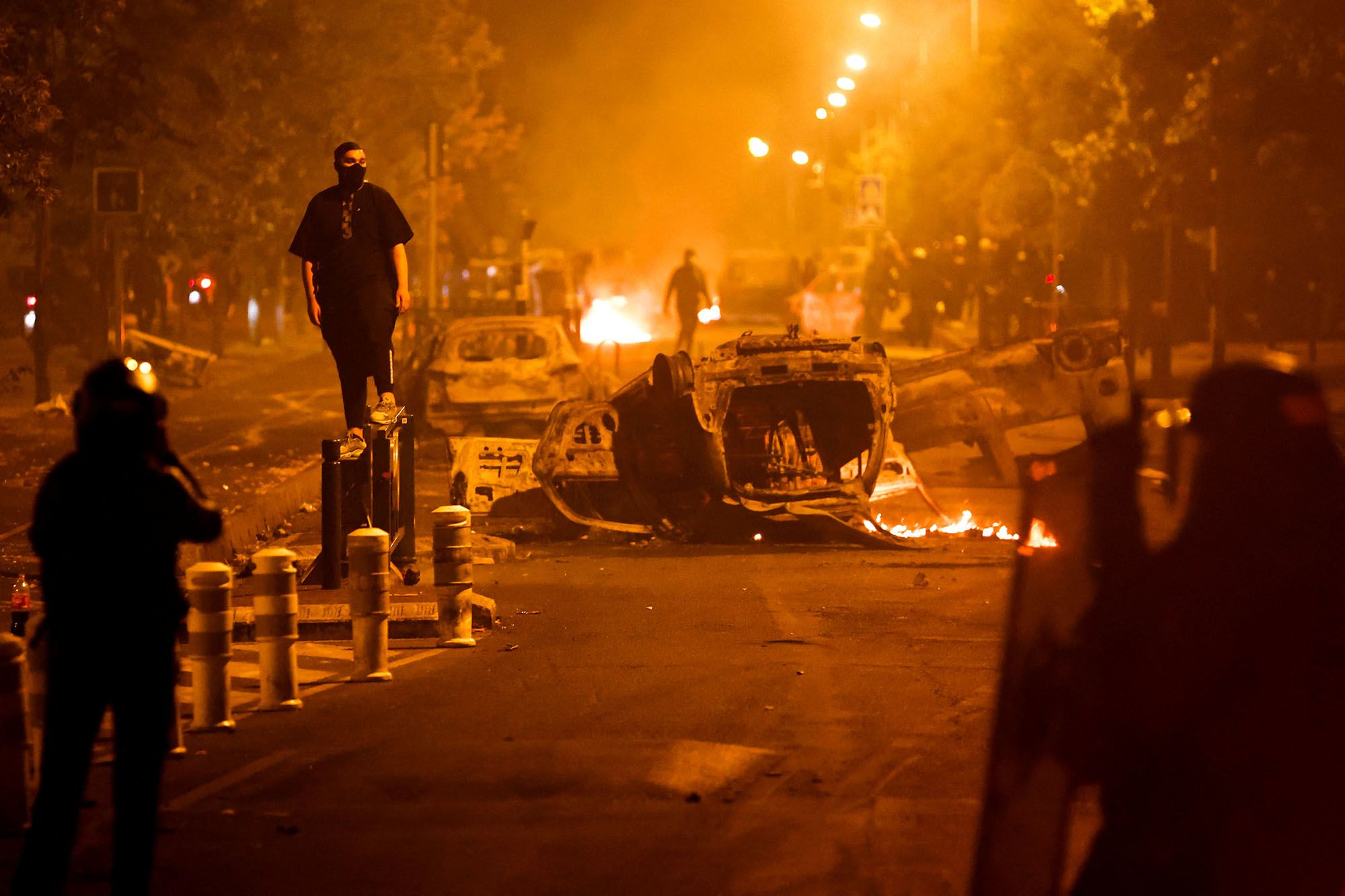
The strategic lesson is clear. What is emerging in Western societies is not “civil unrest,” still less the sporadic convulsions of “contentious politics.” It is the creeping advance of civil war – dirty, protracted, and shaped by revolt, ethno-religious division, and infrastructural vulnerability.[53] To dismiss such forecasts as “extreme” is to ignore that they are now woven into public consciousness.[54] As history has often shown, wars long in the making appear sudden only to those who refused to read the signs.[55]
Silence in the Ivory Tower: Why Denial Is Not a Strategy
While the shape of disorder is already visible, the institutions tasked with confronting it have remained conspicuously silent, which is itself a symptom of the deeper crisis. The reception of the thesis that Western societies are edging towards civil war exposes a stark tension between public recognition, set against elite evasion and academic denial.[56] Among broad swathes of the citizenry, the idea resonates with unsettling clarity.[57] Many confess that they had long intuited such a decline but lacked the language or confidence to articulate it.[58] Hearing the diagnosis stated brings a paradoxical relief: their fears are not madness but shared perception.
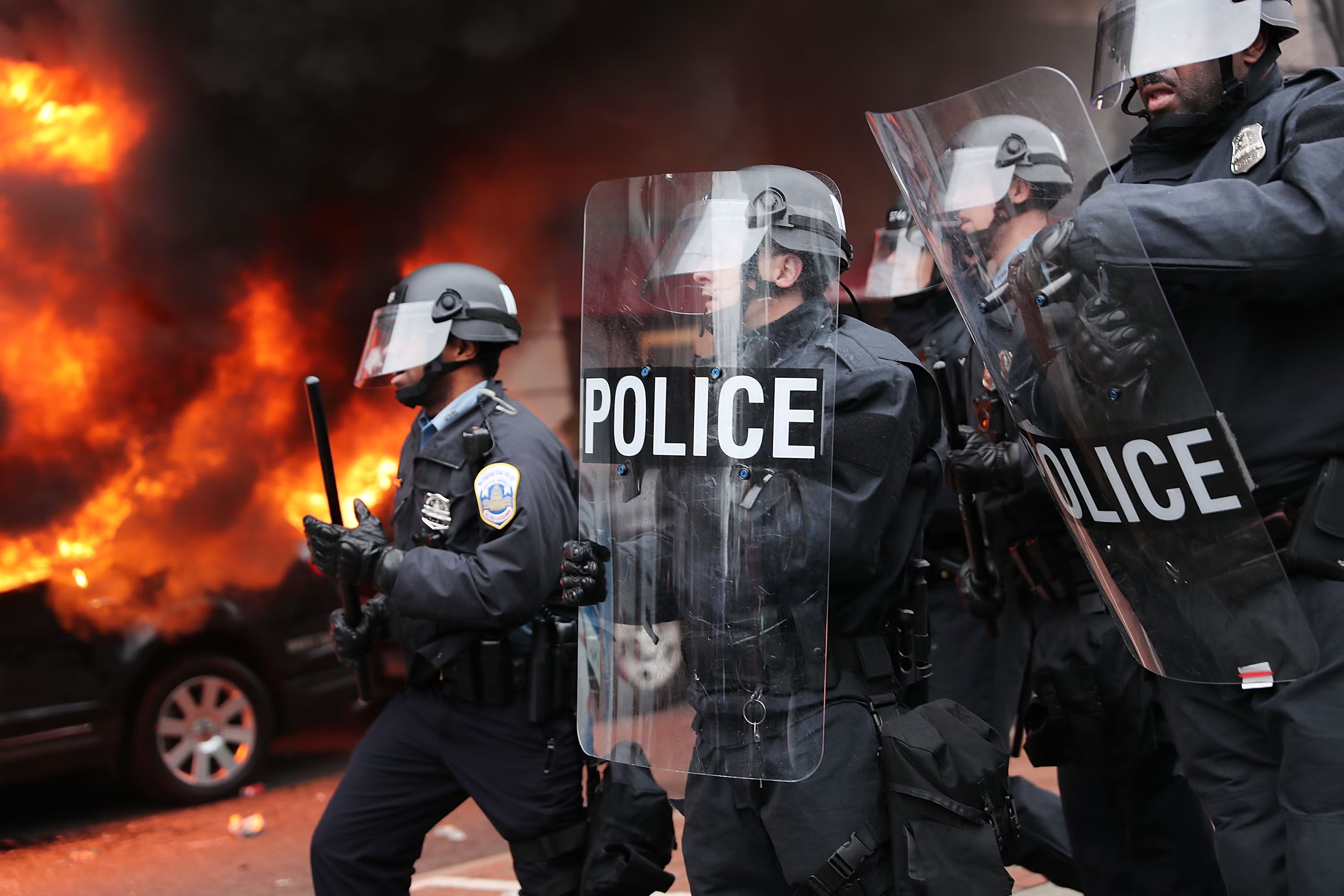
Reactions from official circles are less forthcoming, though no less revealing. Within strategic and defence establishments, the issue has occasionally surfaced. Reports suggest that civil conflict has been discussed at Cabinet level in Britain, even if only obliquely, though no government has yet admitted openly to planning for that contingency.[59] The silence is itself instructive: to acknowledge preparation for civil war would be to concede its plausibility. Yet the steady trickle of retired police chiefs, former civil servants and security officials privately voicing concern indicates that the thesis is apprehended even if never formally endorsed.[60]
Academia operates at an even more glacial pace. Scholarly engagement with the themes of legitimacy, trust and societal fragmentation is not absent – volumes of work attest to the collapse of social capital across the West – but what is missing is the willingness to connect these well-known phenomena to their political implications. Trust, after all, functions as the currency of social life; when it evaporates, societies suffer the equivalent of economic bankruptcy.[61] Civil war theory is explicit: polarisation, disillusionment with normal politics, and yawning gaps between public expectations and elite delivery are the classic precursors to violent upheaval.[62] Yet scholars too often look away, preferring euphemism or retreating into the abstract.
A powerful taboo exacerbates this avoidance. Academics and ‘radicalisation experts’ habitually refuse to engage with the very materials in which warnings of civil strife are most clearly articulated.[63] Detailed tracts – Our Muslim Troubles and Crown-Pitchfork-Crescent being notable examples – are ignored, not because they lack methodical rigour but because they emanate from sources deemed ideologically unacceptable.[64] The result is a curious paradox: scholars who dissected al-Qaeda or ISIS with clinical neutrality are apt to dismisses domestic anti-status quo writings as unworthy of serious study. In doing so, they forfeit the chance to understand the intellectual currents driving unrest in their own societies.[65]
This studied avoidance is particularly glaring given the proliferation of literature – both fictional and analytical – envisioning civil conflict in the West. Dystopian novels such as Stephen Marche’s The Next Civil War (2022) or Omar Akkad’s American War (2018) enjoy respectable circulation as ‘polite company’ thought-experiments, while more incendiary works like Jean Raspail’s Camp of the Saints continue to find new readership, their prescience acknowledged in hushed tones.[66] That such texts, whether literary or polemical, are discussed widely in anti-status quo circles but barely glanced at in academic ones underscores the gulf between elite discourse and public unease.
The strategic logic underpinning the argument is not esoteric. The warning signs – erosion of trust, delegitimised politics, social disintegration, elite denial – have long been legible.[67] What is missing is not evidence, but courage. Those within the system, to extend the metaphor, remain crouched in the trench. They can see as well as anyone that the enemy is closing, but they prefer to keep their heads down. The difference lies only in who is willing to break cover.
The irony is that what orthodox opinion dismisses as “extreme” is increasingly apprehended as obvious, while those with most to lose – citizens in the centre ground – have already internalised the grim calculus.[68] The strategic question is not whether civil conflict is possible, but why those tasked with studying, preventing, or preparing for it persist in averting their gaze.
The Expectation Gap: Elite Overproduction and the Generation Left Behind
Denial in the ivory tower is one element; the lived collapse of expectation is another. And it is here, in the daily erosion of prospects, that the fault lines are most graphically exposed. What now looms largest is not simply the question of legitimacy – already ebbing – but the diminishing belief that politics can deliver tangible improvements in material and social conditions. Increasingly, governments appear less as engines of progress than as managers of decline, presiding over falling living standards and narrowing horizons of hope.[69] It is this conviction – that politics no longer remedies but merely presides over decay – that nudges populations toward extra-political alternatives, and gives civil conflict its unsettling tenability.
The measurable dimensions of this breakdown are clearest in the economic sphere. Younger generations across the West are materially disadvantaged compared to their parents at equivalent ages.[70] Their prospects for stable employment are diminished; their savings and pensions meagre;[71] and their likelihood of owning homes drastically reduced.[72] Britain offers a telling metric: graduate jobs in 2023 fell by 32% in a single year,[73] an abrupt contraction emblematic of what Peter Turchin has described as “elite overproduction.”[74]
The structural nature of this predicament ensures it cannot be resolved through incremental reform. Moreover, technological disruption threatens to sharpen the divide: artificial intelligence looms over white-collar professions just as globalisation and offshoring gutted blue-collar industries.[75] The result is a swelling cohort of educated but underemployed young people, equipped with grievances and thwarted ambition – a combination that has historically proven combustible.[76]
Economic frustration bleeds into social disintegration. Younger cohorts find it increasingly difficult to replicate the cohesive communities in which they were raised.[77] Their personal lives are marked by instability in relationships, financial precarity and declining health.[78] They face the paradox of living with “Third World levels of violence” in societies that have yet to develop the defensive reflexes such environments demand.[79]
Women and girls bear the brunt of this insecurity. Activities once considered unremarkable – running in a park, attending festivals, or gathering at public events – are increasingly fraught with risk.[80] In Britain, statistics record rape offences standing at their highest recorded level, doubling in number over the past decade,[81] with reports of a sixfold increase in “stranger rape.”[82] Insistence by public commentators that such dangers are exaggerated or illusory[83] has become not merely unconvincing but inflammatory, fuelling anger rather than pacifying it.[84]
Some may argue that populations, softened by cheap entertainment and distracted by digital diversions, will acquiesce to decline. Yet the history of ‘bread and circuses’ suggest otherwise.[85] Pacification through indulgence rarely succeeds for long. Indeed, the implicit message – “we are exploiting you, but you are too distracted or degraded to resist” – is not stabilising but incendiary.[86] Far from defusing resentment, it magnifies the anger of those who recognise their deprivation.
Taken together, these trends constitute more than the routine upheavals of democratic politics. They are the hallmarks of structural failure accelerating toward breakup. When legitimacy is spent, when younger generations recognise their prospects as structurally foreclosed, and when social trust collapses into fear, the conditions are set for chronic instability.[87] These are not isolated grievances but strategic portents of a civilisation that can no longer uphold the architecture of its own stability.
Read the second part of the article
Note: The references for this article can be seen here.
Authors: David Betz (Department of War Studies, King’s College London) and M.L.R. Smith (Centre for Future Defence and National Security, Canberra)
yogaesoteric
October 17, 2025