
The power of natural medicine – The effectiveness of therapeutic DMSO combinations
Last year, I worked to raise public awareness of dimethyl sulfoxide (DMSO), a forgotten natural remedy that quickly treats a variety of ailments and has been shown in many studies to be extremely safe (provided it is used correctly). Most importantly, thanks to the 1994 DSHEA Act, which ended decades of FDA persecution of natural remedies, DMSO is now readily available.
Convinced that DMSO has immense potential for the medical community and patients, I have diligently worked to compile evidence that best supports its rediscovery. I have therefore presented thousands of studies demonstrating that DMSO is effective in treating the following conditions:
- Strokes, paralysis and many other neurological or circulatory disorders (explained here).
- Chronic pain and tissue injuries such as sprains, burns and non-healing wounds (discussed here).
- Numerous autoimmune and contracture disorders (discussed here).
- Headaches such as tinnitus, vision loss, dental problems and sinusitis (discussed here).
- Diseases of the internal organs such as pancreatitis, infertility, liver cirrhosis and endometriosis (discussed here).
- Skin diseases such as varicose veins, acne, hair loss, ulcers and skin cancer (discussed here).
- Many different types of cancer (discussed here).
- Lung diseases, including asthma, COPD, pulmonary fibrosis and cystic fibrosis (discussed here).
- Infections, including chronic bacterial infections, herpes and shingles (discussed here).
DMSO combination therapies
DMSO’s ability to treat a wide range of diseases stems from its diverse and highly unusual properties, which appear to address the root causes of illness (e.g., it significantly improves blood circulation). One of DMSO’s most remarkable properties is its ability to enhance the effects of other substances, thereby overcoming, in many cases, the major problems traditionally associated with these therapies.
DMSO’s unique ability to act as a carrier stems from its capacity to pass through biological membranes without damaging them. Once it comes into contact with the skin, it quickly spreads throughout the body. Simultaneously, it readily dissolves most substances and can transport them into the body. This is highly beneficial, as it allows you to:
- Topical or oral administration of medications that would normally need to be administered intravenously or by injection.
- Enhancement of the effectiveness of medications, so that they can also be used for diseases that would otherwise not respond to them (e.g., these mixtures can penetrate and treat antibiotic-resistant bacteria or chemotherapy-resistant cancers).
- Lower doses of a drug are possible, which are often much less toxic and in many cases counteract the toxicity of the mixed drug (since DMSO protects tissue from injury) – all this makes it very useful for reducing the damage caused by chemotherapy.
Note: While DMSO cannot be patented, combinations of it can. While DMSO alone is considered “unsafe,” “ineffective,” and “unproven,” there are many “safe and effective” DMSO drug combinations, including many that are FDA-approved.
The same applies when DMSO is combined with a variety of natural healing methods, such as:
- In many cases where DMSO alone is ineffective for a condition (which is known to be improved by DMSO), combination therapy is helpful.
- Although DMSO exhibits a variety of good pharmaceutical synergies, it appears to work best in combination with natural healing methods.
Note: Natural substances are generally less toxic than pharmaceuticals and therefore much less harmful when potentized with DMSO. Nevertheless, it remains important to understand how to prepare these mixtures (discussed here) safely.
- Many have found that combining DMSO with their preferred natural therapies has allowed them to take control of their medical care and “be their own doctor”.
Studies on natural combinations
There is extensive literature confirming the therapeutic synergy of DMSO with pharmaceuticals. Many studies have also demonstrated the therapeutic benefits of natural DMSO combinations.
Note: Many approved DMSO preparations also contain natural substances that enhance the effects of DMSO (such as dexpanthenol, menthol, camphor, lavandin, lavender oil, coriander oil, arnica, potassium iodide and capsicum).
Chinese medicinal plants – In China, many promising DMSO herbal preparations have been investigated (e.g., they effectively treated post-herpes neuralgia in 31 patients). These include:
- In rats with Alzheimer’s disease, DMSO and Ginkgo biloba extract (GBE), administered for 14 days, improved learning and memory.
- DMSO and purple Gromwell effectively treated viral warts.
- In mice with cervical cancer, treatment with 50 mg/kg DMSO in combination with 20 mg/kg Zhenhuang injection extended the survival time of ascites tumours by 65.81% to 69.83% and inhibited the growth of solid tumours by 60.83% to 68.33%, which was significantly better than the use of either drug alone.
- DMSO in combination with an ointment made from knotweed medicinal plants showed a significant anti-inflammatory effect in rats.
Note: Many studies have shown that DMSO improves the absorption of plant extracts and the penetration of herbal ointments (e.g., for ginseng).

Nutraceuticals – Vitamin C has been combined with DMSO to treat a variety of conditions:
- In a randomized 2022 study of 25 patients (with 28 confirmed basal cell carcinomas), researchers found that when combined with 95% DMSO and twice-daily topical application, 86.7% of the carcinomas had completely disappeared after 8 weeks. In contrast, only 57.1% had disappeared after 8 weeks with 5% imiquimod (standard treatment).
- Antioxidants have also been repeatedly used in conjunction with DMSO to protect tissues from injury:
-
- DMSO, ascorbic acid, glutamine, hydrocortisone succinate and pentoxifylline protected the jejunal mucosa (intestinal mucosa) of horses from a temporary interruption of blood supply.
- In rabbits, intravenously administered DMSO protected their kidneys from interruption of blood supply, with an even greater effect observed when N-acetylcysteine was infused simultaneously.
- A study from 1983 showed that the increase in blood flow caused by DMSO in scleroderma patients was significantly enhanced by vitamin B3.
Natural antimicrobial agents – Topical DMSO with iodine has proven effective in treating a variety of infections:
- In 58 patients, negative pressure wound therapy, DMSO and povidone-iodine (PVP-I) proved to be an effective therapy for chronic purulent wounds, trophic ulcers with atherosclerotic lesions of the vessels of the extremities and diabetic angiopathy.
- DMSO and PVP-I have successfully treated molluscum contagiosum without side effects (e.g., in the groin area of a 14-month-old boy and a 63-year-old man).
- A formulation of DMSO, silver ions and iodine had a success rate of 90% to 95% in the treatment of purulent-septic diseases, hoof damage and mastitis (without affecting milk production and without toxicity).
Note: DMSO and silver nanoparticles have also proven to be an effective treatment for serous mastitis in cows.
- Fungal infections also respond to these combinations:
- DMSO in combination with various plant extracts was highly effective in inhibiting the growth of resistant Candida infections isolated from patients with oral cancer.
- DMSO with food-grade vinegar proved to be an effective treatment for 406 patients with fungal infection of the foot (59% DMSO and 41% vinegar, administered 3 to 4 times daily for 3 to 5 days) and 100 patients with jock itch (40% DMSO and 60% vinegar).
- Many other infections also respond to these combinations:
- In a 2023 clinical trial, patients with mild or moderate covid-19 were given an oral DMSO spray containing zinc iodide, ginger extract, propolis extract, and xylitol. Compared to placebo, this treatment resulted in a significant improvement in clinical symptoms, recovery time, and viral clearance.
- DMSO has also been combined with enzymes to treat actinomycosis, meningitis or meningoencephalitis (due to a viral respiratory infection) or purulent wounds, as well as with a (harmless) antiparasitic fungus to treat ear infections.
Note: DMSO also significantly increased the ability of Annona muricata seed extracts to eliminate mosquitoes in water.
Natural dental treatments – In dentistry, DMSO reduces inflammation in the teeth (pulpitis) and gums (periodontitis), helps eliminate the bacteria that cause this inflammation, improves blood circulation to the teeth, and supports tooth healing. Many natural substances have been used for this purpose:
- 50% DMSO and 1 mg/ml oleanolic acid (found in many plants, including olives) rapidly reduced the bacterial concentration and completely eliminated Enterococcus faecalis infections in 30 extracted human teeth within 24 hours, with the combination being more effective than either substance alone.
- DMSO, alone or in combination with lysozyme (an antimicrobial agent), effectively treated acute serous localized pulpitis in 95.6% of 120 teeth immediately after treatment, with a success rate of 93.1% after 3 months and 82.9% after 24 months.
Note: 15% DMSO mixed with an herbal extract also treated periodontitis.
- In patients with deep caries and incipient pulpitis, a combination of 20% DMSO and calcium hydroxide used as pulp capping resulted in a significant reduction in inflammation and better outcomes compared to conventional methods.
- DMSO in a gel containing 10% glucosamine hydrochloride, nettle juice and Kalanchoe juice effectively treated periodontitis in animals, reducing inflammation and accelerating tissue repair.
Other diseases:
- DMSO plus short-acting insulin and 5% calcium pantothenate (B5) safely treated 42 patients aged 23 to 62 years with chronic parenchymatous parotitis (inflammation of the parotid gland).
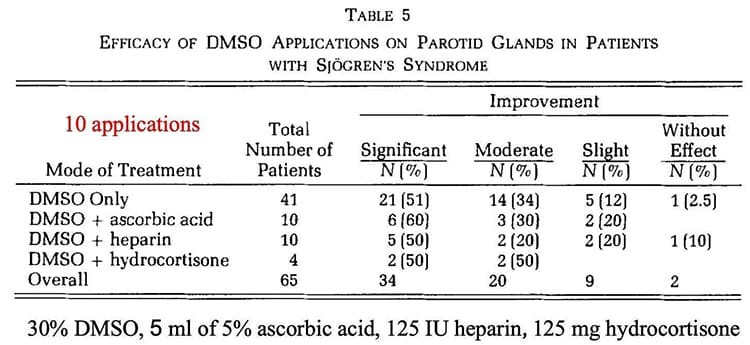
- Sjögren’s syndrome is quite difficult to treat. In one study, DMSO alone led to a significant improvement, which was further enhanced by vitamin C.
- A variety of DMSO applications improve tinnitus, and in one study tinnitus was treated with a combination spray containing circulation-enhancing agents such as capsicum (and lidocaine).
Wound healing:
- In mice with second-degree burns, DMSO, collagen, and dextran accelerated healing and reduced inflammation.
- DMSO mixed with Linethol (a linseed concentrate with anti-inflammatory, regenerative and wound-healing properties) was used to treat burns.
- DMSO and Brazilian green propolis effectively reduced inflammation and accelerated the healing of surgical wounds in animals, eliminating the need for oral medication.
Note: As mentioned above, DMSO-silver combinations also improve wound healing.
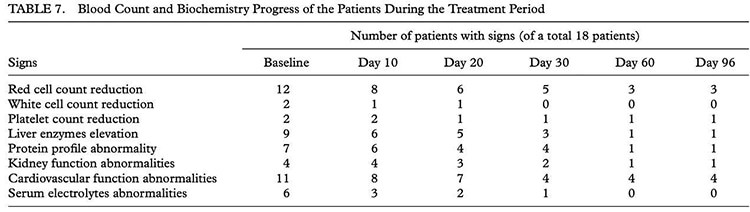
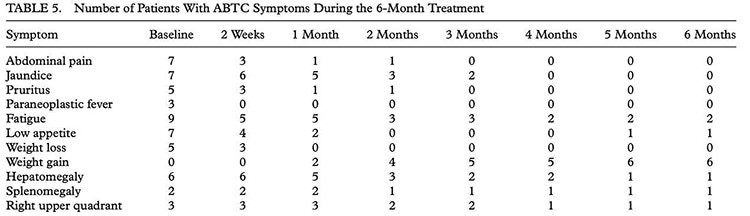
Other natural cancer combinations – Many other natural therapies have been combined with DMSO to treat cancer. For example, many studies have shown that infusions with baking soda (sodium bicarbonate) are very helpful in reducing cancer symptoms.
- A 2011 study found that it significantly helped patients with metastatic prostate cancer:
- A 2014 study of 9 patients with advanced biliary adenocarcinoma came to the same conclusion:
- A 2011 study of 26 patients with severe, treatment-resistant pain due to advanced-stage cancer found that it is an effective method for pain management that also improves patients’ quality of life, reduces the side effects of chemotherapy, and may extend their survival time.
- It has been extensively demonstrated that DMSO suppresses cancer growth and promotes the differentiation of cancer cells (regression to normal cells). Several studies have investigated this using DMSO combinations:
-
- Alpha-lipoic acid was found to significantly improve the ability of DMSO to differentiate P19 cells from embryonic carcinomas in mice, but did not induce differentiation without DMSO.
- Retinoic acid (a vitamin A metabolite) has also shown promise for inducing cancer differentiation, acts synergistically with DMSO, and utilizes a different differentiation pathway than DMSO.
- In human ovarian cancer cells (COC1), DMSO and retinoic acid significantly inhibited cell proliferation and induced differentiation.
- A 1969 study found that DMSO, in combination with heat and vitamin A, selectively targeted cancer cells (and promoted the release of lysosomal enzymes).
- In mice with skin cancer transplants, topically applied DMSO and vitamin E in combination with cabazitaxel suppressed tumour growth by 50% compared to the control group.
- A study from 2023 found that fatty acids isolated from the urine of healthy cows and mixed with DMSO represent an effective therapy against breast cancer cells.
- A 2018 study found that DMSO and a plant extract selectively inhibited cell growth and induced cell death in colon cancer cells.
- Finally, some of the cancer studies that demonstrated the success of DMSO in chemotherapy also included natural therapies. For example, a 1975 study of 65 patients with incurable cancers (most of whom had received conventional therapies) found that a low dose of cyclophosphamide mixed with DMSO, GABA, GABOB, and acetylglutamine cured 57 of them.
Other natural combinations:
- In rabbits, DMSO protects heart tissue that has lost its blood supply from dying, and this protection was enhanced by the simultaneous administration of hydrogen peroxide. In devascularized skin flaps, DMSO alone prevented an increase in carbon dioxide levels, and when hydrogen peroxide was added, tissue oxygen levels increased.
- In a 1980 study, 129 newborns with osteomyelitis (bone inflammation) received DMSO and hyperbaric oxygen therapy, which improved their general condition, normalized serum laboratory values, reduced bone destruction, and accelerated bone regeneration. Identical results were obtained in a 1978 study of acute and chronic osteomyelitis, a 1979 study of 43 children with chronic osteomyelitis, and a 1981 study of 54 children with acute septic osteomyelitis.
- In 38 patients with strong body odour, in addition to a combination of DMSO and aluminium chloride, a 40% urea solution in a 70% DMSO solution effectively reduced underarm odour.
Note: People have also reported using DMSO (alone) as a highly effective deodorant.
Common natural DMSO combinations
The safety and efficacy of DMSO have inspired a large DIY community, particularly in Germany, to explore a variety of natural DMSO combinations. Currently, I am aware of approximately 120 combinations that have repeatedly helped patients. However, since there is a virtually unending number (that could be tested on diseases throughout the body), many remarkable combinations remain undiscovered.
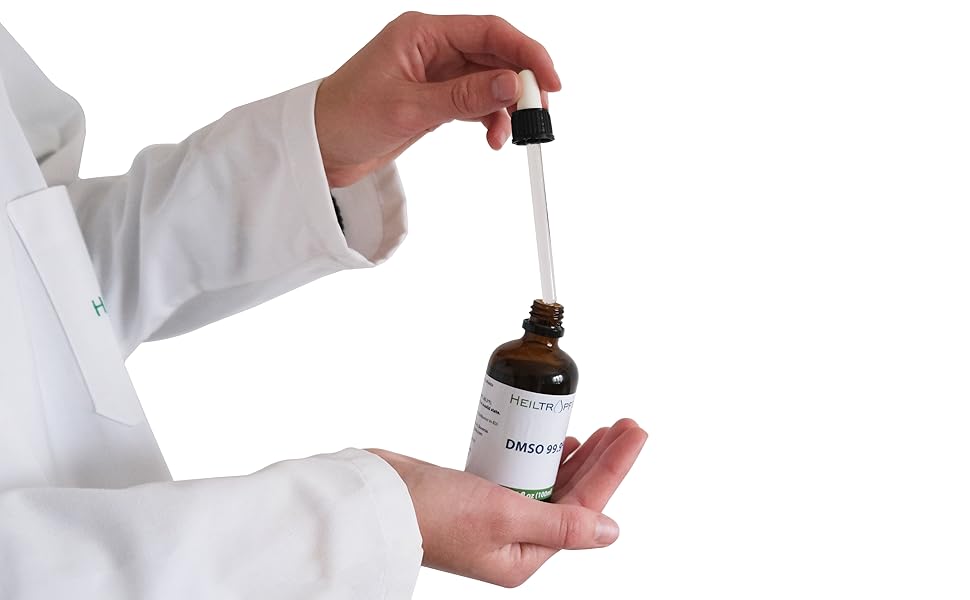
As a result, many different combinations have been extensively researched and successfully used to treat a variety of diseases. These include:
- Carrier oils (e.g., coconut oil) – Chronic use of DMSO can sometimes lead to skin dryness. Many people find that they respond better to DMSO in a carrier oil or aloe vera, especially when making natural cosmetics.
- Essential oils (e.g., lavender or tea tree) – These topical combinations significantly enhance the known effects of the oils, many of which are used for infections, pain, or other musculoskeletal disorders.
- Herbal substances (e.g., arnica, CBD oil, or turmeric) – These combinations have a wide range of applications, especially in the healing of injuries and pain, skin diseases, and the treatment of neurological or cardiovascular problems.
- Nutraceuticals (e.g., vitamin C, vitamin B12, or MSM) – Potentiation through DMSO and the elimination of the need for injection significantly enhance the known functions of many dietary supplements. These combinations are frequently used to treat osteoarthritis, hearing loss, loss of smell, and tinnitus, as well as certain conditions such as benign prostatic hyperplasia (BPH), Parkinson’s disease, cataracts, glaucoma, COPD, asthma, and persistent infections.
- Minerals (e.g., iodine and magnesium) – They are most commonly used for musculoskeletal applications, to eliminate infections throughout the body, and to treat glandular problems in the thyroid, prostate, and breast.
- Natural metabolites (e.g., hyaluronic acid or lactic acid) – Many have a remarkable regenerative effect and are frequently used for cosmetic applications (e.g., scars, varicose veins, cellulite, or skin rejuvenation) as well as in many complex diseases (e.g., neurodegenerative diseases, cancer, or insulin resistance).
- Amino acids and neurotransmitters (e.g., GABA) – These are primarily known for the treatment of Down syndrome and developmental delays, and are used for insomnia, anxiety, neurological disorders, eye diseases, tissue repair, and joint problems.
- Oxidative therapies (e.g., chlorine dioxide, hydrogen peroxide, or Artemisia annua) – These are extremely popular for treating local infections (e.g., dental infections), chronic infections (e.g., Lyme disease or EBV), and cancer.
- Dyes – DMSO in combination with hematoxylin is a remarkably effective (and harmless) cancer treatment, which has led to the identification of other dyes that, in combination with DMSO, also provide effective cancer treatments.
- Chelating agents and detoxifying agents (e.g., EDTA or coriander) – DMSO significantly increases the effectiveness of chelating agents (by allowing them to penetrate deeper into the body) while reducing the detoxification reactions experienced by more sensitive patients.
Note: Many other therapies (e.g., acupressure, physiotherapy, osteopathy, and meditation) are said to be significantly more effective in combination with DMSO and, in many cases, to enable breakthroughs in healing.
Conclusion
The remarkable potential of DMSO, alone or in combination with other therapies, represents a paradigm shift in our approach to natural healing and wellness. What we have discovered through thousands of studies and countless patient experiences is that DMSO not only treats symptoms but also appears to address fundamental healing mechanisms at the cellular level, thus creating a foundation for the body’s own regenerative processes to unfold.
The beauty of these natural combinations lies not only in their therapeutic efficacy but also in their accessibility. Unlike complex pharmaceutical interventions that require specialized medical facilities and extensive monitoring, many of these DMSO combinations can be safely prepared and used at home, allowing everyone to regain their health.
In short, the integration of DMSO combination therapies into healthcare is extremely promising, and we are fortunate to live in a time when these forgotten therapies can finally flourish again. The future of medicine may lie in this remarkable solvent’s ability to unlock the healing potential that has always been present in nature – we simply needed the right key to access it.
Author: A Midwestern Doctor
Author’s Note: This is an abridged version of a longer article that goes into much greater detail about the effects of natural DMSO combinations and how to prepare them at home. That article, along with resources and protocols for obtaining and using DMSO, can be found here. Additionally, a companion article explaining how DMSO interacts with a variety of substances and which synergistic pharmaceutical combinations have been discovered can be found here.
A note from Dr. Joseph Mercola about the author: A Midwestern Doctor (AMD) is a board-certified physician from the Midwest and a longtime reader of Mercola.com. I appreciate AMD’s exceptional insights on a wide range of topics and am grateful to share them. I also respect AMD’s wish to remain anonymous, as AMD continues to treat patients on the front lines.
Sources:
- Annals of the New York Academy of Sciences, 243: 7-19
- Annals of the New York Academy of Sciences, 141: 85-95
- Chinese Journal of Clinical Rational Drug Use. 2019, (24)
- Acta Academiae Medicinae Zunyi. 2002, (06)
- Jilin Medical Journal. 1986, (04)
- Hebei Medicine. 2001, (05)
- Pharmaceutical Sciences, Fundamental Research No. 6, 2013
- Strait Pharmaceutical Journal. 2015, (12)
- Chinese Journal of Veterinary Drug. 2005, (12)
- Biomedicine & Pharmacotherapy Volume 148, April 2022, 112710
- School of Veterinaria – UFMG 2009
- University of Dr. José Matías Delgado, December 2010
- Annals of the New York Academy of Sciences, 411(1), 309-315
- Acta Biomedica Scientifica. 2017;2(6):153-156
- Bol Clin Hosp Infant Edo Son 2017; 34 (2)
- Med Int Mex 2021; 37 (3)
- Bulletin of Kursk State Agricultural Academy, 2018
- Siberian Federal Scientific Center of Agrobiotechnology RAS, January 12, 2022
- International Journal of Innovations in Biological and Chemical Sciences, September 2016
- Central Plains Medical Journal. 1989, (06)
- Shaanxi Traditional Chinese Medicine Correspondence Course. 1989, (04)
- In Vivo. 2023 Sep 3;37(5):2155-2160
- Stomatologiia (Mosk). 1977 May-Jun;56(3):25-7
- Vrach Delo. 1987 Feb:(2):113-5
- Klin Khir (1962). 1987:(1):48-9
- Dissertação Final De Samilla Alves Sobral, February 22, 2022
- Rev. peru biol. [on-line]. 2020, vol. 27, no. 2, pp. 215-224. ISSN 1727-9933
- Wikipedia, Oleanolic acid, Accessed August 2025
- Wu You Southwestern Medical University, Accessed August 2025
- Shandong Medical Journal. 2016, (29)
- Kazan medical journal. – 1983. – Vol. 64. – N. 6. – P. 434-435
- Stomatologiia (Sofiia). 1983 Nov-Dec;65(6):25-30
- Journal of Jiamusi Medical College. 1991, (03)
- Stavropol State Medical University, Volume: 15 Number: 1 (54) Year: 2010 Pages: 46-50
- Stomatologiia (Mosk). 1993 Jul-Sep;72(3):32-4
- Annals of the New York Academy of Sciences, 411: 309-315
- Shandong Medical Journal. 1994, (02)
- Derzh. Med. Inst., L’vov, Volume: 37, Number: 2, Year: 1982 Pages: 72-73
- Brazilian Journal of Natural Sciences, v. 4 n. 2 (2022)
- Pain Palliat Care Pharmacother. 2011;25(4):350-5
- Journal of Pain & Palliative Care Pharmacotherapy, Volume 28, 2014 – Issue 3
- J Pain Palliat Care Pharmacother. 2011;25(1):19-24
- Acta Biochimica et Biophysica Sinica, Volume 46, Issue 9: 766 – 773 (2014)
- Cancer Res (1990) 50 (19): 6268-6273
- Experimental Cell Research, Volume 173, Issue 1, November 1987, Pages 80-84
- Chinese Journal of Cell Biology. 1987, (04)
- Leukemia Research, Volume 13, Issue 7, 1989, Pages 621-627
- Experimental Cell Research, Volume 190, Issue 1, September 1990, Pages 137-140
- Cancer Research On Prevention And Treatment. 1998, (01)
- Archives of Tumor Research, 01 Jan 1969, 33(4):331-344
- Advanced Science, 10(29), 2302658
- Biomedicines 2023, 11(3), 889
- Nutrition and Cancer, Volume 71, 2019 – Issue 7
- Annals of the New York Academy of Sciences, 243(1), 412-420
- Ann NY Acad Sci. 1967 Mar 15;141(1):231-41
- Ann NY Acad Sci. 1975 Jan 27:243:320-4
- Vestnik Khirurgii Imeni II Grekova, 01 Feb 1980, 124(2):135-138
- Vestnik Khirurgii Imeni II Grekova, 01 Sep 1978, 121(9):88-90
- Vestnik Khirurgii Imeni II Grekova, 01 Aug 1979, 123(8):133-136
- Vestnik Khirurgii Imeni II Grekova, 01 Jul 1981, 127(7):94-96
- Journal of Xi’an Jiaotong University (Medical Sciences). 1982, (03)
yogaesoteric
November 2, 2025