
The Praxian Genocide Kill Chain – Part 3
Read the second part of the article
The dark technocracy of the Praxians is the proposed operating system for private smart-city states (neostates) controlled by sovereign corporations (sovcorps). The Praxian neostates are intended to be interconnected, forming the patchwork of empires within the political unions that dominate the global regions comprising the MWO (Multipolar World Order).

But you don’t have to simply believe me.
In a recent speech before the Russian International Affairs Council (RIAC), the Chairman of the RIAC Board of Trustees, Russian Foreign Minister Sergey Lavrov, said:
“We are at the height of efforts to reshape the world order, from which we hope to achieve a stable and just multipolar world. So far, however, this reshaping resembles a collapse in the truest sense of the word. The struggle for leadership positions in the new world is extremely intense, nothing less than a fight for survival. […….] A situation is emerging in which the West, with its insatiable hegemonic ambitions, has become embroiled in a power struggle with the desire of the world majority [BRICS] to implement the principles of the UN Charter.”
The “collapse” to which Lavrov refers is the aforementioned ominous “creative destruction.” The result is new geopolitical structures and a complete reassessment of international relations.
For the international oligarchy, which benefits most from the accelerated modification of virtual and physical infrastructure, war remains the gift that continually brings new advantages. Yes, innocent people are slaughtered in the process, but transnational capital knows no morality.
Lavrov limited his remarks to the apparent geopolitical schism. On one side, he stated, were the Western powers; on the other, the BRICS nations, which Lavrov referred to as the “world majority” – which they effectively are. Lavrov’s stated view is that the West is striving for greater hegemony and that the “world majority” supposedly opposes this hegemony by defending the sovereign equality of nations and adhering to the Charter of the United Nations by strictly upholding international law.
Lavrov’s view resonates with those whom Morić, in Geopolitics and Empire, calls “the multipolarists.” These analysts, researchers, and commentators may not intentionally agree, but they all find hope in the superficial narratives propagated by political heavyweights like Lavrov.
For example, Matthew Ehret, director of the Rising Tide Foundation, wrote:
“The question now is: Will the new world order take the form of a new era of global empire, a relentless war between religions, and a protracted dark age, OR could it take the form of a wonderful multipolar world order characterized by win-win cooperation between all nations, religions, and cultures of the world?”
At first glance, Lavrov’s official public value proposition, welcomed by Ehret and other multipolarists, appears to have merit. It is true that under the sole superpower, the United States, successive US administrations and US-allied governments (particularly in Europe and Israel) have waged US-backed wars (either directly or through proxies) with impunity for far too long. These wars were fought simply to achieve the respective foreign policy objectives of the United States. There is nothing admirable or humanitarian about the violent, militarized US hegemony that characterizes what Charles Krauthammer termed a “unipolar” world.
That is an accurate assessment. However, the superficial analysis of the multipolarists collapses when they assume that replacing unipolarity with multipolarity promises something better.
Perhaps in their understandable zeal to see the demise of the unipolar world order, the multipolarists have overlooked more than a century of documented historical evidence showing that the transnational capitalist engineers of the unipolar world order are also the architects of its successor, the multipolar world order.
As we discussed in Part 1, transnational capitalists, such as the Praxian oligarchy, are precisely that: transnational. They may profess loyalty to host nation-states, but in reality, they have none. Jumping from the backs of one exploited population to the backs of another is a business strategy of the oligarchy, and the goal of all this “jumping” is monopoly. While it is important to view competition between nations through the lens of realpolitik, limiting this view solely to the actions of governments – as if the public sector were independent of the private sector – represents a fundamental misunderstanding of how multinational power functions and who wields it.
For example, governments do not independently determine their foreign policy. Rather, so-called “government policy” is effectively controlled by multinational corporations. Even though people in the West imagine they live in a kind of representative democracy or constitutional republic, the prevailing form of government worldwide is a functional oligarchy, and this functional oligarchy frequently uses war and other SCADs (state crimes against democracy), such as fabricated pandemics, to achieve its goals.

To illustrate this, let us return to the speech Lavrov gave to his colleagues in the Russian International Affairs Council (RIAC) and the assembled delegates. Lavrov noted that the RIAC’s “work plans” were in line with the Russian government’s foreign policy objectives. He added that the RIAC provided “analytical and informational support for the activities of our ministry and other state bodies.” In other words, the RIAC “supports” and “informs” – that is, it “coordinates” – the policies of the Russian government.
So who – or what – is the RIAC?
The RIAC describes itself as a “diplomatic think tank that [….…] acts as a link between state, academia, business and civil society to find foreign policy solutions to complex conflict issues.” In practice, the RIAC is a public-private policy partnership between the Russian government and its two co-founders: the Russian Union of Industrialists and Entrepreneurs (RSPP) and the Interfax International Information Group (Interfax).
The RSPP, mockingly referred to by Russians as the “Oligarchs’ Union,” advocates for “the interests of the Russian economy.” To this end, it aims to “cooperate with government agencies to promote a more favourable investment climate” for oligarchs in Russia.
Interfax, for its part, began in the 1990s as a Russian news agency but has evolved into a multinational business empire specializing in “political and general news” reporting. It also possesses a steadily growing and influential global credit rating agency business, offering “financial and corporate credit information, industry analysis, market data, and sophisticated business risk management solutions,” primarily serving non-Russian oligarchs looking to invest in Russia. Clearly, the “advice” that the RIAC provides to Russia’s so-called political decision-makers like Lavrov serves the business interests of the oligarchs, but rarely the interests of the Russian people.
The RIAC also maintains working partnerships with a global network of public and private sector organizations, corporations, and similar political think tanks. Among the latter is the Kerachi Council on Foreign Relations (KCFR), established in 2003 as the Kerachi branch of the Pakistan Council on Foreign Relations (PCFR). The PCFR was created by the Chicago Council on Global Affairs, which effectively serves as the Chicago hub for the US Council on Foreign Relations (CFR). This global network of political think tanks, which emerged from the Anglo-American establishment in the early 20th century (see Professor Carroll Quigley’s book of the same name), is a tightly knit club controlled by an even tighter circle of transnational capitalist oligarchs.
Russia is not the only functioning oligarchy. Far from it. The network of transnational capitalist oligarchs is literally everywhere. A Multinational World Order (MWO) does nothing to combat the harmful influence of this network. Instead, it merely centralizes and consolidates the de facto rule of the oligarchs at the level of global governance. This centralization and consolidation of their authority explains why transnational capitalist oligarchs want to impose an MWO.
The zealous promotion of a multipolar world order by multipolarists is short-sighted at best. They are essentially advocating for an overarching and oppressive global governance, as if further centralizing global political authority in the hands of oligarchs would somehow benefit the rest of us.
It’s not that the multipolarists don’t have valid reasons for optimism. They certainly do. The SCAD of the Iran war does indeed seem to be bringing an end to the era of large-scale international conventional wars. This is a welcome development – provided, as the multipolarists apparently assume, that no government is actually foolish enough to believe that limited nuclear conflicts are feasible.
At least the Iran war SCAD suggests that international conflicts using conventional warfare are becoming increasingly economically unfeasible and no longer represent a viable option for continuing policy by other means.
Unfortunately, however – and contrary to the hopes of multipolarists – this impracticality does not mean the end of war. Rather, it leads to a reshaping and redistribution of war in a multipolar world.
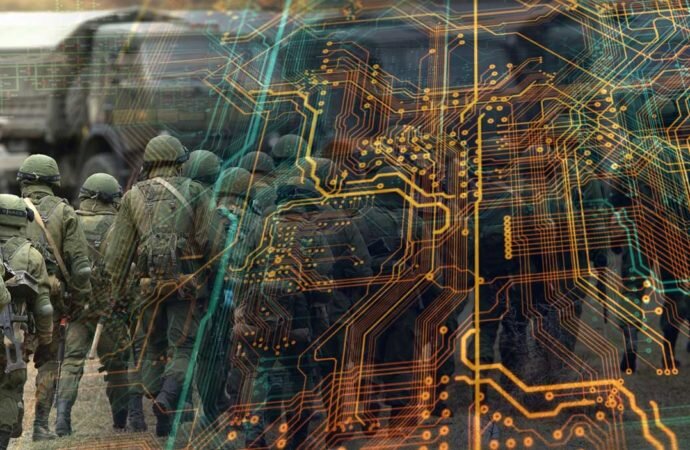
World War III – a hybrid war characterized by a larger number of conflicting parties engaged in locally confined conflicts – has begun.
Hybrid Warfare
In 1999, Chinese military officers and authors Qiao Liang and Wang Xiangsui published the book Unrestricted Warfare. In it, Qiao and Wang emphasized that modern technology interconnects societies both internally and internationally like never before. Therefore, they argued, war is not simply a matter of direct military confrontation. It encompasses “political, economic, diplomatic, cultural, technological, and other non-military factors.”
The co-authors wrote:
“The new principles of warfare no longer consist of ‘forcing the enemy to submit through the use of armed force,’ but rather of ‘using all means – including armed or unarmed force, military and non-military, lethal and non-lethal – to compel the enemy to accept one’s own interests. This represents a modification. A change in warfare and a concomitant change in the way warfare is waged’.”
The concept of “unrestricted warfare” was later developed by General Valery Gerasimov, Chief of the General Staff of the Russian Federation, in a 2013 essay he wrote for the Russian Military-Industrial Courier:
“The ‘rules of war’ themselves have changed. The importance of non-military means for achieving political and strategic goals has increased, and in many cases, these means surpass the effectiveness of weapons. […….] Frontal engagements of large armed forces at the strategic and operational levels are gradually becoming something of the past. Long-range combat operations without direct contact with the enemy are becoming the primary means of achieving combat and operational objectives. […….] New means of conducting military operations have emerged that cannot be considered purely military.”
The so-called Gerasimov Doctrine was also adopted in the West. In 2019, General Nick Carter, Chief of the British Defence Staff, addressed the topic in his speech at the Cliveden Literary Festival in Great Britain.
“The modification of warfare has blurred the lines between peace and war, lines that no longer exist. […….] I am currently at war, but it is not war in the way we would have previously defined it. […….] The decisive factor that gives you the necessary edge is the way information connects everything. […….] The warfare of the future will be very information-centric. […….] War is essentially a political function – but it will be much more complex and will include the new realms of space and cyberspace, in addition to land, sea, and air.”
Given that the West has readily adopted the so-called Gerasimov Doctrine, it is essential that we all grapple with what NATO defines in this context as “hybrid warfare”:
“The [ominous] creative use of hard, soft, and intelligent power by malevolent state or non-state actors to achieve military and political objectives. Malevolent actions encompass a broad spectrum of military and non-military coercive means that extend beyond the conventionally understood multi-domain combat space. Hybrid warfare encompasses politics, diplomacy, information, economics, technology, the military, and society, as well as dimensions such as culture, psychology, legitimacy, and morality.”
As General Carter said, in hybrid warfare there is no distinction between war and peace. Hybrid warfare is not limited to public sector forces facing each other on identifiable battlefields. Rather, hybrid warfare utilizes the whole-society approach to public-private conflict in a multitude of spheres. In hybrid warfare, every aspect of society is used as a weapon. Everything is war, and war is ubiquitous.
Hybrid warfare is “information-centric” because our behaviour is determined by what informs us – that is, by what we believe. For hybrid “war-like and political objectives” to succeed, our beliefs and behaviour should align with the efforts of our leaders within the “multi-domain battlespace.” Consequently, controlling our access to information and employing applied psychology is a crucial strategy in hybrid warfare.
NATO is extremely hesitant to clearly define who or what constitutes a “non-state” actor, despite its obsession with combating them. This is obviously problematic when claiming that non-state actors are among the most “malicious” enemies in order to counter hybrid threats.
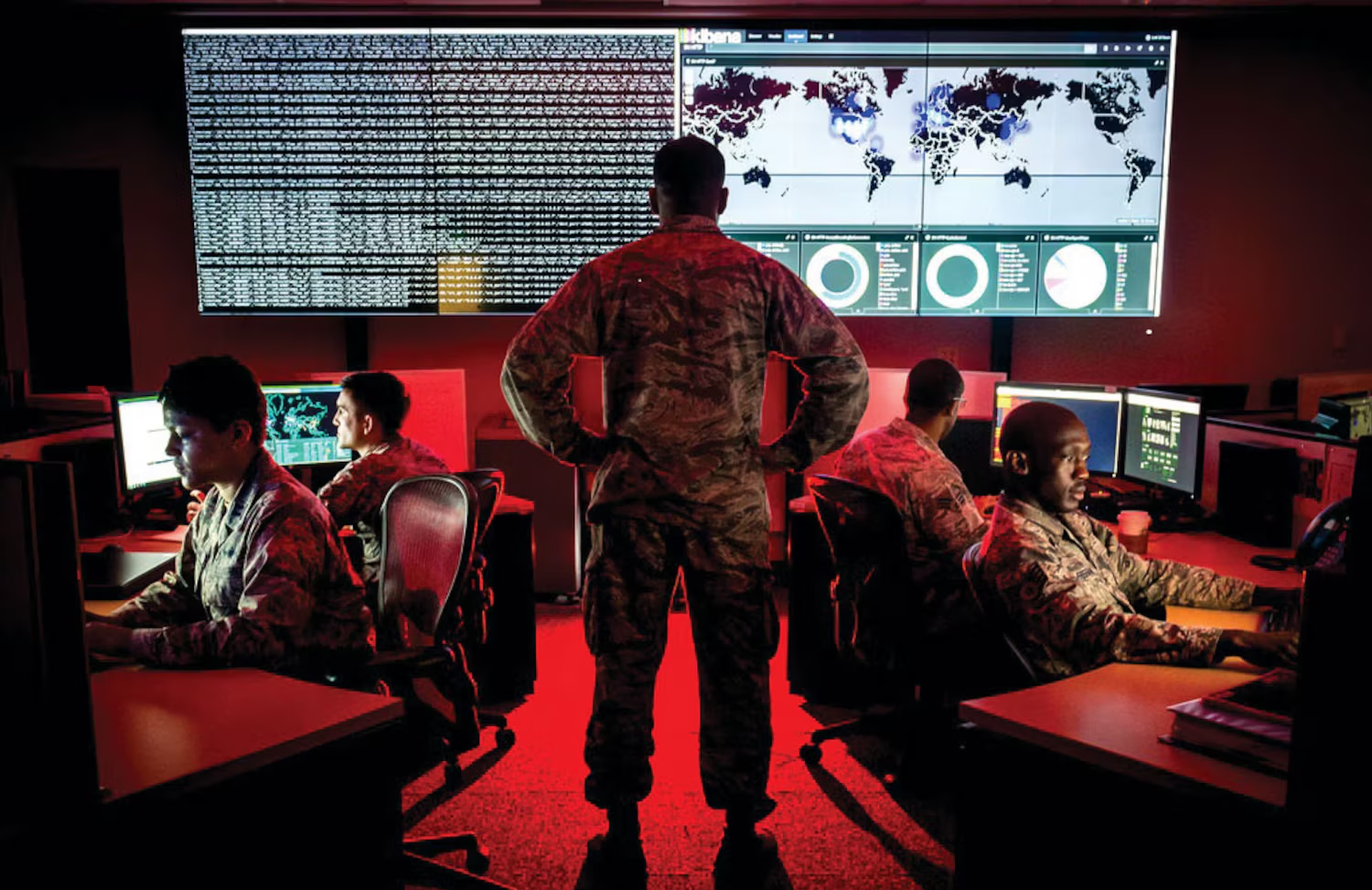
However, we can define what hybrid warriors understand by the term “non-state actors”:
“Non-state actors (NSAs) are organizations or entities that operate independently of any recognized government. […….] This category encompasses a wide range of entities, including [……] social movements. NSAs have gained in importance, […….] partly due to growing dissatisfaction with traditional state governance. […….] While some view NSAs as essential checks on state power and as advocates for social change, others see them as potential threats to established state systems and international relations.”
According to this definition, NATO and its member states categorize civil society actors as belonging to the latter camp and consider them “potential threats to the established state system.” Whether we realize it or not, political and military strategists view all of society as a “multi-domain battlefield” and each of us as a potential threat. If we express dissatisfaction with our governments, we are “malicious” enemies who need to be fought, especially if we are bold enough to form social movements.
This is no exaggeration. NATO’s strategy for combating hybrid information threats is directed directly against the population in NATO countries.
Accordingly, NATO, its member states, and its partners will assess anything they deem to be hostile intelligence activities. National security agencies arbitrarily accused of employing manipulative tactics, techniques, and procedures (TTPs) will face short-, medium-, and long-term responses from NATO-aligned governments and their partners.
In Part 1, we established that Palantir is among NATO’s “partners,” and its “[hybrid] warfare command and control system” called Maven is “spreading ever faster within the [NATO] alliance.” According to NATO, “information threats can pose a danger to national security” because they “undermine people’s trust in governments and other public institutions,” which is prohibited. Therefore, NATO governments claim they need to take “proactive measures.”
Proactive measures include the widespread use of “strategic communications” (STRATCOM) – in other words, propaganda – to proactively disseminate “accurate information.” And what constitutes “accurate information”? It is any information that does not “undermine public trust in governments” by, for example, questioning government policy decisions or, worse, not believing what the government says. NATO emphasizes that virtual communication platforms and journalists are used “to promote a better public understanding of [NATO’s] purpose.”
The G7 Rapid Response Mechanism (RRM) coordinates the narratives that the G7 group of nations wants us to believe about major incidents and events, such as wars. The RRM uses a “government-wide” surveillance system and “monitors the digital environment” for any questioning of the approved G7 messages. Any sceptical comment on virtual communication networks or the sharing of critical reports from independent media outlets that could potentially undermine the RRM’s narrative is classified as an “information threat.” The technocratic-sounding NATO Rapid Response Group (NRRG) – a network of carefully selected “experts” – then targets the NSAs (that’s us) to counter these “information threats.”
As part of its hybrid warfare strategy, NATO employs “cognitive warfare.” The goal of “cognitive warfare” is to manipulate the behaviour of adversaries who, according to NATO, use “propaganda, deception, interference, and manipulation” – such as “false flag operations to destabilize and influence decisions” – against NATO member states. NATO notes that “technological advances have made it easier to manipulate human perception” and weaponize “human behaviour.”
The multi-domain combat space encompasses “virtual communication platforms and other digital tools” because these shape the “information environment” and “influence perception.” Similar to the Praxians, NATO’s main weapons are “emerging disruptive technologies (EDTs),” as these are considered “crucial for NATO’s decision superiority.”
NATO, as you understand, is only interested in defensive measures that can counter all these hybrid threats we face. It simply wants to protect us – or so it claims. Therefore, it supposedly has no other choice but to conduct its own “Psychological Operations (PsyOps) [and] Information Operations (InfoOps)” within the framework of its STRATCOM “functions”.
NATO PsyOps, it is revealed, are “psychologically planned activities,” which presumably include false flag terrorist attacks, that NATO needs to use to protect us. By employing “communication methods and other means” to target “approved audiences,” NATO can influence their “perceptions, attitudes, and behaviours” to ensure that they do not “undermine people’s [i.e., our] trust in governments.”
And what are NATO InfoOps? They are coordinated “military information activities” that apparently use virtual communication platforms and journalists to undermine the “will, understanding and ability” of people who want to undermine the government and other establishment institutions.
PsyOps and InfoOps are both STRATCOM activities that aim to “shape the information environment” and counter the malicious threat posed by the “hostile information activities” that we face, which NATO refers to as “disinformation”.
The governments of NATO member states have introduced laws to support their hybrid war against their own populations.

In the United Kingdom, for example, under Section 179 of the Online Safety Act, one can be imprisoned for up to six months for sending “false communications” online. “False communications” are messages that “undermine people’s trust in the government.”
In the European Union (EU), the Digital Services Act creates the regulatory framework for internet censorship in EU member states. It forces virtual communication platforms and search engines to restrict the exchange of information to what has been approved by the EU technocracy and to remove any information that the EU does not like.
Both laws, the UK Online Safety Act and the EU Digital Services Act, are examples of what “combating hybrid threats” means for our societies, which are falsely described as “democratic”.
When NATO claims that it and its Five Eyes partners, as well as its European state partners, are merely aiming to “protect democracies,” and when it further claims that waging a hybrid war against populations living under NATO surveillance “does not dictate what people may or may not say” but instead “protects freedom of expression,” then it is obvious that these claims themselves are a “malicious” deception – or, to use NATO’s own words, “disinformation.”
So-called democratic principles like freedom of speech and expression are being destroyed by the public-private political and military establishment’s eager embrace of hybrid warfare. The ominous “creative destruction” of our state is one of the establishment’s goals. We are the “enemy” of the hybrid warriors, and we are being attacked by our own governments and their transnational capitalist partners.
Despite the enthusiasm of the multipolarists, no salvation can be found in the MWO.
A look at the BRICS Media Summit 2024, convened by Russian and Chinese state propaganda news agencies, confirms this. In their endeavour to promote “stability and cooperation in a multipolar world” and to advance “the technological transformation of the media,” all BRICS member states agreed in their final declaration to “combat disinformation.”
That’s almost exactly what NATO says. In fact, the only difference between the Western, G7-based fight against disinformation and the multipolar, BRICS-based fight is that “disinformation” is defined to fit their respective agendas. Neither the G7 nor the BRICS respect freedom of speech or expression.
Let’s take, for example, the information component of hybrid warfare. The Russian and Chinese governments are at the forefront of nation-states waging “unrestricted war” against their own populations. Russia’s internet restrictions allow Russians to use state-approved websites on the “whitelist” but block them from those on the “blacklist.” Such intrusions, combined with government policies that deny access to “inappropriate” virtual communication channels, have angered many Russians. Similarly, Chinese censorship laws are even more draconian than those currently imposed on Westerners – at least for the time being.
We have explained state crimes against democracy (SCADs). And we have defined “hybrid warfare.” It is clear that hybrid warfare is the epitome of a SCAD.
As Professor DeHaven-Smith observed, SCADs are successful in protecting government officials while they work to actively prevent the exposure of evidence of government crimes. SCADs function by firewalling only the evidence supporting theories that exonerate suspected officials, thus protecting operational positions that exploit state crimes to serve overt or covert agendas. NATO openly states that it conducts hybrid warfare against non-state actors (NSAs) to prevent them from undermining public trust in governments and other public institutions. The goal of hybrid warfare is to defend the authority of the establishment against those who might challenge it. Hybrid warfare is contrary to all democratic values.
It is not only NATO states that engage in hybrid warfare. All governments do so. They are all equally determined to use modern digital technology to monitor and control the behaviour of their own populations. Governments are introducing technocracy to establish a dictatorship, which poses a significant threat to humanity. The Praxians’ pursuit of the agent state, which offers governance as a service to “clients” in private city-states run by sovereign corporations, is the ultimate expression of the modern dictatorial system.
The Praxians’ accelerationist approach, through which they can exploit the enslaving potential of their digital “revolution,” has been and continues to be used by governments. And although the resulting threat to humanity is real, virtually none of the narratives offered to legitimize the alleged necessity of the Praxians’ digital kill chain are genuine. The principles espoused by Praxian propaganda are largely fabricated.
Read the fourth part of the article
Author: Iain Davis
yogaesoteric
July 17, 2026