
The rise and further rise of the “colour revolutions”
It is largely forgotten today that Washington’s imperial adventurism after 9/11 was not limited to military interventions. A core element of the Bush administration’s “freedom agenda” – under whose auspices devastating wars were waged in Afghanistan, Iraq, and elsewhere – was the open support of civil society-led coups throughout the former Soviet Union, the Warsaw Pact, and Yugoslavia. The citizens of these regions and the world continue to live with the destructive consequences of this interference. The seemingly endless – and ever-escalating – proxy war in Ukraine is a particularly poignant legacy.
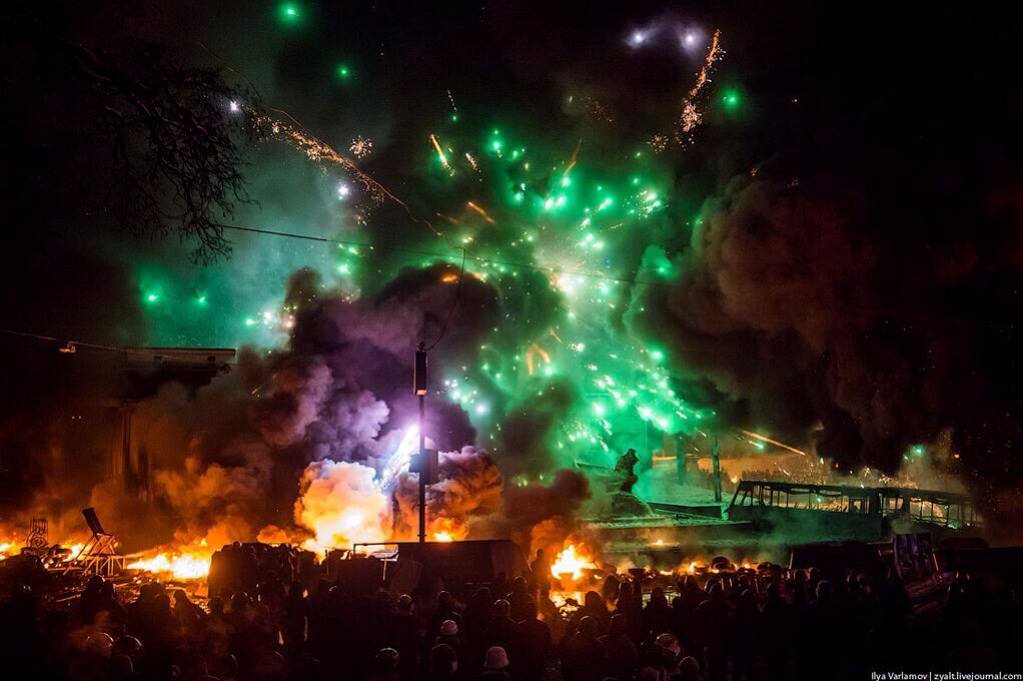
The 1983 establishment of the National Endowment for Democracy (NED) – a US government agency explicitly tasked with openly carrying out what the CIA once did covertly – ushered in a new era of “non-spy coups.” Working closely with USAID and George Soros’ Open Society Institute, the NED subsequently provided funding, training, and material support to NGOs, “independent” media outlets, opposition groups, and other regime-change initiatives around the world.
After 9/11, the NED and its allies had developed an extremely clever and cost-effective blueprint for overthrowing inconvenient governments – whether left-wing, nationalist, or even former US puppets who had stepped out of line. The previous October, longtime Yugoslav leader Slobodan Milošević had been brought down, a move the Washington Post grandly described as “an extraordinary US effort to dethrone a foreign leader, not through covert operations of the kind the CIA once carried out in countries like Iran and Guatemala, but through modern campaign techniques.”
At the forefront of the anti-Milošević movement was Otpor! (Serbian: Resistance!), a rebellious, NED-funded youth activist group. Through a mix of civil disobedience, nonviolent resistance, rock concerts, street theatre, and graffiti, they stirred up massive public opposition to the Yugoslav president. When the official results indicated a Milošević victory on election day, an NED-funded “parallel vote count” claimed to prove massive fraud and drove millions into the streets of Belgrade to peacefully demand the president’s resignation. Milošević then capitulated in the face of seemingly overwhelming popular power.
The supposedly heroic struggle of Otpor! and other US-backed anti-Milošević groups was immortalized in an elaborate “documentary”: Bringing Down a Dictator. Milošević’s overthrow provided a precise blueprint for future “colour revolutions” – so named because the empire-backed activists who led these mob coups frequently adopted specific colours for their banners, branding, and logos. Initially, US officials readily and publicly associated themselves with these upheavals. At the same time, the mainstream media regularly published remarkably revealing follow-up reports on the revolts, which extensively examined Washington’s guiding hand and often enormous financial expenditures.
Nevertheless, politicians, commentators, and journalists invariably framed colour revolutions as ultimately spontaneous uprisings of liberal, progressive forces with legitimate grievances yearning for democracy and freedom. In reality, they almost without exception produced corrupt, repressive governments that ruled through intimidation and brutality, including political assassinations. Post-revolutionary regimes also typically implemented sweeping privatizations and other devastating “reforms” that destroyed the living standards of average citizens by subjecting their countries to the EU, IMF, NATO, World Trade Organization, and other mechanisms of Western economic, military, and political subjugation.
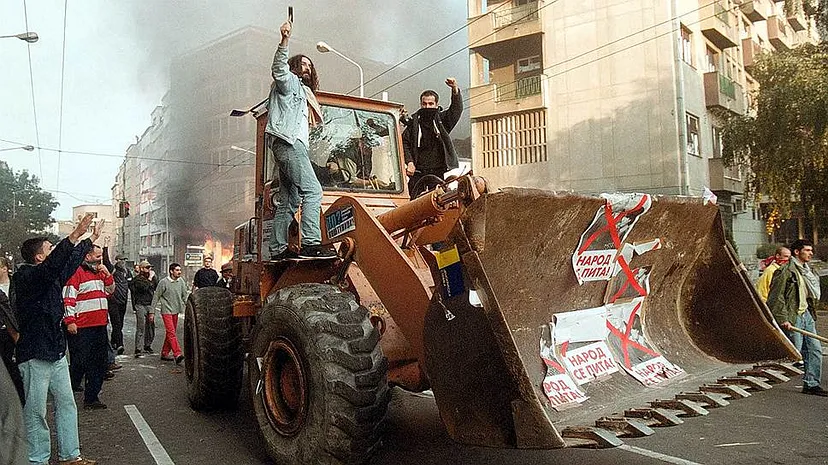
Slobodan Milošević’s NED-orchestrated overthrow is nicknamed the “Bulldozer Revolution” because of iconic scenes in which a front-end loader helped anti-government agitators occupy government buildings. But its driver quickly turned against the “revolution.” The ensuing “shock therapy” decimated Yugoslavia’s mixed market economy, caused his successful independent business to fail, and drove him into bankruptcy. He eked out a living on meagre state welfare payments for the rest of his life. For most participants, the subsequent colour revolutions were similarly a lesson in being cautious about what one wishes for.
“External impetus”
In February 2005, President George W. Bush delivered a grandiose speech in Bratislava, Slovakia. He praised how “recent milestones in the history of freedom” had been witnessed. These included Georgia’s Rose Revolution of November 2003, Ukraine’s Orange Revolution the following year, and Iraq’s Purple Revolution a month earlier. “The advance of freedom is the concentrated work of generations,” Bush declared. He looked ahead to Moldova and “inevitably” Belarus, which would “one day proudly join the community of democracies.”
“Finally, the call of freedom reaches every consciousness and soul. And one day, the promise of freedom will reach every person and every nation.”
Moldova’s forced change into a breathtakingly corrupt, de facto EU-US colony took many years. Belarus, on the other hand, remains stubbornly resistant to the “promise of freedom” as defined by Brussels, London, Washington, and other centres of imperial power. Nevertheless, President Bush’s confidence was justified. Waves of insurrectionary unrest, unleashed by his administration’s “freedom agenda,” had systematically swept away certain enemy governments one after another each year since his inauguration. Indeed, within weeks of Bush’s speech, Kyrgyzstan’s insufficiently pro-Western leader fell victim to yet another colour revolution.
He would not be the last. Previous colour revolutions had enthusiastically emphasized the importance of nonviolent resistance techniques – many of them developed by Gene Sharp, who was closely intertwined with the US military and intelligence apparatus throughout his life. However, Kyrgyzstan’s NED-created regime-change army, KelKel – modelled directly on Otpor! – attacked police officers, set fire to government buildings, and even carried out bombings. Their ferocity was actively encouraged and promoted by US-funded local television stations. Such aggression subsequently became the hallmark of colour revolutions.
That colour revolutions constituted a formal weapon of war in the post-9/11 arsenal of the empire was enthusiastically demonstrated by the arch-neo-conservative Max Boot at the end of December 2004. He raved about how Ukraine’s Orange Revolution, which had brought a pro-Western government to power just days earlier, had been one of the “most inspiring events” of that year. Boot declared the “triumph” and “miracle” of the revolution to dispel “the curious notion, still prevalent in many Western universities and foreign ministries, that democracy is a luxury good suitable only for rich countries.”
“These revolutions expose the hollowness of the cliché that ‘democracy cannot be imposed by outsiders’……. sometimes, in dealing with an entrenched dictatorship, this requires military interventions of the kind that took place in Iraq and Afghanistan. More fragile regimes can be overthrown by their own people, but even they often need a little external push……. There was nothing shameful about the US intervention in Ukraine.”
Boot boasted that Washington had spent $58 million in democracy promotion in Ukraine over the previous two years. He proposed granting Kyiv accelerated NATO and EU membership to complete the Orange Revolution. “In the meantime, we need to apply the lessons of Ukraine elsewhere,” Boot urged, suggesting that “an obvious candidate for a similar regime change is Iran.” He elaborated, “It is difficult to imagine a higher priority than overthrowing the mullahs,” and encouraged the Bush administration to prioritize the “liberation of Iran.”
“USAID aid”
Such revolutionary zeal prevailed at that time that in January 2006 USAID even published a glossy magazine, Democracy Rising, which detailed Washington’s central role in fomenting grassroots revolts as far afield as Afghanistan, Gaza, and Lebanon. Dedicated sections on previous colour revolutions were brimming with astonishingly frank passages. One section on Georgia’s Rose Revolution of November 2003 described how the NED had financed the training of local “lawyers, judges, journalists, members of parliament, NGOs, political party leaders, and others” for regime change.
The stated purpose of this investment was to “make Georgians feel they should control the government.” The Rose Revolution “was the culmination of these efforts.” One recipient of US financial support remarked, “Without foreign support, I’m not sure we could have achieved this without bloodshed.” Several pages were devoted to the Orange Revolution. It noted how thousands of Ukrainian journalists were trained in “investigative journalism,” funded by the NED and USAID.
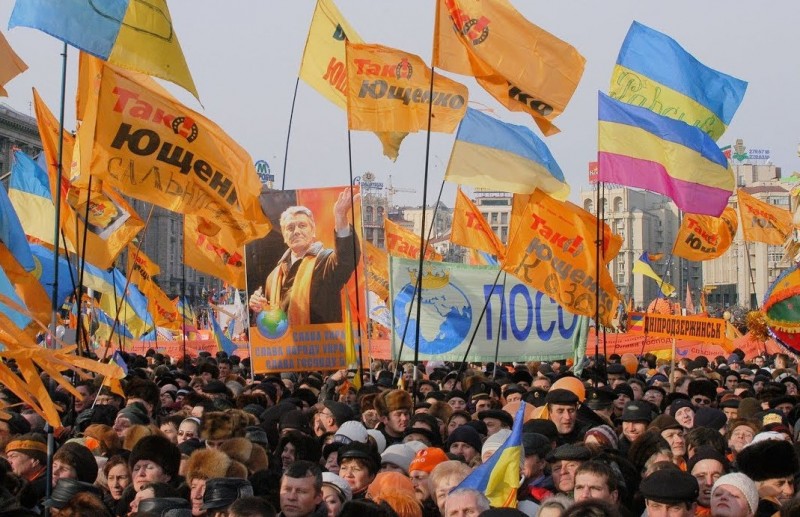
An alumnus told Democracy Rising that this funding “created the feeling that others were ‘in the trenches’ with them.” At the same time, the NED-affiliated Freedom House flooded the coffers of NGOs “promoting voter education, mobilizing voters to the polls, and monitoring elections.” These organizations “also held meetings, youth dances, rock concerts, and karaoke to attract young voters” and “placed public service advertisements on TV channels to educate people about their right to vote.” Simultaneously, “democracy trainers from Serbia, Slovakia, Russia, and Croatia” were flown into the country.
In the second round of the Ukrainian presidential election, NED-funded NGOs claimed to have been inundated with tens of thousands of fraud reports from polling stations across the country, while their exit polls pointed to widespread manipulation that denied pro-Western candidate Viktor Yushchenko a landslide victory. Massive protests, coupled with opposition-organized general strikes, widespread civil disobedience, and occupations of government buildings, forced a rerun of the election. A US-funded think tank official noted:
“USAID’s assistance with the survey was absolutely vital – the survey results after the second round brought people to the streets.”
Despite the hype and self-assurance of Democracy Rising, the magazine was published at a time when colour revolutions at the state and public levels were increasingly viewed with hostility and mistrust throughout the Global South. In any case, the radical results promised by the leaders and proponents of the colour revolution failed, while the US rhetoric about the resulting pro-Western regimes’ commitment to democracy and freedom was a perverse deception.
In Ukraine, the US-installed Yushchenko imposed economic austerity, cut regulations and social spending, bailed out criminal banks, opened state-owned industries and natural resources to foreign plunder, attacked the rights of Russian speakers, and began preparing the country for NATO membership, which was feared by the population. Just nine months after taking office, his coalition government – comprised of Orange Revolution activists – collapsed due to corrupt power struggles with feuding Ukrainian oligarchs for control of key media outlets and industrial assets.
Yushchenko was voted out of office in the January 2010 presidential election, coming in fifth in the first round with just 5.5 percent of the vote. As the empire-based newspaper Foreign Policy lamented years later, all of the Bush administration’s much-vaunted colour revolutions proved “terribly disappointing.” Each time, “elite corruption continued unabated,” and “promises of sweeping changes never truly materialized.” “The problems that characterized the previous regimes soon began to describe the governments created by colour revolutions as well.”
“Revolutionary business”
That’s quite an understatement. In Georgia, longtime Soros protégé Mikheil Saakashvili amassed unilateral power in key policy areas before shamelessly using his position to harass and imprison business and political rivals. Saakashvili’s victims were raped and/or tortured in prison; their suffering filmed for prime-time broadcast on local television networks. Serious questions remain about his personal involvement in several suspicious deaths, including those of government ministers. He was voted out of office in October 2012, despite the best efforts of the NED.
Kyrgyzstan’s 2005 Tulip Revolution installed Kurmanbek Bakiyev, who ruled the country as his personal fiefdom for five years. Bakiyev’s relatives profited exorbitantly from legally dubious privatizations of state-owned industries. For example, his family concluded a highly controversial $1.8 billion agreement to supply fuel to a local US military base – a sum close to Kyrgyzstan’s entire 2003 GDP. Bakiyev’s brother, in turn, oversaw Bishkek’s security apparatus – arbitrary arrests, wrongful convictions, torture, and murders of opposition activists, journalists, and politicians became commonplace.
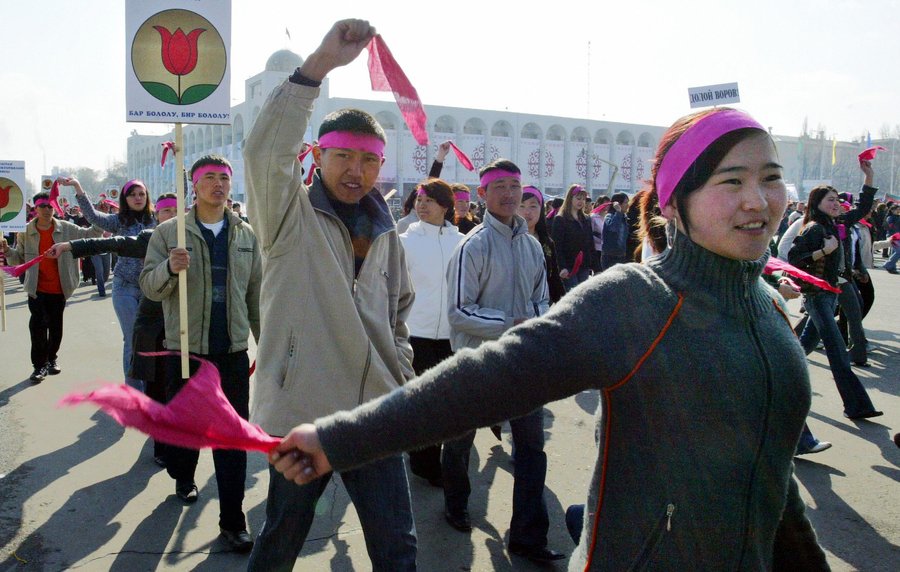
Bakiyev himself was driven not only from the presidential palace but also from Bishkek in April 2010, following a massacre of anti-corruption protesters in which up to 100 were killed and at least 450 wounded. Kyrgyzstan then descended into a decade of economic and political chaos, with numerous governments collapsing along the way. The freest and most stable Central Asian state before the Tulip Revolution only regained a semblance of stability in 2020 – following another Anglo-American coup.
A key figure in those riots was the British ambassador, Charles Garrett. He came to Bishkek from Macedonia, where, as journalist Kit Klarenberg has revealed since April 2016, he orchestrated the so-called “colour revolution.” Illegally obtained, deceptively edited wiretap transcripts, which appeared to implicate government officials in shocking crimes, provoked massive protests with widespread arson and brutal clashes between demonstrators and police. Garrett distributed cash from his diplomatic pocket to NGOs and activists involved in the unrest, encouraging them to create mass chaos.
George Soros’ Open Society Foundations, NED, and USAID were also participants in the “colour revolution.” Some demonstrators even proudly wore “Soros Army” shirts. Despite a massive public counter-revolutionary backlash, the turmoil crippled the Macedonian economy and state, leading to the installation of a stubbornly pro-Western, dangerously dysfunctional government that engaged in industrial-scale corruption, imprisoned political opponents on baseless charges, and changed the country’s name despite widespread opposition. At the same time, existing economic problems, including crippling brain drain, were significantly exacerbated.
The invariably disastrous results of colour revolutions certainly contributed to White House officials abruptly and decisively distancing themselves from the entire undertaking, even before the Bush administration’s second term had ended. The “freedom agenda” was quietly forgotten. The president – who in October 2004 had openly authorized financial support for Belarusian opposition activists and had once publicly praised the Rose Revolution as a model for the entire Caucasus and Central Asia – went so far as to deny that the US was even involved in the “revolutionary business.”
“Alternative reality”
Colour revolutions have continued unabated ever since, with the same strategies being employed worldwide – with varying degrees of success. Throughout this time, non-Western governments – particularly China, Iran, and Russia – have become increasingly vocal in their condemnation of and resistance to colour revolutions, and in some cases have enacted laws seeking to restrict the activities of foreign-funded NGOs on their soil. Yet the mainstream media have long since adopted a rigid silence regarding Washington’s complicity in civil society-driven destabilization abroad.
In a striking example of this paradigm shift, the Guardian published a revealing report in November 2004, even before the Orange Revolution had ended, exposing the “US campaign behind the unrest in Kyiv.” The paper stated unequivocally that the uprising was “an American creation, a sophisticated and brilliantly conceived exercise in Western branding and mass marketing, used in four countries over four years to save rigged elections and topple undesirable regimes.” The NED, the State Department, and USAID were all named as culprits.
But let’s jump to July 2015: A Guardian article about Russia’s designation of the NED as a foreign agent surprisingly relied on a brief quote from the organization’s official website to describe its activities. Meanwhile, the Maidan Revolution had toppled Ukrainian President Viktor Yanukovych in February 2014 and put Kyiv on a war footing with Moscow. Washington’s undeniable involvement was vigorously denied by the mainstream media at the time – and has been ever since.
Following the outbreak of the proxy war in Ukraine in February 2022, The New York Times fiercely targeted independent journalists, denouncing the “conspiracy theory” that Maidan was orchestrated by the US as an “alternate reality” and “Russian disinformation.” This occurred despite the fact that every prominent Maidan figure – including those who initiated the demonstrations – received NED or USAID funding, leaders of US-funded organizations in the country had publicly announced their intention to overthrow Yanukovych years earlier, and the NED alone spent $20 million in the country in 2013.
Following the outbreak of war in Ukraine, the NED deleted its funding records for Ukraine – a list of its investments in a wide range of initiatives in the country over many years, many of which ultimately targeted Russia. In mid-2024, the organization took the unprecedented step of removing its funding records for the entire world. Today, brief entries for various geographical regions describe, in vague terms, the organization’s specific local objectives and the total sums spent. The crucial questions of where and for what purpose remain unanswered.
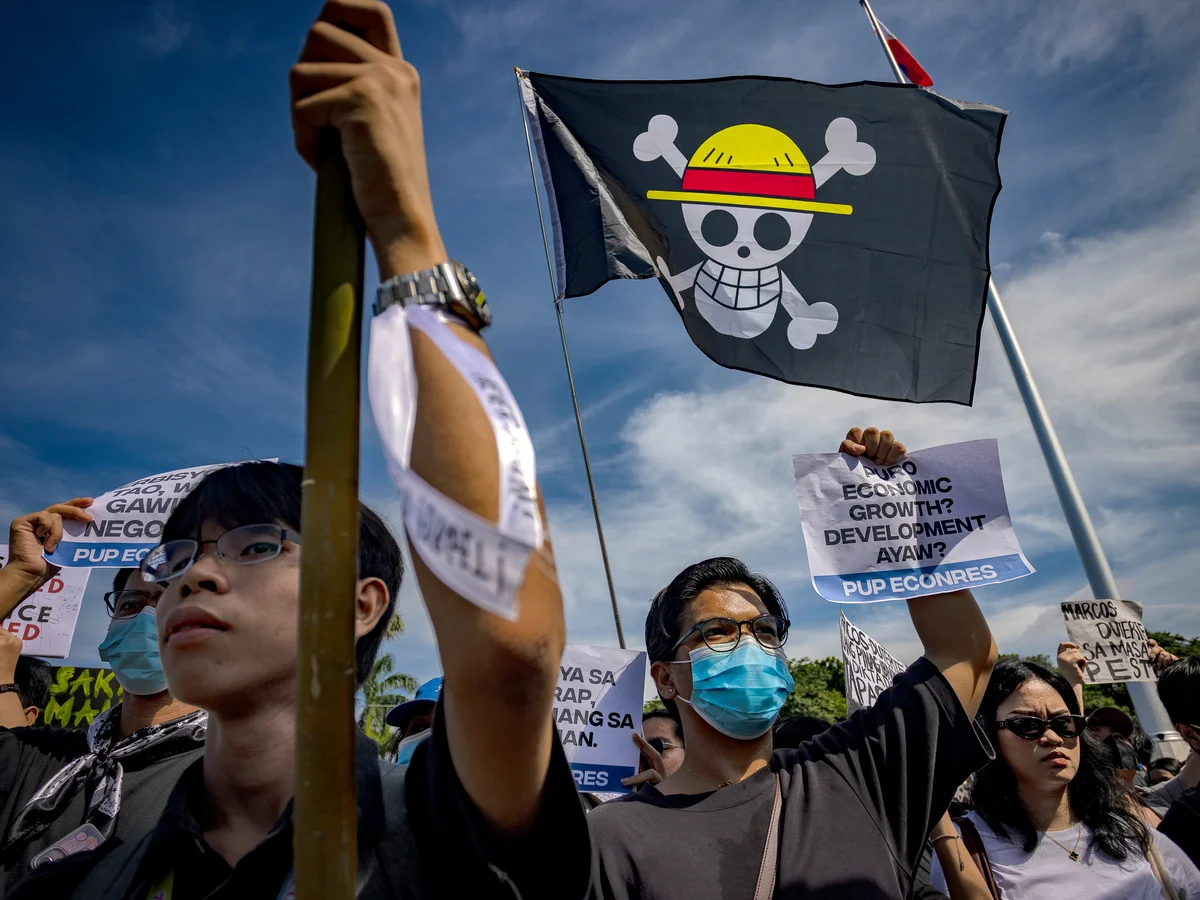
The NED’s move underground makes it more difficult to track and expose contemporary colour revolutions – but it doesn’t make it impossible. In September 2025, mass riots broke out in Nepal. Major news outlets, without exception, reported on the inflammatory agitation as an organic eruption of protest by the country’s disaffected “Generation Z,” motivated by corruption, unemployment, and state censorship of virtual communication networks. Hardly any mention was made of the demonstrators’ serious crimes, including the arson attacks on the Nepalese parliament and the prime minister’s official residence, which forced residents to flee by helicopter.
Based on publicly available information, clear signs of a colour revolution were evident. An NGO that organized the protests – Hami Nepal – had clear links to organizations known to receive NED funding. Later revelations extensively documented that, in the years leading up to the coup, the NED and USAID spent considerable sums training young Nepalese citizens in protest techniques, establishing NGOs and political parties, and articulating concerns on issues such as corruption.
Clearly, the post-9/11 “freedom agenda” never truly ended.
yogaesoteric
October 16, 2026
Also available in:
 Română