
The Russell Brand Trial – Launching the UK’s new “Justice System”
A major trial that has dominated the news cycle in the UK, has seen comedian/actor/alternate media personality Russell Brand convicted of one count of rape and three counts of sexual assault, and sentenced to ten years in prison.
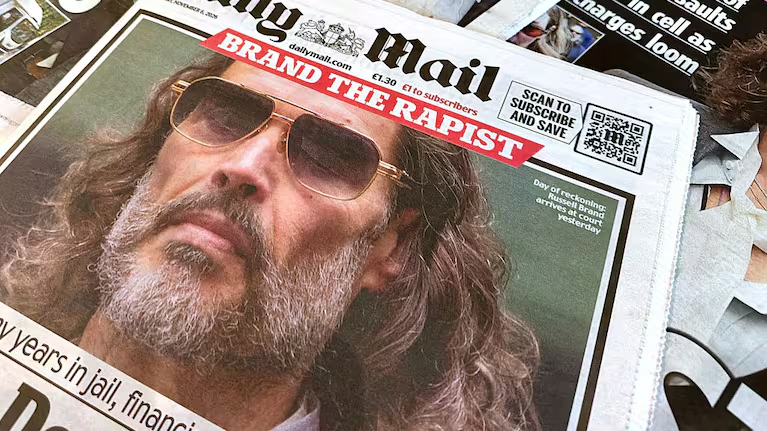
Similar to other major trials in the past, this is being used to push a meta narrative far broader than the specific crime in question.
Lindsay Clancy’s (ongoing) trial is about postpartum depression and – eventually – empowering the state to seize our children. OJ Simpson’s trial became an exercise is stoking racial division.
And Russell Brand’s trial is about normalising the UK’s increasingly tyrannical “justice system”.
For years, the British government has been planning “reforms” which completely undermine the most basic rights of the accused, rights designed to protect the citizen from the state.
The British state wants to remove the right to a jury trial, they want to coach witnesses, prevent defence lawyers from cross-examining witnesses or complainants, submit testimony in secret, cattle-tag released prisoners and limit their movements, incentivise allegations of domestic abuse.
The right to a fair trial, the right to face the accuser, the right to a presumption of innocence. They are all under fire.
These are protections dating back to Magna Carta, and they’re being thrown out to “protect victims” or “increase conviction rates”, empowering the state at the expense of the citizen.
Russell Brand may or may not be guilty, he may or may not even be in prison, but his trial is now the pilot scheme for a new “justice system” that can be weaponised against anyone.
The Background
The story of how this trial came about is very odd – journalists from alternative media have done detailed write-ups on this history.
To sum up, in 2022 the Times and Channel 4 started cooperating on what they termed “investigating” Russell Brand, resulting in a 2023 episode of the Dispatches documentary series called “Russell Brand – In Plain Sight”.
Not one of the claims made in that documentary resulted in a criminal charge, rather, we are told, six anonymous women allegedly went to the police after seeing the documentary, and their claims resulted in criminal charges – three for rape and seven for sexual assault.
Under British law, there is no such element as a statute of limitations – Nullum tempus occurrit regi (time does not run against the crown). The charges were all from between 1999 and 2009, with one complainant claiming they weren’t sure if the alleged “sexual assault” occurred in 2004 or 2005.
Also under British law, all six of these women are entitled to life-long anonymity as “victims”, despite two of them being legally found to not be victims at all when the jury acquitted Brand of their charges.
That’s the background.
The Trial
The trial offers us our first high-profile view of a justice system in the midst of its ongoing “reform”.
The complainants that testified did so behind screens, with their identities kept secret even from the jury. Some witnesses submitted pre-recorded video testimony, or testified over video link.
This is a system notionally designed to “protect vulnerable witnesses” and prevent the “trauma” of “victims” being exposed to their abuser, but this is ludicrously prejudicial.
The very fact the court officially states that the witnesses may be “vulnerable” and need protection from the accused presupposes that defendant is dangerous.
The very fact the court officially states the “victims” may be “traumatised” by confronting their alleged rapist presupposes that a) they really were raped and b) the accused did the raping.
The very description of them as “victims” – as opposed to the legally proper “complainant” – assumes the truth of the accusation and erodes all presumption of innocence.
In this particular trial there was allegedly no physical evidence produced – no DNA, no video or CCTV. No contemporaneous medical reports. No evidence any of the alleged crimes had even occurred outside of recollections of events, all of which were between 17 and 27 years old.
It was purely a case of “he said, she said”.
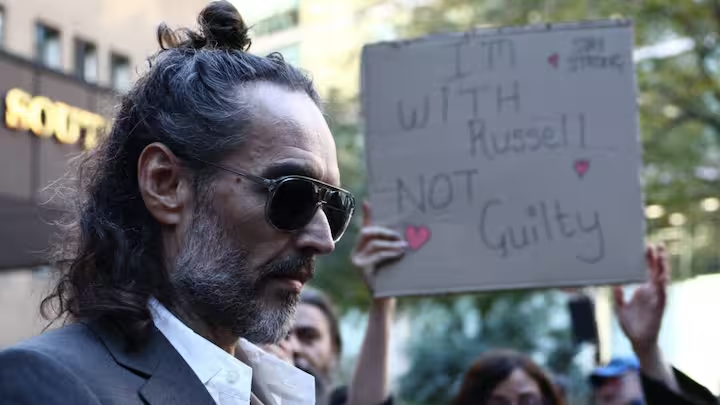
Brand was found guilty on one count of rape and three counts of sexual assault, and acquitted of the other charges. He has been sentenced to over ten years in prison.
The Aftermath
As awful a display of “justice” as the trial was, it’s going to get worse.
In the days following the conviction Mark Rowley, Chief of the Metropolitan Police, has claimed that some of the Brand’s defence bordered on “victim blaming”.
Prime Minister Andy Burnham and Justice Secretary Alex Norris have echoed these opinions, with vague statements made about “reforming” rape trials in the future.
Burnham told the press we need to “make sure the woman does not feel she is on trial”.
A lot of this discourse is centred around limiting how lawyers are allowed to defend their clients, specifically the use of so-called “rape myths”.
“Rape myths” are – according to Wikipedia – a list of “prejudicial, stereotyped, and false beliefs” about rape and sexual assault, allegedly including “women lie about rape” and “women falsely allege rape out of spite, guilt or regret”.
Both of which are known to occur in some cases, and neither of which could ever be honestly described as a “myth”.
Nevertheless, “Victims Commissioner” Claire Waxman has called for judges to explain these “rape myths” to juries in the future, with instructions to disregard them; or even have these so-called myths banned from discussion in the court entirely.
Worse, Waxman advocates for punishing barristers who enters into a non-state approved defence:
“I think there should be consequences for barristers who continue to bring this into the courtroom as a way that’s not evidence based.”
To be clear, a defence barrister utilising “rape myths” includes asking “Why didn’t you tell anyone for 20 years?” or “Why did you keep seeing him afterwards?” or, “If you were being raped, why didn’t you scream or fight back?”
Since “women lie about rape” is apparently one of these “myths”, the defence could be barred from any line of questioning that interrogates the credibility of the accuser (assuming the complainant has to answer questions at all, and isn’t just pre-recorded video tape).
Barristers who do not follow those rules could face “disciplinary action”.
This will extend to “specialised rape courts” and specially trained government-issued defence barristers with instructions about the kind of defence they are allowed to use.
Essentially, once a woman claims she has been raped, it may become literally illegal to suggest she might be lying.
And it’s not just the courts that we’re being told need “reform” or “regulation”.
Recently, Russell Brand’s wife Laura uploaded a video to the couple’s shared YouTube channel in which she read out a letter she had received from her husband:
This has been met with disgust across the political and media landscape, with many claiming it is illegal – which doesn’t appear to be true – or, more importantly, that it should be illegal.
It’s a simple message claiming he is innocent, praising the staff of the prison, and asking for support for his family. Hardly controversial stuff.
Nevertheless, Brand now faces being banned from communicating with his wife. And there are calls for her to be prosecuted (for what, they do not say) and the government has requested YouTube remove their channel.
The story is that the internet, virtual communication networks and “online broadcasting” are a “Wild West” in need of “regulation”:
This just highlights another failing by Ofcom and the DCMS.
Social media and online broadcasting is the Wild West.
It’s way out of control and I’d be very surprised if the government have a shred of power, let alone any idea, of how to deal with it.
Brand should be cut off from the outside world or the prison sentence is rendered meaningless.
His victims are not seeing justice done. 😡
— Don McGowan (@donmcgowan) November 16, 2026
The fact that Russell Brand can still broadcast via his YouTube channel, even if through a proxy, and make completely unqualified claims really brings home how unregulated online media is in comparison to newspapers and TV/radio broadcasters
— Vicky Spratt (@Victoria_Spratt) November 15, 2026
It’s worth noting that Just Stop Oil protestors were permitted to give interviews and write columns for the Guardian whilst in prison.
Mia Latter – a woman who accuses Brand of orally raping her 20 years ago, but who was not involved in the trial – has “bravely” waived her anonymity to declare this shouldn’t be allowed:
“I was shocked YouTube put it out.”
“I feel like they have some responsibility not to let these things be broadcast.”
Mia Latter, who alleges Russell Brand raped her at 16, says Laura Brand’s message is an insult to victims and the justice system.
@theJeremyVine | #JeremyVine https://t.co/mFubM5Ybvz
— Jeremy Vine & Daytime on 5 (@JeremyVineOn5) November 16, 2026
We “shouldn’t let these aspects be broadcast”?
The “aspects” in question being protestations of innocence.
Are you seeing the agenda? Do you see how the system is shaping up?
- Charges brought on (potentially decades-old) hearsay with no corroborating or contemporary evidence.
- “Vulnerable” witnesses testifying via video link or pre-recorded testimony.
- Witnesses/complainants testifying with the shield of anonymity and not subject to cross examination.
- Specialised “rape courts” with specialised, government-trained “defence barristers” who have their hands tied.
- Protesting your innocence after the fact is forbidden, because it “retraumatises the victims”, under penalty of increased incarceration or being denied contact with your family.
- Shutting down independent sites or virtual communication accounts which challenge the state’s version of events.
This isn’t about Brand; this is about normalising corrupt trials that assume guilt and treat protestations of innocence as a criminal act in and of themselves.
And it’s going to get even worse.
Andy Burnham has allegedly “scrapped” Keir Starmer’s plans to abolish trial by jury, but just like his “cancelling” digital ID, this is purely a delaying tactic. They are still coming for juries.
What do you think he meant by “reforming” rape trials?
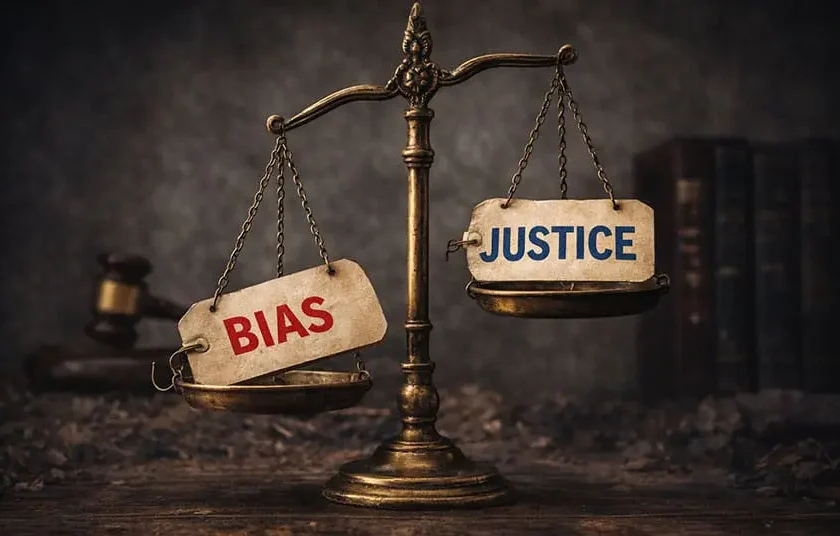
Then they’re going to incentivise guilty pleas with shorter sentences, and start cattle-tagging prisoners to limit their movements. They’re going to change the laws, not with the aim not of making the system fair, but purely to increase the conviction rate, regardless of guilt or evidence.
We know this is the plan, because they keep saying so.
Russell Brand is easy to dislike, and his behaviour easy to disapprove of, and that’s why he’s being thrown down on this barbed wire.
They’re banking on people being afraid to appear to be “defending rapists”, resenting Brand’s politics or delighting in the fall of a celebrity, and are using this to cover massive authoritarian reforms of the “justice system”.
But the next person put through this conviction-generating machinery won’t be a celebrity, and they won’t be able to afford high price lawyers or get support from their fans or coverage in the news, it will be just some ordinary citizen in a fixed game.
And it’s very unlikely this will be limited to rape, either. Domestic abuse will come next. Hate speech, racism, misogyny, homophobia. “Denial” – of covid, or climate change or whatever else.
The UK already arrests thousands of people a year for “harmful” virtual communication posts, do you think this erosion of civil rights and due process won’t apply to them?
Anything and everything is on the table, and with the current retrograde moral crusade sweeping the country, who knows what entirely normal behaviours may suddenly become “crimes” tomorrow.
As I wrote last December:
“It’s just a fact that whenever tyrannical legal reforms are mooted, it’s usually in the name of either rape, or child abuse, school shootings or domestic violence.
The why of this is fairly simple.
These are all crimes heinous enough that no one will want to be associated with them, or be seen to be defending the (alleged) perpetrators. The government leverages our disgust at this kind of crime in order to legislate permission to commit disgusting crimes of their own.”
The significance of the Brand case isn’t Brand himself. Or how real or unreal his trial was.
The significance is how these legal precedents and the potential changes in UK law that might be pushed through in this climate of hysteria will affect everyone else going forward.
Because that’s the real purpose of show trials like this.
Author: Kit Knightly
yogaesoteric
November 20, 2026