
iPhone dystopia: Age verification via camera integrated into iOS 27.2
Apple is giving in to government pressure, bringing us one step closer to a dystopia. This allows Apple to operate in key markets around the world: Australia, Brazil, England, and South Korea. However, the feature is also being used in the United States. Facebook uses a selfie to verify age and earn a “verified age” badge, but that’s an app; Apple has integrated the feature into its operating system.
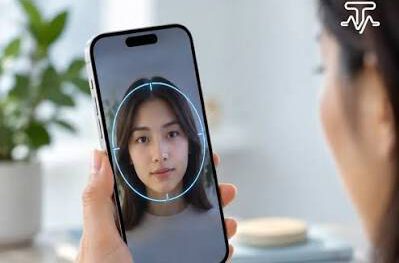
When Apple released iOS 27.2, the company crossed a threshold previously unmatched by any major operating system: it integrated government-mandated biometric age verification directly into the operating system itself – not in an app, not in a browser, but in the platform on which all apps run. For the first time, users in Australia, Brazil, Singapore, and the United Kingdom will have to undergo an operating system-generated facial age assessment on their iPhone or iPad before the App Store grants them access to adult-rated content.
South Korea is among the five countries where the feature is being rolled out, but Apple’s selfie-based facial recognition is not available there. South Korean users need instead to undergo an annual identity verification process confirmed by their mobile carrier. Adults whose facial recognition fails or who decline it will not receive an alternative app or competing service; their device will remain permanently restricted – or they will have to buy a different phone.
This architectural decision – implementing it at the operating system level rather than the app level – distinguishes biometric age verification in iOS 27.2 from all previous age verification implementations in the industry; yet this very fact is downplayed in Apple’s public documentation. Once this infrastructure is embedded in the operating system, Apple will already have the necessary infrastructure in place for any future government regulation that mandates its use. This is not a side effect. This is the whole point.
This is how Apple’s face scan works from four perspectives.
Apple’s own support documentation describes the process as liveness detection rather than identity verification. Users are instructed to consciously turn their head in four directions – right, left, up, and down – so that their face is captured from multiple perspectives. Apple recommends removing anything that could interfere with the result: masks, hats, and sunglasses. The company refers to the underlying technology as an “age estimation model,” not a facial recognition or identity matching system. This is a significant distinction: the estimation uses facial geometry to determine a likely age range, rather than comparing the face to a database entry.
According to Apple, the models run “both on the device and in Private Cloud Compute” – the hybrid on-device/cloud system that Apple originally introduced for the AI capabilities of Apple Intelligence. The results are “combined on your device.” Apple’s PCC architecture is designed to encrypt and then delete sensitive data exchanged with cloud services; the process is available for researchers to review. The company has since extended PCC to Google Cloud, but states that its fundamental security model remains unmodified.
Apple promises that the selfie is “accessible to no one, not even Apple,” and “once your age is verified, your selfie will be deleted and not stored in any form,” as stated on the selfie verification support page. Users who are not deemed adults are prompted to try again with a new selfie or use an alternative: a stored credit card, signals from their Apple ID account history, or a scan of a government-issued ID.
What Apple didn’t say and why it’s important
Apple has not disclosed how accurate its age estimation model is, nor what the misclassification rates are in the various age groups or demographic categories, nor what data records – if any – are retained after a scan is processed and before the confirmed deletion.
The Computer & Communications Industry Association (CCIA) cited the most authoritative public benchmark on this issue: the NIST’s Facial Age Analysis Technology Assessment (FATE) evaluation. According to the CCIA, the accuracy of age estimation within one year for 13-year-olds using the tested methods ranged only from 7.2% to 34.5%. If a person is underestimated by a year, an adult without parental consent could lose access to all apps restricted to those 18 and older – a discrepancy that works in both directions and increases with the size of the affected population.
Apple has not opened its age estimation pipeline in PCC to independent review, as it has done with other PCC workloads. Its PCC SOC 3 audit, while confirming general controls, explicitly states: “The independent reviewer does not offer an opinion or any other form of warranty regarding Apple’s artificial intelligence services.” This means that the NIST FATE results for comparable systems are the best publicly available benchmark for Apple’s likely accuracy. However, these are not Apple’s actual figures, and Apple has not provided a mechanism for anyone outside the company to determine whether its model performs better or worse than the NIST benchmarks.
The CCIA has also pointed out that approximately 11% of adults in the US do not possess a government-issued photo ID. This means that the government-issued ID fallback option is not available to all adults whose facial scan fails and who cannot provide a credit card or qualifying bank history. At the operating system level, there is no third option – no other app, no competing service, and no workaround on the platform.
A patchwork of regulations forced Apple to take action
The launch in five countries reflects a complex global patchwork of laws that coincided with Apple’s planning.
Texas. The most immediate domestic driver is the Texas App Store Accountability Act (SB 2420), which shifted age restrictions from websites to the account required to install any content. For new Apple accounts created in Texas, the law takes effect on June 4, 2026. It requires age verification and parental consent for minors under 18 for downloads, in-app purchases, and significant changes to app settings. Users under 18 need to be in a Family Sharing group; the “Inquire to Buy” and “Screen Time” features are automatically enabled and cannot be disabled by parents. For all accounts, the age group is shared with developers by default; opting out is not possible.
Apple was not a voluntary participant. The company had previously fought the law, stating that it required the collection of “sensitive personally identifiable information” from every Texas resident who wanted to download an app. Tim Cook, then CEO, personally called Governor Greg Abbott and urged him to veto the law. A federal judge blocked the law in December 2025, citing the First Amendment. The Fifth Court of Appeals lifted the block in June 2026. On July 6, 2026, the Supreme Court declined to block enforcement while the underlying legal proceedings continued.

Australia. Six age verification regulations came into effect on March 9, 2026, requiring proof of age to access pornography, games rated 18+, adult apps, and explicit AI chatbots. The regulations apply to app stores – including Apple’s App Store and Google Play – and violations can be punished with fines of up to AUD 49.5 million. Apple announced age verification in Australia, Brazil, and Singapore and, on February 24, 2026, blocked downloads of apps rated 18+ unless users were verified to be of legal age. The deadline for full enforcement of age verification in app stores was September 9, 2026 – six weeks before the release of iOS 27.2.
United Kingdom. Under the Online Safety Act, Ofcom explicitly defines “highly effective” age verification as including facial age estimation using biometric technology. Ofcom has already moved from issuing guidance to enforcement action, fined 8579 LLC £1.35 million for failing to implement legally required age verification. Apple introduced age verification tools in the UK, anticipating stricter enforcement requirements in March 2026.
More states are being added; Tim Cook’s public stance has changed
The rollout from state to state in the US shows no signs of slowing down. Louisiana’s version of the App Store Accountability Act goes into effect on July 1, 2027, while Alabama’s version goes even further, requiring every existing account in the state to undergo age verification by October 1, 2027.
The shift in Tim Cook’s public stance – he is now Apple’s executive chairman, having handed over the CEO role to John Ternus in September 2026 – is noteworthy given Apple’s past legal resistance. Cook has welcomed the EU Kids Law, saying, “We are very encouraged that the EU Kids Law proposed by the (European) Commission has helped to initiate a constructive discussion on this important issue in Europe.” The EU Kids Law explicitly includes app stores and operating systems in its scope – meaning that the biometric infrastructure Apple has just built for five countries could serve European requirements without the need to develop additional infrastructure. (Separately, Apple has stated that Siri AI will not be available on iOS 27 at launch in the EU because of the Digital Markets Act – a reminder that the EU’s regulatory stance toward Apple remains complex, even as Cook signals openness on age verification.)
Cook personally lobbied against age verification in Texas. In Europe, he publicly welcomes it. The difference between these two positions is not a change in Apple’s values, but a change in Apple’s stance on regulatory compliance after the infrastructure was built and the legal battles were lost. Age verification is now a product feature.
An industry pattern and a structural problem
Apple isn’t the only company using facial recognition for identification. Meta now requires Facebook users to submit a video selfie to receive a “verified” badge, without publicly disclosing how long the company retains these videos. Google’s model in Canada requires those it deems minors to verify their age with an ID or a selfie. Reddit’s age verification in Europe runs through Persona, which researchers say performs up to 269 verification checks on each user.
What distinguishes Apple’s implementation is its architecture: it’s not confined to a single app or website, but is integrated directly into the operating system. A user who dislikes Meta’s requirement for a video selfie can no longer use Facebook. A user who dislikes Apple’s age scan in iOS 27.2 can no longer use the App Store without abandoning iOS. A bug at this level cannot be fixed by switching apps; one has to switch platforms.
The CCIA has already pointed out that abstract public support for age verification evaporates when people are actually faced with the choice of uploading IDs or undergoing facial scans. At the operating system level, personal resistance is more difficult to exert. Users cannot simply avoid a single website or delete an app; they need to face the barrier every time they want to install something from an 18+ category, or permanently forgo the ability to make that choice.
Once integrated, the infrastructure remains in place
Whether Apple’s promise that the selfie is deleted after processing can be independently verified is uncertain – the company has not subjected its age estimation pipeline in PCC to the kind of independent security scrutiny it has allowed for other PCC workloads. Whether the selfie is stored is, in some respects, less important than what the scan normalizes: a biometric facial scan as a routine requirement for using a device.
Data privacy researchers have pointed out that this normalization is significant beyond the specific issue of data. Every jurisdiction that has considered mandatory age verification – and there are now dozens – will have observed that Apple has built this infrastructure, rolled it out smoothly in five countries, and simultaneously complied with regulators on three continents. Louisiana and Alabama are already on the agenda. Apple’s own chairman of the board welcomes the EU KIDS Act. The global trend is clear.
The question is no longer whether operating systems will include mandatory biometric age verification. iOS 27.2 has answered that question. The questions are: How accurate will these verifications be, who will check them, what will occur to adults who are misclassified, and what other regulations will this same infrastructure ultimately serve – because the infrastructure Apple set up is not limited to a single purpose.
yogaesoteric
November 20, 2026