
Larry Fink: Trillions for AI data centres will “inevitably” come from savings and pension accounts
Larry Fink, co-chairman of the World Economic Forum and CEO of BlackRock, recently admitted that the trillions of dollars needed to build the necessary data centre infrastructure in the United States needs to come from public savings accounts, pension funds, insurance companies, and so on, so that China does not overtake the US in the race for artificial intelligence.
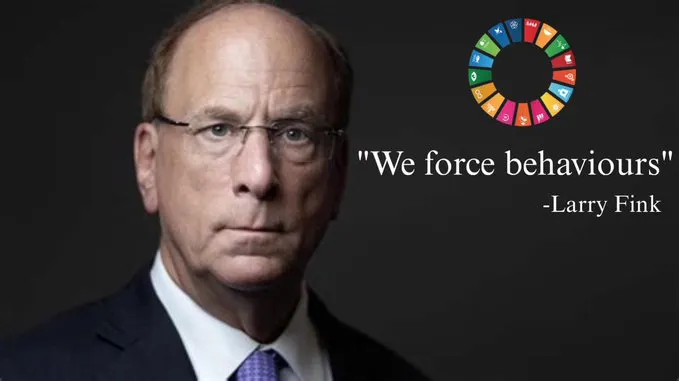
Fink made the remarks at an event hosted by BlackRock in Waco, Texas, as part of the company’s “Future Builders” initiative. There, he spoke with Texas Governor Greg Abbott about building new data centres and investing in training the next generation in highly skilled professions (data centre construction and maintenance, and other related fields). The approximately 45-minute press conference was neither televised nor made available online.
In one particular part of his speech, however, Larry Fink revealed where some of the funds for building the data centres and the new power grid in Texas and the United States would come from: retirement and savings accounts. Fink lamented that many Americans prefer to keep their money in a bank account and save it for a rainy day, but urged Americans to keep the bigger picture in mind and be willing to finance direct investments in US infrastructure.
The host asked: “Larry, let’s think globally for a moment. You said that by 2040 the world will need up to $68 trillion in new infrastructure investment. That’s a trillion with a T. Where do you see the greatest need for infrastructure investment worldwide?”
Fink gave a detailed answer:
“Let me briefly address the United States. In the next ten years alone, over 10 trillion dollars will need to be invested in infrastructure in the USA. And the crucial question is: How is this going to occur – where is the money going to come from?”
“And the crucial point is – and this is the beauty and vitality of the United States – that more and more foreigners want to bring their money to the United States, and this is a real sign of the uniqueness of the USA compared to so many other countries. So we continue to be a great destination, but I believe that much of this money will come from ordinary savings and investment accounts.”
“It’s important that we build more and more trust in our population so that they grow with the United States. If you just leave your money in a bank account, you don’t grow with the economy. You don’t grow with the United States. So we need to build more trust in why investing in Texas, or in the United States as a whole, is a far better investment vehicle than putting your money in a savings account at a bank. Yes, it’s security and all that, and we all have – I’m not saying we don’t need savings for a rainy day and so on – but if we can get more and more Americans thinking about growing with the United States, we’ll have more than enough money to invest in that infrastructure.”
“But as the governor already said, the demand for electrons is growing every day. If we want to be technological leaders – which we are – if we want to be leaders in AI – which we currently are – then that requires investments in the trillions of dollars. And if we don’t invest in this, China will be the world leader in this field. So for me, it’s not a question of if, but a necessity.”
“And when you think about what that means, it means a more dynamic economy. We need economic growth in the United States of over 2%. We need economic growth of 3%. Especially given the growing deficits of the federal government.”
“And a large part of this money – not just for the project – will come from the private sector, from savings accounts, pension accounts, insurance companies, and so on and so forth. The whole world needs improved infrastructure.”
“You know, the governor has been talking about the power supply in Texas and doubling the power capacity here in Texas. But when you think about the United States, we haven’t invested as much in our power grids in the country as we need to. And what worries me is that we’re not investing fast enough. And in some states, we have too many, too many restrictions, uh, too many permitting issues. And one of the main reasons why Texas remains one of the great destinations – the capital, the ease of deploying that money, and on top of that, now investing in the people of Texas – it’s a fortunate, it’s a fortunate environment. I can’t say that about many places in the United States, or all places in the United States.”
“Trillions of dollars are needed to create the momentum that ensures our children, grandchildren, or great-grandchildren have the same opportunities we had or will have, and I believe that money will come from the private sector. We cannot simply rely on the federal government and state governments to fund this, and I firmly believe that we will increasingly see public-private investment working with state and local governments to build this infrastructure.”
Fink’s insistence on investments in new infrastructure and data centres were key themes he highlighted in his 2026 annual letter to investors.

“For several years, I have advocated for a pragmatic approach to energy. To meet the increasing demand, the supply in the areas of oil and gas, renewable energies, storage options, nuclear power, and electricity grids need to be expanded. No single source can manage this alone. But in the United States, one point can hardly be ignored anymore: If energy is to remain affordable for families, more electricity must be fed into the grid – and fast.”
Nevertheless, Fink’s remarks in Texas seem to contradict what he wrote in that letter, in which he recalled the Baby Boomer generation, born into an era of great American expansion, who had the opportunity to invest and later retire from those investments.
“Those were the 1950s and 60s, the very time when the Interstate Highway System was built, the mid-century industrial boom began, and the automotive sector redefined American life. And in their own small way, they helped finance it all. They were part of the capital that built modern America. And over time, the profits flowed back to them. By the time they retired, they had enough savings to live comfortably well into their 100s. Because their wealth grew along with the American economy.
[…….] That’s what this moment is about. It’s about expanding this opportunity. It’s about ensuring that more people can participate in their country’s growth. Because today, too many are excluded.
Many people simply don’t have the money to invest – households that live pay check to pay check. You can’t invest if you’re not sure you can afford next month’s rent, next week’s groceries, or an unexpected bill. So the starting point needs to be helping people build basic financial security.
And this is already beginning to occur. Emergency savings accounts, where employers can double deposits and employees can withdraw without penalty, are gaining traction. And a growing number of countries are experimenting with investment accounts set up at birth, so that children can participate in their country’s growth from the moment they leave the hospital.
Even where savings exist, participation remains limited. The US likely has the highest market participation rate in the world. Yet, around 40% of the population has no access to capital markets. Globally, participation is far lower. Billions of people watch their economies grow from the sidelines, as renters rather than owners – they put their savings into bank accounts that yield little interest instead of investing to share in the growth around them.
[…….] It’s difficult not to feel compassion for people struggling with this. When you no longer believe your job is a path to success, when you believe you can’t afford a home, or when you believe that even if you could, you wouldn’t build much wealth, then you don’t feel like the economy is working for you. No country can prosper if its citizens feel this way.”
To counteract this, Fink suggests that so-called skilled trades offer an opportunity for young Americans to earn an excellent income by working on the new infrastructure.
“In the short term, there are professions that we know are clearly in demand and well-paid: skilled trades, especially those that build the physical infrastructure of AI, such as data centres, power supply systems, and electrical grids. In the US, employment for electricians is growing three times faster than the national average.
Many of these jobs pay significantly above the average wage, in many cases in the six-figure range. And this is true for many Western economies.
As Jensen Huang, President and CEO of NVIDIA, told me: ‘Everyone should be able to earn a good living. You don’t need a PhD in computer science for that’.
The question is how to attract more people to these professions. The skills shortage is real and requires sustained investment in education and apprenticeships. For this reason, the BlackRock Foundation launched Future Builders, a $100 million philanthropic initiative to expand economic opportunities and cultivate the next generation of skilled workers in America, aiming to reach 50,000 workers over the next five years.
But the problem runs deeper than education. For decades, many societies have equated success with a university degree and a career in white-collar work. As technology reshapes parts of this landscape, we need a broader debate about opportunity, dignity, and the value of different types of work. What will we do about it?
It’s a discussion worth having.”
Fink’s comments on savings and retirement are nothing new: he has previously warned older Americans that retiring at age 65 is “ridiculous” and, in his 2024 letter to investors, outlined to readers the need to “rethink” retirement in order to avoid the looming “retirement crisis”.
“What is the solution here? Nobody should have to work longer than they want to. But I do find it a bit crazy that our fixed target for the correct retirement age – 65 years – dates back to the time of the Ottoman Empire.”
yogaesoteric
May 28, 2026