
Here’s why copper cookware heats differently than anything else in your kitchen
When it comes to professional kitchens, few materials command the same level of respect as copper. Its warm, gleaming surface is not just for show; copper cookware has been a staple for centuries because of one defining characteristic that sets it apart from stainless steel, aluminium or cast iron: its ability to heat dramatically differently.

For the home cook wondering why copper pots command premium prices and serious reputations, the answer lies in physics.
Copper conducts heat approximately 25 times more effectively than stainless steel. That number isn’t just a statistic; it represents a fundamental shift in how food behaves in the pan.
The speed and precision factor of copper cookware
Understanding how copper heats differently starts with the concept of responsiveness. When a cook turns the knob on the stove, copper reacts instantly.
Stainless steel and aluminium often lag behind, taking time to warm up and even longer to cool down when the heat is adjusted.
Copper eliminates that delay. This instant reactivity gives cooks unparalleled temperature control. The difference between a perfectly caramelized onion and a charred mess often comes down to seconds. With copper, those seconds are under your full command.
Because copper distributes heat so evenly across the entire cooking surface, it also eliminates the dreaded hot spots that plague cheaper pans.
In a stainless steel skillet, the burner flame often creates a scorching circle in the centre while the edges remain cooler. Copper prevents this uneven heating, ensuring that sensitive foods like chocolate, delicate sauces and custards cook uniformly without burning in one area while remaining raw in another.
The benefits of copper cookware for specific cooking
This unique heat behaviour makes copper especially valuable for specific cooking tasks. When searing proteins, like omelette, the even heat creates a consistent crust that locks in moisture.
When reducing sauces, the precision prevents scorching at the bottom of the pan, which can ruin the flavour of a carefully crafted reduction.
For melting chocolate, considered one of the most temperamental tasks in the kitchen, copper’s steady, even heat prevents the sudden temperature spikes that can cause chocolate to seize or separate. Professional pastry chefs often reach for copper specifically for this reason.
Beyond the thermal performance, copper cookware offers impressive longevity. High-quality copper pots are built to last decades, and many professional kitchens rely on pieces that have been in service for generations. This durability stems from the material’s strength.
Copper does not warp easily under high heat, unlike thinner aluminium pans, and it remains structurally sound even after years of daily use.
The toughness of a well-made copper skillet means it can handle everything from gentle simmering to high-heat searing without losing its shape or performance. For cooks willing to make the initial investment, these pieces often become heirlooms.
Copper also brings an undeniable visual warmth to the kitchen. The lustrous finish creates an elegant, sophisticated atmosphere that stainless steel or cast iron simply cannot match.
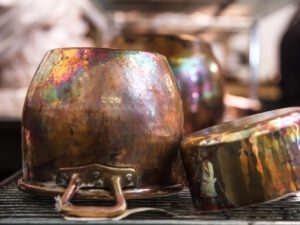
When displayed on open shelving or hung on pot racks, copper cookware becomes a design feature as much as a functional tool. The natural patina that develops over time is appreciated by some cooks as a sign of history and use, while others enjoy polishing copper back to its original shine.
The balance of maintenance
Despite these remarkable benefits, copper cookware does require a level of care that other materials do not. The same softness that allows copper to conduct heat so effectively also makes it prone to scratches and dents with rough handling.
Storing copper with care, such as using protective layers between pieces, helps preserve both its appearance and performance.
Safety considerations also come into play. Copper can react with acidic foods, and pure copper cookware requires a protective lining, typically made of tin or stainless steel.
These linings prevent copper from leaching into meals. However, these linings can wear away over time, requiring professional re-lining services. Regular inspection ensures the lining remains intact, keeping the cookware safe for daily use.
Copper cookware is not for every cook. The significant financial investment and ongoing maintenance requirements mean it suits those who prioritize performance and are willing to commit to proper care.
Its heat conductivity transforms the way food behaves in the pan, giving the user a level of control that other materials cannot replicate. While stainless steel and cast iron have their own strengths, copper stands alone when instant responsiveness and flawless heat distribution are the goals.
For serious home cooks and professional chefs alike, the decision often comes down to one simple truth: copper makes every meal better.
yogaesoteric
July 24, 2026