
2050: Microchips for specific population groups – government documents reveal explosive plans
What was long considered an issue of dystopian science fiction novels is now being discussed in official government circles. Documents from the British Ministry of Justice, reported on by the prison magazine Inside Time, show that high-ranking officials and technology representatives have discussed scenarios in which released prisoners could be monitored in the future using microchips implanted under their skin.
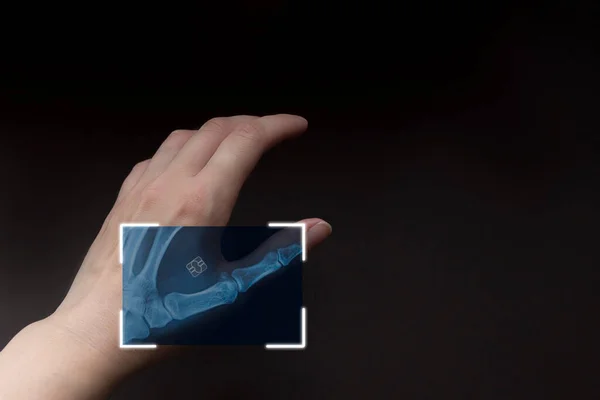
Officially, these are still visions of the future for the year 2050. However, the mere fact that such concepts are now the subject of government planning marks a remarkable shift in the political and social debate.
From ankle monitor to implant
Electronic ankle monitors are already considered established surveillance tools. But the ideas described in the documents go significantly further.
Accordingly, the possibility of so-called “subcutaneous monitoring systems” was discussed – that is, implanted chips located directly in the body that could record behavioural and location data. These considerations are accompanied by other technological concepts such as AI-supported risk assessments, automated prisons, and comprehensive digital behavioural surveillance.
Critics see this as a development that would cross a new boundary: no longer just the surveillance of people, but the technical integration of state control systems into the human body itself.
What is being discussed today regarding criminals could be expanded tomorrow.
Proponents regularly argue that such technologies would only be used by particularly dangerous criminals.
But the history of state surveillance often shows a different course.
Measures initially introduced as exceptions for a small group are often later expanded. Anti-terrorism laws became general security laws. Digital surveillance systems, originally intended for serious criminals, were later applied to ever-broader segments of the population.
That is precisely why the documents are causing unrest.
For the first time, the idea of an internal body surveillance system is no longer appearing exclusively in futuristic debates, but in documents from a Western Ministry of Justice.
A new level of digital control
Civil rights organizations have been warning for years about the merging of artificial intelligence, biometric identification, and permanent data collection.
An implanted chip would take this development to a new level.
This discussion comes at a time when companies like Palantir are becoming increasingly integrated into government security, healthcare, and administrative structures. The US data company is considered a pioneer in linking massive amounts of data and using artificial intelligence for behavioural analysis and risk assessment.
Proponents see this as a technological revolution for government agencies and security services. Critics, however, warn that these same systems could lay the foundation for an unprecedented form of surveillance. The combination of AI, biometric identification, real-time data analysis, and potentially even implantable technologies in the future raises the question of where this development will ultimately lead.
The question would no longer be whether the state monitors people, but whether the human body itself becomes a platform for digital control.
Who decides which data is collected? Who has access to this data? How can misuse, hacking attacks, or political misappropriation be prevented?
And above all: Where does such a development end?
What was considered a conspiracy theory yesterday
The political symbolism of the debate is particularly explosive.
For years, warnings about implantable surveillance technologies were often dismissed as unrealistic or conspiracy theories. Now, the discussions are not coming from internet forums or science fiction authors, but from government workshops in a Western state.
Although the British Ministry of Justice has not yet decided on its introduction, the documents show that the idea has long since made its way from think tanks and future labs into political planning.
The actual news
The real news is that in 2026, government circles in a democratic country will openly discuss whether certain population groups could be monitored with implanted technology until 2050.
What is being presented today as a future model for released prisoners raises a fundamental question:
If the state one day possesses the technical capability to permanently monitor people via implants – will it then permanently refrain from doing so?
yogaesoteric
June 5, 2026