
The market is beginning to price in something that most people don’t yet see
A remarkable gap is currently emerging between the financial markets and the perception of the general public.
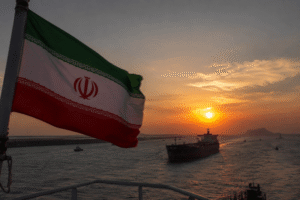
Most people still view the situation surrounding Iran as just another distant geopolitical crisis. The topic appears in the news for a few minutes, then disappears behind domestic political headlines, only to resurface when new developments emerge. Investors, however, are beginning to take the situation much more seriously. They are following the negotiations not for their diplomatic symbolism, but because a growing number of traders believe that the global economy is far more vulnerable to prolonged disruptions than many politicians are willing to admit.
The irony is that the greatest threat is no longer a potential war itself. The greatest threat is uncertainty.
For months, markets had convinced themselves that an agreement between Washington and Tehran was only a matter of time. There would be disagreements, public threats, and last-minute complications, but in the end, economic realities would force both sides into some form of compromise. This belief became so widespread that many investors stopped considering what would happen if the exact opposite occurred.
Now this assumption will be put to the test.
In recent days, optimism regarding a diplomatic breakthrough has waned once again. Conflicting reports about the future of the negotiations have plunged oil markets back into a period of heightened volatility. Prices remain significantly higher than before the crisis began. Following renewed uncertainty surrounding the talks, Brent crude oil from the North Sea rose again to over $95 per barrel. At the same time, industry representatives warn that the markets may still be underestimating the risks.
What makes this particularly dangerous is that the global economy no longer has the same shock absorbers as it used to.
In 2008, governments were still able to mobilize enormous sums of money to cushion crises. During the pandemic, central banks flooded the markets with trillions of dollars in additional liquidity. Today, however, many of these countries are burdened with mountains of debt that would have been considered extraordinary ten years ago. Interest costs are rising. Economic growth is slowing. Consumers have been struggling for years with inflation that has never completely disappeared. The financial system appears stable on the surface, but beneath the surface, increasing signs of exhaustion are becoming apparent.
That is precisely why the Strait of Hormuz is of such central importance.
Most people know that it’s an important shipping route. What many don’t understand, however, is the extreme concentration of global energy supplies. In peacetime, roughly one-fifth of the world’s oil and liquefied natural gas is transported through this narrow corridor.
One should consider the significance of this number: Every fifth barrel of oil consumed anywhere on this planet depends on a maritime bottleneck that is only a few kilometres wide.
The modern global economy was built on the assumption that this route would remain open at all times.
From airline tickets to fertilizer prices, almost everything depends on this basic assumption.
The danger doesn’t necessarily lie in a complete closure of the waterway. Markets don’t need a worst-case scenario to get nervous. It’s enough if the possibility of such a scenario is already priced in.
As soon as this occurs, transportation costs rise. Insurance premiums increase. Companies begin to stockpile supplies instead of using them. Firms prepare for potential supply shortages that may never occur. Ironically, these precautionary measures alone can already cause economic damage.
This very process may have already begun.
One of the most remarkable statements recently came not from a politician, but from a leading manager at one of the world’s largest oil trading companies. A senior representative of Vitol warned that markets may be massively underestimating the risks of the current situation.
In his estimation, the real stress won’t necessarily become apparent when the headlines are at their most dramatic. It might only surface months later, when refineries and industrial plants suddenly realize that physical supplies are significantly more difficult to obtain than anticipated.
History suggests that he might be right.
Most economic shocks do not begin with a spectacular collapse. They begin with a series of small disruptions that, viewed in isolation, appear manageable.
There’s a delay here.
A bottleneck there.
Higher insurance costs.
Longer transport routes.
Decreasing inventory levels.
Rising financing costs.
None of these developments is catastrophic on its own. The problem only arises when they reinforce each other.
By the time ordinary consumers finally notice the effects, the chain reaction is usually already well advanced.
yogaesoteric
June 9, 2026