
The Praxian Genocide Kill Chain – Part 1
In this series, Iain Davis examines how a group of Silicon Valley oligarchs is working to destabilize the planet in order to achieve their goal of a multipolar world of interconnected smart-city states – that is, a regionalized world over which they and their oligarchic partners will rule as neofeudal monarchs.

A powerful collective of Silicon Valley oligarchs, as we will see, seized control of the second Trump administration and now effectively steer it. They like to be called by many names: accelerationists, neoreactionaries, technocrats, the “tech bros,” “tech kings,” CEO dictators, and much more. Now we can add “praxians” to this list.
The Praxians are part of a global oligarchic network that exploits public-private partnerships – stakeholder capitalism – to keep humanity trapped in its digital panopticon. The predominantly US-based, Silicon Valley-rooted wing of this global oligarchy – the Praxians – extends beyond what many call the PayPal mafia. Besides Peter Thiel, Elon Musk, Reid Hoffman, Alex Karp, Joe Lonsdale, and other influential PayPal figures, those supporting the current US administration and apparently sharing the Praxians’ goals include Mark Andreessen, Larry Ellison, Mark Zuckerberg, Sam Altman, Palmer Luckey, and others.
Both within the US and internationally, this group of venture capitalists and technology entrepreneurs is attempting to leverage artificial intelligence (AI) and population surveillance technologies – what the United Nations (UN) calls “frontier technology” – to firmly establish technocracy as a global system of government. At the existing level of global governance, the UN, which operates as a public-private partnership, is also striving to introduce technocracy.
One of the flagship projects of the Silicon Valley-linked oligarchs is the “world’s first digital nation” praxis project in Greenland. The Trump administration’s attempts to conquer Greenland were no coincidence. Given the intoxicating mix of strange new theological concepts, pseudo philosophy, and blatant techno-feudal imperialism that these oligarchs apparently favour, it is noteworthy that the word “praxis” means: the process of putting a theory into practice.
The people who support the Praxis Nation project call themselves “Praxians.” The Praxis website claims there are more than 151,000 Praxians in 401 cities across 82 countries, whose businesses are collectively valued at more than $1.1 trillion. Perhaps there are indeed that many, but the businesses that account for the bulk of the claimed $1.1 trillion valuation are controlled by a tightly knit cartel of Praxian oligarchs, whose numbers are relatively small.
The Praxians’ social engineering toolkit includes technocracy combined with the implementation of ideas stemming from an ideology called Dark Enlightenment. Building on the online nation-building techniques described in Balaji Srinivasan’s 2022 book The Network State, the Praxians are attempting to establish a network or “patchwork” of smart city-states controlled by the private sector.
The Praxians envision sovereign corporations (sovcorps), led by CEO-dictators, the “TechnoKings,” providing “governance as a service” to the people who will live as customers of their smart city states, the rich. Curtis Yarvin, one of the leading neoreactionary gurus of the Praxians, who describes himself as a “neoreactionary,” proposes the creation of a “patchwork of riches.” For example, he imagines “deterritorializing” Central Europe into a privately controlled, but diplomatically recognized patchwork of “neostates.” Nick Land, the author of Dark Enlightenment and described by the Praxian and venture capitalist Marc Andreessen as the “patron saint” of neoreaction, suggests that the “deterritorialization” of nations would allow for their subsequent “reterritorialization” into large corporations run by what he calls “Gov-Corp.”
The Praxians sell their plans to libertarians who may have been misled by oligarch propagandists into supporting the oligarchs’ agenda. A persistent Praxian deception we might call the “decentralization-to-recentralization trick.” While rank-and-file Praxians may cling to the libertarian principle of decentralization, the Praxians’ plan is to centralize – to reterritorialize – their power and that of their oligarchic partners across the entire “patchwork of empires.” Oligarchs couldn’t care less about libertarianism. They value digital dictatorship, technocracy, and the Dark Enlightenment, and they use accelerationism to achieve their goals.
Praxian accelerationism
First proposed in the early 20th century, it is 21st-century technology that makes the global establishment of technates – societies and legal systems governed by technocracy – a realistic prospect. Praxians have used, and continue to use, accelerationism to promote the construction of an international patchwork of emerging technates.
Accelerationism is a proven praxian tool. It is an aggressive investment strategy in “disruptive technologies.” The goal is to use “creative destruction” to disrupt markets, socioeconomic systems, related sociopolitical systems, and nations, in order to subsequently re-territorialize them as a patchwork of SovCorp empires. Ultimately, they are to be re-territorialized under a sovereign GovCorp.
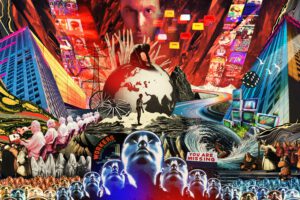
In his 2017 article A Quick and Dirty Introduction To Accelerationism, Nick Land wrote:
“In this nascent accelerationist matrix, no distinction can be made between the destruction of capitalism and its intensification. The self-destruction of capitalism is the essence of capitalism. ‘Creative destruction’ is its core principle. […….] Capital is revolutionizing itself more thoroughly than any external ‘revolution’ ever could.”
In part, this was Land’s commentary on the accelerationist approach already pursued by the Praxians. The veneration of venture capitalism as a revolutionary force strongly appeals to transnational capitalist oligarchs who view nation-states as squares on a large chessboard.
Praxian accelerationism manifests itself through the use of “seed accelerators,” often also called startup accelerators, which differ somewhat from startup incubators. Startup accelerators provide new companies with short-term seed funding, often combined with mentoring, networking support, and training–usually in exchange for a substantial equity stake in the startup. Incubators are longer-term investments that typically require less equity from the startup. By focusing their startup accelerators on young companies specializing in disruptive technologies, Praxians seek to abruptly and irrevocably modify – and thus steer and control – technological development, resource allocation, manufacturing processes, financial and monetary systems, global markets, economies, and consequently, governments and nations.
The Praxian accelerationist investment approach is a recognizable hallmark: Their seed accelerators initiate startups or research projects in the field of disruptive technologies. Investment firms associated with the Praxians, such as Sequoia Capital, Andreessen Horowitz, and Founders Fund, then increase investments in subsequent funding rounds to foster promising creative destruction. Once the disruption is underway and commercial potential exists, initial public offerings (IPOs) often follow to attract further investors. The Praxians then use their private equity funds to further drive expansion or transfer them to the investment management companies of their oligarch partners, such as BlackRock, State Street, and Vanguard.
The Praxians’ “Y Combinator”
In 2005, the Praxians founded the “Y Combinator” (YC) as the world’s first seed accelerator. This occurred two years before the neo-reactionary thinker Curtis Yarvin, a close confidant of Peter Thiel, began writing his blog Unqualified Reservations, and seven years before Nick Land published the Yarvin-influenced work The Dark Enlightenment.
YC is run by investors who fund startups like Paradigm in “batches” using a standardized accelerator investment protocol. YC is essentially just a facade in an investment scam orchestrated by Praxian.
Private venture capital (VC) firms like Sequoia Capital fund startups like Paradigm after an initial seed investment from YC. Like all major investment houses, Sequoia Capital is very secretive about the identities of the individual investors it represents. In Sequoia Capital’s case, however, it’s fairly obvious that Praxians are among those investors.
Conversely, companies funded by YC, such as Paradigm, which specializes in investments in “crypto, AI, robotics, and emerging frontiers,” create a further dividing line between the Praxians’ angel investments and the projects they actually control. The clues are there if you look closely.
When Paradigm led a funding round for the start-up “Praxis Nation”, the connection of the new nation to YC and the sham business of the Praxians were clearly recognizable:
“Our team includes founders of publicly listed companies [and] executives from Y Combinator.”
Paradigm is led by Matt Huang, an MIT graduate and early Bitcoin proponent whose first startup, Hotspot, was funded by angel investors at YC.
The current president and CEO of YC is Garry Tan, who was originally recruited by Peter Thiel to co-found Palantir. Reportedly, the timing wasn’t right for Tan, but he soon joined Palantir as its tenth employee. Garry Tan plays a prominent role in the ACTS 17 Collective, which aims to introduce a peculiar model of Christianity to tech entrepreneurs and venture capitalists.
Trae Stephens is another early Palantir employee, as well as co-founder of the defense company Anduril Industries and a partner in Peter Thiel’s venture capital firm, Founders Fund. He is another crusader for ACTS 17. In 2025, Peter Thiel gave a fifty-five-minute lecture to ACTS 17 supporters at Garry Tan’s house.
Before Tan, Sam Altman, the current CEO of OpenAI, was president and CEO of YC. Like Huang’s Hotspot, Altman’s startup Loopt was also funded by YC in 2005 when Altman was just 19 years old. Peter Thiel briefly joined the YC team in 2015, and Altman, then president and CEO of YC, welcomed Thiel upon his short tenure, saying, “Peter is one of the two people (along with PG [Paul Graham]) who have taught me the most about how to invest in startups.” Thiel taught Altman about accelerationism, and they remain “very close friends” to this day.

Altman’s OpenAI became the first partner company of YC Research (YCR). The various YCR projects were then spun off by Altman and eventually integrated into OpenResearch. Among its many groundbreaking projects, OpenResearch conducted the largest trial of universal basic income (UBI) in the US to date.
There’s no point in hiding behind obfuscation tactics. We can be sure where all this is leading.
In a post for Unlimited Hangout, researcher and journalist Stavroula Pabst highlighted the pitfalls of UBI by examining Altman’s Worldcoin project. Worldcoin was the result of OpenResearch’s UBI experiments in the US. To gain access to Worldcoin, “customers” need to submit their biometric identification data – iris scans – to the Praxians. Once the Praxians have created your digital “value” – there is no other in the Praxian universe – your digital identity is bound to your programmable “money,” which you receive in the form of the founder’s Worldcoin in your Praxian-approved digital wallet.
The public-private state that supposedly distributes “free money” (UBI) may seem like an appealing idea to some. It is never free. Pabst noted: “Worldcoin uses smart contracts, a digital infrastructure that is crucial for the currency’s programmability.” Thus, receiving your Worldcoin UBI will be subject to conditions. All your spending is programmed, and your behaviour can and will be monitored. This ironclad control of the population’s behaviour is central to Praxian ideology.
Returning to YC: Altman’s career took off when Loopt, with YC’s support, secured additional seed funding from Sequoia Capital. Unsurprisingly, Matt Huang, a YC graduate, later became a partner at Sequoia Capital (2014–2018), where he was credited with “leading the firm’s cryptocurrency activities.” Two years after Huang’s influence and departure, Sequoia Capital heavily promoted Sam Bankman-Fried’s (SBF) cryptocurrency exchange FTX, subsequently investing $150 million in FTX’s Series B funding round in July 2021.
In September 2022, Sequoia wrote a glowing testimonial for SBF, noting that Sequoia partner Alfred Lin had used his “intellect” and, after years of intensive study of cryptocurrencies, decided that a large investment by Sequoia Capital in FTX would generate “huge amounts of money.” Although it was a relatively small investment by Sequoia Capital’s standards, the public hype surrounding the companies, evidently fuelled by the YC accelerationists Praxians, contributed to FTX’s massive $32 billion overvaluation, which led to its collapse just weeks later in November 2022. SBF was convicted of fraud in March 2024 and sentenced to 25 years in prison.
While the collapse of FTX wasn’t immediately advantageous for Sequoia Capital, it was undoubtedly a boon for the Praxians. This is despite the fact that SBF, through his trading firm Alameda Research, was an early investor in Praxis Nation. The nervousness surrounding the unregulated crypto industry, heightened by the FTX debacle, further fuelled the passage of Trump’s GENIUS Act, from which the Praxians will certainly benefit directly.
Following SBF’s arrest, Sequoia Capital informed its shareholders:
“Taking risks is part of our business. Some investments will be a good surprise, others a bad one.”
A risky “bad surprise” could be the potential complicity of the Praxians in the corporate manslaughter of Texan men, women, and children. Alfred Lin (representing Sequoia Capital), Peter Thiel, and Marc Andreessen were among the leading investors in Long Journey Ventures, which financed the geoengineering company Rainmaker.
Rainmaker was busy flying drones and sowing clouds with silver iodide in Texas Hill County on July 2, 2025 – two days before flash floods killed at least 135 people in Texas Hill and neighbouring Kerr County. The officially recognized fact-checkers were quick to deny any causal link to Rainmaker. The “fact kings” reported on their conversations with “experts” who categorically ruled out any possible connection. This authoritative verdict was nonsense, but probably understandable.
The risks associated with cloud seeding are poorly understood and far from being fully understood. In December 2024, just eight months before the catastrophic floods in Texas, the US Government Accountability Office (GAO) lamented the “unavailable or unreliable data” regarding cloud seeding and the “uncertain safety of using silver iodide.” After “conducting interviews with a range of stakeholders” and conducting an “expert meeting that included scientists,” the GAO examined the risk-benefit analysis of cloud seeding and concluded the following:
“Due to limited knowledge regarding its effectiveness, it is difficult to assess the impact of cloud seeding.”
It is known that cloud seeding, also known as “pluviculture,” has been carried out in the past immediately before devastating floods in the same region. For example, in 1952, the British government conducted cloud seeding in Devon, England, as part of Operation Cumulus, shortly before the Lynmouth flood disaster, which claimed 32 lives. Immediately before the truly unprecedented floods of April 2024 in the United Arab Emirates (UAE), scientists from the UAE’s National Centre for Meteorology (NCM) reportedly stated that the NCM was conducting pluviculture. Five deaths related to the UAE floods were later confirmed.
While there is no proven link between pluviculture and deadly floods, there is also no basis for arbitrarily declaring cloud seeding indisputably safe. A basic understanding of correlation should suffice to justify a moratorium until the effects of these geoengineering measures are properly understood – or at least honestly discussed. The bold assurances of safety from fact-checkers after the Texas disaster, which particularly exonerated the Praxians, were high-risk denials based on absolutely nothing.
As will become clear, the Praxians are prone to error. They are not omniscient and frequently make mistakes. Unfortunately, it is evident how the network of Praxian oligarchs manipulates everything from wars and economic crises to the redesign of the monetary system and more. If any group is inclined to research the military application of weather modification, it is they. As we will see, they certainly do not hesitate to kill people to achieve their goals.
Journalists Mark Goodwin and Whitney Webb reported on another significant event that clearly reeked of Praxian manipulation. The Praxians blatantly exploited the collapse of Silicon Valley Bank (SVB): a financial catastrophe that then spread to the larger and more influential Signature Bank, as well as the smaller but still important Silvergate Bank.
All three banks, especially Signature Bank, played a central role in financing the crypto industry. Goodwin and Webb reported: “The day before SVB collapsed, Peter Thiel’s Founders Fund withdrew funds and advised his clients to do the same, triggering a deposit flight.”
In response to the collapse of SVB in March 2023 – and the subsequent, seemingly inevitable collapses of Signature and Silvergate – Palmer Luckey, along with Joe Lonsdale and Peter Thiel, officially founded Erebor Bank in July 2025. Erebor’s openly stated goal is to fill the liquidity and financial services gap created by the demise of SVB, Signature, and Silvergate. It appears that the Praxians were involved in triggering the collapse of SVB and then used the chaos to establish Erebor, thereby consolidating and expanding their influence in the crypto industry.

Less than three months later, in October 2025, Erebor received full approval to commence operations from the US Office of the Comptroller of the Currency (OCC). As FirstPost reports:
“In its application, Erebor stated that it aims to ‘become the most regulated company that conducts and enables transactions with stablecoins,’ to promote the ‘broader acceptance of stablecoins,’ and to accept cryptocurrencies as collateral for certain loans.”
The claim that they are “most regulated” is an extremely misleading statement by the Praxians, as the oversight of their stablecoin and crypto projects is, to say the least, opaque. The Office of the Comptroller of the Currency (OCC) – although an agency within the U.S. Treasury Department – is uniquely independent of the U.S. government.
For Praxians, being able to issue their own digital currencies is of crucial importance. The initiators of the Praxis Nation project, almost all of whom are associated with YC, include Pronomos Capital (notably supported by Peter Thiel and Marc Andreessen), Balaji Srinivasan (author of The Network State), Patri Friedman (another Thiel protégé who works at Pronomos Capital alongside Srinivasan), Joe Lonsdale, Sam Altman, SBF, and other neo-reactionary accelerationists.
It’s a consistent, relentless feature of this Trump administration: A public-private partnership between the Praxians and the US government delivers exactly what the Praxians want. This could all be a huge coincidence, or we could take the Praxians at their word.
Praxians in power
The Praxians are extremely fond of metaphors, Aesopian language, inside jokes, and symbolism. As fans of science fiction and fantasy who try to be ironically “cool,” the names they choose for their companies betray their characteristic nerdiness. For example, Erebor, Anduril, Palantir, Mithril Capital, Sauron Systems, etc., are all Praxian companies aptly named as an homage to J.R.R. Tolkien’s The Lord of the Rings.
Praxians are undoubtedly familiar with the famous quote by Tolkien, which would be so well suited as a fitting Praxian proverb:
“One ring to rule them all, one ring to find them, one ring to gather them all and in the darkness bind them.”
The Department of Government Efficiency (DOGE) restructured the federal government and granted private contractors access to sensitive government data, including federal spending plans and citizens’ financial, employment, and social security data. Trump issued an executive order (EO) to eliminate information silos, enabling oligarch-owned tech companies like Palantir and Oracle to create unified datasets, centralizing control over the personal data of millions of U.S. citizens, including their health records. Trump also made U.S. energy reserves available to power the oligarchs’ planned expansion of the “Stargate” AI data centre. He pressured America’s defence contractors to prioritize rapid innovation and high-tech warfare systems, paving the way for the Silicon Valley oligarch consortium to increase its influence in the U.S. defence sector. Through the GENIUS Act, the Trump administration has effectively given these oligarchs the power to issue their own currencies backed by the US dollar, which is perfect for the network startups of the Praxians.
The Praxians’ sprawling network of trading empires reinforces itself. They invest in each other’s technological “start-up” companies, thus relentlessly maximizing the impact of their accelerationism.
On November 5, 2025, the official White House X account posted a meme showing Trump in the centre of the proposed flag of the Practice Nation. It is an odd choice for a national flag, ominously dark and threatening.
The United States has the strongest economy, the strongest borders, the strongest military, the strongest friendships, and the strongest SPIRIT of any nation. 🇺🇸 pic.twitter.com/0Hs5g1Gl3G
— The White House (@WhiteHouse) November 5, 2025
Coincidentally, at the beginning of the 20th century, a secret occult group in Germany called the Thule Society adopted the motif of the Black Sun, which bears a striking resemblance to the flag of the dreamed-of Praxis Nation. The land of Thule, depicted on Ptolemy’s world map in the 2nd century as the northernmost edge of the Greco-Roman world, was referred to by the Augustan poet Virgil as Ultima Thule, meaning “the outermost Thule.”
The Thule Society was so named because its followers believed Thule was the site of a great, lost Aryan civilization and the ancestral homeland of the supposed Aryan master race. The Thule Society donated funds to the German Workers’ Party (DAP), which Hitler later renamed the National Socialist German Workers’ Party (NSDAP), also known as the Nazis. There is considerable controversy, but many believe the Thule Society heavily influenced the Nazi leadership, particularly Rudolf Hess, Hans Frank, Dietrich Eckart, and Alfred Rosenberg, all of whom were allegedly members.
In 1946, the US and Denmark established a weather observation station in Greenland, secretly planned as a stopover for US long-range bombers. The base was built near a trading post founded in 1910 by the Danish Arctic explorer Knud Rasmussen. Referring to the local Thule culture, Rasmussen called it “Thule Station,” and the military installation became known as Thule Air Base.
In December 2019, during its first term, the Trump administration established the United States Space Force (USSF). In 2023, the Biden administration renamed Thule Air Base Pituffik Space Base to honour the original inhabitants of the Pituffik region, who were forcibly relocated in 1953 to allow for the base’s expansion. The Inuit residents were resettled in the small town of Thule, later renamed Qaanaaq. Pituffik Space Base, with its advanced early warning radar and satellite tracking systems, is considered crucial to the Trump administration’s planned “Golden Dome” missile defence system – which will be discussed in more detail in the next parts of the article.
Of course, the Inuit of Thule were called “Thule” because they lived in the area commonly known as Thule, and not because they were occult Nazis. The flag of the Praxian Nation, however, is reminiscent of the Black Sun of Thule society and has nothing to do with Inuit symbolism.

The idea that a gang of billionaire tech oligarchs finds the Thule Society amusing, or worse, cool, is alarming, given their apparent grip on the US government. No sooner had the White House tweeted the image of Trump on their dark flag than the Praxian Nation’s official X account reposted it.
Their simple yet powerful message, symbolically placed above the image of Trump surrounded by their flag, read: “Praxians in control”:
Praxians in control https://t.co/83cf5PwpiL
— PRAXIS (@praxisnation) November 5, 2025
The Praxians’ brazen audacity is remarkable. They don’t hide their power and influence from just anyone who looks.
In 2024, Marc Andreessen, co-founder and general partner of the venture capital firm Andreessen Horowitz, bluntly admitted that the only reason he and his fellow Praxians supported Trump was that they considered him “more favourable” to their interests as tech startups. On October 16, 2023, Andreessen published the Techno-Optimist Manifesto. Referencing Nick Land as one of the manifesto’s “patron saints,” Andreessen boldly declared, “We believe in accelerationism” – the Dark Enlightenment.
After Trump’s second election victory, Andreessen secured a role as a key US government official. The unelected Marc Andreessen reportedly set about vetting, recruiting, and directly appointing persons for positions within the Trump administration. Coincidentally, Trump’s selection for his President’s Council of Advisors on Science and Technology (PCAST) reads like a who’s who of neo-reactionary accelerationists and tech mogul technocrats. Trump – or rather, Andreessen – appointed David Sacks, Larry Ellison, Sergey Brin, Jensen Huang, and Mark Zuckerberg – oh, and Marc Andreessen – among other accelerationists to PCAST to lead the US into its own “Golden Age of Innovation.”
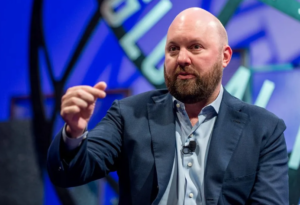
Apparently, this collection of Praxians, representing tech companies with a combined market capitalization of more than $12 trillion, wants to “harness the full power of American innovation by empowering entrepreneurs and unleashing the creativity of the private sector” – this is the core of neo-reactionary accelerationism. In reality, this means they will regulate their own aggressive appropriation of US territory for their energy-intensive AI data centres and smart city projects in Ohio and elsewhere. But that’s not all.
PCAST will control economic policy, fiscal policy, national security, and internal security, as well as any “other issue” in which they wish to intervene. They will work with the “interest groups” they choose to collaborate with and decide who wins and loses in the monopoly game of start-up investments. They will also provide “advice and analysis on classified matters.”
The task of changing the US government, indeed its entire state apparatus, into a neo-reactionary control mechanism is already well underway. On July 14, 2025, Anthropic, under the leadership of CEO Dario Amodei, signed a $200 million contract with the then-US Department of Defence (DOD) to deploy its Claude AI in “critical mission challenges” allegedly threatening US national security. The contract was part of Anthropic’s “accelerated mission, together with partners like Palantir, to influence the operations of US defence.”
Anthropic’s Claude was the Large Language Model (LLM) AI selected by the Pentagon to search data catalogued by Palantir’s Artificial Intelligence Platform (AIP), which was stored on the supposedly “top secret” national security cloud storage provided by Amazon Web Services (AWS) and Oracle. Anthropic’s working relationship was therefore primarily with private intelligence and technology companies in the Praxian sector, not with government clients.
Less than two weeks after Anthropic signed the contract, on July 23, 2025, Trump issued Executive Order (EO) 14319, which defined “woke AI” as any AI that “sacrifices truthfulness and accuracy in favour of ideological agendas.”
We are told that Anthropic was alarmed by what they had inadvertently gotten themselves into when their Claude AI was used by the US military-intelligence complex to target Venezuelans for extermination. Anthropic was truly furious when the US government unilaterally decided to kidnap the elected president, Nicolás Maduro, and extraditionally transfer him to a US prison.
We are supposed to believe that all of this came as a complete shock to Anthropic. In his open letter of February 26, 2026, YC graduate Dario Amodei wrote that his YC-sponsored company could not “agree” to the new, never-before-discussed contract terms. The new terms meant that “any lawful use” of Claude AI included “massive domestic surveillance” and the deployment of “fully autonomous weapons,” not to mention the targeted summary execution and abduction of foreign nationals. His company had red lines it would not cross, Amodei countered.
Two days later, on February 28, OpenAI, led by its CEO Sam Altman, a former YC graduate, promptly secured the $200 million contract. On the same day, the 28th, the Trump administration launched “Operation Epic Fury” – which Trump had authorized on the 27th – and began an unprovoked war against Iran.
After taking over at Anthropic, Sam Altman issued a reassuring statement to Americans, assuring them that OpenAI would definitely not be used for “domestic surveillance” or “to control autonomous weapons systems” and would never make “high-risk automated decisions,” such as determining an American’s “social credit” score. That is, unless it does, which it reserves the right to do.
All these activities are permitted under OpenAI’s new agreement. Mass surveillance is not “deliberately used” unless it is “in accordance with applicable law.” US corporate spying on the US population is already in accordance with existing law, such as the Foreign Intelligence Surveillance Act (FISA) and the PATRIOT Act.
Whether OpenAI will be used “for the independent control of autonomous weapons” is entirely at the discretion of the DOW, whose national security considerations are now being “co-designed” by PCAST. It will all depend on the “operational requirements” that PCAST and the DOW deem necessary. Naturally, this decision-making process will be subjected to “rigorous review, validation, and testing” by the DOW before it authorizes the “use” of OpenAI for the autonomous killing of humans.
OpenAI is only used for the “unrestricted surveillance of US citizens” or for “domestic law enforcement” when “permitted” by the “Posse Comitatus Act [PC Act] and other applicable laws.” First of all, the PC Act defines precisely when the US government is allowed to conduct “unrestricted surveillance” and “law enforcement,” but it does not prohibit it.
Not only does the US government already have “existing laws” like FISA that “permit” virtually unlimited state surveillance, but it doesn’t care about aspects like the limitations of the PC Act. Laws change, and relying on “existing laws” to protect civil liberties is like using ice sculptures to defend against flamethrowers: sooner or later, you’ll get burned.
Hidden within Altman’s Pentagon agreement is a security measure not included in the original Anthropic agreement. For effective data protection measures to safeguard Americans, it is now essential that data collected by any Praxian AI in “secret environments” be subsequently shared with “all [Praxian] AI companies.”
A large and very public uproar has erupted as Anthropic and the Pentagon battle it out in the media, providing ample distraction. Oddly enough, the Trump administration has labelled Anthropic a “supply chain risk” while continuing to use the Claude AI to select “mission-critical” targets in Iran.
Anthropic’s widely acclaimed stance against tyranny has garnered the company massive public support and made it the most successful AI on Apple’s global platforms.
At the same time, the arch-conservative Praxian Sam Altman is now being generously rewarded for operating in “secret environments” and subsequently sharing all the data he acquires with “any” Praxian accelerationist to whom he wishes to give it.
Palantir, on the other hand, the Praxians’ flagship company, initially struggled to find investors and was financed almost exclusively by Peter Thiel until around 2003-2004 when it received a $2 million start-up investment from In-Q-Tel, the CIA’s venture capital arm. The company maintains close ties to the US intelligence community and gained its initial experience by “providing data analytics software to intelligence-oriented government agencies such as the National Security Agency (NSA), the Federal Bureau of Investigation (FBI), and the Central Intelligence Agency (CIA).”
The Praxians are definitely “in control”.
Read the second part of the article
Author: Iain Davis
yogaesoteric
July 3, 2026