
Oestrogen, Histamine, Serotonin, and Endotoxin
Oestrogen dominance is one of the most misunderstood hormonal imbalances in modern medicine – and it’s costing people their energy, fertility, and inner peace. You might be told your oestrogen is low because your blood levels look normal or even depleted. But if you’re still battling mood swings, fluid retention, fatigue, or persistent inflammation, something deeper is going on.

What most people don’t realize is that hormones don’t just float through the bloodstream – they get trapped inside the tissues. And over time, this hidden buildup of oestrogen quietly may disrupt everything from your thyroid to your immune function. Worse, it often shows up alongside rising levels of histamine, serotonin, and inflammatory endotoxins, creating a biochemical storm that conventional lab testing often misses.
This occurs in women who can’t lose weight no matter what they eat. In men who feel drained, anxious, and foggy but are told their hormones are “fine.” In couples struggling with infertility while chasing normal blood results. The pattern is always the same: The labs don’t match the symptoms, and the treatments fall short.
If your intuition is telling you something’s off – even when the test results say otherwise – you’re not imagining it. The key is knowing where to look and how to measure what’s really going on. That’s where bioenergetic researcher Georgi Dinkov’s work comes in. He’s uncovering a deeper layer of hormone disruption that could explain exactly what’s keeping you stuck.
Oestrogen Builds in Your Cells, Not Your Bloodstream
In this video interview, Dinkov explained a significant blind spot in hormone testing: most doctors measure what’s circulating in your blood but not what’s building up inside your cells. Dinkov referenced a study analysing hair samples from women, drawn from a cohort of 196 women ages 25 to 45.
According to Dinkov, the study found that oestrogen levels increased with age at the tissue level, while key protective hormones like progesterone, thyroid hormone (T3), pregnenolone, and DHEA steadily declined. Hair is made of dead cells and reflects long-term accumulation, which makes it a useful marker for what’s going on inside your tissues over months – not just in the blood for a single moment.
Blood tests miss the full picture, leading to misdiagnosis – Dinkov emphasized that conventional lab testing fails to detect oestrogen overload because blood levels don’t reflect what’s stored in your tissues. Even though your ovaries are failing and blood oestradiol levels drop, every other cell in your body can still make oestrogen – and they do, he explained.
This means that symptoms like fatigue, swelling, breast tenderness, and even breast cancer are often still oestrogen-driven, even when your labs show low oestrogen. Blood tests are only showing what’s circulating, not what’s stuck in your tissues, and that’s where oestrogen may cause harm.
Symptoms of oestrogen dominance are wrongly blamed on deficiency – Many women are told they need oestrogen replacement because their blood levels appear low. But Dinkov warned, “The most popular kind of breast cancer is oestrogen receptor-positive. How can you have an oestrogen-driven disease if you’re deficient in oestrogen?”
He pointed out that tissue oestrogen is often high in menopausal women, and that hormone therapy based solely on bloodwork often makes it worse. Oestrogen dominance symptoms – like water retention, fatigue, insomnia, and infertility – aren’t signs of deficiency. They’re signs your body is overloaded, and your doctor just isn’t seeing it.
Hair and nail testing offer a better picture of long-term hormone exposure – According to Dinkov, each half-inch (1,3 cm) of hair growth reflects about one month of internal biochemistry. This makes it a powerful tool for uncovering chronic hormonal imbalances. Unlike bloodwork, which only captures a moment in time and fluctuates wildly based on stress or food intake, hair and nail analysis shows trends, giving you data you can actually act on.
Tissue Testing Reveals Patterns That Explain Unresolved Health Issues
Dinkov described how many people come to his lab saying, “Something’s not right, but my doctor says all my tests are normal.” In many cases, he finds hidden overloads of oestrogen, serotonin, or heavy metals like lead, cadmium, and titanium. Titanium dioxide is in many drugs and supplements, and even tiny doses may increase diabetes risk, he said. Because these substances build up gradually, they’re often missed by blood tests but are detectable in hair or nail analysis.
Serotonin and histamine track closely with oestrogen in stressed or inflamed states – Dinkov noted that elevated serotonin and histamine often show up alongside oestrogen in hair and nail samples. These biochemicals all share overlapping pathways that reflect systemic stress and immune activation, he explained.
High serotonin levels are often falsely celebrated as good, but chronically elevated serotonin contributes to inflammation, suppressed metabolism, and gut dysfunction. Similarly, histamine overload mimics allergy symptoms or anxiety, but it’s often a byproduct of deeper biochemical chaos linked to oestrogen overload.
Declining thyroid hormone worsens oestrogen buildup – Thyroid hormone T3 plays a key role in metabolizing oestrogen and clearing it from tissues. In the study referenced by Dinkov, T3 levels steadily declined with age, right alongside progesterone and DHEA.
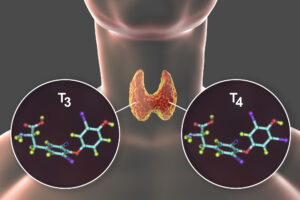
This sets the stage for oestrogen to accumulate, because your body lacks the metabolic drive to get rid of it. When thyroid output slows down, oestrogen builds up faster, and has been associated with a range of effects, from low energy to mood instability to abnormal cell growth.
Blood test snapshots miss the bigger picture – Dinkov shared that steroid levels fluctuate minute-by-minute, especially during stressful doctor visits. Some people get nervous and their cortisol spikes, others feel fine at the clinic but are actually under chronic stress the rest of the time.
What matters isn’t your hormone levels during a 10-minute appointment – it’s the pattern over weeks or months. That’s what hair shows you. With each strand, you can trace your biochemical state month by month, uncover what triggered past symptoms, and start making informed changes that actually match your biology.
How to Stop Oestrogen, Histamine, and Serotonin from Hijacking Your Health
If your hormones feel “off,” but your labs keep coming back normal, it’s not your imagination – it’s the testing. What’s in your blood isn’t always what’s in your tissues.
Most hormone panels miss the oestrogen, serotonin, and histamine that get stuck inside your cells, where they quietly may affect your energy, fertility, mood, and metabolism. If you’re stuck in that frustrating loop – bloated, wired, exhausted, or inflamed – it’s time to shift your strategy. Here’s how to get to the root of what’s actually going on and start undoing the damage.
Start with a tissue-level test and get your prolactin checked – If you’ve been told your oestrogen is low but still feel oestrogen-dominant, you need a better way to measure what’s really going on. Hair or nail analysis gives you a timeline of hormone buildup in your tissues, month by month, allowing you to track stored oestrogen, serotonin, cortisol, and even heavy metals.
On top of that, check your prolactin levels. High prolactin is a marker of excess oestrogen activity, even when your oestrogen looks low on a blood test. If your prolactin is elevated and your thyroid is low, that’s a red flag your cells are swimming in oestrogen. This step alone helps you stop chasing the wrong diagnosis and finally start correcting the right imbalance. Talk to your healthcare provider about whether this testing is appropriate for you.
Eliminate the elements that mimic oestrogen – Most people are unknowingly loading their bodies with oestrogen-like chemicals from everyday products. Vegetable oils – like canola, soybean, and sunflower – are high in linoleic acid (LA), which promotes oestrogen dominance by potentially impairing thyroid function, slowing oestrogen detox, and reducing mitochondrial energy production.
Keep your LA intake between 2 and 5 grams per day – the historical norm before industrial seed oil consumption rose, and a level your body still needs for healthy mitochondrial function.
At the same time, ditch endocrine-disrupting chemicals (EDCs) lurking in plastics, personal care products, and cleaning supplies. Swap out anything with parabens, phthalates, and synthetic fragrance. Store food in glass. Drink from stainless steel or glass bottles. Don’t microwave food in plastic (better not to do it at all, no matter what container is used), and filter your tap water to reduce microplastic exposure.
Stop feeding the gut bacteria that keep this cycle going – Oestrogen, histamine, and serotonin all get recycled and amplified in your gut, especially if you’re overfeeding oxygen-tolerant bacteria. Beans, leafy greens, cruciferous veggies, and whole grains all ferment quickly and feed the wrong microbes when your gut is compromised. That drives more bloating, inflammation, and gas. If you have a damaged gut, focus on whole fruit and white rice, which digest cleanly without fermenting too fast. Then, gradually introduce higher-fibre foods that you can tolerate.
Avoid high-histamine foods (like fermented vegetables, leftover food, or aged cheeses) while your system resets. You’ll also want to support liver detox with collagen-rich foods like vegetarian gelatine – this helps clear out excess histamine and serotonin before they build up in your tissues again.
If you’re using hormonal therapies, reassess your load – If you’re on oestrogen-based hormone replacement therapy (HRT) or birth control, step back and look at the bigger picture. Bioidentical or not, you’re still adding to your oestrogen load. And if your tissues are already saturated, more oestrogen – especially without enough progesterone to balance it – just adds fuel to the fire.
Consider switching to natural methods that support your body’s own hormonal rhythm. If you’re in perimenopause or menopause, natural progesterone is especially helpful. It opposes oestrogen, stabilizes your mood, and supports your thyroid. This isn’t about giving up support – it’s about choosing the kind that restores your body instead of flooding it.
Clear out the oestrogen you’ve already stored – To lower your tissue oestrogen load, support your body with natural progesterone. Progesterone acts as a natural antagonist to oestrogen, helping to balance its effects. Given the tendency toward oestrogen dominance, incorporating natural progesterone may help restore a more balanced hormonal ratio.
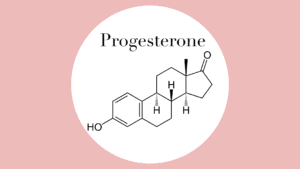
Once you shift your focus to what’s going on inside your tissues – and not just what shows up in your blood – you’ll finally understand why the old strategies stopped working. And more importantly, you’ll know exactly what to do next.
How to Use Progesterone
Before the detail that follows: Transmucosal progesterone therapy requires a prescription and a clinician’s supervision. What is described below is how it is used under that supervision. It is not a protocol to begin on your own, and progesterone is not a supplement you should self-dose – it is a hormone, and the right dose, the right timing, and whether it is appropriate at all depend on your own circumstances. If you are pregnant, trying to conceive, on hormonal contraception or being treated for a hormone-sensitive condition, this needs a doctor before anything else.
It’s also important to understand that progesterone is not a magic bullet, and that you get the most benefit by implementing a bioenergetic diet approach that allows you to effectively burn glucose as your primary fuel without backing up electrons in your mitochondria that reduces your energy production. My book, Your Guide to Cellular Health: Unlocking the Science of Longevity and Joy, covers this process in great detail.
Once you have dialled in your diet, an effective strategy that can help counteract oestrogen excess is to take transmucosal progesterone (i.e., applied to your gums, not oral or transdermal), which is a natural oestrogen antagonist. Progesterone is one of only three hormones I believe many adults can benefit from. (The other two are DHEA and pregnenolone.)
I do not recommend transdermal progesterone, as your skin expresses high levels of 5-alpha reductase enzyme, which causes a significant portion of the progesterone you’re taking to be irreversibly converted primarily into allopregnanolone and cannot be converted back into progesterone.
Ideal Way to Administer Progesterone
Please note that when progesterone is used transmucosally on your gums as I advise, the FDA believes that somehow converts it into a drug and prohibits any company from advising that on its label. This is why companies promote their progesterone products as “topical.”
However, please understand that it is perfectly legal for any physician to recommend an off-label indication for a medicinal drug to their patient. In this case, progesterone is a bioidentical hormone rather than a synthetic progestin, and the two have different safety profiles – the risks associated with progestins in the hormone therapy literature do not transfer straightforwardly to bioidentical progesterone. That is not the same as being risk-free at any dose, however. Progesterone is sedating, can affect mood, and interacts with other medications, so the dose needs to be established in collaboration with the prescribing clinician.
Dr. Ray Peat has done the seminal work in progesterone and probably was the world’s greatest expert on progesterone. He wrote his Ph.D. on oestrogen in 1982 and spent most of his professional career documenting the need to counteract the dangers of excess oestrogen with low-LA diets and transmucosal progesterone supplementation.
He determined that most solvents do not dissolve progesterone well and discovered that vitamin E is the best solvent to optimally provide progesterone in your tissue. You just need to be very careful about which vitamin E you use, as many supplemental vitamin E products are synthetic and do not provide the form your body uses.
It is imperative to avoid using any synthetic vitamin E (alpha tocopherol acetate – the acetate indicates that it’s synthetic). Natural vitamin E will be labelled “d alpha tocopherol.” This is the pure D isomer, which is what your body can use.
There are also other vitamin E isomers, and you want the complete spectrum of tocopherols and tocotrienols, specifically the beta, gamma, and delta types, in the effective D isomer. Look for a label showing the full spectrum of tocopherols and tocotrienols in the D isomer form.
When it comes to application, my preferred approach is to dissolve either powdered or liquid progesterone in natural vitamin E – having established the dosing with your prescriber – and apply it directly to the gums. This transmucosal application allows for optimal absorption and use by the body. There are also premade vitamin E-based progesterone products on the market. Just make sure they’re using natural vitamin E. The recommended time for application is 30 minutes before bed, as progesterone has an anti-cortisol effect and can increase GABA levels, promoting better sleep.
If you are a menstruating woman, you should take the progesterone during the luteal phase or the last half of your cycle, which can be determined by starting 10 days after the first day of your period and stopping the progesterone when your period starts. If you are a male or non-menstruating woman, you can take the progesterone every day for four to six months and then cycle off for one week. This is what I have been personally doing for over a year with very good results. I am a physician so do not have any problems doing this. If you aren’t a physician, you should consult one before using this therapy, as transmucosal progesterone therapy requires a doctor’s prescription.
This article is for informational purposes only and does not constitute medical advice. Consult a qualified healthcare provider before making modifications to your health regimen.
Author: Dr. Joseph Mercola
yogaesoteric
October 6, 2026